|
Getting your Trinity Audio player ready...
|
How Free Zone Storage in Dubai Reduces Costs for DG, Bulk & Breakbulk Cargo
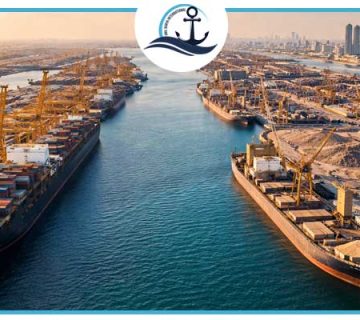
Dubai has become one of the most strategically optimized logistics hubs in the world, not only because of its geographic location but due to the way its free zone logistics framework has been engineered to reduce cost exposure across complex supply chains. For shippers handling dangerous goods (DG), bulk, and breakbulk cargo, storage decisions directly affect compliance risk, operational flexibility, and total landed cost—especially when Dubai acts as both the origin and destination of cargo flows.
Unlike conventional onshore warehousing, Dubai free zones allow cargo to remain commercially and fiscally flexible while staying fully compliant. This structural distinction is what transforms storage from a passive expense into an active cost-control tool.
At a foundational level, Dubai free zone logistics reduces overall logistics costs through:
- Duty and VAT deferment until mainland customs clearance
- Purpose-built infrastructure for DG, bulk, and breakbulk cargo
- Direct connectivity to sea and air freight gateways
These advantages are particularly valuable in volatile trade environments, where shipment timing, routing, or destination may evolve after cargo arrival.
Storage Costs as a Strategic Risk in Complex Cargo
For DG, bulk, and breakbulk shipments, storage costs tend to escalate non-linearly. Dangerous goods require controlled environments, segregation by hazard class, and continuous regulatory oversight. Bulk cargo depends on yard availability, heavy handling equipment, and environmental exposure management. Breakbulk cargo introduces additional complexity through lifting operations, space planning, and damage prevention.
In non-free-zone environments, these requirements often trigger early customs clearance, higher insurance premiums, and repeated cargo movements. Each additional handling step increases both cost and risk. Free zone storage eliminates much of this inefficiency by separating storage activity from final customs outcomes.
This is why DG storage UAE solutions within Dubai free zones consistently outperform traditional warehousing models—not only in direct cost terms but across the entire logistics lifecycle.
Why Free Zone Storage Changes the Financial Equation
Dubai free zones operate under a regulatory model that allows cargo to remain in bonded status while being stored, inspected, consolidated, or prepared for onward shipment. This single feature reshapes both cost control and cash-flow planning.
Instead of paying customs duties and VAT upon arrival, companies can align financial exposure with real commercial decisions. Cargo may be partially released, redirected, or re-exported without unnecessary fiscal leakage. This flexibility is critical for companies using Dubai as a regional distribution hub rather than a final consumption market.
At the midpoint of the logistics chain, free zone storage supports cost efficiency by enabling:
- Flexible release of cargo in phases
- Re-export without UAE customs duty exposure
- Reduced risk of demurrage and detention
This model aligns naturally with dynamic routing strategies, particularly multimodal operations discussed in Multimodal DG Transport in Dubai: Sea, Air & Land Workflows Explained
DG Storage in Free Zones: Compliance Without Cost Inflation
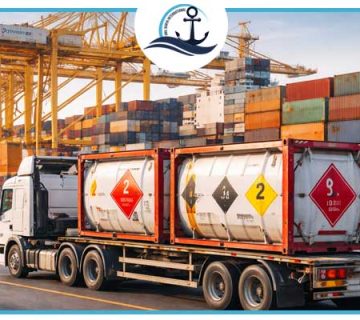
Dangerous goods logistics is where compliance failures most often translate into financial loss. Penalties, delays, and cargo rejection can quickly outweigh any savings achieved elsewhere in the supply chain. Dubai free zones mitigate this risk by offering DG-approved warehouses and yards designed in line with IMDG, IATA, and UAE regulatory requirements from the outset.
Rather than retrofitting general warehouses or managing fragmented approval processes, shippers gain immediate access to certified infrastructure supported by trained personnel and established inspection workflows. This significantly reduces both direct compliance costs and indirect delay-related expenses.
When DG storage is integrated into transport planning rather than treated as a standalone service, compliance becomes an efficiency enabler rather than a cost driver. This integrated approach is central to how Anil Darya Shipping structures hazardous cargo logistics from and to Dubai.
Bulk & Breakbulk Cargo: Efficiency Through Proximity and Planning
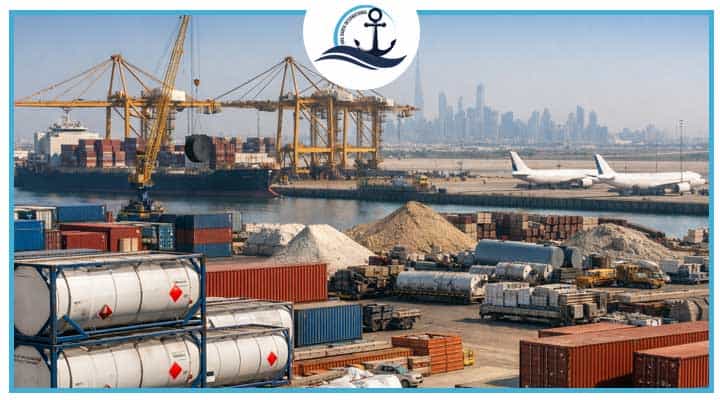
Bulk and breakbulk cargo are especially sensitive to distance from transport gateways and handling repetition. Every additional inland movement increases fuel costs, labor exposure, and scheduling risk. Dubai free zones located near Jebel Ali Port and major cargo airports eliminate these inefficiencies structurally.
By allowing synchronized planning between storage, handling, and loading operations, free zone storage reduces congestion exposure and improves schedule reliability—two critical cost drivers in bulk and breakbulk logistics. This efficiency has played a key role in Dubai’s rise as a hub for project and oversized cargo, as reflected in Dubai’s Growing Role in Project & Heavy-Lift Cargo.
Storage as a Cash-Flow Management Tool
Beyond physical efficiency, free zone storage plays a decisive role in financial resilience. Deferred customs duties preserve liquidity, particularly for high-value DG shipments or large-volume bulk cargo. This allows companies to synchronize cash outflows with revenue realization rather than cargo arrival.
In uncertain markets, this distinction can determine whether a shipment remains profitable. Storage becomes a financial buffer that absorbs volatility instead of magnifying it—especially in staged deliveries or time-sensitive routing scenarios similar to those discussed in Sea–Air Freight from Dubai: Faster Transit Without Full Air Costs.
Storage and Transport as One Integrated Strategy
The greatest cost reductions occur when storage is planned as an extension of transport rather than as a separate operational layer. In Dubai free zones, storage decisions influence vessel selection, flight availability, cargo prioritization, and even insurance exposure.
When storage and transport are fully aligned:
- DG cargo moves with fewer regulatory interruptions
- Bulk shipments avoid peak congestion windows
- Breakbulk cargo benefits from optimized lifting schedules
This integrated strategy defines how Anil Darya Shipping supports shippers handling DG, bulk, and breakbulk cargo from and to Dubai—ensuring that storage decisions actively reduce total landed cost.
Strategic Use of Value-Added Services
Free zone storage allows selected value-added services such as labeling, inspection, or repacking without triggering customs clearance. When applied selectively, these services prevent downstream errors that often lead to re-handling, documentation corrections, or shipment delays.
At the final stage of the logistics cycle, free zone storage contributes to cost reduction through:
- Fewer last-minute documentation corrections
- Reduced risk of cargo rejection
- Smoother transition to sea or air freight
For companies shipping dangerous goods, bulk, or breakbulk cargo from or to Dubai, free zone storage is not simply a warehousing choice—it is a strategic cost-control mechanism. Anil Darya International L.L.C-FZ helps clients design integrated free zone storage and transport strategies that reduce compliance risk, optimize cash flow, and lower total logistics cost.
Frequently Asked Questions (FAQ)
Dubai free zones combine DG-approved infrastructure, deferred customs duties, and integrated compliance workflows, reducing both direct storage costs and indirect delay-related expenses.
Yes. Free zones offer flexible storage durations suitable for project cargo, phased deliveries, and redistribution strategies.
Yes. Proximity to ports and airports enables seamless integration with sea freight and air freight operations.
Free zone facilities are designed to meet IMDG, IATA, and UAE regulatory requirements.
By integrating free zone storage with transport planning, DG compliance, and execution under a single coordinated logistics strategy.