What does a freight forwarder in Dubai do?
A freight forwarder plans and books the movement of your cargo: choosing the route and mode, securing carrier space, preparing the shipping documents and following the shipment until delivery. Anil Darya International does this from Dubai for sea freight, air cargo, dangerous goods, bulk cargo and break bulk / project cargo.
Which services does Anil Darya International offer?
Ocean freight is our focus: sea freight (FCL and LCL), dangerous goods by sea, dry and liquid bulk cargo, and break bulk / project cargo for oversized pieces. We also have an air cargo service for urgent shipments.
Is Anil Darya International a member of FIATA and NAFL?
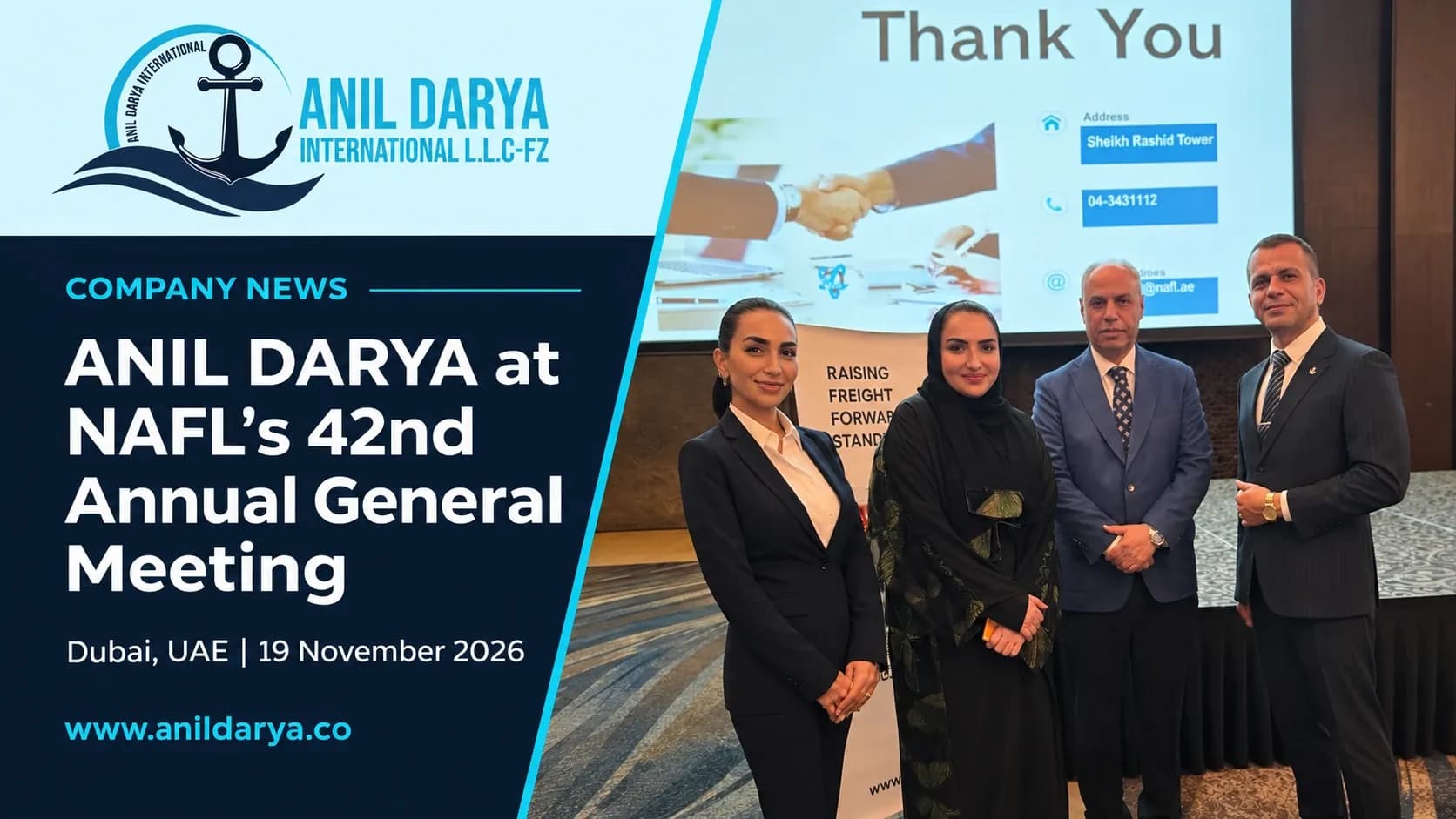
Yes. We are a FIATA member and an NAFL member, our team holds the FIATA Diploma in Freight Forwarding, and we have completed IMDG awareness training for dangerous goods. The certificates are shown on our About page.
Which countries do you ship to?
We move cargo between the UAE and around 50 countries, booked through our carrier network out of Jebel Ali and major Asian and European ports.
What is the difference between FCL and LCL?
FCL (full container load) means your cargo has a container to itself. LCL (less than container load) means your cargo shares a container with other shippers and you pay for the space it uses. FCL usually suits larger volumes; LCL suits smaller shipments. We arrange both.
Can you ship dangerous goods from Dubai?
Yes. Our team holds dangerous goods certification. We handle classification and the DG declaration, approved packing and labelling, and we arrange carrier acceptance in advance, through Jebel Ali Port and Dubai International Airport.
How much does shipping from Dubai cost?
The price depends on the mode, the route, the weight and volume (for air, the chargeable weight), the type of cargo (dangerous goods need extra handling), the Incoterm and the date the cargo is ready. Send these details through our Freight Rate Inquiry form and we reply with a rate within one working day.
What documents do I need to ship cargo?
Usually a commercial invoice, a packing list and the transport document (bill of lading for sea, air waybill for air), which we prepare. Some destinations also need a certificate of origin, and dangerous goods need a safety data sheet and a DG declaration. Having the HS code ready speeds things up.