|
Getting your Trinity Audio player ready...
|
Insurance Essentials for Dangerous Goods Carried by Sea or Air
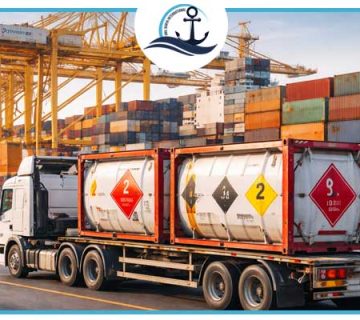
Transporting dangerous goods by sea or air is one of the most complex responsibilities in global logistics. From chemical reactions and cargo leaks to pressure changes in aircraft holds and rough sea movements, dangerous goods require far more than compliance—they need a complete risk-protection ecosystem, in which proper insurance plays a central and unavoidable role. For companies shipping in and out of Dubai, a region that serves as one of the world’s major gateways, understanding how dangerous goods insurance Dubai works is not only beneficial—it is essential.
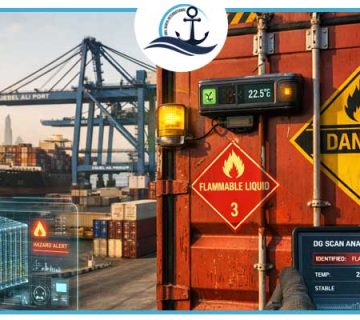
In today’s global supply chains, manufacturers, traders, and logistics companies must ensure that every step of the journey meets strict safety rules established by IMDG (sea), IATA (air), and UAE regulatory bodies. Even when packaging, labeling, documentation, and handling are executed flawlessly, risks still remain, especially for high-sensitivity cargo such as chemicals, lithium batteries, flammable liquids, ADR items, radioactive goods, and reactive materials. These are precisely the risks that comprehensive cargo risk coverage UAE policies protect against.
For shippers that rely on specialists like Anil Darya Shipping, insurance becomes an integrated part of the logistics workflow. It is not a separate step; it is woven into the entire DG compliance journey—from cargo classification to vessel/aircraft booking, loading, transit, and final delivery. Dubai’s strategic location, advanced ports, and high-volume air corridors make it one of the most active hubs for dangerous goods transport, and therefore one of the places where insurance is taken most seriously.
The Role of Insurance in DG Transportation: Why It Matters More in Dubai Than Anywhere Else
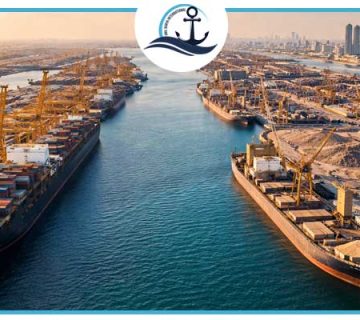
Dubai’s position as a global logistics hub brings massive advantages: world-class infrastructure, high-speed customs processes, and vast carrier networks. But it also means your DG cargo will often move through busy ports, strict air cargo security zones, and high-volume transshipment hubs. This increases exposure—both operationally and commercially.
When DG cargo moves via sea freight from Dubai, it may pass through multiple ports, each with unique environmental conditions: humidity, temperature, vessel vibrations, heavy crane movements, or potential stacking pressure in container yards. Likewise, DG air cargo routed through Dubai’s air freight network undergoes multiple inspections, re-screenings, aircraft hold pressure changes, and handling at tight schedules.
Insurance protects against risks that even the most advanced operations cannot eliminate. It ensures that despite the best safety measures, your cargo remains financially protected.
This is why a well-constructed DG shipment policy in the UAE always includes insurance as a mandatory component—not an optional add-on.
What Dangerous Goods Insurance Actually Covers (Extended Explanation)
Most shippers assume DG insurance simply covers damage or loss. In reality, DG insurance is far broader and covers multiple stages of the journey, from origin warehouses to final delivery. Coverage typically includes:
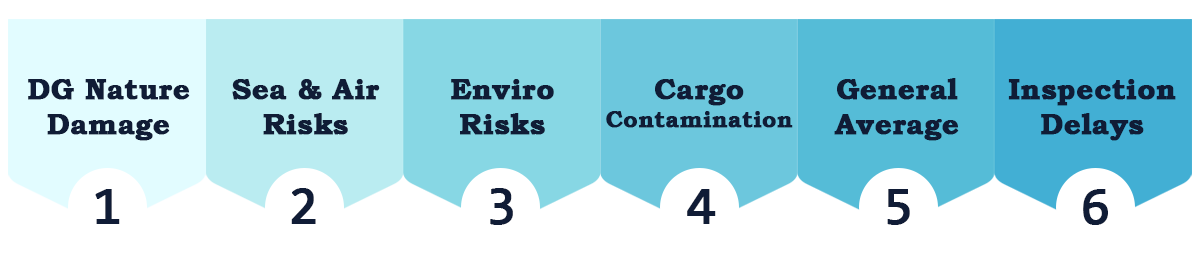
1-Damage Caused by DG Nature
Many dangerous goods can react, leak, ignite, or deteriorate. Standard cargo policies often exclude such incidents. DG insurance fills that gap.
2-Maritime and Air Operational Risks
- Container damage due to shifting at sea
- Aircraft off-loading in emergency cases
- Pressure-related incidents
- Cargo movement during turbulence
- Forklift or crane damage at terminals
3-Environmental Exposure Specific to Sea Freight
Moisture, humidity, condensation buildup, and sea water ingress are highly common when shipping chemicals, pharmaceuticals, battery cargo, and reactive materials.
4-Contamination and Cross-Cargo Reactions
If your DG cargo contaminates or damages other cargo, insurance can cover shared liabilities.
5-General Average
In major maritime emergencies, all cargo owners must contribute financially to save the vessel. DG insurance covers this mandatory contribution.
6-Delays Caused by Safety Inspections
Authorities may hold DG cargo for additional screening, especially at Dubai ports. Insurance helps offset some of these losses, depending on the policy.
Why Shippers in Dubai Must Not Depend on Carrier Liability
A major misconception among exporters/importers is the belief that the shipping line or airline will cover damages. But carriers’ liability is extremely limited—based on weight and not actual cargo value.
For example:
- Sea carriers:governed by Hague-Visby Rules (very low compensation per kg)
- Air carriers: limited by the Montreal Convention
- Handling agents: often exempt from most DG-related claims
This means a USD 100,000 DG shipment might only receive USD 1,000–3,000 in compensation under carrier liability.
Dedicated DG insurance prevents such catastrophic losses.
How Insurance Supports Regulatory Compliance
Dangerous goods are strictly regulated, and insurance acts as both a protective and compliance-reinforcing measure.
Insurance aligns with:
- IMDG Code (sea)
- IATA DGR (air)
- UAE Civil Aviation Authority rules governed by Hague-Visby Rules (very low compensation per kg)
- Dubai Customs guidelines
- Dubai Municipality hazardous materials requirements
For DG cargo routed via Jebel Ali Free Zone (JAFZA) or Dubai Airport Free Zone (DAFZA), these requirements become even more critical. If your DG shipment includes other cargo categories—like break bulk shipments or bulk materials—insurance helps maintain consistent compliance across multimodal routes.
Integrating Insurance Into Your DG Shipment Policy
A well-built DG shipment policy is not just about packaging, labeling, and MSDS accuracy. It must include formal structures around:
- Risk assessment before booking
- Approved carriers for DG classes
- Packaging validation according to UN specifications
- Pre-loading inspections
- Emergency response plans
- Insurance coverage matched to cargo value
When managed by specialists like Anil Darya Shipping, these steps combine into a single integrated chain. Their experience in DG transport—whether via sea, air,bulk cargo solutions, or break bulk logistics—ensures that insurance requirements are aligned with practical operations.
End-to-End Protection: From Dubai Warehouses to Global Destinations
Dangerous goods shipped from Dubai may travel through extreme environments: Middle East heat, Indian Ocean humidity, European winter temperatures, or high-altitude aircraft pressure. Insurance provides continuity across every stage.
Insurance can cover:
- Storage at Dubai Free Zones
- Loading/unloading at ports
- Transit between airports and warehouses
- Multimodal transfers
- Storage at destination prior to final delivery
This holistic protection is particularly crucial for DG shipped as part of larger cargo consignments, such as DG containers mixed with general cargo, steel coils, machinery, or chemical drums within break bulk operations.
Case Scenarios Where DG Insurance Becomes Essential
Scenario 1: Chemical Leakage at Sea
A container carrying chemicals reacts due to heat, causing smoke and minor fire. Emergency response teams flood the hold area, damaging not only your cargo but also neighboring containers. Insurance covers your direct loss—and your share of General Average.
Scenario 2: Battery Cargo Overheating in Air Freight
Lithium batteries heat up, triggering an aircraft safety inspection. Cargo is off-loaded, delayed, and temporarily quarantined. DG insurance covers damages and sometimes delay-related losses.
Scenario 3: Misdeclared DG by a Supplier
Even when it is not your operational fault, insurance offers protection if the misdeclared cargo causes damage.
Scenario 4: Transshipment Damage in Busy Ports
DG cargo moving through Asia or Europe may undergo multiple crane lifts. Insurance protects you through the entire chain until delivery.
Why Choose Anil Darya Shipping for DG-Integrated Insurance Solutions
Dangerous goods logistics requires accuracy, experience, and absolute compliance.
Anil Darya International L.L.C-FZ is one of the UAE’s specialized DG freight providers that combine:
- Correct UN classification
- Proper packaging/labeling guidance
- IMDG/IATA compliance
- Route planning for DG cargo
- Safe handling at Jebel Ali and Dubai airports
- Documentation alignment for insurance claims
- Direct liaison with insurers for accurate declarations
Working with a DG-certified forwarder is the only way to ensure your insurance remains valid throughout the journey. A single documentation error can void an entire insurance claim, which is why expertise is critical.
If you are planning to transport dangerous goods by sea or air through Dubai, do not expose yourself to financial risk.
Your cargo’s safety—and your business reputation—depend on it.
Frequently Asked Questions (FAQ)
Because Dubai handles high-volume DG cargo, regulators require strict compliance. Standard insurance does not cover most DG risks, so specialised dangerous goods insurance Dubai policies are necessary.
Yes. Compliance prevents accidents; insurance protects your finances if an accident still occurs.
MSDS, DG Declaration, Packing Certificate, UN classification, IMO/IATA forms, and correct labeling.
Yes, but it must be declared properly. This is important when routing throughbreak bulk operations in Dubai.
Air cargo faces pressure and temperature-related risks, while sea cargo faces moisture, water damage, and vessel movement risks.
Many policies do, but you need to confirm the time window.
They ensure compliance, proper documentation, and accurate declarations—crucial for insurance validity.