
Liner or Charter? Booking Options for Breakbulk Cargo
Liner or charter for breakbulk cargo? How each option works and when each one makes sense.
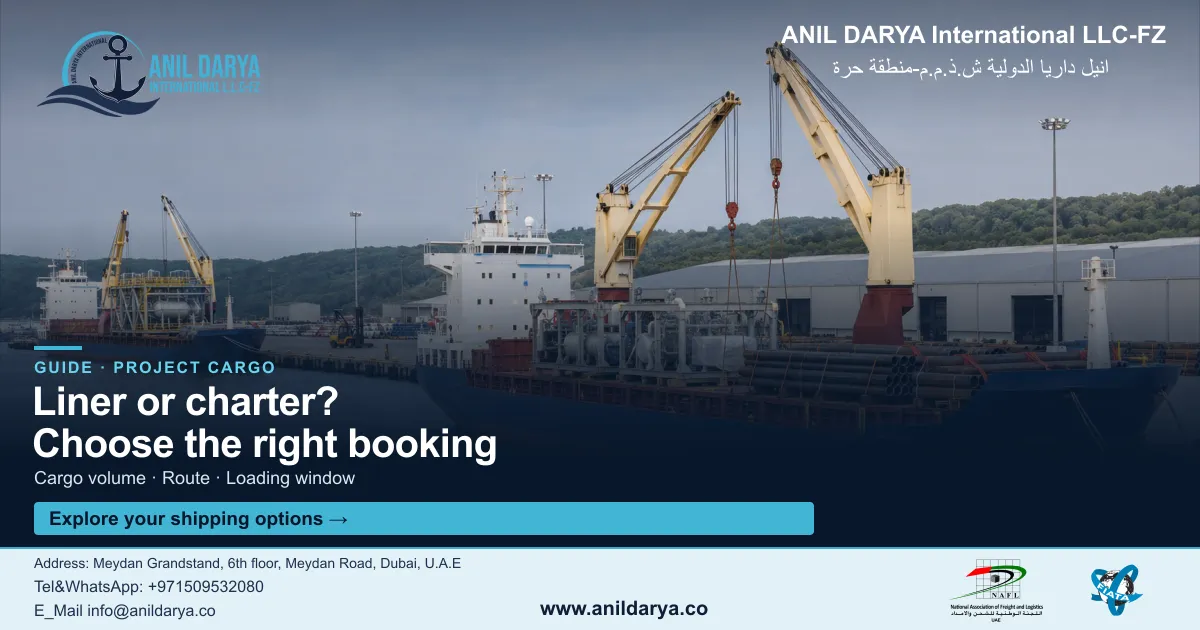
Breakbulk cargo can travel in two main ways. On a liner service, your cargo shares a ship that sails a regular route and you pay per revenue ton. On a charter, you hire the whole ship or a large part of it for your cargo, on terms you negotiate. Liner is usually better for smaller lots and regular shipments. Charter starts to make sense when you have enough cargo to fill most of a ship, when you need a route or date no liner offers, or when the cargo needs a specific type of vessel.
How a liner booking works
Breakbulk liner services run on published routes with an approximate schedule. You book space for your pieces, the carrier issues a booking note, and the cargo is shipped under the carrier's bill of lading and its standard terms.
- Price: a rate per revenue ton plus surcharges. The rate is set by weight or measurement, whichever is higher.
- Schedule: the carrier sets it. Ports can be added or skipped depending on cargo.
- Risk of delay: if the ship is full or the schedule slips, your cargo waits for the next sailing.
- Paperwork: simpler, because the terms are standard.
How a charter works
With a charter you hire the vessel, and the deal is set out in a charter party. The standard forms most of the industry uses are published by BIMCO. The main types are:
- Voyage charter: the ship carries your cargo from port A to port B for an agreed freight. The common BIMCO form is GENCON.
- Part charter: you take a defined share of the ship's space, and the owner fills the rest.
- Time charter: you hire the ship for a period and direct where it goes. This is rare for single project shipments.
A charter brings terms that liner shippers never see. The two most important are laytime, the time allowed for loading and discharge, and demurrage, the daily amount you pay if loading or discharge takes longer than the laytime. If the port is congested or your cargo arrives late at the quay, demurrage can add up quickly.
Which one fits your shipment?
Liner is usually the better choice when:
- You have a few pieces, not a shipload.
- A regular service already runs between your ports.
- Your delivery date has some flexibility.
Charter is worth pricing when:
- The cargo would fill most of a vessel.
- No liner service calls at the port you need, or not soon enough.
- The pieces need special gear or a deck layout only certain ships have.
- You need control over the loading date to meet a project schedule.
Questions to ask before you choose
- What is the total cost per revenue ton under each option, after surcharges and port costs?
- For a charter, what are the laytime and demurrage terms, and who carries the risk of port congestion?
- What happens if the cargo is not ready on the agreed date?
- Does the vessel have the gear for the heaviest piece?
- Who arranges stevedoring and lashing at each end?
Common mistakes
- Choosing a charter on freight rate alone and ignoring demurrage risk.
- Booking a liner for a deadline-critical project when the service is irregular.
- Signing a charter party without someone experienced reading the clauses.
Compare options with us
Anil Darya books both liner space and charters for breakbulk and project cargo from the UAE. Send us the cargo list, the total revenue tons, the ports and your loading window at info@anildarya.co, and we will compare the realistic options for your shipment.
Sources
- BIMCO, contracts and clauses (including GENCON): bimco.org/contracts-and-clauses (reviewed 9 November 2026)