
Dangerous Goods Declaration for Sea Freight: Fields and Common Errors
The fields a sea freight dangerous goods declaration needs, and the mistakes that hold up DG bookings.
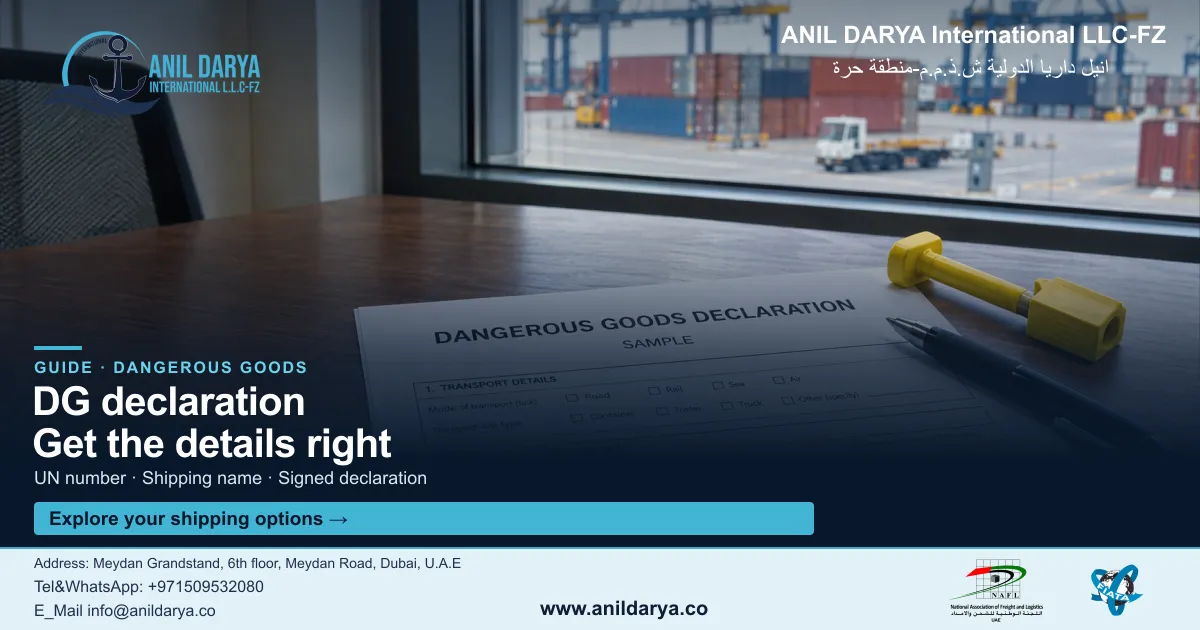
A dangerous goods declaration (DGD) is the shipper's signed statement that the goods are correctly classified, packed, marked, labelled and fit for sea transport under the IMDG Code. The carrier relies on it to plan stowage and to know how to respond in an emergency. If any field is wrong or missing, the booking is held or rejected. Below are the fields required and the errors we see most often.
The required information
The IMDG Code sets the content of the dangerous goods transport document in Chapter 5.4. Many shippers use the IMO Multimodal Dangerous Goods Form, which combines the declaration with the container packing certificate. For each dangerous substance, the document must show:
- UN number, preceded by the letters "UN".
- Proper shipping name, exactly as in the IMDG Code, with the technical name added in brackets where required.
- Class, and any subsidiary risk in brackets.
- Packing group, where one applies.
- Number and kind of packages and the total quantity of dangerous goods (net or gross, as the code requires).
- Flashpoint, if it is 60°C or lower.
- Marine pollutant statement, if applicable.
- Limited quantity or excepted quantity statement, if the goods are shipped under those provisions.
- Emergency response information, usually the EmS numbers.
- Shipper, consignee and carrier details.
- The signed declaration by the shipper that the goods are correctly described and packed.
The container packing certificate
When dangerous goods are packed into a container, the person responsible for packing must sign a container packing certificate. It confirms that the container was clean and fit, the goods were properly loaded and secured, segregation rules were followed and the container is correctly placarded. On the IMO form, this is the box at the bottom right.
Common errors that hold up bookings
- Trade name instead of the proper shipping name. "SuperClean 500" is not a shipping name. The IMDG name, such as "Corrosive liquid, n.o.s.", is.
- Missing technical name. Entries ending in "n.o.s." need the chemical name of the hazardous component in brackets.
- UN number and shipping name that don't match. Each UN number goes with specific names. Mixing them is an automatic rejection.
- Wrong or missing packing group.
- Quantities that differ from the booking or the packing list.
- Old SDS data. The classification on the declaration must match the current SDS and the current IMDG amendment.
- Unsigned forms or forms signed by someone without DG training.
The IMDG Code changes every two years. See IMDG Code Amendment 42-24 for the latest changes.
Before you submit
- Check every field against the SDS and the IMDG Dangerous Goods List.
- Make sure the package marks and labels match the declaration.
- Send the DGD with the booking, not on the day of loading.
- Keep a copy. Shippers must retain DG documents for at least three months under the IMDG Code.
Have your declaration checked
Anil Darya reviews DG documents as part of our dangerous goods shipping service. Send your draft declaration, the SDS and the route to info@anildarya.co before you book. This article is general guidance; the current IMDG Code is the legal reference.
Sources
- IMO, Dangerous goods and the IMDG Code: imo.org (reviewed 9 November 2026)