
FCL vs LCL: How to Choose for Your Shipment
The difference between FCL and LCL, and how to decide which one suits your shipment.
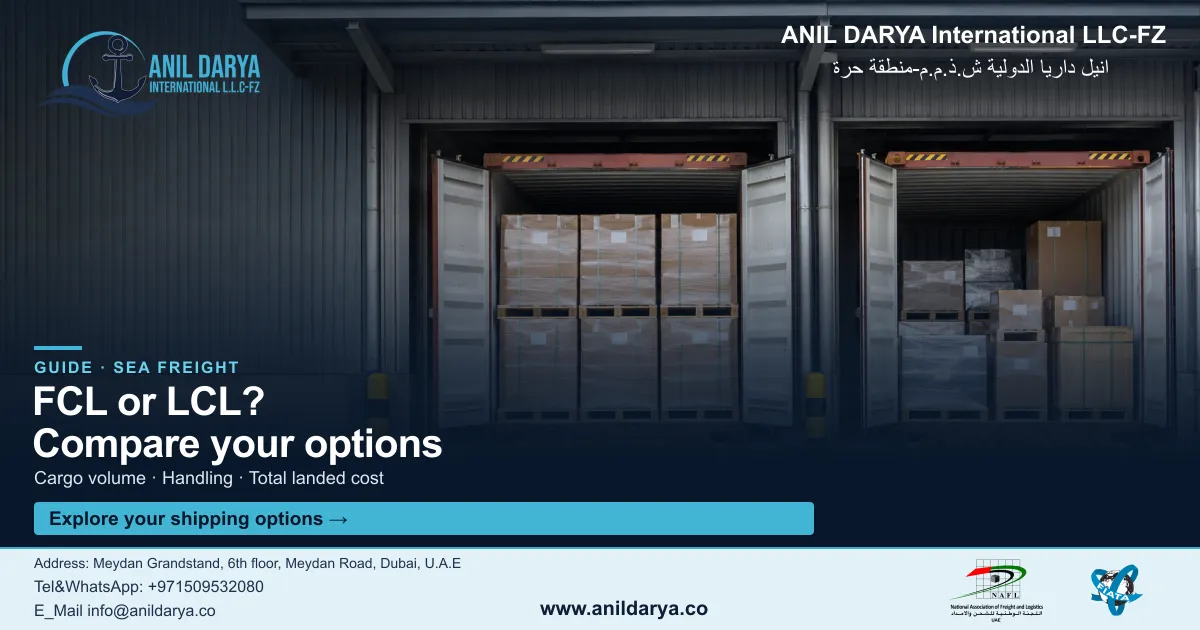
FCL (Full Container Load) means you book a whole container for your cargo. LCL (Less than Container Load) means your cargo shares a container with other shippers' goods and you pay only for the space you use. LCL is usually cheaper for small shipments. FCL is usually cheaper per cubic metre once your cargo fills a good part of a container, and it is faster and safer because the box is not opened on the way. The right choice depends on volume, budget, timing and how fragile the cargo is.
How each one works
FCL: the empty container is delivered to you or your supplier, you load it, it is sealed and goes straight to the port. At destination the consignee receives the same sealed container. You pay one rate per container, however full it is.
LCL: you deliver your cargo to a consolidation warehouse (a CFS, or container freight station). The forwarder combines it with other shippers' cargo into one container. At destination the container is unpacked at another warehouse and your cargo is released. You pay per cubic metre or per tonne, whichever is higher, plus handling at both warehouses.
Comparing the two
- Cost: LCL wins for small volumes. As your volume grows, the per-cbm LCL charges and warehouse fees add up, and at some point a full container costs less. A standard 20ft container holds roughly 33 cbm inside, so once your cargo is approaching half of that, get both quotes.
- Transit time: FCL is faster. LCL adds time for consolidation and unpacking, and the cargo waits until the container is full enough to ship.
- Handling and damage risk: FCL cargo is loaded once and unloaded once. LCL cargo is handled more often and shares space with other goods.
- Customs: in LCL, a problem with another shipper's cargo can hold up the whole container at destination. With FCL, only your own paperwork matters.
- Flexibility: LCL lets you ship small amounts more often, which can keep inventory low.
When to choose FCL
- Your cargo fills a large part of a container.
- The goods are fragile, high value or easily contaminated.
- You need the shortest, most predictable transit.
- The cargo is dangerous goods, which many LCL services restrict.
When to choose LCL
- You are shipping a few pallets or cartons.
- Cost matters more than a few extra days.
- You want to send smaller, more frequent shipments.
- The goods are sturdy and well packed.
Costs people forget
- LCL: CFS handling charges at both ends, documentation fees and minimum charges, often for one cubic metre even if your cargo is smaller.
- FCL: container demurrage and detention if you keep the box too long, and trucking for the full container.
Detention charges can catch FCL shippers out. Our tips on cutting sea freight costs from Dubai cover how to avoid them.
Quick decision checklist
- Measure the total volume and weight of your cargo, including pallets.
- Get both an FCL and an LCL quote, each with all origin and destination charges.
- Compare total landed cost, not just the ocean freight.
- Factor in transit time and the value of the goods.
Get FCL and LCL quotes
Anil Darya ships FCL and LCL sea freight through Jebel Ali. Send us your origin, destination, cargo description, volume, weight and ready date through our rate inquiry form or to info@anildarya.co, and we will price both options so you can compare.
Sources
- ISO 668:2020, Series 1 freight containers, classification, dimensions and ratings: iso.org (reviewed 9 November 2026)