
Heavy-Lift Shipping: Lift Plans, Vessel Gear and Port Requirements
What heavy-lift shipping involves: the vessel and its cranes, the lift plan, port requirements and the data shippers must supply.
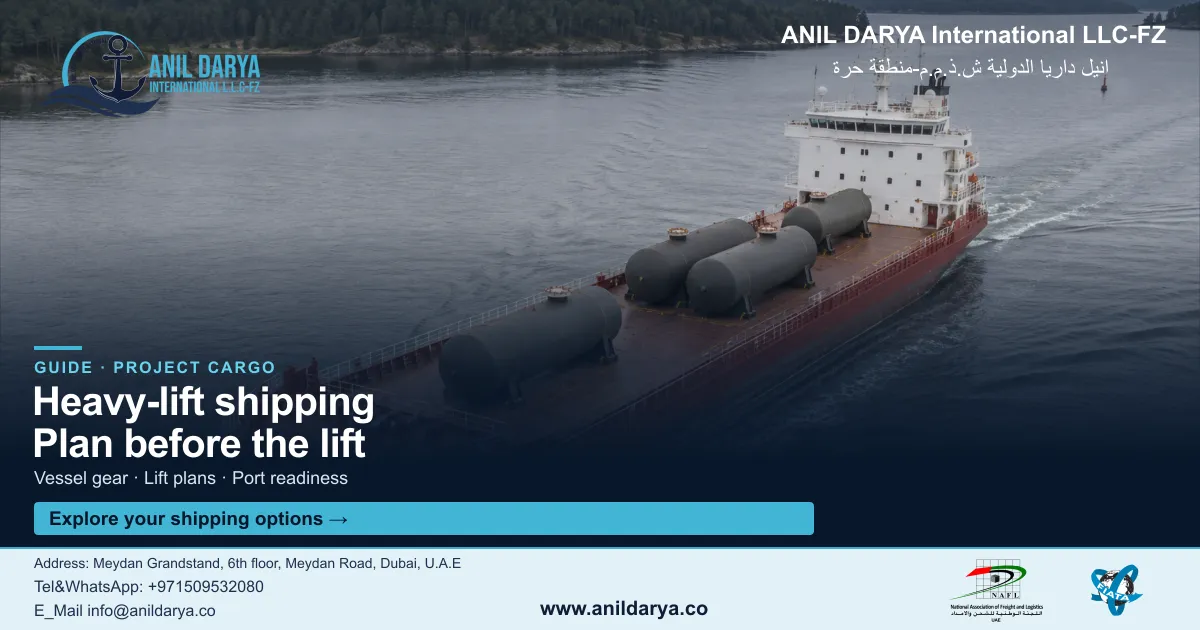
Heavy-lift shipping is the sea transport of single pieces that are too heavy for normal port cranes or standard vessel gear. Think of transformers, reactors, turbines, boilers or large steel structures. What makes it work is planning: a lift plan for every crane operation, a vessel with gear strong enough for the heaviest piece, and ports that can take the load on the quay. This guide explains each of those and what the shipper has to provide.
What counts as heavy lift?
There is no single legal definition. Each carrier sets its own threshold for when a piece becomes "heavy lift" and attracts extra charges and planning. In practice, if a piece is heavier than what a terminal's standard cranes or a general cargo ship's own derricks can lift, it needs heavy-lift planning. Always ask the carrier where its thresholds are.
The vessel and its gear
Heavy-lift cargo usually travels on one of these:
- Multipurpose (MPP) or heavy-lift vessels with their own cranes. They can load and discharge without shore cranes, which matters at ports with limited equipment. Two ship cranes working together (a tandem lift) can lift more than one crane alone.
- Semi-submersible or deck carriers for the largest structures, which are floated or rolled on and off.
- Ro-ro vessels for cargo that can be driven or rolled on board on trailers.
The carrier chooses the vessel based on piece weight, dimensions, the ports and the stowage plan.
The lift plan
Every heavy lift needs a written lift plan. It is normally prepared by the carrier or the lifting contractor, using information from the shipper. A lift plan covers:
- The weight of the piece plus the rigging.
- Centre of gravity and lifting points, taken from the manufacturer's drawings.
- Crane capacity at the working radius, not just the crane's maximum rating.
- The rigging arrangement: slings, shackles, spreader beams and their ratings.
- Weather limits, mainly wind speed, above which the lift stops.
- Who is in charge on the day and how the team communicates.
Port requirements
The port has to take the weight as well as the ship. Check:
- Quay load capacity where the cargo will sit and where any mobile crane will stand.
- Berth depth and length for the vessel.
- Shore crane availability if the vessel's gear will not be used.
- Space for staging the cargo and the trailers.
- Access for self-propelled modular transporters (SPMTs) or multi-axle trailers if the cargo is rolled rather than lifted.
Choosing the right port can save a lot of money. Our comparison of Jebel Ali and Sharjah covers some of the practical differences in the UAE.
What the shipper needs to provide
- General arrangement drawings with dimensions, weight and centre of gravity.
- Marked and certified lifting points, or instructions for where slings may go.
- Lashing points for sea securing.
- Packing details and any parts that must stay dry or protected.
- The date the cargo is ready and the required delivery date.
Common mistakes
- Weights in the drawings that do not include later additions, like fluids or attached parts.
- Centre of gravity marked in the wrong place, or not marked at all.
- No space booked at the port for staging the cargo before loading.
- Insurance that does not cover on-deck stowage.
For the full project process, read breakbulk damage prevention, which covers lashing, dunnage and storage.
Talk to us about a heavy lift
Anil Darya arranges heavy-lift and project cargo shipping through UAE ports. Send the drawings with weights and centre of gravity, the origin and destination, and your delivery window to info@anildarya.co or through our rate inquiry form.