
IMDG Segregation: How Incompatible DG Classes Are Kept Apart in Containers
How the IMDG Code keeps incompatible dangerous goods apart in containers and on the ship.
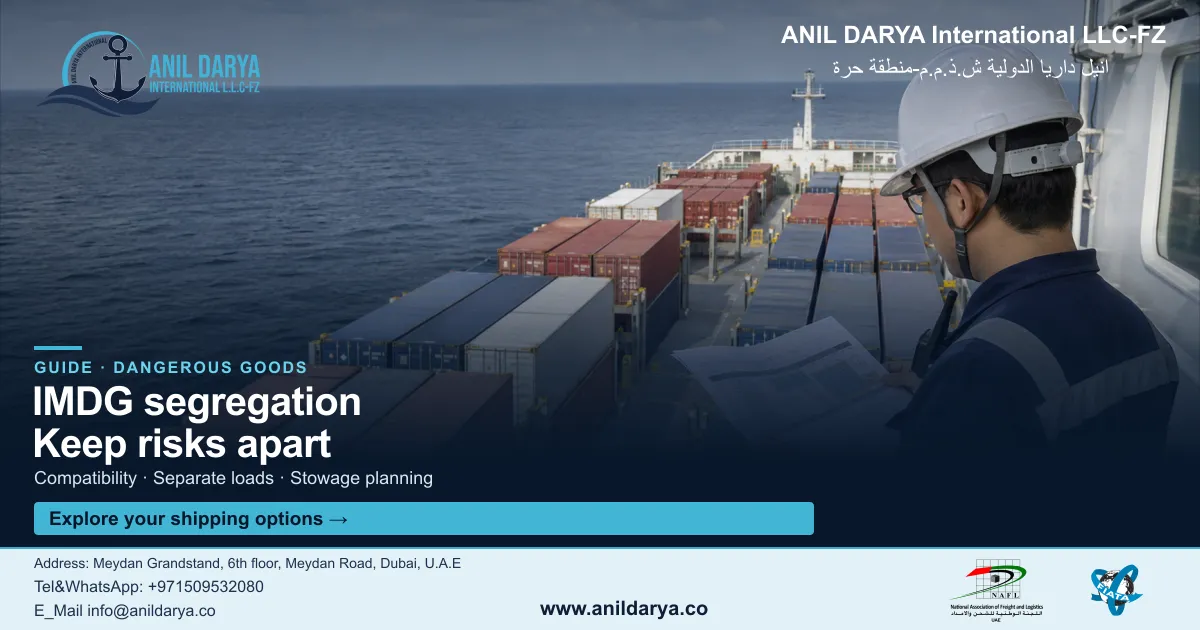
Segregation is how the IMDG Code keeps dangerous goods that could react with each other apart, so a leak or fire in one does not set off another. For shippers, the key rule is simple: goods that the code says must be segregated from each other normally cannot go in the same container. The carrier then applies further distances between containers on the ship. Here is how it works and how it affects your bookings.
Why segregation exists
Some combinations are dangerous. An oxidizer next to a flammable liquid can turn a small leak into a fire. An acid next to a cyanide can release toxic gas. Segregation rules are built on those reactions, using the hazard class of each product and, for some substances, a segregation group such as acids or alkalis.
The four segregation terms
The IMDG Code uses four levels, from least to most strict:
- "Away from": kept a minimum distance apart, but can be in the same compartment or on deck near each other.
- "Separated from": in different holds or compartments, or a greater distance apart on deck.
- "Separated by a complete compartment or hold from": at least one full hold or compartment between them.
- "Separated longitudinally by an intervening complete compartment or hold from": the strictest level, with a full hold in between along the length of the ship.
The segregation table in Chapter 7.2 of the code shows which level applies between each pair of classes. The Dangerous Goods List can add specific requirements for individual substances.
Segregation inside one container
This is the part that affects shippers most. Under the IMDG Code, dangerous goods that must be segregated from each other may not be packed in the same cargo transport unit. The exception is goods that only need to be "away from" each other, which may share a container with the approval of the competent authority. In practice, if your shipment mixes classes, check the segregation table before planning one container.
Some examples to check carefully:
- Class 5.1 oxidizers with Class 3 flammable liquids.
- Acids and alkalis (Class 8) from different segregation groups.
- Class 4.3 dangerous-when-wet goods with anything containing water.
Dangerous goods also have rules about foodstuffs. Many classes must be kept "away from" or "separated from" food, so a mixed LCL load with food and chemicals needs planning.
Segregation on the ship
Once containers are booked, the carrier's planners stow them so that the required distances are kept. This is one reason carriers limit how much DG they accept on a sailing. If a vessel already has cargo that conflicts with yours, your booking may move to a later ship.
What you can do as a shipper
- List every dangerous product in the shipment with its class, UN number and segregation group before you plan the load.
- Check the segregation table for every pair.
- Split incompatible goods into separate containers or shipments.
- Tell your forwarder about any food or feed items travelling in the same container.
- Book DG early, so the carrier has room to stow it properly.
Correct paperwork is the other half of the job. Our article on why shipping lines reject DG bookings explains the document checks.
Plan a mixed DG shipment with us
Anil Darya plans container loads for dangerous goods shipping from the UAE. Send the list of products with their SDS, quantities and route to info@anildarya.co, and we will check which items can travel together. The current IMDG Code is the reference for any actual shipment.
Sources
- IMO, Dangerous goods and the IMDG Code: imo.org (reviewed 9 November 2026)