
Shipping Lithium Batteries by Sea: UN3480, UN3481 and UN3091
Which UN number applies to your lithium battery shipment, and what testing, packing and documents carriers expect.
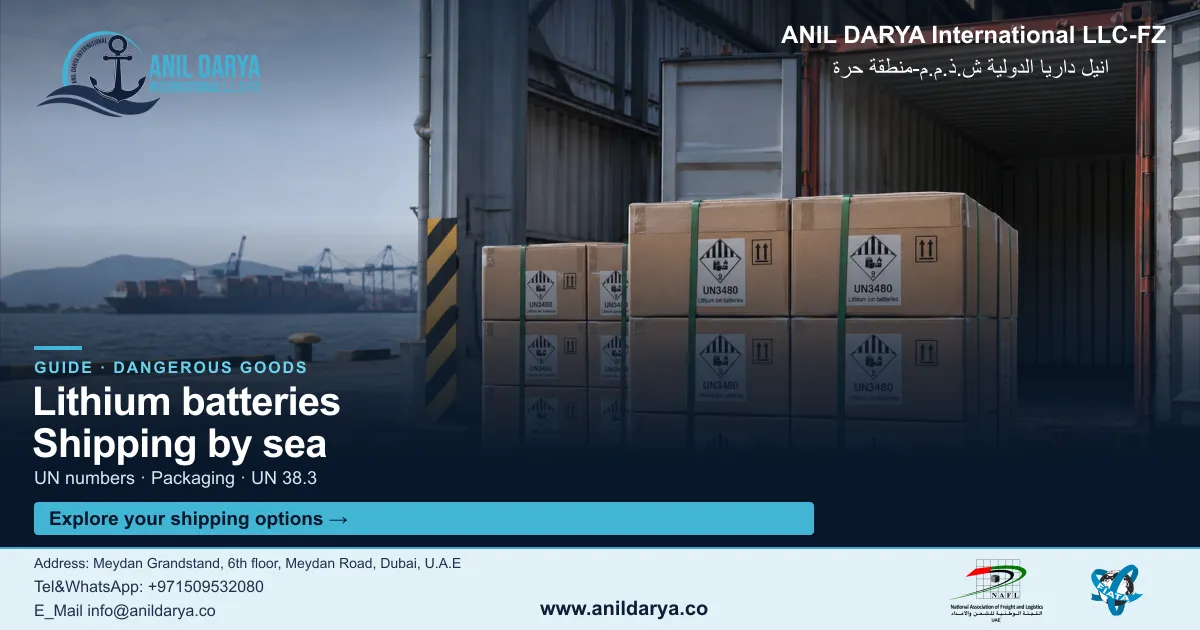
Lithium batteries are Class 9 dangerous goods when shipped by sea. Which rules apply depends on two things: the chemistry (lithium-ion or lithium metal) and how the batteries are packed (on their own, packed with equipment, or inside equipment). That gives the four main UN numbers, UN3480, UN3481, UN3090 and UN3091. Every battery type also needs a passed UN 38.3 test. Here is how to work out which entry applies to you and what the carrier will ask for.
The four UN numbers
- UN3480: Lithium ion batteries. Rechargeable cells or batteries shipped on their own, such as power banks or spare battery packs.
- UN3481: Lithium ion batteries contained in equipment, or packed with equipment. For example, laptops with their batteries installed, or tools shipped with spare batteries in the same box.
- UN3090: Lithium metal batteries. Usually non-rechargeable, such as coin cells, shipped on their own.
- UN3091: Lithium metal batteries contained in equipment, or packed with equipment. For example, devices with built-in lithium metal cells.
Getting the entry right matters because the packing rules, labels and paperwork differ.
UN 38.3 testing
Every lithium cell and battery type must pass the tests in the UN Manual of Tests and Criteria, section 38.3, before it can be transported. These cover altitude, temperature, vibration, shock, short circuit and other conditions. The manufacturer must make a test summary available. Carriers and forwarders will ask for it, so get it from your supplier before you book.
Small batteries and Special Provision 188
Small cells and batteries below set watt-hour (lithium-ion) or lithium-content (lithium metal) limits can be shipped under Special Provision 188 with lighter requirements. They still need the lithium battery mark on the package, strong packaging and protection against short circuit, but not the full Class 9 regime. Check the limits and conditions in the current IMDG Code before relying on it.
Packing basics
- Protect terminals against short circuit, for example with caps, tape or individual bags.
- Stop batteries from moving inside the package.
- Use packaging that meets the IMDG packing instruction for the UN number.
- Equipment containing batteries must be prevented from switching on during transport.
Damaged and defective batteries
Batteries that are damaged, defective or recalled for safety reasons are much harder to ship. Special Provision 376 sets strict conditions, and many carriers refuse them. Tell your forwarder up front if any batteries are returns or have a known fault.
A note on state of charge
You may have heard that lithium-ion batteries must be at 30% charge. That is an air transport requirement under IATA rules for UN3480. It is not the same rule at sea, but some shipping lines set their own limits, so ask the carrier.
Documents the carrier will ask for
- Dangerous goods declaration with the correct UN number and shipping name.
- UN 38.3 test summary for each battery type.
- SDS or battery specification sheet showing watt-hours or lithium content.
- Photos of the packaging and labels, for some carriers.
For more on the declaration itself, see our article on why shipping lines reject dangerous goods.
Get your battery shipment reviewed
Anil Darya ships lithium batteries by sea as part of our dangerous goods service. Send the battery type, watt-hours or lithium content, quantity, the UN 38.3 summary and your route to info@anildarya.co. This article is general guidance and does not replace the current IMDG Code or the carrier's own rules.