
Steel Cargo, Pre-Loading Surveys and Clean Bills of Lading
Rust on steel products can turn into a claused bill of lading and a letter of credit problem. Here is how pre-loading surveys work and what shippers can do before loading.
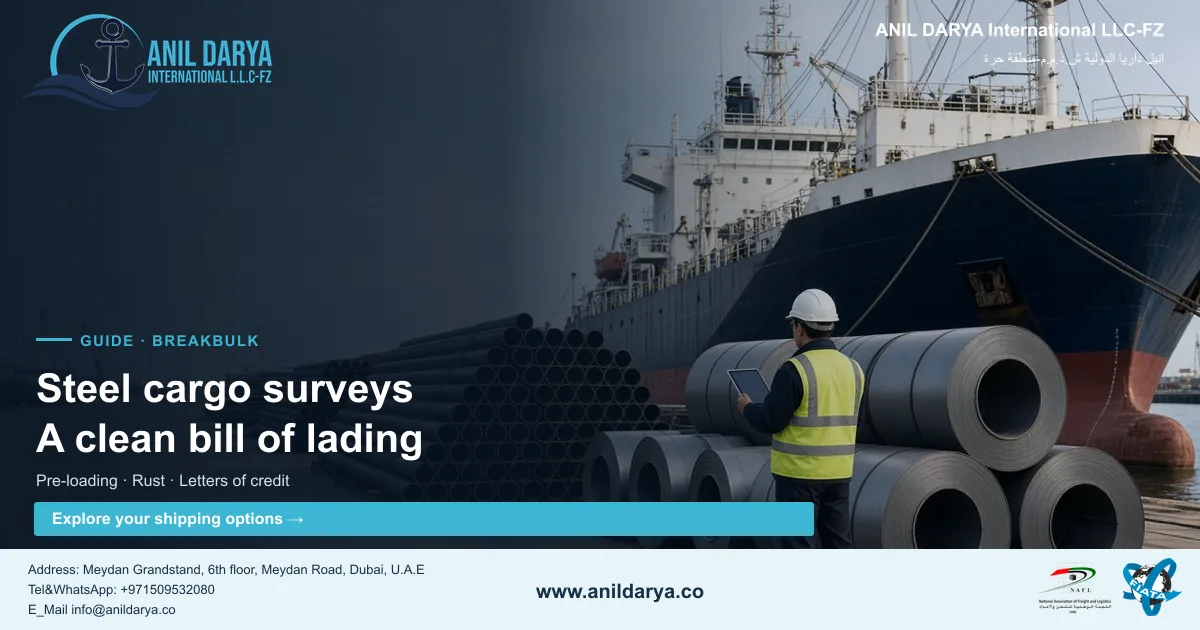
Steel products are one of the most common breakbulk cargoes, and they are also among the most likely to be disputed on arrival. Steel can rust when stored in the open or exposed to moisture, and receivers often claim for rust damage. To protect themselves, shipowners frequently arrange a pre-loading steel survey. For shippers, the result of that survey can decide whether they receive a clean bill of lading, which matters a lot when payment is by letter of credit.
What a pre-loading steel survey is
Before loading, a surveyor appointed by the shipowner or its P&I club inspects the steel. The survey records the condition of the cargo, including the degree of rust (often described as light, moderate or severe), pitting, packing damage and any wet or contaminated items, with photos. The report is shared before bills of lading are issued, so the master can decide what remarks the bill should carry.
Which products are usually surveyed
P&I club Gard, in guidance updated in August 2025, recommends pre-loading surveys mainly for finished steel products, such as:
- hot-rolled and cold-rolled steel in coils, packs or bundles;
- galvanised and stainless steel, and tin plate;
- wire rods and steel pipes;
- structural steel, including rebars, beams, angles, channels, sections and rails.
Gard does not normally recommend surveys for semi-finished or low-value products that will be processed further, such as billets, blooms, slabs, scrap and pig iron.
From survey to bill of lading
The bill of lading is a receipt that describes the apparent order and condition of the cargo. Receivers rely on that description when they claim. If the survey finds rust or damage, the master may add a remark to the bill, for example that the steel is "partially rusted, refer to survey report". That is called a claused bill.
The letter of credit problem
Many letters of credit require a clean bill of lading. A claused bill can lead the bank to refuse documents, which delays payment. Shippers sometimes ask the carrier to issue a clean bill in exchange for a letter of indemnity. P&I club Skuld warns that, under English law, issuing a clean bill for cargo known to be damaged can amount to misrepresentation, and such an indemnity may not be enforceable. Gard also notes that P&I cover can be prejudiced if the bill is known to misdescribe the cargo's condition. In practice, carriers are increasingly unwilling to issue clean bills for visibly rusted steel.
What shippers can do
- Store steel properly before shipment. Keep it covered, off the ground and away from standing water.
- Check packing and wrapping. Damaged wrapping and broken bands are often recorded as remarks.
- Ask for the survey schedule. Have your own representative present during the survey, if possible.
- Discuss remark wording early. Agree with the buyer and the bank what wording is acceptable, before the cargo arrives at the port.
- Review your letter of credit terms. If light surface rust is normal for the product, discuss with the buyer whether the credit should allow suitable wording.
- Arrange your own pre-shipment inspection if you expect a dispute, so you have independent evidence of condition.
This article gives general information only. The legal position depends on the contract, the governing law and the specific facts, so take legal advice for any dispute.
Shipping steel or other breakbulk cargo? ANIL DARYA handles breakbulk shipments of steel products and project cargo through UAE ports. See our break bulk service or send your cargo list, packing details and loading port through our freight rate inquiry.
Sources:
- Gard, Alexandra Chatzimichailoglou, "Pre-load steel surveys – recommended only for finished steel products", published 10 November 2021, updated 19 August 2025. https://gard.no/insights/pre-load-steel-surveys-recommended-only-for-finished-steel-products
- Skuld, "Rusted steel cargo: How to avoid receivers' claims", 28 March 2014. https://www.skuld.com/topics/cargo/steel/rusted-steel-cargo-how-to-avoid-receivers-claims/