|
Getting your Trinity Audio player ready...
|
Revolutionary Step Toward Zero-Emission Sea Freight
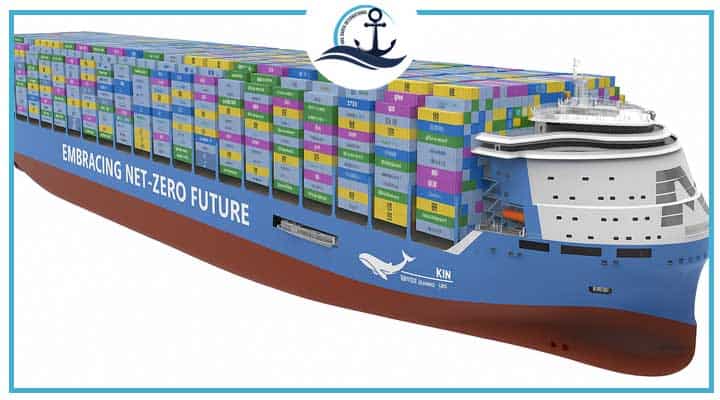
China has revealed plans to develop a 14,000 TEU containership powered by a thorium-based molten salt reactor (MSR), marking one of the most ambitious advances yet in nuclear-powered commercial shipping.
The project, led by China State Shipbuilding Corporation (CSSC) in partnership with the China National Nuclear Corporation (CNNC), aims to deliver zero-emission propulsion capable of long-range endurance without reliance on traditional bunker fuels.
According to design details from the Shanghai Merchant Ship Design & Research Institute (SDARI), the vessel will feature a closed-loop thorium MSR system generating several hundred megawatts of thermal energy — a scale sufficient to power one of the world’s largest sea freight vessels with continuous efficiency and no greenhouse gas output.
Technical Design and Development Timeline
The design phase is expected to conclude by 2026, with construction likely to start later in the decade at a CSSC-affiliated yard. If completed, it would become the world’s first thorium-powered container ship, showcasing China’s rapid progress in applying advanced nuclear energy systems to maritime propulsion.
Unlike conventional uranium reactors, thorium MSRs operate at lower pressure and higher thermal efficiency, reducing risks of meltdown and improving energy conversion rates — making them particularly suitable for long-haul sea freight operations.
Regulatory and Safety Considerations
Chinese authorities have already approved initial safety assessments for the project, while international oversight remains a challenge. The International Maritime Organization (IMO) has yet to establish specific operational guidelines for nuclear-powered merchant ships, though the initiative is expected to accelerate discussions on future maritime energy frameworks.
This project builds upon China’s broader nuclear research breakthroughs. On November 1, the Chinese Academy of Sciences confirmed the successful thorium-to-uranium fuel conversion in a 2-MW molten salt reactor, proving the viability of thorium fuel in commercial-scale applications — a key step toward future clean propulsion for global trade.
Building on Previous Maritime Innovation
At the previous Marintec China exhibition, Jiangnan Shipyard unveiled a conceptual design for a 24,000 TEU thorium-MSR-powered vessel, signaling China’s early ambitions in this field.
The new 14,000 TEU prototype aims to move from theoretical modeling to practical application — potentially reshaping the future of container shipping, reducing operational emissions to zero, and setting a precedent for the next generation of sustainable sea freight technologies.
Global Implications for Sea Freight and Decarbonisation
If successful, China’s thorium ship could redefine energy use in global maritime logistics.
By integrating nuclear power into containerised sea freight, the country is positioning itself at the forefront of next-generation green propulsion, offering a long-term alternative to LNG, biofuels, and ammonia.
Maritime experts note that while the concept faces regulatory and geopolitical challenges, its technical potential to eliminate emissions, refueling stops, and fuel cost volatility could make it a turning point in shipping decarbonisation.