|
Getting your Trinity Audio player ready...
|
Taiwan Tightens Controls on High-Risk Vessels as Maritime Security Measures Rise
Taiwan has announced a sweeping upgrade to its ship regulation framework, introducing fines of up to NT$10 million ($318,000) for vessels entering its waters with inaccurate identification.
Authorities say the goal is to reduce the growing risks posed by “high-risk tonnage,” particularly aging ships with poor records or unclear ownership.
Under the amended Law of Ships, all vessels calling Taiwan must keep their AIS (Automatic Identification System) switched on and transmit correct, unaltered data — a measure directly tied to maritime safety and Sea Freight governance across the region.
Mandatory Vessel Markings and Logbook Requirements
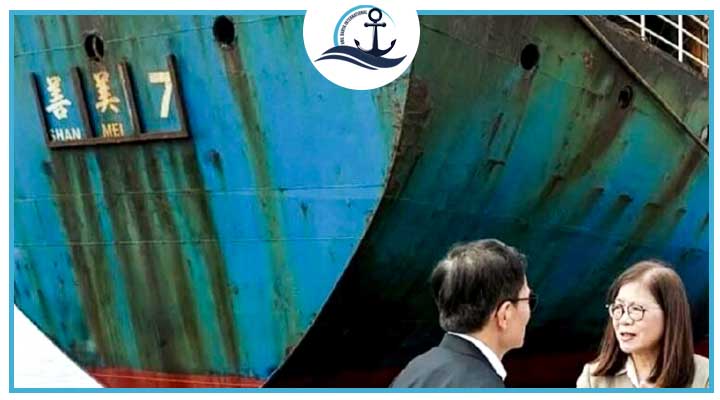
The new rules also require all ships to display visible vessel names and IMO numbers unless exempt under SOLAS. Any tampering, concealment, or modification of markings will trigger penalties.
Ships above 150 GT must maintain an accurate navigation logbook while in Taiwan’s territorial or restricted waters, reinforcing accountability standards similar to those used in global sea freight compliance frameworks.
Stricter Insurance and Financial Oversight
As part of the escalating safety push, Taiwan recently implemented a shipowner liability insurance review system. Every vessel must show valid P&I coverage from:
- An International Group P&I Club member
- A Taiwanese insurer
- A BBB-rated international underwriter
Authorities report 96.7% compliance, while non-compliant vessels may be asked to lodge deposits — or face port entry denial.
Targeting Aging Fleets and Opaque Ownership Structures
Taipei has been tightening maritime controls for several years, citing incidents involving old merchant vessels damaging subsea internet cables.
Key measures include:
- Enhanced vetting of ships with opaque ownership
- Expanded customs authority to seize vessels falsifying AIS data
- Prioritized inspection of ships over 20 years of age
- Higher scrutiny of vessels flagged under registries on international watchlists
These policies reflect Taiwan’s broader strategy to shield its critical maritime infrastructure, a move closely monitored by global sea freight stakeholders.
Longer Clearance Process for High-Risk Flags
Since April, vessels from Mainland China, Hong Kong, and Macau — as well as those flagged under Cameroon, Tanzania, Mongolia, Togo, and Sierra Leone — must undergo extended application procedures that may take up to a month.
Security officials will screen documentation before approval, signifying a major tightening of Taiwan’s port-control regime.
Cable Damage Leads to Coast Guard Rapid-Response Protocol
Taiwan’s coast guard is now authorized to board and inspect vessels entering within 24 nautical miles of the coast if they are near subsea cable routes.
The system was implemented after several ships were caught dragging anchors and damaging infrastructure.
One notable vessel, the Hongtai 68, became infamous as the “thousand faces ship” for swapping steel nameplates to operate under different identities — a loophole that Taiwan is now aggressively targeting.
Rising Security Concerns Amid PLA Use of Civilian Ships
In parallel to regulatory tightening, U.S. research groups report China is increasingly repurposing civilian cargo ships and roro vessels for amphibious military drills near Taiwan.
Exercises conducted this summer saw PLA-utilized merchant vessels landing equipment directly onto beaches, bypassing ports — a development that significantly increases tensions and underscores why Taiwan is accelerating maritime oversight.