|
Getting your Trinity Audio player ready...
|
Alpha Bulkers signs for 11 containerships in China
Greek owner Alpha Bulkers, traditionally known for its supramax-to-capesize dry bulk fleet, is making a decisive move into the container shipping sector, confirming an 11-ship newbuilding programme across major Chinese shipyards. The shift mirrors a growing trend among Greek owners diversifying beyond bulk carriers to capture long-term charter opportunities in container trades and global sea freight markets.
Newbuilds Span 1,900 to 4,500 TEU Classes
According to industry reports, Alpha Bulkers has committed to a diversified series of conventionally fueled containerships—a size range popular for flexible deployment on regional and global routes.
The breakdown includes:
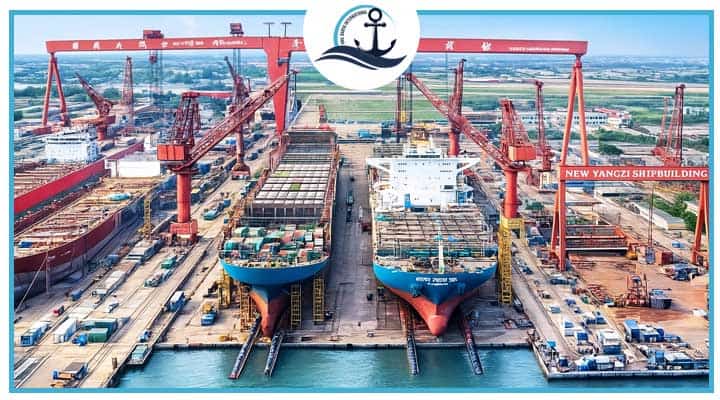
- Three 1,900 TEU vessels expected to be built by Yangzijiang Shipbuilding, likely at its Chang Bo facility, which specialises in smaller tonnage.
- Four 3,100 TEU vessels secured at COSCO Shipping Heavy Industry Guangdong.
- Four 4,500 TEU ships ordered from Yantai CIMC Raffles, forming the largest segment of the programme.
These vessel classes remain highly attractive in charter markets due to their strong versatility and performance across feeder, regional, and mid-size trades.
Part of a Larger Greek Shift Toward Containers
Alpha Bulkers now joins a broader movement of Greek owners—including Latsco Shipping (via Marla), Minerva Marine, and Transocean Maritime—who are expanding into the containership sector. Many non-operating shipowners are targeting the same core sizes (1,900–4,500 TEU), drawn by stable charter demand and resilient earnings in major sea freight corridors.
Estimated Contract Values
While no official pricing has been disclosed, current market benchmarks for China-built conventional tonnage indicate:
- 1,900 TEU: approx. $30 million
- 3,100 TEU: approx. $45 million
- 4,500 TEU: $57–59 million
These figures place the total programme well above $500 million, reflecting sustained confidence in medium-term container market dynamics.