|
Getting your Trinity Audio player ready...
|
Maersk Completes First Red Sea Transit in Nearly Two Years
Maersk has carried out its first vessel transit through the Red Sea in almost two years, marking a cautious but symbolically important step toward restoring one of the world’s most critical sea freight corridors.
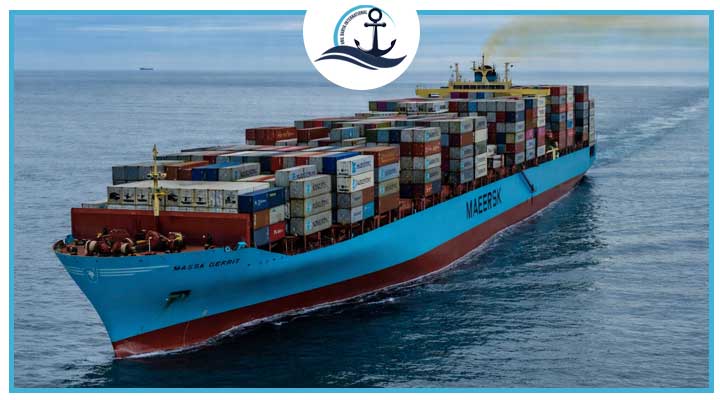
In the early hours of December 19, the Singapore-flagged containership Maersk Sebarok successfully transited the Bab el-Mandeb Strait and entered the Red Sea under heightened security conditions. The 2007-built vessel, with a capacity of 6,500 teu, is currently deployed on Maersk’s Middle East Container Line (MECL) service.
High-Security Transit Signals Cautious Progress
Maersk confirmed that the transit was conducted under what it described as the “highest possible safety measures,” reflecting the carrier’s continued concern over regional security risks. While the passage represents a notable milestone, the company stressed that it does not yet signal a full return of its East–West network to the trans-Suez route.
Instead, Maersk characterised the voyage as a measured, step-by-step approach to evaluating whether conditions are sufficiently stable for broader resumption of Red Sea operations—an artery that plays a vital role in global sea freight flows between Asia, Europe and the Middle East.
No Immediate Network Shift Back to Suez
Despite completing the transit, Maersk made clear that it has no immediate plans to reinstate regular sailings through the Suez Canal. The carrier said any further movements would depend on whether security thresholds continue to be met over time.
“Assuming that security conditions remain acceptable, we are considering continuing our gradual approach toward resuming navigation along the East–West corridor via the Red Sea and the Suez Canal,” the company said in a statement.
This cautious stance reflects Maersk’s broader risk management strategy, following nearly two years of rerouting vessels around the Cape of Good Hope—a move that significantly lengthened transit times, tightened vessel supply and reshaped global sea freight capacity dynamics.
Limited Follow-Up Sailings Under Review
Maersk indicated that the Maersk Sebarok transit represents the first phase of a possible return to the corridor. This may be followed by a limited number of additional trans-Suez sailings, although no firm schedules have yet been confirmed.
For cargo owners and logistics providers, the move will be closely watched as a potential early indicator of easing pressure on long-haul sea freight routes, particularly for Asia–Europe trades that have faced elevated costs and prolonged transit times since the Red Sea disruptions began.
Strategic Importance for Global Sea Freight
The Bab el-Mandeb Strait and the Red Sea remain among the most strategically sensitive chokepoints in global shipping. Any sustained return of major liners such as Maersk could gradually restore confidence in the corridor, though most operators continue to prioritise crew safety and operational certainty over speed.
For now, Maersk’s first Red Sea transit in nearly two years stands as a carefully controlled test case, rather than a full reopening of one of the world’s most important sea freight arteries.