|
Getting your Trinity Audio player ready...
|
Diana Shipping Secures Forward Charter for Kamsarmax Bulker
Greek dry bulk owner Diana Shipping has fixed forward employment for one of its kamsarmax vessels, extending a steady run of period charter deals as owners seek earnings visibility in the global sea freight market.
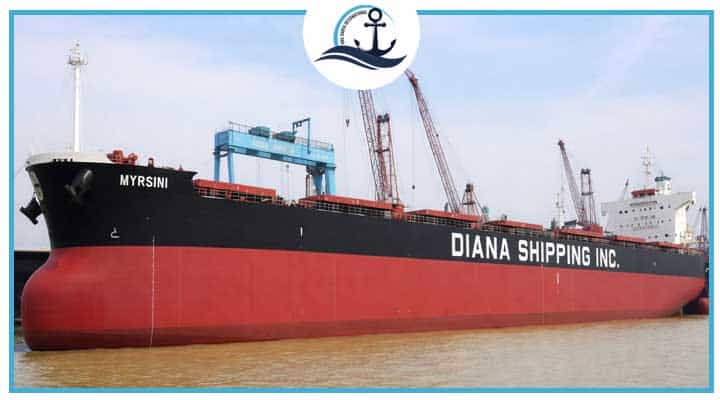
The US-listed company confirmed it has agreed a new time charter for the 2010-built Myrsini with Paralos Shipping, at a daily rate of $13,500, less a 5% commission. The contract is set to run until December 20, 2026, with options extending through to February 20, 2027, and is scheduled to commence on January 1, 2026.
Improved Forward Coverage
The 82,117 dwt kamsarmax is currently trading under an existing charter to Cargill at $13,000 per day, less a 4.75% commission. The new fixture therefore represents a modest improvement in earnings while locking in longer-term employment.
Diana Shipping said it expects the charter to generate approximately $4.71m in gross revenue over the minimum contracted period, strengthening cash flow visibility amid fluctuating dry bulk freight rates.
Positioning for Sea Freight Volatility
Forward fixtures of this nature reflect a broader strategy among dry bulk owners to balance spot exposure with period cover, particularly as sea freight demand continues to be influenced by geopolitics, commodity flows and shifting trade patterns.
Kamsarmax bulkers remain a core segment of the dry bulk fleet, widely used for transporting coal, grain and minor bulks across long-haul and regional sea freight routes. Securing employment into 2026 and beyond allows owners like Diana to mitigate short-term market volatility while maintaining operational flexibility.
Part of a Broader Chartering Push
The latest deal builds on recent chartering activity by the Athens-based owner. Earlier this month, Diana Shipping secured multi-year employment for two ultramax vessels at slightly improved rates compared with their previous charters, followed by the fixing of one of its capesize bulkers.
Diana Shipping currently controls a fleet of 36 dry bulk vessels, spanning supramax, ultramax, kamsarmax and capesize segments, and continues to actively manage its exposure across spot and period markets in response to evolving global sea freight conditions.