|
Getting your Trinity Audio player ready...
|
CMA CGM Sends ULCV Through Suez Canal as 2026 Traffic Return is Predicted
The Suez Canal Authority (SCA) has marked what it describes as a turning point in the recovery of global sea freight flows, as ultra-large containerships made their first transits through the canal in nearly two years. On December 23, vessels operated by CMA CGM and Maersk passed through the waterway, signalling renewed confidence among major liners after prolonged disruption linked to Red Sea security risks.
A Milestone for Ultra-Large Vessel Transits
Admiral Ossama Rabiee, Chairman and Managing Director of the Suez Canal Authority, described the latest transits as a “new phase” in the return of container shipping to the canal. He said the passage of ultra-large vessels would have a “profound impact” on restoring volumes and urged other shipping lines to begin adjusting schedules back toward the Suez route.
According to Rabiee, the authority expects a gradual recovery in traffic during 2025, with a return to near-normal levels forecast for the second half of 2026, assuming security conditions continue to stabilise.
CMA CGM Leads the Way
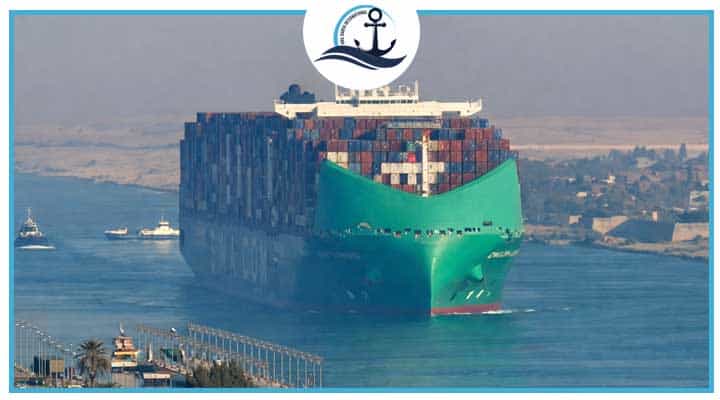
The most notable southbound transit was completed by the 23,000-teu CMA CGM Jacques Saadé, which sailed from Tangier Med on December 16 and is bound for Port Klang, Malaysia. The vessel operates on one of CMA CGM’s flagship Asia–Europe services and is the largest containership to transit the Suez Canal since 2023.
In the northbound convoy, the 15,536-teu CMA CGM Adonis transited the canal while sailing from Singapore toward the Eastern Mediterranean. The SCA reported the vessel was carrying approximately 154,000 tonnes of cargo, underlining the scale of sea freight volumes now cautiously returning to the corridor.
CMA CGM has not confirmed whether these sailings mark a full reinstatement of schedules or form part of a broader testing phase, although the carrier has already announced that one of its India–US routes will resume regular Suez transits from January.
Maersk Tests the Route
Also in the northbound convoy was the 6,648-teu Maersk Sebarok, sailing from Oman to the US East Coast. Maersk previously confirmed the vessel was its first Red Sea and Suez transit since December 2023, but stressed that the voyage was a trial and not yet indicative of a wider network shift.
The Danish carrier reiterated that crew safety remains its top priority and that any broader return to the Suez Canal will depend on sustained improvements in regional security.
Suez Canal Pushes for Sea Freight Comeback
The Suez Canal Authority has been actively engaging with major shipping lines to accelerate the return of traffic, offering temporary toll incentives and enhanced operational support. The canal remains a critical artery for global sea freight, particularly on Asia–Europe and Asia–US East Coast trades, and is a vital source of foreign currency for Egypt.
While operators remain cautious, the reappearance of ultra-large containerships suggests that confidence in the Suez route is slowly rebuilding, setting the stage for a broader recovery in containerised sea freight flows over the next 18 to 24 months.