|
Getting your Trinity Audio player ready...
|
Comparing Dubai’s Main Ports: Best Options for DG, Bulk & Break Bulk Shippers
Dubai has firmly positioned itself as one of the world’s most influential maritime gateways, linking Asia, Europe, Africa, and the wider Middle East through a highly integrated logistics ecosystem. While most ports in the emirate can handle standard containerized cargo efficiently, the situation changes significantly when it comes to dangerous goods (DG), bulk, and break bulk shipments.
This Dubai port comparison is designed for shippers whose origin or destination is Dubai and who need to make informed decisions between the emirate’s main ports. With particular focus on Jebel Ali vs Sharjah port, the article evaluates how each option fits into modern UAE shipping strategies for regulated and non-standard cargo.
Rather than presenting a simple ranking, the analysis reflects how ports are used in real operational scenarios, where cargo characteristics, compliance requirements, and downstream logistics matter more than theoretical capacity.
Why Port Choice in Dubai Matters for Specialized Cargo
Specialized cargo introduces layers of operational and regulatory complexity that do not exist in standard container shipping. DG cargo must meet strict international and local regulations, bulk shipments depend on berth availability and discharge efficiency, and break bulk cargo requires physical space and coordinated planning.
In practice, port selection in Dubai is influenced by factors such as:
- Availability of dedicated DG handling and storage areas
- Access to bulk and break bulk berths
- Integration with free zones and inland transport corridors
- Alignment with shipping line and customs requirements
These considerations explain why experienced shippers view Dubai’s ports as a networked ecosystem rather than interchangeable gateways.
Jebel Ali Port: Dubai’s Benchmark for Complex Cargo
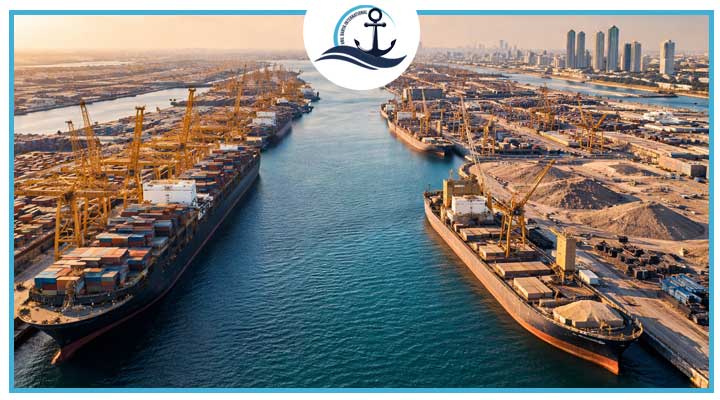
Jebel Ali Port is widely regarded as the most advanced port in the Middle East and remains the first choice for many shippers handling DG, bulk, and break bulk cargo. Its scale is matched by a mature operational framework that supports complex cargo movements from planning to execution.
Key strengths of Jebel Ali include:
- Advanced DG compliance infrastructure aligned with the IMDG Code
- Extensive yard space for bulk and project cargo staging
- Strong integration with JAFZA and multimodal transport routes
For DG cargo in particular, Jebel Ali’s controlled storage areas, segregation protocols, and trained handling teams significantly reduce the risk of cargo rejection or delay. Many shippers combine sea operations at Jebel Ali with Multimodal DG Transport in Dubai: Sea, Air & Land Explained, creating compliant door-to-door solutions.
Sharjah Ports: Cost-Effective and Cargo-Specific Alternatives
Sharjah’s ports, including Hamriyah Port and Port Khalid, play a complementary role within Dubai-centric supply chains. While they are often compared directly with Jebel Ali, their operational value lies in serving specific cargo profiles rather than acting as universal substitutes.
These ports are frequently selected for shipments where proximity to industrial zones, reduced congestion, and faster vessel turnaround outweigh the need for advanced compliance infrastructure. For conventional bulk commodities or break bulk cargo with standard handling requirements, Sharjah ports can offer measurable cost efficiencies and predictable operations.
When evaluating Jebel Ali vs Sharjah port, the decision often depends on how regulated the cargo is and whether it requires controlled storage, segregation, or extended dwell time. For many regional distribution flows, Sharjah ports function as a practical extension of Dubai’s broader logistics network rather than a competing alternative.
Bulk Cargo Handling Across Dubai Ports
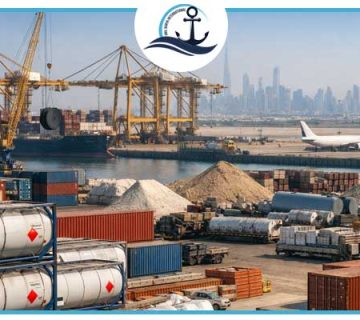
Bulk cargo movements are highly sensitive to berth availability, discharge rates, and yard logistics, making port selection a critical operational decision. Dubai’s ports support bulk cargo in different ways, depending on shipment volume, commodity type, and final destination.
Jebel Ali’s primary advantage is its ability to handle large and mixed bulk volumes within a single integrated port environment. This makes it suitable for traders managing multiple suppliers or combining bulk cargo with containerized or project shipments. The port’s scale allows bulk operations to proceed without creating bottlenecks elsewhere in the terminal.
Sharjah ports, by contrast, often deliver efficiency through simplicity. For single-commodity bulk shipments destined for nearby industrial users, their layout and access routes can reduce turnaround time and handling complexity. Exporters serving regional and African markets frequently align bulk routing decisions with broader trade flows such as those discussed in Dubai–Africa Bulk Shipping Demand Is Surging: What Exporters Must Know.
Break Bulk & Project Cargo: Space, Planning, and Experience
Within any meaningful Dubai port comparison, break bulk and project cargo clearly demonstrate why operational capability matters more than headline capacity. These cargo types are non-standard by nature, often oversized or heavy, and require precise coordination between terminals, surveyors, and inland transport providers.
Jebel Ali Port has become the primary gateway for large-scale project cargo in UAE shipping because it supports structured, long-term planning rather than ad-hoc handling. Extensive marshalling yards, heavy-lift cranes, and engineered workflows allow project shipments to be staged, inspected, and executed in alignment with installation schedules. For cargo originating from or destined to Dubai, this significantly reduces handling risk and schedule uncertainty.
Sharjah ports provide a different but equally valuable role within the same logistics ecosystem. For regional projects or smaller break bulk shipments that do not require extensive staging or specialized lifting, Sharjah can offer faster access and more predictable turnaround. In these cases, proximity and operational simplicity outweigh scale.
Experienced shippers recognize that break bulk port selection in Dubai is rarely binary. Instead, it reflects a balance between cargo dimensions, handling tolerances, project timelines, and the operational environment best suited to support them.
DG Cargo: Compliance as the Deciding Factor
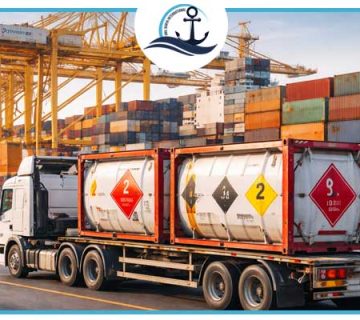
In UAE shipping, dangerous goods represent the cargo category where port selection has the greatest regulatory and operational impact. DG shipments are governed by layered compliance frameworks involving shipping lines, port authorities, customs, and safety agencies. As a result, compliance is not an administrative formality but the defining factor in routing decisions.
Jebel Ali Port consistently emerges as the preferred option for hazardous cargo in Dubai port comparison analyses because compliance is embedded into its operational structure. Alignment with the IMDG Code, controlled DG zones, segregation protocols, and trained response teams significantly reduce the risk of cargo rejection or detention. For shippers moving regulated cargo from or to Dubai, this maturity translates directly into reliability and cost predictability.
Sharjah ports can handle limited categories of DG cargo, but access is often subject to strict conditions related to cargo class, volume, and storage duration. This makes early-stage compliance assessment essential. Even minor discrepancies in classification, packaging, or documentation can result in delays when port-level DG capabilities are more restrictive.
In this environment, freight forwarders play a critical advisory role. By evaluating DG cargo characteristics during the planning stage, companies such as Anil Darya Shipping help shippers align their routing strategy with ports that fully support the regulatory profile of the shipment. Common compliance pitfalls are also discussed in Why Shipping Lines Reject Hazardous Cargo: Common Causes & Solutions.
Integrating Sea, Air, and Land from Dubai Ports
One of Dubai’s strongest competitive advantages is its ability to integrate maritime ports with air cargo hubs and regional road networks. This is particularly valuable for DG and time-sensitive shipments.
Multimodal solutions often involve:
- Sea freight into Jebel Ali
- Controlled transfer to air cargo for urgent delivery
- Road distribution across the GCC
Such workflows are increasingly used by shippers seeking faster transit without full air freight costs, as explored in Sea–Air Freight from Dubai: Faster Transit Without Full Air Costs.
The Role of Freight Forwarders in Port Selection
Selecting the right port in Dubai is rarely a standalone decision. It requires coordination with shipping lines, understanding terminal constraints, and navigating regulatory nuances.
Anil Darya Shipping supports exporters and importers by analyzing cargo characteristics, compliance requirements, and destination priorities before recommending the most suitable port. This advisory-driven approach is particularly valuable for DG, bulk, and break bulk cargo, where incorrect port selection can result in delays, penalties, or forced rerouting.
Frequently Asked Questions (FAQ)
Jebel Ali offers broader IMDG acceptance and more advanced DG infrastructure, making it better suited for complex hazardous shipments.
Often yes for bulk and conventional break bulk cargo, though lower port costs may be offset by compliance limitations for DG cargo.
Jebel Ali is generally preferred for large or complex project cargo, while Sharjah ports can be effective for smaller regional projects.
Yes. Dubai supports integrated sea–air–land movements, particularly through Jebel Ali under controlled compliance frameworks.
For specialized cargo, working with an experienced provider like Anil Darya Shipping helps ensure compliance, efficiency, and cost control.