|
Getting your Trinity Audio player ready...
|
Black Sea Shipping Suffers Deadly Weekend Attacks
Commercial shipping in the Black Sea experienced one of its most severe periods of violence since the start of the conflict, with both Russian and Ukrainian military operations affecting merchant vessels and maritime infrastructure over the weekend.
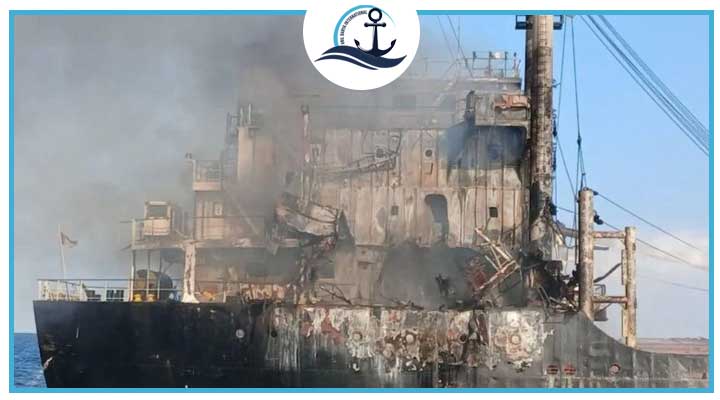
The most serious incident occurred on Sunday when the Turkish-owned, Guinea-Bissau-flagged Golden Leo was struck by three Russian cruise missiles after departing the Odesa region carrying a grain cargo.
According to Ukraine's Ministry of Transport, 10 crew members were confirmed dead, while eight people were rescued, including two who sustained injuries. The vessel's 18-person crew included Syrian and Indian seafarers, as well as a Ukrainian maritime pilot, who was among those killed. Search and rescue operations were continuing following the attack.
Merchant Vessels Targeted Near Odesa
The attack on Golden Leo followed another strike involving the Antigua and Barbuda-flagged supramax Venturo operating off the coast of Odesa.
Ukraine's Navy reported that the bulker lost propulsion after being hit, forcing naval personnel to evacuate 17 Filipino seafarers while military activity continued in the surrounding waters. One person was killed and three others were reported injured during the incident.
Earlier in the weekend, port infrastructure in Mykolaiv was also damaged after Shahed-type drones struck the area. Ukrainian authorities said three foreign-flagged commercial vessels sustained damage, while two Ukrainian nationals aboard one of the ships lost their lives.
Ukrainian Drone Operations Expand Across the Black Sea
Military activity was not limited to attacks on Ukrainian ports and merchant vessels.
Ukraine's Unmanned Systems Forces said they had targeted 12 Russian-linked vessels in the Black Sea on Friday. According to the military, the targets included nine dry cargo ships, one oil tanker, one gas carrier and one tug.
Ukrainian drone commander Robert Brovdi later stated that an additional 13 vessels were targeted overnight across the Black Sea and the Sea of Azov. The reported targets included eight cargo vessels, one oil tanker, one LNG carrier, one tug and two floating cranes.
Energy Shipping Also Comes Under Pressure
The weekend's escalation also affected energy export infrastructure.
Three Suezmax tankers operated by Dynacom, Nordic American and Alafouzos were reportedly attacked by drones while alongside the Caspian Pipeline Consortium (CPC) terminal during separate incidents on Friday and Sunday.
The attacks highlight the growing exposure of energy shipping assets operating in and around the region, adding further uncertainty for tanker operators and charterers.
Refining Capacity Faces Continued Disruption
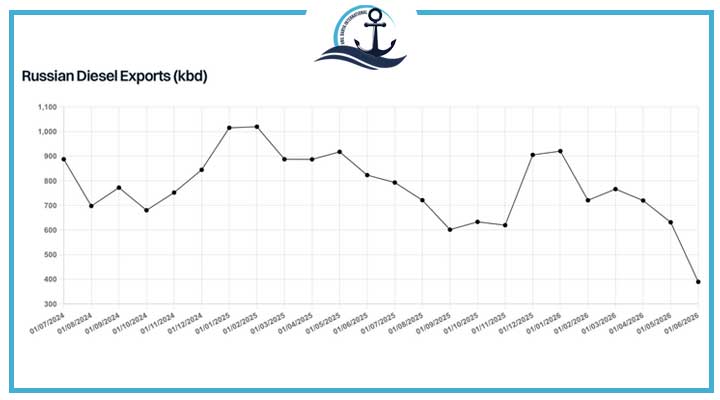
Shipbroker Gibson said Ukraine's broader campaign of long-range strikes is increasingly affecting Russia's energy sector beyond the battlefield.
According to the company, drone attacks have reportedly disabled more than 40% of Russia's refining capacity, with each of the country's 11 largest refineries having been struck at least once.
The disruption has created an unusual situation for one of the world's largest petroleum exporters, with Russia expected to import fuel from neighbouring countries and other international suppliers to help meet domestic demand.
Black Sea Security Risks Continue to Affect Sea Freight
The latest incidents underline the continuing security challenges facing commercial shipping in the Black Sea. Grain carriers, bulk vessels, tankers and port infrastructure have all been affected by the recent escalation, increasing operational risks for shipowners, charterers and cargo interests.
As military activity continues across the region, shipping companies are expected to monitor navigation advisories, port conditions and security updates closely when planning vessel movements through the Black Sea.