|
Getting your Trinity Audio player ready...
|
Drone Warfare Expands Shipping Risk Zones
Long-range drone attacks are reshaping global maritime risk by extending security threats beyond traditional conflict areas, forcing shipowners and insurers to reassess routes once considered relatively safe.
The latest reported strike on a vessel in the Caspian Sea highlights how modern unmanned systems are expanding the geographic scope of maritime security risks.
Caspian Sea No Longer Seen as a Safe Route
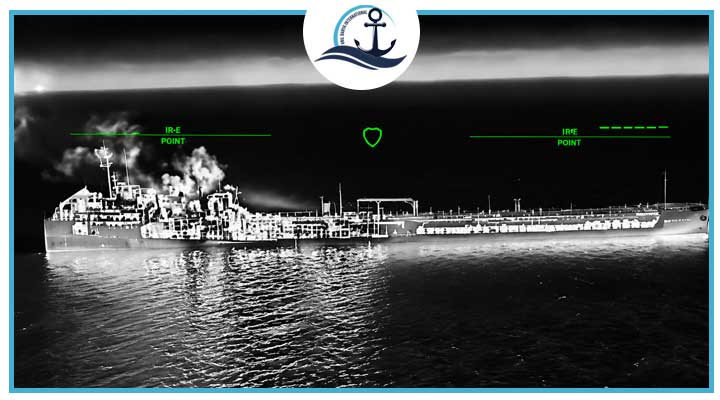
According to reports, a Ukrainian long-range drone targeted an Iranian cargo vessel in the Caspian Sea over the weekend. The vessel was allegedly transporting military cargo destined for Russia.
The incident reportedly killed one seafarer and injured several others. If confirmed, it would represent one of the most significant security incidents in the inland sea since the conflict began.
For years, the Caspian route formed part of the International North–South Transport Corridor (INSTC), linking Iranian ports with Russia through waters that were largely insulated from naval conflict.
Conflict Zones Become Increasingly Connected
The reported attack suggests that military supply chains, rather than geography alone, are becoming a key factor in determining maritime risk.
Iran condemned the incident and described it as an act of aggression, while Ukraine maintained that the vessel was a legitimate military logistics target.
Shipping analysts at SEB said the latest developments increase the exposure of commercial vessels connected to Russian and Iranian supply chains.
Fewer Alternative Routes for Cargo
Unlike other maritime corridors, the Caspian Sea offers few practical alternatives for international cargo movements.
Should security concerns increase further, cargo may have to move through rail networks in Azerbaijan and Kazakhstan or via land routes across the Caucasus, where transport capacity and political considerations could limit flexibility.
The shrinking number of secure transport corridors also reduces operators' ability to reroute cargo during periods of heightened risk.
Insurers Face a Changing Risk Landscape
The Caspian Sea now joins several strategic waterways that are receiving increased attention from marine insurers, including the Black Sea, Red Sea, Bab el-Mandeb Strait, Strait of Hormuz and the eastern Mediterranean.
Each additional hotspot makes risk assessment more complex for shipowners, charterers and underwriters involved in international trade.
Low-Cost Drones Continue to Challenge Shipping
Recent conflicts have demonstrated how relatively inexpensive drones can threaten merchant vessels operating far from conventional battlefields.
The growing use of unmanned systems in the Black Sea, Red Sea and Strait of Hormuz has shown that shipping companies may face expanding security challenges even in regions previously regarded as low risk.
As these technologies continue to evolve, maritime security planning is increasingly becoming an essential part of global logistics and Sea Freight operations.