|
Getting your Trinity Audio player ready...
|
Jeddah Port Delays Disrupt Project Cargo Schedules
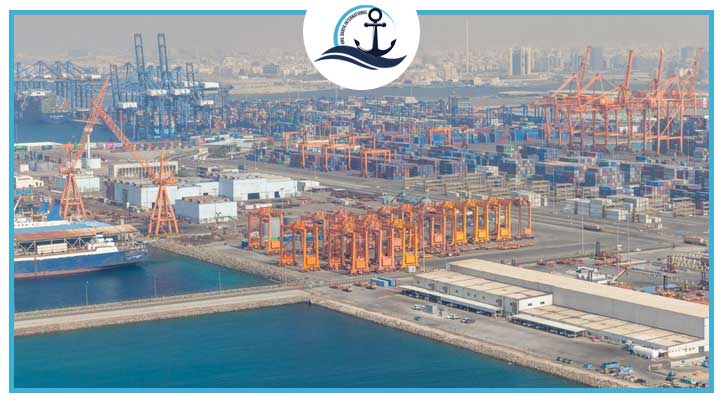
Project cargo shipments through Saudi Arabia are facing severe delays as congestion at the Port of Jeddah pushes vessel berthing waits to as long as 10 days, while trucks face delays of up to three days before entering the port.
The disruption reflects growing pressure on Saudi Arabia’s land bridge and Red Sea logistics network as cargo flows adjust to restrictions affecting the Strait of Hormuz and continued security risks in the Red Sea. For project, heavy-lift and breakbulk cargo, the resulting capacity constraints are creating longer lead times and higher transport costs across the Gulf.
Jeddah Port Waiting Times Reach 10 Days
Berthing delays for project cargo vessels at Jeddah reached approximately 10 days in mid-August, as increased cargo volumes placed additional pressure on port infrastructure.
Congestion is also affecting landside operations. Trucks were reportedly waiting as long as three days to enter Jeddah, while long queues have developed outside port gates.
Part of the pressure comes from cargo moving through alternative Saudi routes. Shipments can move south through the Suez Canal to King Abdullah Port, north of Jeddah, before being transported by road across Saudi Arabia to Dammam.
From Dammam, cargo can then be transferred to smaller vessels serving destinations including Dubai and Bahrain.
However, the amount of cargo that can be shifted from ocean transport to road remains limited, particularly for oversized and heavy project shipments.
Saudi Land Bridge Faces Capacity Constraints
Alternative infrastructure currently provides only partial relief.
A rail connection towards Jordan is absorbing some cargo pressure, but an intermodal rail connection linking Saudi Arabia's eastern and western regions is not expected until after 2030.
This leaves road transport playing a significant role in maintaining cargo flows between the Red Sea and Persian Gulf coasts.
The challenge is particularly significant for project cargo and heavy-lift shipments, which require specialised vehicles, equipment and drivers and cannot always be transferred easily between transport modes.
Hormuz Disruption Reshapes Gulf Project Cargo Routes
Project cargo supply chains have undergone significant changes since disruption around the Strait of Hormuz intensified.
Some project shipments were moved from the UAE by road towards Jeddah and Yemen after access through Hormuz became restricted.
The sudden shift placed considerable pressure on regional trucking capacity.
Shippers reported waits of up to two weeks for trucks, while road freight from Dubai to other Gulf Cooperation Council countries increased sharply. Rates reportedly rose 25% in June, with some shipments facing additional costs of as much as $20,000 per TEU.
Specialised heavy-haul transportation faced additional pressure from driver shortages, contributing to reported rate increases of another 20% to 30%.
Capacity constraints were particularly visible across important logistics corridors in Saudi Arabia, Oman and Fujairah.
Red Sea Risks Limit Alternative Ocean Routes
Security conditions in the Red Sea have further complicated the situation.
Many multipurpose carriers began rerouting vessels around the Cape of Good Hope after Red Sea attacks intensified in 2023. Other operators serving the Middle East increasingly relied on Persian Gulf ports.
Subsequent disruption around Hormuz meant that both major maritime options faced operational challenges.
Some carriers continue to move cargo from the Mediterranean through the Suez Canal into the northern Red Sea. However, many shipowners still consider the route too risky.
Suez Canal transits have fallen by approximately half since the beginning of the Red Sea attacks, according to Egypt's State Information Service.
Project carriers have been particularly exposed because they frequently transport time-sensitive and high-value cargo between the Persian Gulf, India and Europe.
Project Cargo Demand Remains Strong Under Saudi Vision 2030
Despite the disruption, underlying regional demand for specialised cargo transportation remains significant.
Persian Gulf ports have traditionally served as important gateways for steel, machinery, construction equipment and other project cargoes moving into and out of the Middle East.
Saudi Arabia's Vision 2030 investment programme is also supporting substantial demand for project, heavy-lift and breakbulk cargo.
However, recent disruption has affected import volumes.
Monthly imports of selected project cargoes into Saudi Arabia fell 64% year-on-year in March, while comparable shipments into the UAE declined 58%, according to S&P Global data. Iraq's general cargo imports fell 95% over the same period.
These declines demonstrate the scale of disruption affecting specialised cargo flows across the region.
Bab el-Mandeb Threats Add Further Uncertainty
Security risks around the Bab el-Mandeb Strait remain another challenge.
Through August, Houthi threats against Saudi-linked shipping and ports have continued, adding uncertainty for vessels using southern Red Sea routes.
Negotiations concerning the reopening of the Strait of Hormuz are also continuing with mediation by Oman.
Even if conditions improve, however, industry sources do not expect all vessel segments to return simultaneously.
Tankers are expected to return first, followed by project carriers, with container and roll-on/roll-off vessels potentially returning later.
This means project cargo supply chains could continue experiencing delays even after broader maritime conditions begin to improve.
Fujairah and Jeddah Expand for Future Cargo Demand
Despite current congestion and geopolitical disruption, port investment across the region is continuing.
DP World is developing two new terminals in Fujairah, including a container terminal and another facility serving general cargo and breakbulk shipments. The facilities are expected to become operational in the second half of 2028.
Saudi Arabia is also expanding Jeddah and Yanbu as two Red Sea logistics hubs that could provide alternatives to Jebel Ali on the Persian Gulf.
These projects demonstrate expectations that long-term cargo demand will remain strong despite current disruption.
For project cargo shippers, however, the immediate challenge remains maintaining reliable schedules while dealing with congested ports, limited heavy-haul trucking capacity and security risks affecting both Hormuz and Red Sea routes.