|
Getting your Trinity Audio player ready...
|
Bab el-Mandeb Faces Renewed Shipping Risks as Regional Tensions Escalate
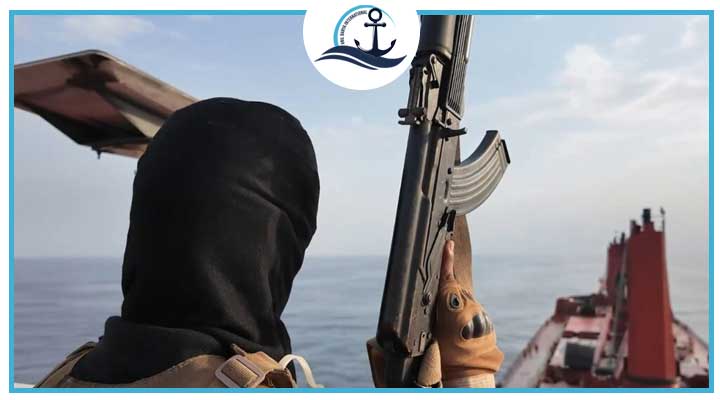
Fresh concerns have emerged over security in the Red Sea after reports indicated that Iran has asked Yemen's Houthi movement to prepare for potential action against shipping in the Bab el-Mandeb Strait if the United States launches further attacks on Iranian power infrastructure.
According to Reuters, three sources familiar with the discussions said the proposal has been reviewed by Iran's leadership and communicated to the Houthis. A separate source close to the Yemeni group claimed that missiles and drones have already been positioned near the strategic waterway, with operations awaiting a final decision.
Bab el-Mandeb Becomes More Critical as Hormuz Remains Disrupted
The reported developments come at a time when the Strait of Hormuz is no longer functioning as the primary export route for Gulf energy shipments. This has increased the strategic importance of the Bab el-Mandeb Strait, which now serves as the main maritime outlet for oil exported via Saudi Arabia's East-West Pipeline.
Saudi crude transported from Gulf production fields to Yanbu on the Red Sea must pass through Bab el-Mandeb before reaching customers in Asian markets. Any disruption to navigation in the strait would therefore affect one of the region's most important alternative export corridors.
Saudi Export Capacity Depends on Red Sea Access
Shipping analysts at Scandinavian bank SEB estimate that Saudi Arabia is currently exporting between 4 million and 4.5 million barrels per day through Yanbu, placing throughput close to the practical capacity of the East-West Pipeline.
SEB noted that the Red Sea has effectively become the relief route for Gulf exports while Hormuz remains inaccessible. If shipping through Bab el-Mandeb were disrupted at the same time, Saudi Arabia would lose its principal eastbound maritime outlet despite maintaining pipeline access to the Red Sea.
Although exports could still move through the Suez Canal and the SUMED Pipeline into the Mediterranean, the process would become considerably more complex.
Alternative Routes Would Increase Operational Complexity
Large crude carriers would face significant operational constraints if Bab el-Mandeb became unavailable.
Fully laden Very Large Crude Carriers (VLCCs) cannot transit the Suez Canal, requiring cargoes to be partially discharged at Ain Sukhna, transported through the SUMED Pipeline and reloaded at Sidi Kerir before continuing their voyage. This additional handling would increase voyage complexity and reduce overall transport efficiency.
SEB said tanker freight rates could initially rise as longer sailing distances, additional operational requirements and reduced effective vessel availability are reflected in the market.
Over a longer period, however, the bank indicated that sustained disruption could eventually reduce oil demand if higher energy prices curb consumption. Combined with continued fleet growth, lower cargo volumes could later place downward pressure on tanker freight rates.
Impact Extends Beyond Energy Cargoes
The implications of any disruption would not be limited to oil tankers. Bab el-Mandeb forms the southern entrance to the Red Sea and the Suez Canal, making it a critical route for container shipping, dry bulk commodities and other Sea Freight moving between Asia and Europe.
During the Houthi attacks that began in late 2023, many major shipping lines diverted vessels around the Cape of Good Hope instead of using the Red Sea. Those diversions extended voyage distances by thousands of miles while increasing fuel consumption, insurance costs and transit times.
A renewed security crisis could once again force carriers to rely on the Cape route, delaying any broader return of commercial traffic to the Red Sea.
Regional Security Situation Remains Fragile
The latest reports also coincide with the apparent collapse of a four-year truce between Saudi Arabia and the Houthis. The Yemeni group has accused Riyadh of attacking an airport under its control and has reportedly launched missile attacks against the kingdom.
With tensions rising across several strategic maritime corridors, shipping companies, tanker operators and cargo owners are expected to continue closely monitoring security developments affecting both the Strait of Hormuz and Bab el-Mandeb. Any further deterioration could have consequences for voyage planning, routing decisions and international supply chains connecting Asia, the Middle East and Europe.