
What is a modular refinery and how are the modules shipped?
A plain explanation of modular refineries: skid-mounted process units, published capacity ranges, why they ship as skids and how the modules are shipped by sea.
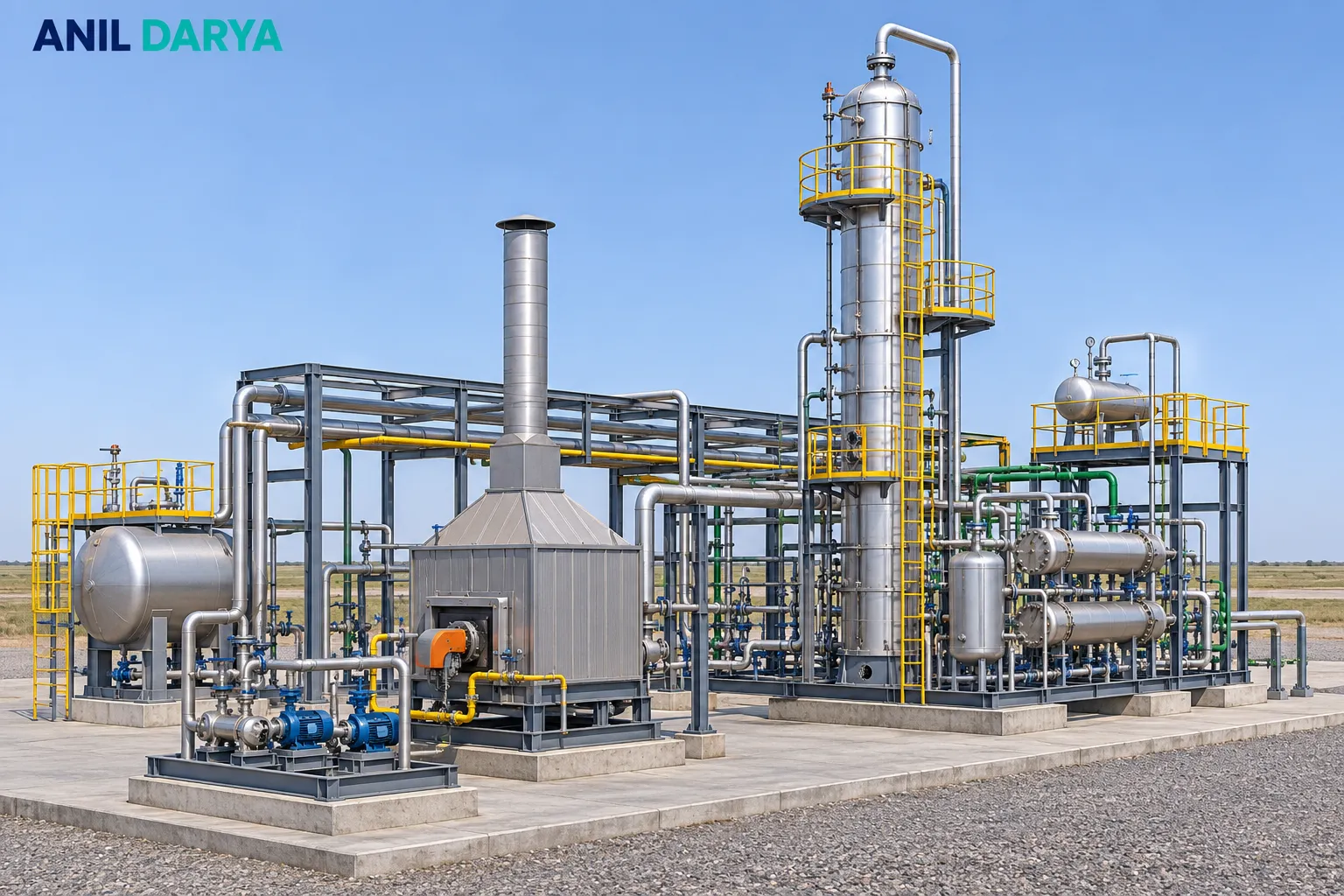
What is a modular refinery? It is a small refinery built from process units that are fabricated and tested in a workshop on steel skids, then shipped to site and connected together. Instead of building columns, heaters and piping piece by piece in the field, the maker delivers finished blocks. This article explains how the concept works, the capacity ranges makers publish, why the units ship as skids, and how they actually travel by sea. We are a freight forwarder, so the last part is where we add most.
What is a modular refinery, in plain terms
Start with the skid. A modular process skid is a process system held in a steel frame so it can be moved. Typical contents are pumps, valves, piping, heat exchangers, instruments and controls. Several skids can be joined to make a larger system or a portable plant.
A modular refinery is a set of these skids, each doing one part of the refining process, linked by interconnecting piping on site. R.C. Costello, a US engineering firm that designs mini refineries, says many of its plants use a skid-mounted modular structure installed on concrete slab foundations. A Nigerian legal and policy review describes modular units as fully assembled and tested before overseas shipment.
The appeal is control. Wikipedia's summary of skids lists the main points: units are built away from the plant in controlled conditions, they can be acceptance-tested before shipping, and civil work on site runs at the same time as fabrication.
Common configurations
Modular refineries are mostly simple plants. Costello shows three basic layouts:
| Configuration | Main units | What it adds |
|---|---|---|
| Topping refinery | Fired heater and atmospheric distillation | Splits crude into straight-run cuts such as naphtha, kerosene, diesel and residue |
| Topping plus hydrotreating | Naphtha hydrotreater, diesel hydrotreater, hydrogen plant | Removes sulphur to meet product specifications |
| Topping plus reforming | Naphtha reformer feeding hydrogen to the hydrotreaters | Upgrades naphtha and supplies hydrogen without a separate hydrogen plant |
Larger modular projects go further. Ventech Engineers built a 20,000 b/d skid-mounted refinery that included a distillation unit, naphtha hydrotreater, catalytic reformer, isomerization unit, two demercaptanization units, a gas plant and utilities, according to the Oil & Gas Journal.
What size is a modular refinery?
Makers publish ranges, and they differ. These are the figures we found on the makers' and project pages themselves:
| Source | Published capacity |
|---|---|
| R.C. Costello (designer) | Modular mini refineries from 2,000 to 20,000 barrels per day |
| PCC, Tianjin (maker) | Mini refinery about 200 to 500 bpd; modular refinery about 1,000 to 10,000 bpd; hydroskimming about 15,000 to 25,000 bpd |
| Ventech Engineers (project) | 20,000 b/d, built in 26 process modules |
| Waltersmith, Ibigwe, Nigeria (project) | 5,000 b/d first phase, commissioned on 24 November 2020 |
| Edo Refinery, Nigeria (project) | 6,000 bpd, granted an operating licence in 2024 |
For comparison, the Phoenix Equipment listing page for used conventional refineries shows plants from 29,000 to 220,000 BPD. So modular plants sit at the small end of refining. They suit remote sites, local crude and local fuel markets.
Why the units ship as skids
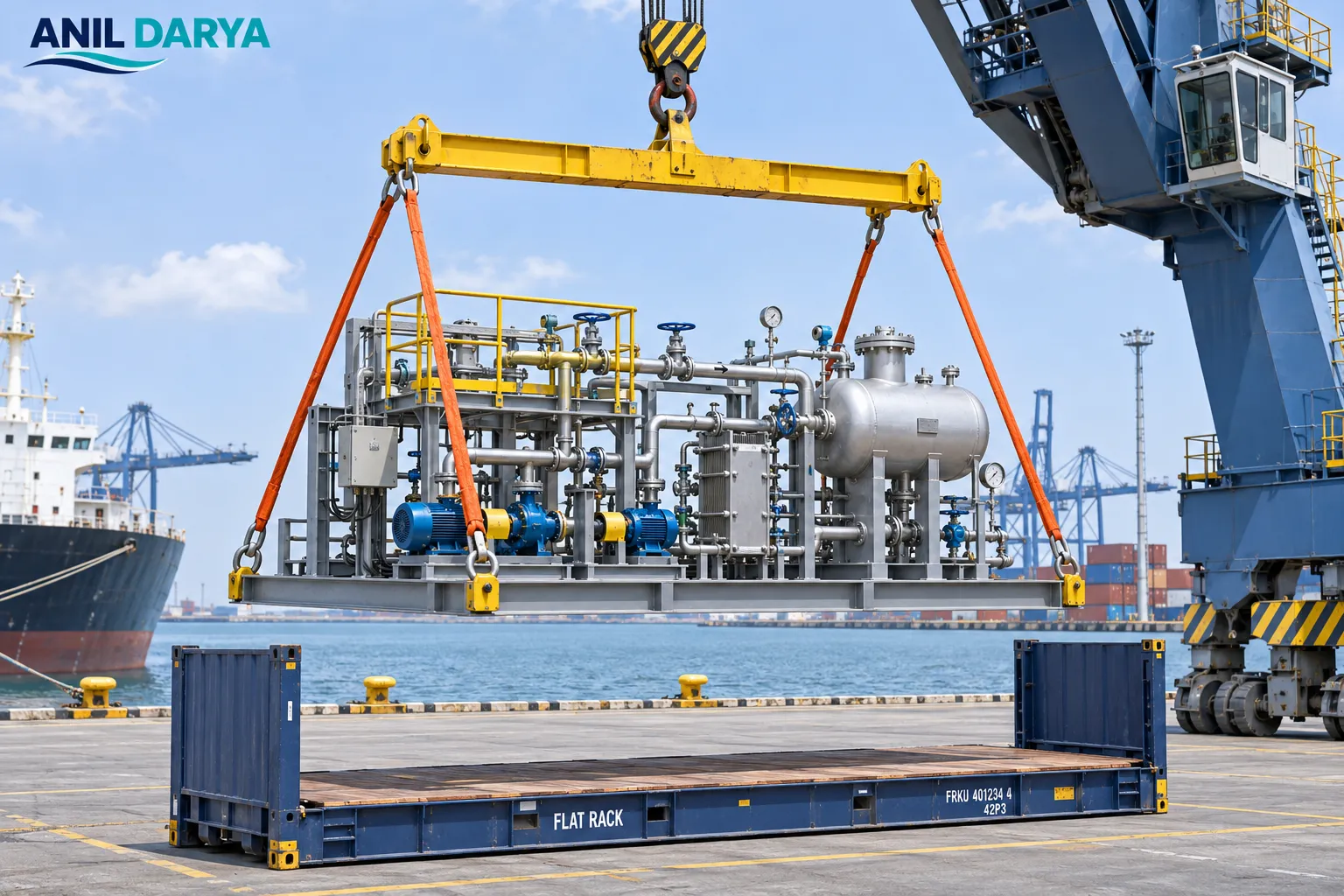
The skid is a transport decision as much as a design one. PRIOS, writing about modular process plants in general, says module size and weight must fit practical transport limits: vehicle capacity, axle loads, bridge clearances, turning radii, port access and local rules. It adds that truckable modules carry lifting and transport points, temporary transport bracing, instrument protection and preservation for transport and storage.
Not everything fits. PCC notes that on the largest units some components, such as crude distillation columns, are too large to mount on skids and ship separately. Wikipedia makes the same point: skids are not suitable when individual process parts are too big for the frame. PRIOS also warns that modular is not automatically cheaper, since module steel, transport frames and heavy lifting add cost.
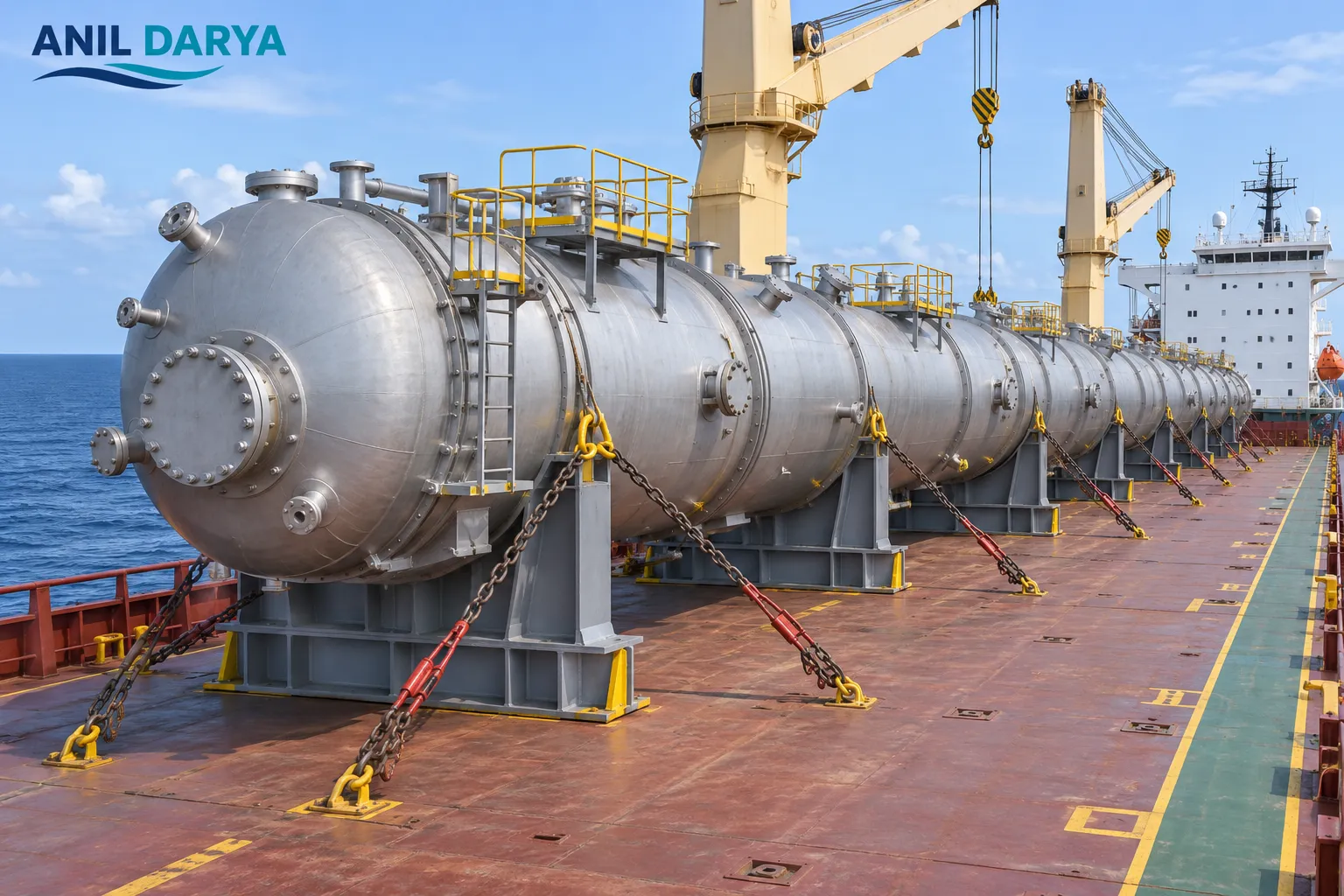
So a typical delivery is a mix. Most of the plant arrives as skids. The column and perhaps a heater or a large drum arrive as separate break bulk pieces.
What is shipped when a modular refinery is delivered
From a shipping point of view, a modular refinery breaks down into four kinds of cargo:
| Cargo | Usual mode | Shipping notes |
|---|---|---|
| Instruments, valves, cables, spares, catalyst drums | Standard containers | Catalysts and chemicals may need dangerous goods declarations |
| Skids within flat rack limits | Flat rack or open top containers | Width, height and weight against the flat rack's limits decide this |
| Larger skids, pipe rack sections, heater parts | Break bulk on a multipurpose ship | Need marked lifting points and centre of gravity |
| Distillation column, large modules | Break bulk or heavy lift ship | Saddles, lift plan and seafastening design |
The Ventech project shows how a full plant moves. The 20,000 b/d refinery was built in Pasadena, Texas, in 26 process modules. The modules shipped between August and January by sea to Mersin in Turkey, then went overland to the refinery site.
Flat rack limits are explained in flat rack and open top containers for OOG cargo. Larger single pieces go as break bulk, and the module side is covered on our page. Catalysts and chemicals that travel with the plant fall under dangerous goods shipping.
Calculations and approvals
Each heavy piece needs a lift plan, a stowage position and lashing calculations. Our specialists prepare and issue these. Where an insurer or charterer requires it, an independent marine warranty surveyor approves them; DNV-ST-N001 is a common standard for marine warranty work. On board, stowage and securing follow the IMO Code of Safe Practice for Cargo Stowage and Securing (CSS Code).
Modular refineries in Nigeria
Nigeria is the market most people mean when they search for this. Waltersmith commissioned the first 5,000 b/d phase of its modular refinery at Ibigwe, Imo State, on 24 November 2020. The Oil & Gas Journal reports it produces diesel, naphtha, high-pour fuel oil and kerosine. The 6,000 bpd Edo Refinery received its operating licence from the Nigerian Midstream and Downstream Petroleum Regulatory Authority (NMDPRA) in 2024.
Licensing comes in stages. A Financial Nigeria review of the 2015 guidelines lists a licence to establish, a licence to construct and a licence to operate. Shipping usually starts after the licence to construct, once the design is fixed and the skids are being built.
For the port side, see our pages on shipping to Nigeria and Lagos port. Skids built in the UAE can go out of Dubai. Skids built in another country can go cross-trade direct to Nigeria without touching the UAE. In that case the shipping line's B/L is released through us as agent for the line, and clearance is agreed with the consignee's broker before shipping.
Can a modular refinery be moved later?
Often yes, if it was designed for it. PRIOS says plants can be relocated if they were built with transportable modules and demountable interfaces, and that converting a conventional design afterwards usually adds cost. Buyers of second-hand units should read , and full plant moves are covered on .
Where we come in
We do not design or build refineries. We plan and book the sea freight for the skids, columns and containers, with multipurpose and heavy lift lines, surveyors and local contractors. Our refinery work includes a refinery project in Iraq and the shipment of parts for a refinery project in Saudi Arabia. For the wider oil and gas side, see .
[AMIR-FACT: whether we have shipped skid-mounted process units or modular plant packages, with vessel type used and destination region, without client names]
Free consultation on shipping a modular refinery
If you are buying or building a modular refinery, send us the skid list with dimensions and weights, the general arrangement drawing, the column and heater data, the catalyst and chemical list, the fabrication location, the site and the target dates.
Our specialists reply by email straight away, and we arrange a meeting in person when it helps. We send back a shipping plan for the package. It shows which skids fit containers or flat racks, which go break bulk, and whether the column needs a heavy lift ship. It lists the lift planning and surveys needed, the documents for export and import, and the points to check at the discharge port. It also suggests a route: into the UAE, out of Dubai, or cross-trade straight to your country. The review is free.
You can also use the freight inquiry form or contact the team.
Frequently asked questions
What is a modular refinery?
A small refinery made of skid-mounted process units, built and tested in a workshop, shipped to site and connected with interconnecting piping on concrete foundations.
What is the capacity of a modular refinery?
Published ranges run from a few hundred barrels per day for mini units to about 20,000 to 25,000 barrels per day. Ventech built a 20,000 b/d skid-mounted plant in 26 modules.
How much does a modular refinery cost?
We do not publish figures. Cost depends on capacity, configuration (topping only, or with hydrotreating and reforming), product specifications and site. PRIOS notes modular is not automatically cheaper than conventional construction.
What is the difference between a modular and a conventional refinery?
A conventional refinery is built in the field piece by piece. A modular one is built mostly in a workshop as skids or modules and assembled on site. Modular plants are usually much smaller.
Are there modular refineries in Nigeria?
Yes. Waltersmith's 5,000 b/d first phase at Ibigwe started in November 2020, and the 6,000 bpd Edo Refinery received its operating licence in 2024.
What is a topping refinery?
The simplest configuration: a fired heater and an atmospheric distillation column that split crude into straight-run products. Many modular refineries start as topping plants.
How are modular refinery skids shipped?
Small skids go in containers or on flat racks. Larger skids and the distillation column go break bulk or on a heavy lift ship. Each piece needs lifting points, a centre of gravity mark and preservation for the voyage.
Sources
- R.C. Costello: mini refineries
- R.C. Costello: understanding modular mini refineries
- PCC: modular refinery
- Oil & Gas Journal: skid-mounted units refinery project (Ventech)
- Oil & Gas Journal: Waltersmith commissions phase 1
- The Energy Year: NMDPRA approves licence for Edo Refinery
- Financial Nigeria: modular refineries review
- Wikipedia: modular process skid
- PRIOS: the advantages of modular process plants
- Phoenix Equipment: refineries for sale
- DNV: DNV-ST-N001 Marine operations and marine warranty
- IMO: Cargoes (CSS Code and cargo securing)
- SPE Journal of Petroleum Technology: first modules arrive at Woodfibre LNG site
Reviewed: 16 November 2026