
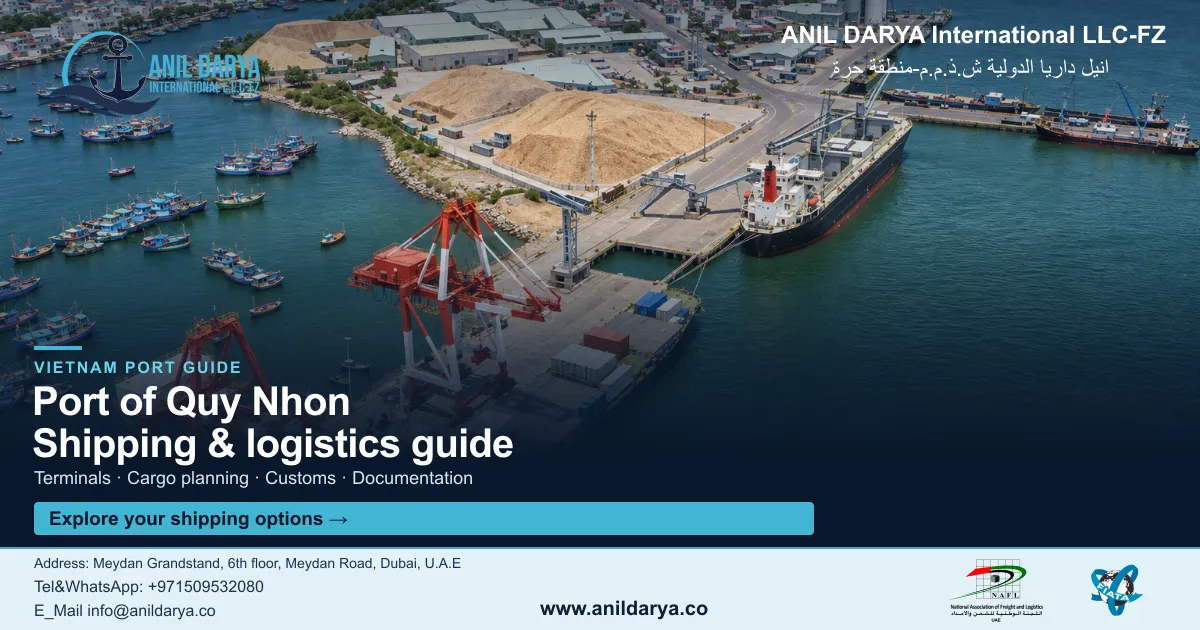
Quy Nhon port shipping is the sea route into the south central coast of Vietnam and the Central Highlands behind it. The port has five berths, handled about 11.8 million tonnes and 174,603 TEU in 2024, and takes ships of up to 30,000 DWT fully loaded. This guide explains what the port can and cannot take, the cargo it handles, and how we plan shipping from Dubai to Quy Nhon and shipping from Quy Nhon to Dubai, with the customs steps at each end.
Quy Nhon port shipping: key facts at a glance
| Item | Detail |
|---|---|
| Operator | Quy Nhon Port Joint Stock Company (stock code QNP) |
| Main shareholder | Vietnam Maritime Corporation (VIMC), 75.01% |
| Location | Eastern tip of Quy Nhon, Gia Lai province (Binh Dinh province until 1 July 2025) |
| UN/LOCODE | VNUIH |
| Founded | 19 January 1976; joint stock company since 2013 |
| Port class | Class I national general port |
| Berths | 5 berths, 170 m to 480 m long, 8.9 m to 12.5 m alongside |
| Ship size | Up to 30,000 DWT fully loaded, up to 50,000 DWT with reduced load |
| Port area | 31 ha |
| Storage | 30,732 m² warehouses (incl. 1,971 m² CFS), 201,000 m² yards (incl. 68,000 m² for containers), 12,000 m³ tanks, 9,000 t silos |
| Cargo handled in 2024 | 11,768,779 tonnes, of which 8,467,554 tonnes export |
| Containers in 2024 | 174,603 TEU (63,632 import, 84,710 export, 26,261 domestic) |
| Ship calls in 2024 | 1,329 |
| Main export cargo | Wood chips, wood pellets, tapioca chips |
| Main import cargo | Fertiliser, steel coil, animal feed |
| Duty on UAE-origin goods | UAE-Vietnam CEPA preferential rates since 3 February 2026 |
| Usual UAE load port | Jebel Ali Port in Dubai |
Where is Quy Nhon port and which region does it serve?
Quy Nhon port sits in Hai Cang, at the eastern tip of Quy Nhon on the south central coast. Since 1 July 2025 the former Binh Dinh province has been merged into Gia Lai province, and Quy Nhon is the administrative centre of the new province. You will see both names on documents for a while, so do not be surprised if an older supplier or carrier record still says Binh Dinh.
National Route 19 starts at the port and runs west into the Central Highlands, then on to the Le Thanh border gate with Cambodia, 247 km from the port. It also links to National Route 1, the north-south highway. Phu Cat airport is about 30 km away, and Dieu Tri railway station on the north-south line is about 15 km away.
For a consignee or shipper in this region, Quy Nhon avoids a long truck run to or from Ho Chi Minh City or Da Nang.
What are the berths and limits at Quy Nhon port?
The port is one compact terminal with five berths, run by one company. The Vietnam Seaports Association lists them as follows.
| Berth | Length | Depth alongside | Cargo |
|---|---|---|---|
| No. 1 | 480 m | 12.2 m | General cargo, containers |
| No. 2 | 174 m | 8.9 m | General cargo |
| No. 3 | 174 m | 8.9 m | General cargo |
| No. 4 | 170 m | 11.8 m | General cargo, containers |
| No. 5 | 200 m | 12.5 m | General cargo, containers |
The port company says its channel and berths take ships of up to 30,000 DWT fully loaded and up to 50,000 DWT when lightly loaded. Other listings quote higher one-off figures for ships that called with reduced cargo. For planning, use the company's 30,000 DWT figure and confirm any larger ship with the carrier.
This limit matters more than anything else on the page. The large container ships that sail from Jebel Ali do not call here. Cargo from the UAE reaches Quy Nhon on a regional feeder after transshipment at a hub, and breakbulk comes on general cargo ships sized for these berths.
Is the port getting deeper?
Yes, on paper. In May 2025 the province asked for about US$292.3 million of investment to 2030, including a channel upgrade so that ships of up to 50,000 DWT can use Quy Nhon fully loaded. The same plan targets 17.65 to 18.75 million tonnes and 0.32 to 0.37 million TEU a year for the province's ports by 2030. The port company has also listed two new multipurpose cranes for Berth 1 and plans an inland container depot. Until the channel work is finished, plan on today's limits.
Equipment and storage
| Equipment or area | What the port lists |
|---|---|
| Mobile harbour cranes | 2, 63 t and 100 t |
| Truck cranes | 2 of 100 t |
| Container quay and yard cranes | 7 QC/RTG cranes, 36 to 40 t |
| Container forklifts | 6, 10 to 45 t |
| Trucks and tractor units | 100, 14 to 40 t |
| Weighbridges | 5, 80 to 100 t |
| Reefer yard | 1,811 m² with 54 power sockets and a 650 kVA standby generator |
| Liquid and dry bulk storage | 12,000 m³ of tanks and 9,000 t of silos |
A practical point: 54 reefer sockets is a small reefer yard. If you ship chilled or frozen goods, ask the carrier to confirm plug-in space for the arrival date.
What cargo moves through Quy Nhon port?
Quy Nhon is an export port first. In 2024 it shipped out about 8.5 million tonnes and brought in about 1.4 million tonnes, with about 1.9 million tonnes of domestic cargo. Wood chips alone were 5,480,952 tonnes and wood pellets 1,634,581 tonnes. On the import side the largest items were fertiliser (247,449 tonnes), steel coil (154,049 tonnes) and animal feed (49,800 tonnes).
| Cargo type | How it usually moves into Quy Nhon | What to plan |
|---|---|---|
| General goods, spare parts, consumer goods | FCL or LCL via a hub on a feeder | Transshipment port, free time, delivery truck |
| Plastics, polymers, chemicals in bags | FCL on pallets | HS code, CEPA origin for UAE-made goods |
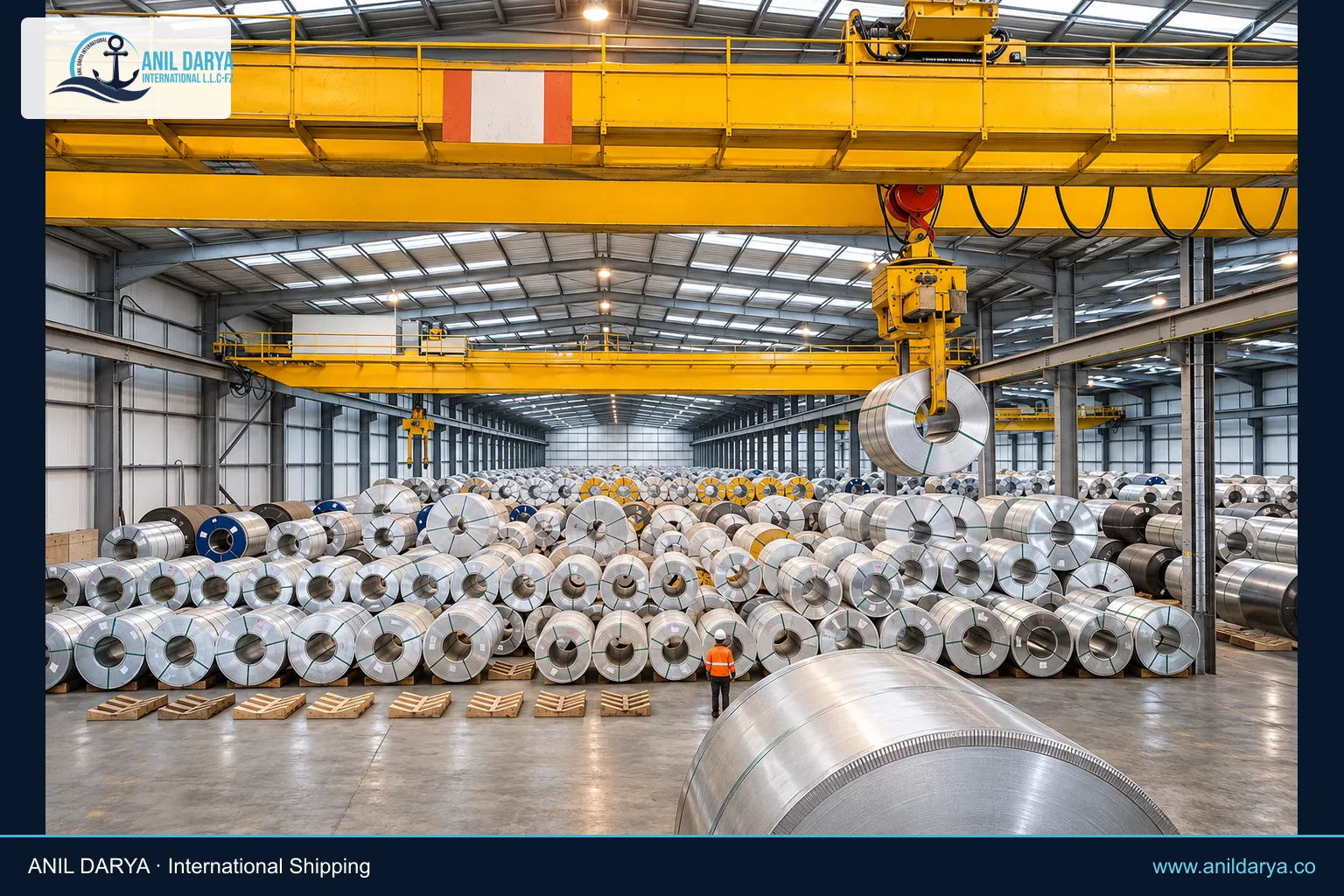
| Steel coil and steel products | Breakbulk on general cargo ships, or containers | Berth depth, lifting gear, coil saddles |
| Fertiliser and other dry bulk | Bulk ships within the port's size limit | Ship size, discharge rate, storage |
| Machinery and project pieces | Flat rack via a hub, or breakbulk | Weights against the 63 t and 100 t cranes, road route |
| Dangerous goods | IMDG containers on feeders that accept the class | Carrier and port acceptance, Vietnamese permits |
| Chilled and frozen food | Reefer containers | Plug space, quarantine and food checks |
Shipping from Dubai to Quy Nhon: FCL and LCL
Most cargo from the UAE moves in containers from Jebel Ali to a transshipment hub, then on a feeder to Quy Nhon. Port listings describe about ten regular routes from Quy Nhon to destinations such as Singapore, Thailand, Japan, Manila and Hong Kong, so your routing will usually pass through one of those regional hubs.
- FCL (full container load). You book a whole 20ft or 40ft box. It is discharged at Quy Nhon and trucked to the consignee once cleared. It suits larger orders and goods that should not be handled with other cargo.
- LCL (less than container load). Your cargo shares a box. Few consolidators run a direct box from the Gulf to a port this size, so LCL is often unpacked at a larger Vietnamese port and moved on, or reaches Quy Nhon only after a second consolidation.
For LCL, ask where the box will actually be unpacked before you book. If it is Ho Chi Minh City or Da Nang, you will pay for a domestic leg, and FCL to Quy Nhon may cost less in total. Our article on FCL vs LCL costs walks through the maths, and our sea freight service covers the container types we book from Jebel Ali.
[AMIR-FACT: our real Jebel Ali to Quy Nhon routing (carrier, transshipment hub) and typical port-to-port days on this lane]
Breakbulk, project cargo and bulk to Quy Nhon
Quy Nhon was built for general and bulk cargo, so breakbulk is normal here. Berths 1, 4 and 5 have 11.8 m to 12.5 m of water, and the port lists two mobile harbour cranes of 63 t and 100 t plus two 100 t truck cranes. The open yards cover 201,000 m², which leaves room to lay down steel and project pieces.
Use this decision rule for heavy pieces:
- If the piece fits a 40ft flat rack by size and weight, book a container service to a hub and a feeder to Quy Nhon. You get more sailings.
- If it does not, look for a general cargo or multipurpose ship that calls Quy Nhon directly and fits the 30,000 DWT limit.
- If a single lift is heavier than the port's cranes can handle, the ship's own gear has to do it. Check the ship's crane capacity before booking.
- Check the road. National Route 19 climbs into the highlands, so oversized pieces for inland sites need a route survey and permits.
For bulk cargo such as fertiliser, the ship size and the discharge plan come first. A bulk carrier that is efficient on the Gulf leg may be too large for Quy Nhon fully loaded. Our bulk cargo shipping service and our break bulk and project cargo service plan the UAE end and the vessel choice. Our guide to flat rack, open top and breakbulk cargo explains the equipment options.
Dangerous goods to Quy Nhon port
Dangerous goods move under the IMDG Code. Quy Nhon is reached on feeders, so two carriers may need to accept the cargo: the line from Jebel Ali and the feeder operator from the hub. Each one, and the port, decides which classes it takes and how long a DG box may stay in the yard. We confirm acceptance for every leg before you commit.
What you need for any DG booking:
- UN number, proper shipping name, class and packing group.
- A Safety Data Sheet for each product.
- A signed Dangerous Goods Declaration.
- UN-approved packaging, labels and container placards.
- Any Vietnamese import permit for the chemical, arranged by the consignee.
A useful check: if the transshipment hub has its own DG rules on dwell time, a missed feeder connection can put your box over the limit. Ask for the feeder schedule at booking. Our dangerous goods shipping team handles the documents and approvals on the UAE side.
Customs clearance at Quy Nhon port: the short version
Quy Nhon follows the same national customs rules as every Vietnamese port. The consignee, or its customs broker, files the import declaration electronically, and the system assigns a channel.
| Channel | Check | Next step |
|---|---|---|
| Green | None | Pay duty and taxes, then clearance |
| Yellow | Document check | Submit the documents customs asks for |
| Red | Documents and physical inspection | Present the cargo for examination |
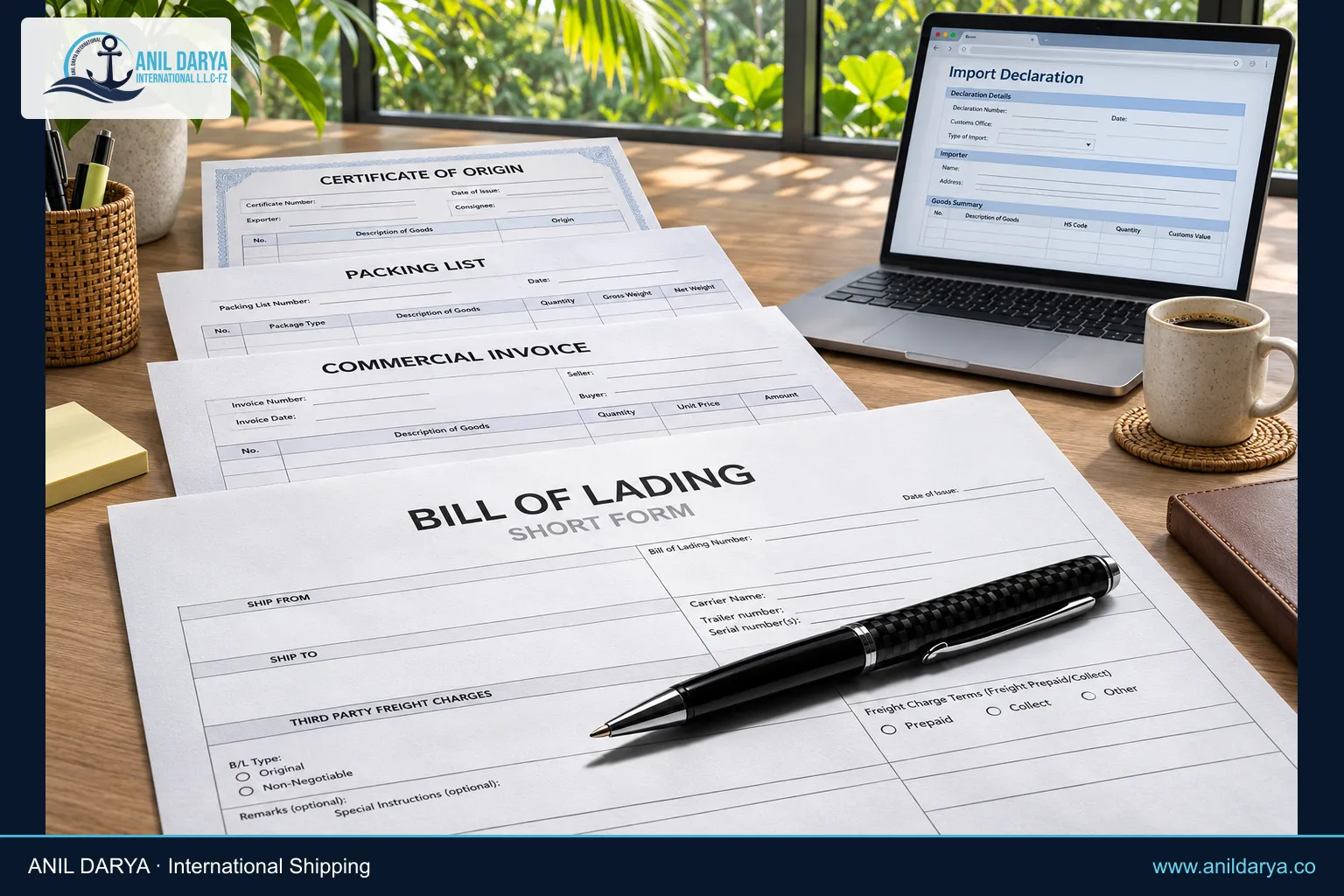
- Documents: declaration, commercial invoice, bill of lading, customs value declaration, and where they apply an import licence, inspection certificate and certificate of origin. Unassembled machinery in HS Chapters 84, 85 and 90 also needs a machinery list.
- Duty: the UAE-Vietnam CEPA entered into force on 3 February 2026. Vietnam is removing tariffs on 98.5% of UAE-originating goods, so a valid certificate of origin can lower the duty.
- VAT: most goods normally taxed at 10% are charged 8% at import from 1 July 2025 to 31 December 2026, with listed exceptions.
Goods made elsewhere and re-exported from Jebel Ali do not get CEPA rates. For the full Vietnam customs picture, see our Hai Phong port guide.
How to ship from Dubai to Quy Nhon port, step by step
We book space with carriers, prepare documents and handle trucking and export clearance in the UAE. Your consignee or its clearing agent clears the goods in Vietnam.
- Send us the cargo details: description, HS code, weight, volume or dimensions, value, Incoterm and the delivery address.
- Check the mode. Containers go via a hub and feeder; heavy or bulk cargo needs a ship that fits the 30,000 DWT limit.
- Check Vietnam's rules with your consignee: licences, specialised inspection and CEPA origin.
- Book space from Jebel Ali, with acceptance from both the main line and the feeder for DG, reefer or out-of-gauge cargo.
- Prepare and cross-check the invoice, packing list, certificate of origin and bill of lading.
- Stuff the container, truck it to Jebel Ali before the cut-off and file the UAE export declaration.
- Track the transshipment and tell the consignee the feeder arrival date.
- The consignee's broker files the import declaration, pays duty and VAT and collects the delivery order.
- The container is collected at Quy Nhon, delivered and returned empty within free time.
Our Dubai freight forwarding team runs the UAE side and keeps your consignee updated on the feeder connection.
How to ship from Quy Nhon to Dubai
We also handle the import direction: cargo from Quy Nhon and its hinterland to Jebel Ali, Khalifa Port in Abu Dhabi or Sharjah. The routing mirrors the export lane. A feeder takes the box from Quy Nhon to a regional hub, and a main-line service brings it to the UAE. Breakbulk and bulk can load direct at Quy Nhon on a ship that fits the port's 30,000 DWT limit.
The split of work is simple. We book the space with the carrier and plan the UAE end. The shipper in Vietnam, or its local forwarder or customs agent, handles the Vietnamese export declaration and trucks the cargo to the port. We do not have an office in Vietnam, so the origin paperwork stays with the shipper's side.
- Send us the cargo details, the shipper's address in Vietnam, the ready date and the Incoterm. On FOB terms the shipper delivers to Quy Nhon and we book the ocean leg. On EXW terms the shipper's agent or a local trucker has to handle pickup and export clearance.
- We book space from Quy Nhon to the UAE port nearest your site and confirm the hub and the feeder.
- The shipper stuffs the container or prepares the breakbulk, and its agent files the Vietnamese export declaration before the cut-off.
- The shipper sends the commercial invoice, packing list and certificate of origin. Ask for a Vietnamese certificate of origin under the CEPA if you want the preferential rate.
- We check the draft bill of lading and track the transshipment.
- Before arrival we file the UAE import declaration through a licensed clearing agent, using your customs business code or your authorisation.
- Duty and import VAT are settled, the line issues the delivery order, and we truck the cargo to your site in the UAE.
| UAE import item | What applies |
|---|---|
| Documents | Invoice, packing list, certificate of origin, bill of lading, delivery order, permit for restricted goods |
| Customs duty in Dubai | 5% of CIF value for most goods (alcohol 50%, cigarettes 100%) |
| Vietnamese-origin goods | The UAE is removing tariffs on 99% of Vietnamese-originating exports under the CEPA, with a valid certificate of origin |
| Who files | Holder of a Dubai Customs business code, or a licensed clearing agent with the owner's authorisation |
| Goods for re-export | A deposit equal to the duty, refunded when the goods leave on time |
A planning rule for this direction: send the certificate of origin and invoice to us before the ship reaches the hub. A missing CEPA certificate means you pay the full 5% and chase a refund later.
Quy Nhon, Da Nang or Ho Chi Minh City: which port fits?
| Your situation | Port to price first | Why |
|---|---|---|
| Consignee in Quy Nhon or the Central Highlands | Quy Nhon | Shortest truck leg, National Route 19 to the highlands |
| Consignee near Da Nang or further north in central Vietnam | Da Nang | Closer delivery |
| Consignee in the south, or very large ships needed | Ho Chi Minh City or Cai Mep | Deep-water berths and mainline calls |
| Ship larger than 30,000 DWT fully loaded | A deeper port, then a domestic move | Quy Nhon's current limit |
| Small LCL order | Compare LCL to a big port plus trucking with FCL to Quy Nhon | Few direct LCL boxes reach Quy Nhon |
Checklist before you ship to Quy Nhon
- Delivery address confirmed as closer to Quy Nhon than to Da Nang or Ho Chi Minh City.
- Routing confirmed: hub port and feeder operator.
- For breakbulk or bulk: ship size within 30,000 DWT fully loaded, crane capacity checked.
- HS code agreed with the consignee.
- Import licence or specialised inspection arranged if needed.
- CEPA certificate of origin ready for UAE-made goods.
- Invoice, packing list and bill of lading match on weights, marks and consignee.
- DG documents and acceptance from every carrier on the route.
- Reefer plug space confirmed for chilled or frozen cargo.
- For imports to the UAE: shipper's export agent named, CEPA certificate of origin requested, UAE customs code or agent authorisation ready.
- Free time agreed and cargo insurance in place.
Common mistakes on Quy Nhon shipments
- Booking a ship that is too large. A vessel that needs more than the port's depth has to arrive part-loaded or discharge elsewhere.
- Assuming LCL ends at Quy Nhon. It may be unpacked at a bigger port first, adding a domestic leg and days.
- Getting DG acceptance from the main carrier only. The feeder operator must accept the class too.
- Claiming CEPA on goods made outside the UAE. The consignee then faces a duty reassessment.
- Using the old province name inconsistently. Make sure the consignee address on all documents matches its registration.
- Planning on 8% VAT for arrivals after 2026. The reduced rate ends on 31 December 2026 unless extended.
Frequently asked questions
What is the port code for Quy Nhon?
The UN/LOCODE for Quy Nhon is VNUIH. You will see it on bookings, bills of lading and tracking systems. Some websites spell the port Qui Nhon.
How big is Quy Nhon port?
The port covers 31 ha with five berths. It handled 11,768,779 tonnes of cargo and 174,603 TEU in 2024, with 1,329 ship calls.
What is the largest ship Quy Nhon port can take?
The port company says ships of up to 30,000 DWT fully loaded and up to 50,000 DWT with reduced load. A channel upgrade is planned so that 50,000 DWT ships can use the port fully loaded.
Who operates Quy Nhon port?
Quy Nhon Port Joint Stock Company operates the port. Vietnam Maritime Corporation (VIMC) holds 75.01% of its shares.
Is there a direct ship from Dubai to Quy Nhon?
Container cargo from Jebel Ali usually transships at a regional hub and reaches Quy Nhon on a feeder. Breakbulk and bulk can move direct on general cargo or bulk ships that fit the port's limits.
Is Quy Nhon in Binh Dinh or Gia Lai province?
Both names are in use. Binh Dinh was merged into Gia Lai province on 1 July 2025, and Quy Nhon is now the administrative centre of Gia Lai.
What cargo does Quy Nhon port handle most?
Wood chips are the largest cargo, at about 5.5 million tonnes of exports in 2024, followed by wood pellets. The main imports are fertiliser, steel coil and animal feed.
Can I ship dangerous goods to Quy Nhon?
Yes, with full IMDG documents and acceptance from every carrier on the route and from the port. Some chemicals also need a Vietnamese import permit arranged by the consignee.
Is cargo from Dubai to Quy Nhon duty-free?
Not automatically. Since 3 February 2026, UAE-origin goods can get preferential rates under the UAE-Vietnam CEPA if they meet the origin rules and carry a valid certificate of origin.
How does shipping from Quy Nhon to Dubai work?
We book the space from Quy Nhon, usually by feeder to a hub and then a main line to Jebel Ali, Khalifa Port or Sharjah. The shipper or its agent files the Vietnamese export declaration, and we arrange UAE clearance and delivery. Dubai duty is 5% of CIF for most goods, and Vietnamese-origin goods can get CEPA rates with a valid certificate of origin.
Get a quote for Quy Nhon port shipping
Send us your cargo details, the delivery address and the ready date, and we will come back with a routing and price from Dubai to Quy Nhon or from Quy Nhon to the UAE. Use our freight rate inquiry form, or contact our team to talk through a breakbulk, bulk or DG shipment first.
Sources
- Vietnam Seaports Association: Quy Nhon Port (berths, equipment, 2024 throughput and cargo mix, development plans)
- Quy Nhon Port JSC: Introduction (history, ship size, storage, reefer yard, equipment)
- Quy Nhon Port JSC: Home page (address in Gia Lai province)
- Thoi bao Tai chinh Viet Nam: Quy Nhon Port 2025 plan (VIMC shareholding, ICD project)
- Viet Nam News: Binh Dinh seeks over $290 million to upgrade ports for 50,000 DWT vessels (May 2025)
- Vietnam Briefing: Provincial mergers (Gia Lai and Binh Dinh, administrative centre, 1 July 2025)
- Gia Lai Newspaper: Merger of Binh Dinh and Gia Lai on 1 July 2025
- Wikipedia: Quy Nhon Port (location, National Route 19, Le Thanh border gate)
- VinWonders: Quy Nhon Port (history dates, airport and station distances, routes)
- iContainers: Port of Qui Nhon (international routes)
- UAE Ministry of Economy: UAE-Vietnam CEPA
- Vietnam Trade Portal (MOIT): Customs procedure for imported goods
- Dubai Customs: Submit Customs Declaration (documents)
- Dubai Customs: Frequently asked questions (duty rate, business code, clearing agents, deposits)
- UAE Government portal: Customs duty and tariff
- Ministry of Finance of Vietnam: VAT reduction at import (Decree 174/2025/ND-CP)
Reviewed: 10 November 2026