Global Box Handling Capacity to Hit Post-Crisis High
Drewry expects global container handling capacity to grow by 4.8%, or 64 million TEU, in 2025, the largest annual rise since the 2008–2009 financial crisis.
Global box handling capacity set for biggest annual rise since financial crisis
Worldwide container handling capacity is forecast to record its largest annual increase since the global financial crisis, according to the latest Global Container Terminal Operators Annual Review and Forecast published by UK consultancy Drewry.
PSA International retains top global ranking
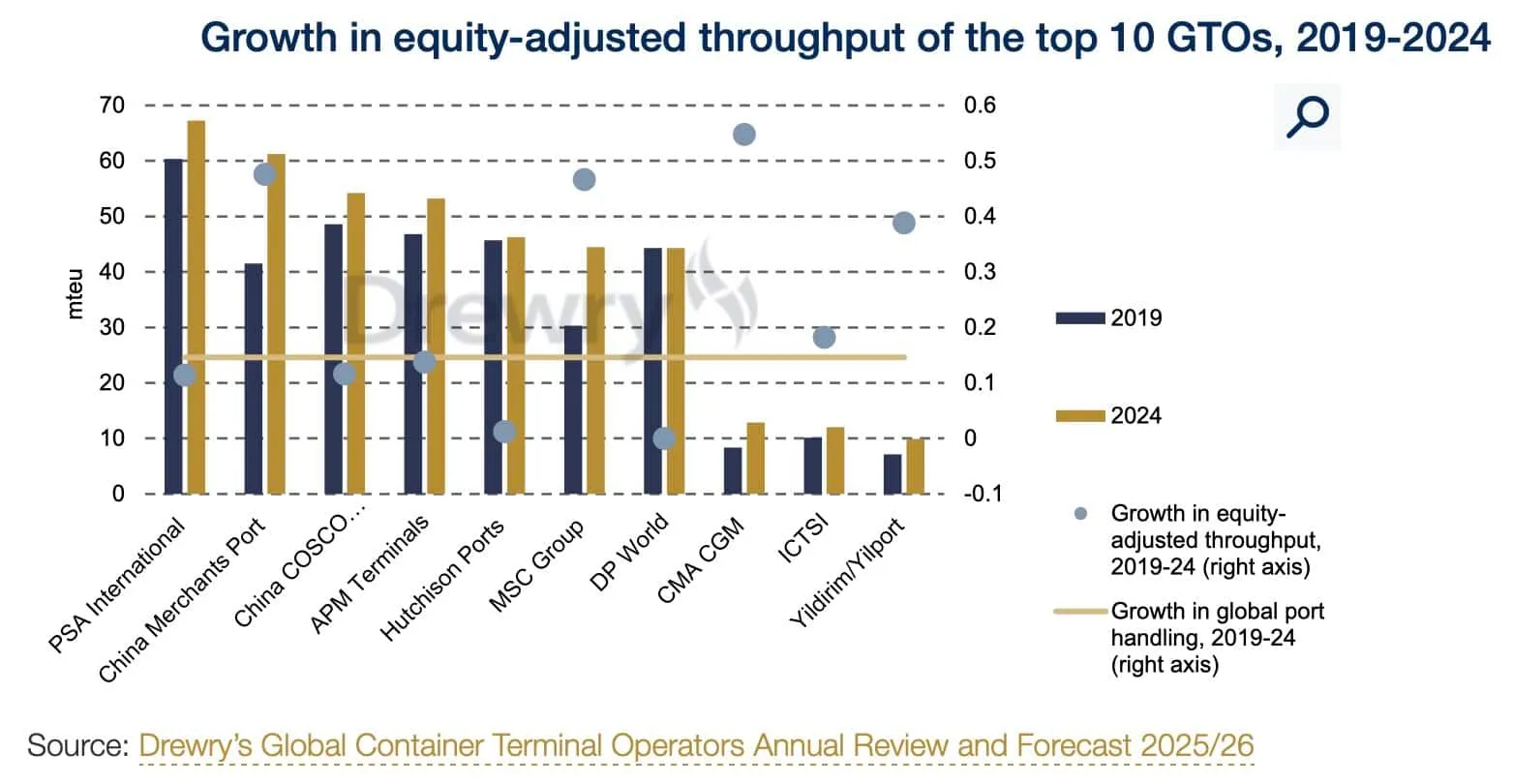
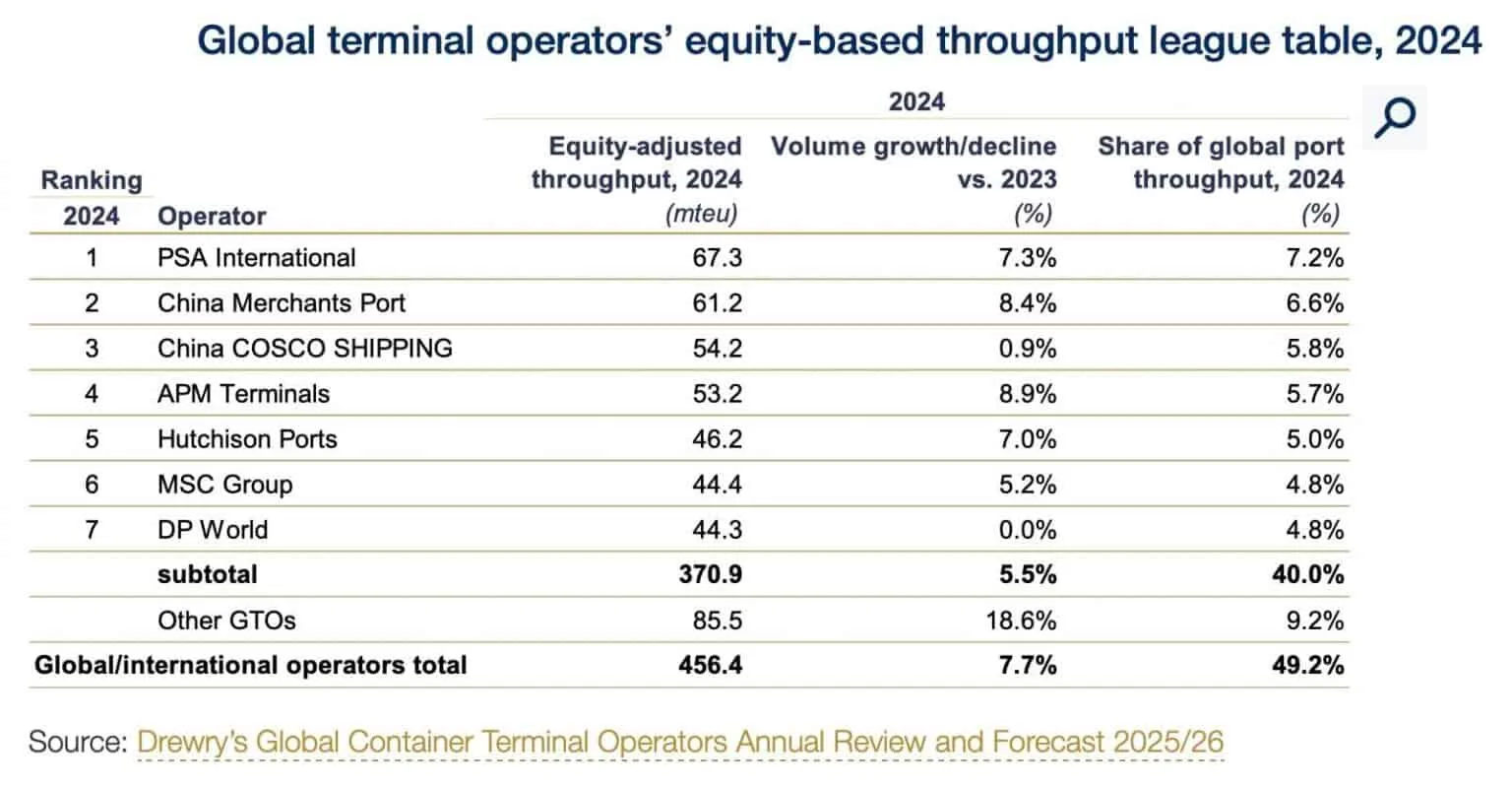
PSA International continues to lead the world as the largest global terminal operator, maintaining the top spot in equity-adjusted rankings with an equity-adjusted throughput of 67.2 million TEU, up 7.3% year on year. Chinese state-backed giants China Merchants and COSCO Shipping Ports secured the second and third positions on Drewry's podium as they continue to expand in key maritime hubs.
Carrier-linked operators strengthen their positions
The terminal operating arms of several cash-rich global carriers, including MSC, CMA CGM, and Hapag-Lloyd, also advanced in the annual rankings. These companies have used strong balance sheets to acquire and expand terminal assets, using M&A-led strategies to penetrate established port markets where greenfield development opportunities are limited.
"These operators have really pushed forward with M&A-led expansion strategies, which is often the only means of entry into established port markets,"
explained Eleanor Hadland, Drewry's senior analyst for ports and terminals and the author of the report.
Record capacity growth forecast for 2025
Drewry projects that global container handling capacity will rise by 4.8%, equivalent to 64 million TEU in 2025. This will mark the largest annual increase in absolute terms since the global financial crisis of 2008–2009.
Hadland noted that the forecast reflects buoyant post-pandemic market conditions. The immediate aftermath of the COVID-19 pandemic saw widespread port and terminal congestion, which triggered a wave of terminal upgrades and expansion projects. These investments are now coming online, and capacity is growing at a pace not seen in over a decade.
Implications for global sea freight
The surge in container terminal capacity is expected to improve efficiency and resilience across international sea freight networks, potentially easing congestion pressures on key trade lanes while intensifying competition among terminal operators. This expansion also provides global carriers with new opportunities to secure strategic berths and improve service reliability amid fluctuating cargo volumes.