|
Getting your Trinity Audio player ready...
|
Port Bottlenecks Threaten Shipping as Demand Stays Strong
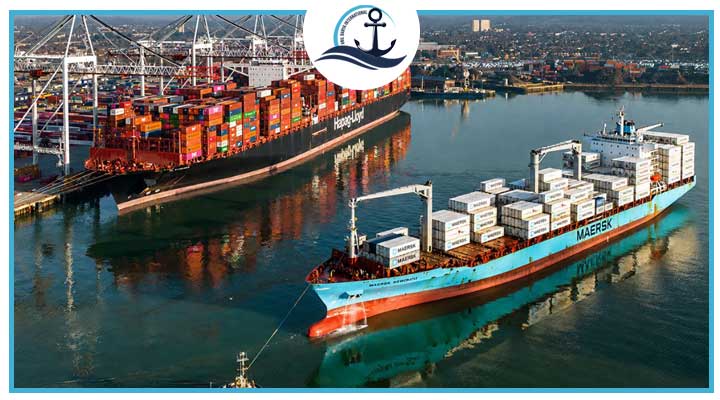
Strong container shipping demand is colliding with growing port and landside congestion, as Maersk and Hapag-Lloyd warn that strained trucking, road and rail networks could create further delivery delays and freight rate pressure through the remainder of 2026.
Both carriers reported stronger second-quarter performance, supported by resilient cargo volumes and higher freight rates. However, their chief executives highlighted infrastructure constraints as an increasingly important challenge for global container shipping, with congestion extending beyond ports into inland logistics networks.
Shipping Demand Remains Resilient Despite Disruption
Global shipping demand has remained stronger than expected despite geopolitical tensions, the war in Iran and the impact of US tariffs.
Maersk CEO Vincent Clerc described the resilience of demand and the wider economy as exceptional, with cargo volumes continuing to move despite major geopolitical disruption.
Hapag-Lloyd CEO Rolf Habben Jansen similarly pointed to remarkably strong shipping volumes, saying the balance between supply and demand had proved more reasonable than previously anticipated.
The strength of cargo demand is becoming increasingly important as transport infrastructure struggles to accommodate growing volumes.
Port and Landside Congestion Creates New Bottlenecks
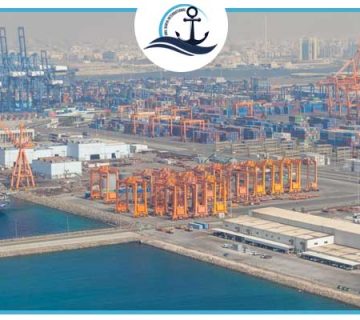
Congestion is emerging across several regions and is no longer limited to container terminals.
Habben Jansen highlighted Asian hubs including Shanghai, where ports are struggling to keep pace with demand, contributing to shipping delays.
Clerc said landside infrastructure is operating close to maximum capacity following insufficient investment. The pressure extends from ports to trucking, rail and road networks, creating bottlenecks across the wider logistics chain.
These constraints can reduce effective shipping capacity even when sufficient vessel capacity is technically available, as containers take longer to move through terminals and inland networks.
Higher Freight Rates Boost Maersk Results
Maersk reported preliminary underlying EBITDA of $3 billion for the April-June quarter, comfortably exceeding analysts' expectations of $2.04 billion.
Revenue increased 20% year-on-year to $15.8 billion, while EBIT reached $1.6 billion, up from $845 million. Net income stood at $1.3 billion.
Higher freight rates were a major contributor to the performance.
Maersk's average freight rate increased 22% to $2,746 per 40-foot container, helping ocean freight revenue rise 23% to $10.5 billion.
Following the stronger performance, Maersk raised its 2026 earnings guidance for the second time this year.
The carrier now expects underlying EBITDA of $10.5 billion to $12.5 billion, compared with its previous forecast of $8 billion to $10 billion.
The guidance assumes global container market volume growth of around 4% for 2026.
Hapag-Lloyd Freight Rates Rise 9%
Hapag-Lloyd also recorded improved second-quarter results, although its recovery from the first quarter was less pronounced.
Revenue increased 11% to $5.8 billion, while the carrier reported net income of $83 million and EBIT of $176 million.
Average freight rates were 9% higher year-on-year.
Hapag-Lloyd had already increased its 2026 earnings forecast in July but warned that significant uncertainty remains because of volatile freight rates and the continuing Middle East conflict.
The carrier absorbed approximately $600 million in headwinds during the quarter linked to the disruption.
Unbalanced Trade Flows Add Pressure to Capacity
Another challenge is the growing imbalance between head-haul and back-haul cargo volumes.
Clerc said strong and broad-based demand originating from the Far East since 2024 has resulted in increasingly unbalanced trade flows.
The widening difference between cargo moving on primary export routes and volumes travelling in the opposite direction is putting additional pressure on already constrained capacity.
At the same time, Maersk continues to manage its return to the Suez Canal and Red Sea cautiously.
Around one-third of the carrier's normal traffic currently uses the Suez or Red Sea route, covering four of its 13 services.
While Clerc said conditions could support a broader return to Suez during 2026, Maersk is taking a gradual approach to avoid placing additional pressure on terminals already dealing with congestion.
Shippers Could Face More Frequent Rate Increases
The combination of strong demand, congested infrastructure and increasingly unbalanced trade flows could create further volatility for freight rates.
Clerc warned that the industry should expect rate events to occur more frequently as new bottlenecks emerge across the supply chain.
Predicting exactly when and where those pressures will develop remains difficult.
For shippers and freight forwarders, the operating environment therefore requires closer attention to vessel schedules, port congestion and inland transportation capacity.
The latest results from Maersk and Hapag-Lloyd indicate that container demand remains resilient. However, the ability of ports and landside logistics networks to handle those volumes is becoming an increasingly important constraint on shipping capacity, schedule reliability and freight costs through the remainder of 2026.