
Shipping from Brazil to Nigeria is a South Atlantic lane led by one product: raw cane sugar, which leaves Santos in bulk for Nigerian refineries, while containers of food ingredients, machinery and industrial inputs follow on liner services to Apapa, Tin Can Island, Lekki or Onne. The Brazilian exporter files the DU-E in Portal Unico Siscomex, and the Nigerian importer needs an approved Form M, SONCAP papers for regulated goods and a licensed customs agent on B'Odogwu. Anil Darya books the ocean freight from Dubai and keeps the Brazilian shipper and the Lagos agent on one plan.
Brazil to Nigeria shipping at a glance
| Item | Detail |
|---|---|
| Main modes | Dry bulk for raw sugar; FCL and LCL containers; breakbulk and flat rack for machinery |
| Brazilian load ports | Santos for sugar and most containers; Paranagua and Itajai/Navegantes in the south; Rio de Janeiro, Salvador, Suape and Pecem further north |
| Nigerian discharge ports | Apapa and Tin Can Island in Lagos, Lekki Deep Sea Port, Onne and Port Harcourt in Rivers State |
| Liner routing | Usually one change of ship; Lome in Togo is one hub that feeds the Lagos terminals |
| Brazilian export filing | DU-E in Portal Unico Siscomex, normally built from the NF-e electronic invoice |
| Nigerian pre-import approval | Form M, opened by the importer through its bank before loading |
| Product conformity | SONCAP for regulated goods, NAFDAC for food, drugs and cosmetics |
| Duty and VAT | ECOWAS Common External Tariff bands of 0% to 35% plus 7.5% VAT; raw sugar for licensed refiners has its own levy package |
| Trade agreement | None between Brazil (or Mercosur) and Nigeria, so Brazilian goods pay the full rate |
| Bill of lading | The shipping line's own B/L, issued and released to you through us as agent for the line |
| Who clears in Nigeria | The consignee's licensed customs agent, agreed before we confirm the booking |
How a Dubai-booked cross-trade works on this lane
The cargo never enters the UAE. Only the booking, the line's paperwork and the follow-up run from Dubai.
| Task | Who does it |
|---|---|
| Choosing the carrier and sailing, booking space and equipment | Anil Darya, with the shipping line |
| Pickup at the mill, plant or warehouse, trucking to the terminal, stuffing and VGM | The Brazilian shipper or its despachante (customs broker), working to the cut-offs we send |
| DU-E filing, NF-e, any MAPA or other export licence | The Brazilian exporter or its broker |
| Form M, SONCAP or NAFDAC, Nigerian marine insurance | The Nigerian importer and its bank |
| PAAR, declaration on B'Odogwu, duty, VAT and release | The consignee's licensed customs agent in Nigeria |
The title document is the carrier's bill of lading. We act as agent for many shipping lines, so the line issues its own B/L from Santos, Paranagua or Itajai to the Nigerian terminal, and we check the draft and release the original or electronic B/L to you from Dubai. A Lagos bank matches that B/L to the Form M line by line, so the consignee, Form M number, cargo description and discharge port have to be right before the vessel leaves Brazil.
Settle the Incoterm at the quote stage. Nigeria expects imports to be insured with a Nigerian insurer, which is why many Lagos buyers purchase FOB Santos and arrange cover at home. A Brazilian seller who quotes CIF with a Brazilian policy creates a mismatch with the Form M that the bank will query. Our Incoterms 2020 guide for sea freight shows where cost and risk pass under each term.
Which Brazilian load ports to use
Pick the port by cargo type first. Bulk sugar has its own terminals at Santos; containers can leave from several ports depending on where the factory is.
| Port | Key figure or note | Typical Nigeria cargo |
|---|---|---|
| Santos (Sao Paulo) | 186.4 million tonnes handled in 2025, a record; 8.83 million tonnes of sugar and 2.8 million TEU in the first half of 2025 | Raw sugar in bulk, most container cargo from Sao Paulo and Minas Gerais |
| Paranagua (Parana) | The Ports of Parana passed 1.662 million TEU in 2025 | Containers from Parana, food ingredients, paper, wood products |
| Itajai and Navegantes (Santa Catarina) | Portonave handled 1,108,029 TEU in 2025 | Containers from Santa Catarina industry, ceramics, machinery parts |
| Rio de Janeiro, Salvador, Suape, Pecem | Further north; used when the line's routing and the factory location suit | Containers from factories in Rio, Bahia, Pernambuco and Ceara |
Discharge ports and terminals in Nigeria
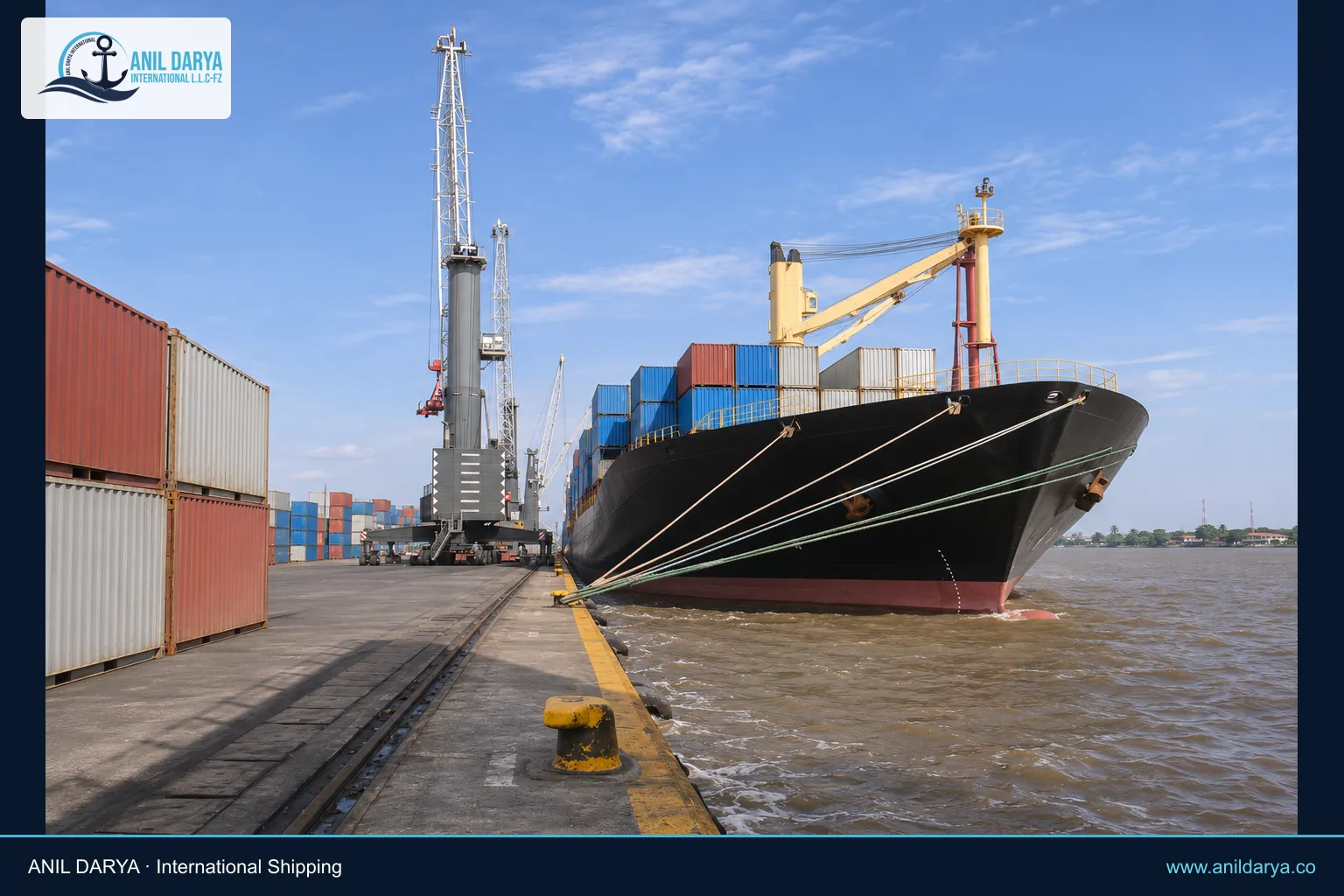
The Nigerian Ports Authority owns the ports and leases the terminals to private operators. The terminal named on your B/L decides free time, handling charges and how fast the box or the bulk parcel can leave. NPA statistics record 602,392 TEU across Nigerian ports in the second quarter of 2026.
| Port | Terminals listed by the NPA | Relevance for Brazil cargo |
|---|---|---|
| Lagos Port Complex (Apapa) | APM Terminals (containers); Apapa Bulk Terminals (bulk, berths 1 to 5); Greenview Development Nigeria (bulk, berths 19 to 20); ENL Consortium (breakbulk, general cargo, containers) | Containers for Lagos and the south-west; dry bulk parcels |
| Tin Can Island, Lagos | TCI Container; Port and Cargo Handling Services; Five Star Logistics; Josepdam Port Services (bulk); PTML (vehicles and containers) | Containers, bulk and general cargo for Lagos buyers |
| Lekki Deep Sea Port | Lekki Freeport Terminal | Containers on services or feeders that call there; the Lagos Free Zone |
| Onne | Intels, WACT and Brawal for containers and oil rig cargo | Equipment for oil and gas operators and buyers in the south-east |
| Rivers Port (Port Harcourt) | Port and Terminal Operators (liquid, dry and breakbulk); BUA Ports and Terminal (liquid bulk, breakbulk) | Bulk and breakbulk for eastern Nigeria |
Lekki lies about 65 km east of Lagos, and the NPA calls it the deepest seaport in sub-Saharan Africa. At Onne, goods brought into the Oil and Gas Free Zone pay duty only when they leave the zone for the Nigerian market.
Sea freight from Brazil to Nigeria: routings and transit
Most container cargo on this lane changes ship once. A route listing for Santos to Tin Can shows every service with one transfer, run by large global lines, with sailings every one to two weeks. No carrier page we could open shows a loop that loads at a Brazilian port and discharges at a Nigerian port on the same vessel.
- MSC's customer advisory of 27 April 2026 announced a weekly feeder between Lome and the Lagos terminals, rotating Apapa, Tin Can, Lekki, Lome and back to Apapa, starting with MSC Rabat IV on 30 May 2026. On MSC, Lome is therefore one hub where Lagos cargo can connect.
- Other lines use other hubs. The hub changes the total days, so ask every quote to name it.
Aggregator sites quote anything from under two weeks to over seven weeks for Santos to Lagos. None of those figures comes from a carrier schedule we could check against a port rotation, so we do not print one. Each quote we send carries the line's own dates for that sailing.
[AMIR-FACT: the carriers we actually book from Santos, Paranagua and Itajai to Apapa, Tin Can, Lekki and Onne in 2026, the hub each uses (Lome or another), and the real port-to-port days for dry and reefer boxes]
Raw sugar in bulk: the largest flow on the lane
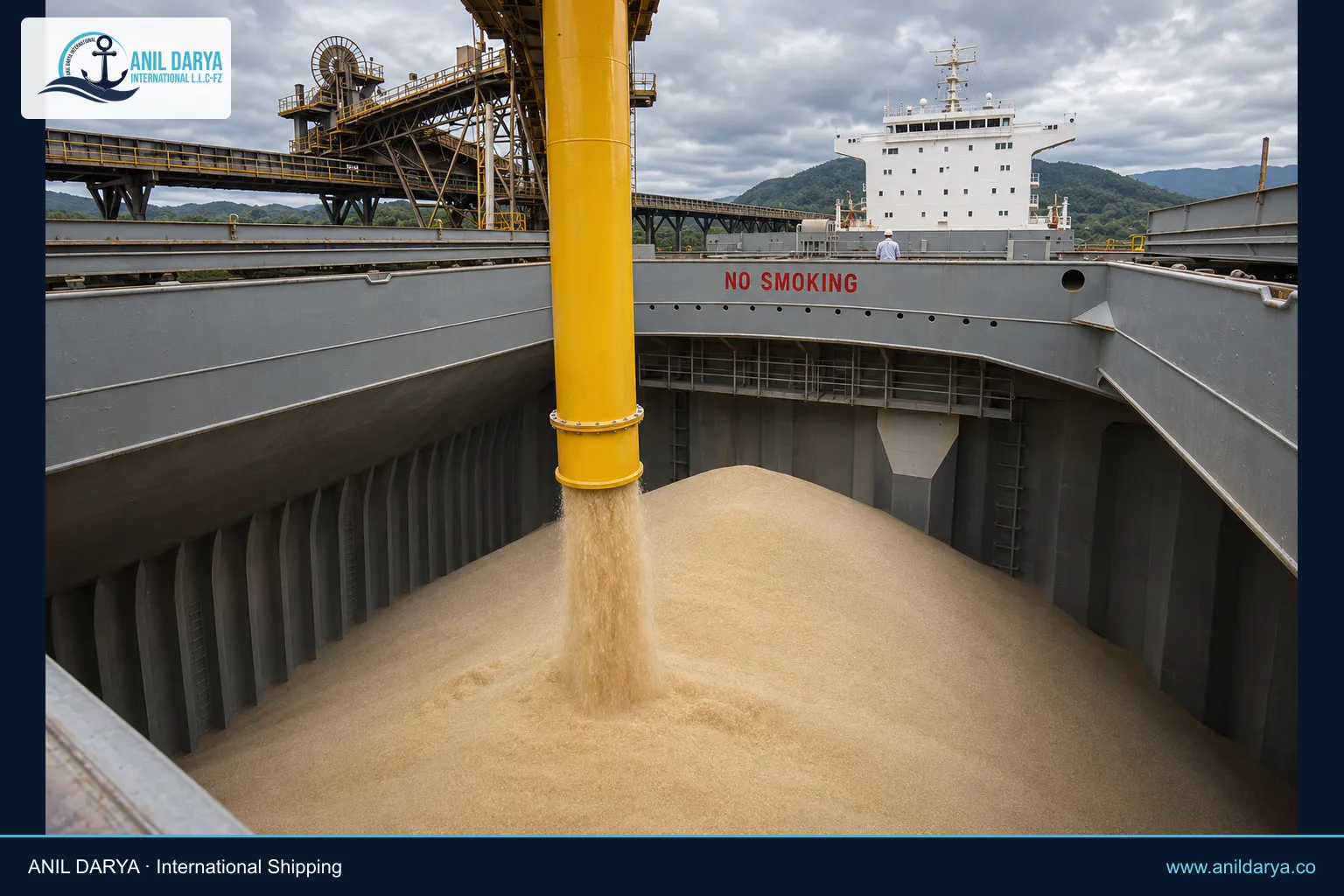
Sugar is the reason this lane exists at scale. Brazil's government reported US$978.5 million of exports to Nigeria in 2024, led by sugars and molasses. A February 2026 report by Brazil's agricultural attache in Abuja adds the detail:
- Nigeria imports about 1.9 million tonnes of raw sugar in the 2025/26 season, and Brazil supplies 97% of it.
- Sugar made up 66% of Nigeria's imports from Brazil in 2025, moving through Santos.
- Under the Nigerian Sugar Master Plan, the Backward Integration Program gives refiners annual raw sugar import permits linked to their investment in local cane.
- For refiners in the programme, the report lists 5% duty, a 5% Sugar Council levy, a 1% charge on CIF and 7.5% VAT on raw sugar. Refined sugar outside retail packs faces 20% duty, a 50% levy and VAT.
Full cargoes of raw sugar move on chartered bulk carriers, not on container lines, and the buyer is usually one of the large refiners that hold permits. If you are a trader with a part cargo, the permit holder and its Form M come first. Our dry and liquid bulk desk can look for tonnage and laycan, and our article on bulk shipping to Africa explains the charter terms you will meet.
[AMIR-FACT: confirm from the full 2026 Customs and Excise Tariff variation order that raw cane sugar for refining by permit holders is still importable, since a summary of the 2026 trade prohibition list names cane and beet sugar]
Container shipping Brazil to Nigeria: FCL, LCL and reefer
Every Nigerian import carries fixed paperwork: a Form M, a PAAR and, for regulated goods, a SONCAP certificate. Fewer, fuller containers spread that cost better than many small lots.
| Option | Typical Brazilian goods | Nigerian point to check |
|---|---|---|
| 20ft FCL | Heavy machine parts, chemicals in drums, bagged ingredients | Axle limits on trucks leaving the Lagos terminals |
| 40ft or 40ft high cube FCL | Ceramic tiles, paper, furniture, auto parts, consumer goods | Every line on the packing list must match the Form M |
| LCL | Samples, spares, trial orders | Each consignee still needs its own Form M and entry |
| Reefer | Food ingredients, temperature-sensitive goods | NAFDAC approval first; frozen poultry, beef and pork are on the prohibition list |
Brazil is a major meat exporter, so the reefer row matters. Nigeria's prohibition list includes live or dead birds including frozen poultry, pork and beef, so a Brazilian meat packer cannot ship those cuts to Lagos whatever the paperwork. Check the HS code with the Nigerian agent before you price a reefer. Our FCL vs LCL guide shows when a full box starts to pay.
Machinery, project cargo and dangerous goods
Brazilian makers of farm machinery, pumps, sugar mill equipment and industrial parts sell into Nigeria's agro-processing and refining sector. Pieces that fit a 40ft flat rack or open top travel on the container service; longer or heavier units need breakbulk space. Send drawings, weights and lifting points early and get the line's written acceptance, including the transfer hub, before the Form M is closed. Our break bulk and project cargo team plans the stowage with the carrier.
Resins, paints, agrochemicals and lab reagents travel under the IMDG Code, whose 2024 edition (Amendment 42-24) became mandatory on 1 January 2026. The Brazilian shipper provides the UN number, class, packing group, Safety Data Sheet and signed DG declaration. Each hub must accept the class too, which is why our dangerous goods desk checks the full routing before we hold space.
The Brazilian export side: DU-E in Portal Unico
Export formalities in Brazil belong to the exporter or its despachante. We share the booking, cut-offs and draft B/L with them; we do not file in Brazil.
- The DU-E (Declaracao Unica de Exportacao) is registered in Portal Unico Siscomex by the exporter, the declarant or their legal representatives, and it is normally filled from the NF-e electronic invoice.
- The gov.br service page, last updated 29 July 2026, sets the order: check the NCM code and the administrative and tax treatment, register the DU-E, then submit documents if the customs channel is not green.
- The Receita Federal export manual describes the flow after filing: the terminal receives the cargo, Receita Federal clears it, and the carrier reports the loading.
Put the Form M number on the invoice from the start so the NF-e, DU-E and B/L match.
Form M: the import approval that comes first
Nigeria controls commercial imports through the Form M. The NPA's import guidelines set the order of work. The importer needs a company registered in Nigeria, a Tax Identification Number and an Authorised Dealer Bank, and then:
- gets a SONCAP Product Certificate if the goods are regulated, because SON requires it to open the Form M;
- opens the Form M through its bank on the Nigeria Single Window with the Brazilian proforma invoice, a Nigerian insurance certificate and the Product Certificate;
- waits for the bank to validate it and for Nigeria Customs to accept it;
- sends the approved Form M number to the Brazilian seller for the invoice and to us for the B/L.
We hold the booking until the Form M is approved. A box that sails without one cannot get a PAAR in Lagos and sits at the terminal.
SONCAP and NAFDAC for Brazilian goods
SONCAP is the Standards Organisation of Nigeria's pre-shipment conformity programme. SON issues three Product Certificate routes: PC1 for unregistered products, valid for one shipment, and PC2 or PC3 for registered or licensed products, valid for one year. After shipment the accredited firm sends a Certificate of Conformity to SON, which issues the SONCAP Certificate used at customs.
SON lists accredited firms such as Intertek, Cotecna and TUV Austria and says none is tied to a territory, so a factory in Sao Paulo or Santa Catarina can use any accredited firm able to inspect on site. SONCAP does not cover food, drugs, medical items other than equipment and machines, chemicals used as raw material by genuine manufacturers, or used products other than automobiles.
Food, drugs, cosmetics and many chemicals go to NAFDAC instead. The NAFDAC registration must sit with a Nigerian company or the maker's local agent, so a Brazilian brand selling in Nigeria for the first time needs that holder in place before the first container ships.
[AMIR-FACT: the usual time we see from SONCAP inspection booking to certificate for Brazilian-origin cargo, and which accredited firms our Brazilian shippers use]
Customs clearance in Nigeria on B'Odogwu
We do not clear goods in Nigeria. Before we confirm a booking from Brazil, we check that the consignee has a licensed customs agent and that the agent has seen the draft invoice, packing list and B/L.
Nigeria Customs Service runs imports on B'Odogwu. The PAAR is generated there from the registered Form M, and the agent files the declaration against it. Inspection happens on arrival, with scanners used to reduce physical checks. Duty is paid in naira at the Central Bank of Nigeria rate, which the system applies on its own.
| Document | Issued by | What the Nigerian agent checks |
|---|---|---|
| Commercial invoice and packing list | Brazilian seller | Form M number, HS code, values, weights |
| Carrier bill of lading | Shipping line, released to you through us | Consignee, notify party, Form M number, port and terminal |
| Certificate of origin | Brazilian chamber or issuing body | Matches the invoice; no preference claimed |
| SONCAP Certificate or NAFDAC approval | SON, or the importer for NAFDAC | Covers these goods on this shipment |
| Insurance certificate | Insurer registered in Nigeria | Matches the Form M |
| Sugar import permit (raw sugar only) | Issued to the refiner under the Backward Integration Program | Quantity and holder match the cargo |
Import duty, VAT and trade agreements for Brazilian goods
Brazil and Nigeria signed several memoranda in June 2025, covering defence, energy, agriculture and tourism, but none of them is a tariff agreement. Mercosur has no trade agreement with Nigeria or with ECOWAS, and Brazil's investment facilitation agreements in Africa do not include Nigeria. ECOWAS and AfCFTA preferences need West African or African origin. Brazilian goods therefore pay the full ECOWAS Common External Tariff rate, mostly on the CIF value.
| Charge | Rate | Brazilian goods often here |
|---|---|---|
| CET band 0 | 0% | Essential social goods |
| CET band 1 | 5% | Raw materials, capital goods, many machines |
| CET band 2 | 10% | Intermediate inputs |
| CET band 3 | 20% | Finished consumer goods, tiles, furniture |
| CET band 4 | 35% | Goods protected for economic development |
| Raw sugar (permit holders) | 5% duty, 5% levy, 1% CIF charge | Bulk raw sugar for refining |
| VAT | 7.5% | On top of duty and levies |
Nigeria Customs announced the 2026 Fiscal Policy Measures on 29 July 2026, with a revised Import Adjustment Tax list, a revised trade prohibition list, a revised excise list and a green tax on vehicles of 2000cc and above. The 4% FOB charge from the Customs Service Act 2023 has been suspended since February 2025. Duty and taxes at destination are paid by the consignee or its broker, so ask for an estimate on the exact HS code before the Form M is opened.
Because Brazilian goods have no preference in Nigeria, storing or splitting them in Dubai costs nothing on the tariff side.
Banned and restricted goods on this lane
Several Brazilian export staples are blocked or limited at the Nigerian border. The list below follows the US International Trade Administration summary of 6 June 2023 and the 2026 updates.
- Live or dead birds including frozen poultry, pork and beef are on the import prohibition list.
- Cane or beet sugar with added flavouring or colouring in retail packs is prohibited; a summary of the 2026 list by a Lagos law firm names cane and beet sugar, so confirm the HS code with your agent.
- Refined vegetable oils, fruit juice in retail packs, spaghetti and noodles, cocoa butter, powder and cakes, and soaps and detergents in retail packs are on the list.
- Second-hand clothing is absolutely prohibited.
- From 1 April 2026 the revised trade prohibition list covers 17 categories of goods from outside ECOWAS, with a 90-day window for deals backed by a valid Form M.
Does routing via Dubai help on the Brazil to Nigeria lane?
For a straight Brazilian order, no. Dubai is not on the way from the South Atlantic to the Gulf of Guinea, and a detour adds days. It helps in narrower cases.
| Option | How it works | What to watch |
|---|---|---|
| Direct from Brazil | The box or bulk parcel sails from Brazil to the Nigerian port on the line's or the charterer's B/L | The default for almost all cargo |
| Jafza stock and re-export | Brazilian goods held in the Jebel Ali Free Zone and sent to Nigeria in smaller lots with Gulf, Indian or Asian stock | Dubai Chambers issues certificates of origin for re-exports; SONCAP and Form M still apply |
Where goods land, wait or are re-exported in Dubai, we clear them through UAE customs for a fee. See our Jebel Ali port guide and our note on re-exporting through Jafza.
[AMIR-FACT: whether any of our Brazil to Nigeria customers route part of an order through Dubai (Jafza stock or consolidation with Gulf or Asian goods), for which cargo, and the extra days against a direct sailing]
Typical cargo on this lane
| Cargo | Usual equipment | Papers to plan |
|---|---|---|
| Raw cane sugar | Chartered bulk carrier from Santos | Refiner's import permit, Form M, phytosanitary certificate if the agent asks |
| Food ingredients and processed food | 40ft FCL, reefer where needed | NAFDAC registration, prohibition list check |
| Farm and sugar mill machinery | Flat rack, open top, breakbulk | SONCAP where applicable, piece list, lifting plan |
| Ceramic tiles, paper, building products | 20ft or 40ft FCL | SONCAP, weight limits, 2026 trade list check |
How shipping from Brazil to Nigeria works, step by step
Steps 1 to 4 are done before any cargo moves.
- Send us the cargo, HS code, weights and sizes, the Brazilian pickup city, the Nigerian port and the Incoterm.
- The Nigerian agent checks the HS code against the prohibition lists and says whether SONCAP, NAFDAC or a permit applies.
- The importer gets its Product Certificate or NAFDAC approval, buys Nigerian insurance and opens the Form M.
- We confirm the Nigerian agent has accepted the clearance, then confirm space with the line to Apapa, Tin Can, Lekki or Onne.
- The Brazilian shipper delivers the cargo to the terminal and its broker registers the DU-E from the NF-e.
- The accredited firm inspects where SONCAP applies, and the seller prints the Form M number on the invoice.
- The line issues its B/L with the Form M number, and we release it to you from Dubai.
- While the ship is at sea or at the hub, the importer collects the SONCAP Certificate and the agent raises the PAAR on B'Odogwu.
- On arrival the agent files the entry, the consignee pays duty and VAT, the cargo is released and the empty is returned within free time.
[AMIR-FACT: one real Brazil to Nigeria cross-trade shipment we booked (cargo, Brazilian load port, Nigerian terminal, carrier and hub, days door to door, and what we coordinated with the Brazilian broker and the Lagos agent), cleared for publication]
What drives the cost of shipping from Brazil to Nigeria?
We quote per shipment. For planning, the Nigerian Shippers' Council publishes quarterly indicative freight rates for its South America and Mexico route, which includes Santos and Rio de Janeiro. The Council says these figures are a guide that shippers negotiate with the lines, so check the current quarter's sheet and ask us for a live quote.
| Cost part | What moves it | Usually paid by |
|---|---|---|
| Brazilian inland and terminal charges | Distance to port, truck or rail, DU-E and broker fees | Seller on FOB, buyer on EXW |
| Ocean freight | Box type, season, hub, surcharges; charter rate for bulk | Set by the Incoterm |
| SONCAP inspection | Product, certificate route, testing | Exporter or buyer, as agreed |
| Nigerian terminal and line charges | Terminal, box size, bulk discharge rate | Consignee |
| Duty, levies and VAT | HS code, CIF value, naira rate on the day | Consignee or its broker |
| Storage, demurrage and detention | Late Form M, missing SONCAP, slow clearance | Whoever caused the delay |
Our article on demurrage and detention shows how those daily charges build, and our Dubai freight forwarding team will walk you through any quote line by line.
Checklist before the cargo leaves Brazil
- HS code checked against Nigeria's prohibition lists, including the 2026 trade list.
- Form M approved, with its number on the invoice and the draft B/L.
- SONCAP Product Certificate and inspection booked, or NAFDAC approval in hand.
- Marine insurance placed with a Nigerian insurer, matching the Form M.
- For raw sugar: the refiner's import permit covers this quantity.
- Nigerian customs agent named and clearance accepted before booking.
- DU-E registered from the NF-e, with consistent values and descriptions.
Mistakes that hold Brazilian cargo in Lagos
- Shipping before destination clearance is agreed. With no Nigerian agent signed up, the container waits at the terminal while storage and demurrage add up.
- Loading without an approved Form M. No Form M, no PAAR, no release.
- Quoting frozen chicken, beef or pork to a Nigerian buyer. They are prohibited, and no permit fixes that.
- Selling raw sugar to a buyer without a refiner's import permit.
- Quoting CIF with Brazilian insurance when the Form M needs a Nigerian policy.
Frequently asked questions
How long does sea freight from Brazil to Nigeria take?
It depends on the carrier and the transfer hub, since most containers change ship once. MSC, for example, feeds Apapa, Tin Can and Lekki from Lome. We give you the line's own dates for each sailing instead of a general figure.
Is there a direct ship from Santos to Lagos?
For containers, we found no carrier page showing a same-vessel loop from a Brazilian port to Lagos in 2026. Bulk sugar is different: chartered bulk carriers sail direct from Santos to the Nigerian discharge port.
Do I need a Form M to ship from Brazil to Nigeria?
Yes, for commercial imports. The Nigerian importer opens it through its bank on the Nigeria Single Window before the cargo loads, and its number goes on the invoice and the bill of lading.
Is there a free trade agreement between Brazil and Nigeria?
No. Mercosur has no agreement with Nigeria or ECOWAS, so Brazilian goods pay the full ECOWAS Common External Tariff rate plus 7.5% VAT.
Can I export Brazilian chicken or beef to Nigeria?
No. Frozen poultry, beef and pork are on Nigeria's import prohibition list. Poultry genetic material was opened to Brazil in June 2025, but meat was not.
Who issues the bill of lading on a Brazil to Nigeria cross-trade?
The shipping line issues its own B/L from the Brazilian port to the Nigerian terminal. We act as agent for many lines, so the B/L is checked and released to you through our Dubai office.
Does Anil Darya clear customs in Nigeria?
No. A licensed Nigerian customs agent, hired by the consignee, files the entry on B'Odogwu. Duty and taxes at destination are paid by the consignee or its broker, and we settle the clearance plan with that agent before the booking is confirmed.
Get a quote for shipping from Brazil to Nigeria
Send the cargo, HS code, Brazilian pickup city, Nigerian port and ready date for a routing and a price. Use our freight rate inquiry form, or contact our team to plan a bulk, project or DG shipment first.
Sources
- Government of Brazil: Declare export, DU-E in Portal Unico Siscomex (updated 29 July 2026)
- Receita Federal: Export manual, Portal Unico
- Ministry of Ports and Airports: Santos handles 186.4 million tonnes in 2025
- Ministry of Ports and Airports: Santos first half 2025 containers and sugar
- Government of Parana: Ports of Parana pass 1.6 million TEU
- Portonave: 2025 throughput
- Agencia Gov: Brazil and Nigeria sign new agreements (25 June 2025)
- Brazil Ministry of Agriculture, attache in Abuja: The Nigerian sugar sector (12 February 2026)
- Siscomex: Investment cooperation and facilitation agreements
- MSC: New connection in Nigeria, Lekki via Lome (27 April 2026)
- Fluent Cargo: Sao Paulo to Lagos route listing (routing type only)
- Nigerian Shippers' Council: Indicative freight rates, April to June 2026
- Nigerian Ports Authority: Terminals and operators
- Nigerian Ports Authority: Import and export guidelines
- Nigerian Ports Authority: Lekki Deep Sea Port
- Nigerian Ports Authority: Q2 2026 cargo throughput
- Oil and Gas Free Zones Authority: Incentives
- Standards Organisation of Nigeria: SONCAP services and accredited firms
- Legal 500: Registration of imported products with NAFDAC
- Federal Ministry of Information: Form M and PAAR on B'Odogwu
- Nairametrics: CBN rate applied to cargo clearance (February 2026)
- Federal Ministry of Information: 4% FOB charge suspended
- Nigeria Customs Service: 2026 Fiscal Policy Measures (29 July 2026)
- SCP Law: Nigeria's 2026 import restrictions
- US International Trade Administration: Nigeria prohibited and restricted imports (6 June 2023)
- US International Trade Administration: Nigeria customs regulations
- ECOWAS: Common External Tariff bands
- PwC Worldwide Tax Summaries: Nigeria VAT
- IMO: IMDG Code 2024 edition
- Dubai Chambers: Certificate of origin for re-exported goods
- Jafza: About the Jebel Ali Free Zone
Reviewed: 11 November 2026