
Shipping from China to Algeria is mostly a container trade: boxes loaded at Shanghai, Ningbo, Shenzhen, Qingdao or Tianjin and discharged at Algiers, Oran, Bejaia or Djen Djen, usually after a change of ship at a Mediterranean hub. The hard part is not the sea leg. Since May 2026 the Algerian buyer's bank must domicile the import before your supplier ships, and the date on the bill of lading has to come after that domiciliation. We book the ocean freight from Dubai, release the carrier's bill of lading to you and keep the Chinese supplier, the Algerian importer and its customs broker on one timetable.
Shipping from China to Algeria at a glance
| Item | Detail |
|---|---|
| Main modes | Sea FCL, sea LCL, reefer, flat rack and breakbulk, dangerous goods by sea |
| Usual Chinese load ports | Shanghai, Ningbo, Shenzhen (Yantian, Shekou), Guangzhou (Nansha), Qingdao, Tianjin, Xiamen |
| Main Algerian container ports | Algiers, Oran, Bejaia, Djen Djen (Jijel), with Annaba, Skikda and Mostaganem for some services |
| Deepest container quay | Djen Djen: 1,590 m of quay at 17 m draft, 12 super post-Panamax cranes |
| China export filing | The consignor or its customs broker, at least 24 hours before loading |
| Before the supplier ships | Bank domiciliation of the import, plus the importer's forecast import programme (PPI) |
| Algerian customs | Direction Generale des Douanes (DGD); detailed declaration within 21 days of unloading |
| Import taxes | Customs duty by 10-digit tariff code, then VAT of 19% on value plus duty for standard-rated goods |
| Duty preference for China goods | None: China is not among Algeria's preferential agreements |
| Who clears in Algeria | The importer or its commissionnaire en douane, agreed before the cargo ships |
How a cross-trade booking from China to Algeria works
We plan and book the sea leg from our Dubai desk, but the container goes from China to Algeria without touching the UAE unless you choose otherwise. Three parties share the work.
- The Chinese supplier, or its local forwarder, stuffs the container, trucks it to the terminal and files the Chinese export declaration.
- We book space with the shipping line, check the invoice, packing list and B/L draft against what the Algerian bank and customs will expect, and hold everyone to the vessel cut-off.
- The Algerian importer's customs broker, the commissionnaire en douane, lodges the detailed declaration, and the consignee pays duty and VAT before the box leaves the port.
You receive the shipping line's own bill of lading. Anil Darya acts as agent for many shipping lines, so the carrier issues the B/L and we release it to you. On this lane the on-board date printed on that B/L carries extra weight: Algerian banks now compare it with the domiciliation date, and a B/L dated before the import was domiciled can block the whole payment file. Before we confirm a booking, ask the importer for the domiciliation date so the loading cannot fall before it.
Agree the Incoterm before the pro forma is signed. FOB China works well for most Algerian buyers, because the supplier handles the export formalities while you keep control of the carrier, the discharge port and the B/L date. Under CFR or CIF the supplier books the ship, and you lose that control over timing. Our guide to Incoterms 2020 for sea freight sets out who pays and who carries the risk under each term.
Which Chinese ports to load at for Algeria
Pick the load port nearest the factory, then check which Mediterranean loop or feeder the carrier offers from it that week.
| Supplier region | Usual load port | Notes for Algerian cargo |
|---|---|---|
| Shanghai, Jiangsu, Zhejiang, Yiwu | Shanghai, Ningbo | Widest choice of Europe and Mediterranean loops; Ningbo suits LCL from many small suppliers |
| Guangdong and Shenzhen | Yantian, Shekou, Nansha | Electronics, lighting and furniture; ask whether the box feeds to another Asian hub first |
| Fujian | Xiamen | Tiles, stone, shoes and textiles; fewer direct options, so allow for a transhipment |
| Shandong and north China | Qingdao, Tianjin | Steel, tyres, machinery; routings often go via a southern Chinese or Southeast Asian hub |
Algiers, Oran, Bejaia or Djen Djen: choosing the discharge port
Algiers
The capital's container terminal is run by DP World Djazair. It has two 300 m berths with depths up to 11 m, rubber-tyred gantry cranes over a 30-hectare yard, and direct truck access to the national road network. It suits buyers in Algiers and the central region, but the limited depth means many large deep-sea ships do not call there directly, so Algiers boxes often arrive on a feeder.
Djen Djen (Jijel)
Djen Djen, near Jijel in the east, is the deep-water option. DP World lists 1,590 m of quay at 17 m draft, a further 250 m at 11 m, 12 super post-Panamax ship-to-shore cranes, 35 RTGs, 36 reefer plugs and a 40ft spreader for out-of-gauge loads, with a planned capacity of 2 million TEU a year. The port authority places it about 350 km from Algiers and calls it the closest seaport to Hassi Messaoud, which makes it relevant for oil and gas equipment heading south.
Bejaia
Bejaia's container terminal is operated by Bejaia Mediterranean Terminal (BMT), a joint venture set up in 2004 between the Bejaia port company and Singapore-based Portek. It serves the Kabylie region and the industrial zones inland from it.
Oran and the other ports
Oran is the gateway for western Algeria, which saves a long truck haul from Algiers. Mostaganem, Annaba and Skikda take some services too; ask whether your carrier calls before you name one on the booking.
Sea freight from China to Algeria: routings and transit time
Most China cargo reaches Algeria in two stages: a large ship on an Asia to Mediterranean loop, then a feeder from a Mediterranean hub. Valenciaport, one such hub, counted China (386,562 TEU) and Algeria (160,993 TEU) among its top partners in the first half of 2025.
| Routing | How the box moves | When it fits |
|---|---|---|
| Mediterranean hub plus feeder | Loaded in China, changes ship at a Mediterranean hub, feeder to the Algerian port | The usual option for Algiers, Oran and Bejaia |
| Deep-sea call at Djen Djen | Larger ship discharges directly at the 17 m quay | Only when the carrier's loop calls there; check the schedule each sailing |
| Via Jebel Ali, Dubai | China to Jebel Ali, then on to Algeria | Only when you combine China goods with stock in Dubai |
We could not open a carrier schedule page with a published port-to-port day count for China to an Algerian port that we could read with confidence, and forwarder estimates on the web range from about four weeks to well over six. Ask for the carrier's own schedule for the sailing you book, then add the feeder connection, clearance and inland delivery.
[AMIR-FACT: the carriers and services we actually book from China to Algiers, Oran, Bejaia and Djen Djen, direct call or transhipped (and at which hub), and our real port-to-port transit days from Shanghai/Ningbo and from Shekou/Nansha]
FCL, LCL, reefer and project cargo for Algeria
| Option | Typical China to Algeria cargo | What to watch in Algeria |
|---|---|---|
| 20ft dry | Tiles, steel fittings, tyres, dense machinery parts | Payload limits on the road leg from the port |
| 40ft or 40ft high cube | Appliances, furniture, lighting, solar panels, textiles | The invoice value must match the domiciled amount |
| LCL | Samples, spare parts, small mixed orders | Customs asks for a detailed packing note per consignee in a groupage, so one weak file can slow the rest |
| Reefer | Food ingredients, chemicals that need cooling | Sanitary or quality inspection at the border, and reefer plugs at the chosen terminal |
| Flat rack, open top, breakbulk | Generators, transformers, plant for energy and construction projects | A lifting and lashing plan, and a port with the right crane and quay |
Our comparison of FCL and LCL shipping shows where the break-even sits. You can also read about our sea freight service.
Dangerous goods and out-of-gauge cargo to Algeria
Lithium batteries, paints, resins, aerosols and many chemicals ship as dangerous goods under the IMDG Code. On the Chinese side, customs inspects DG packaging for export, so the shipper needs packaging performance and use certificates before the line will accept the booking. On the Algerian side, two items on the customs ban list catch DG shippers out: fireworks and other pyrotechnic articles, and ozone-depleting substances, which can include some refrigerant gases in cooling equipment. Check the exact product with the broker, then plan the paperwork with our dangerous goods team.
Out-of-gauge project plant moves on flat racks or as breakbulk; send drawings, weights and lifting points, and see our break bulk service.
The China export side: who files what
Chinese customs puts the export declaration on the consignor. The supplier, or a customs broker it appoints, must be registered as a market entity and a foreign trade operator, and it declares the goods after they enter the customs supervision area and at least 24 hours before loading. Registration and filing run through the China International Trade Single Window.
That makes EXW a poor fit: if the factory will not act as exporter, nobody can file in its name. Ask the supplier to confirm in writing that it will file at the invoice value.
Three China-side tasks really belong to Algeria. The supplier must not load before the buyer confirms the domiciliation date. Consumer goods need Arabic labelling, which is far cheaper to apply in the factory than after arrival. And the final commercial invoice must carry the details Algerian customs checks: date, number, seller and buyer, description, unit and total price, quantity, Incoterm, and the seller's signature and stamp.
Algerian rules to settle before the cargo leaves China
Treat the following as conditions for booking, not tasks for arrival.
A registered importer
Customs expects a commercial register entry whose activity matches the product being imported, and a tax identification number issued by the tax services. The consignee on the B/L should therefore be the Algerian company that holds that register and will domicile the import, not a foreign trading company.
The forecast import programme (PPI)
Algeria's Ministry of Foreign Trade and Export Promotion runs a digital platform where importers file a forecast import programme for each half-year. The ministry describes the filing as a necessary step in requesting import authorisation; the window for the second half of 2026 ran from 23 June to 31 July 2026. If your buyer's goods are not covered, ask the broker which route applies before the supplier starts production.
Bank domiciliation before shipment
Bank of Algeria note 01/DGC/2026 of 14 May 2026 makes every import of goods subject to bank domiciliation before the foreign supplier ships. Banks must check that the date on the transport document, including the bill of lading, is later than the domiciliation date, and must refuse a domiciliation where the goods shipped first, unless an exception is formally authorised. Banks are also told to check invoice dates and any shipping certificates. For you, this means the domiciliation reference has to exist before the container is loaded in China.
Conformity checks, labels and inspections
Some goods face border controls on top of customs: sanitary inspection for animals and animal products, quality and conformity control, and legal metrology for weighing and measuring equipment. The inspection document must go into the customs file. The US trade.gov guide also notes that consumer goods must be labelled in Arabic and that this rule is strictly enforced, and that cosmetics need an ingredient declaration and toxicology analysis.
Algerian customs clearance: the declaration and the 21-day limit
Every import into Algeria needs a detailed declaration, even when no duty is due. It is lodged at the competent customs office by the declarant, who may be the owner of the goods, a commissionnaire en douane or the carrier. Most importers use a commissionnaire, who must attach the owner's mandate to the file.
The deadline is short. The declaration must be filed within 21 clear days of the goods being unloaded into a temporary storage area or dry port. If it is not, the customs receiver places the goods under the deposit regime for two months, with late penalties, and after that they pass to the public treasury. An early declaration before arrival is allowed only for perishable, dangerous and heavy goods.
| Document in the customs file | Why customs wants it |
|---|---|
| Commercial register extract | Shows the importer's activity matches the product |
| Tax identification number | Identifies the importer for tax purposes |
| Final commercial invoice, domiciled at an approved Algerian bank | Sets the customs value and links the import to the bank file |
| Bill of lading | Transport title for the sea leg |
| Packing note or detail list | Required when one shipment holds goods under different tariff codes |
| Border inspection documents | For goods under sanitary, quality, conformity or metrology control |
| Authorisations | Where a law or regulation requires one for the product |
| Proof of origin | Needed to claim a preference; customs also checks origin on documentary control |
| Broker's mandate | When a commissionnaire files instead of the owner |
Green, orange and red channels
Once registered, a declaration cannot be amended, and the customs system (SIGAD) routes it to one of three channels. Green means release without immediate control once duty is paid. Orange means a document check of the tariff code, value, origin and quantity. Red means a document check plus a physical examination of some or all of the goods, which must take place with the declarant present. Authorised economic operators are among those who can qualify for the green channel.
Import duty and VAT on goods from China
Duty depends on the 10-digit Algerian tariff code: the first six digits follow the Harmonized System and the last four are national. Look the code up in the DGD tariff database, or ask customs for a binding tariff ruling (RTC) before the goods are declared. The customs value is the transaction value, meaning the price actually paid or payable for the goods sold for export to Algeria, with the adjustments the Customs Code allows.
The DGD's own worked example shows the order of calculation for a good taxed at 30% duty and 19% VAT.
| Step | Calculation | Result |
|---|---|---|
| Customs value | USD 100 at DZD 100 to the dollar | DZD 10,000 |
| Customs duty | 10,000 x 30% | DZD 3,000 |
| VAT | (10,000 + 3,000) x 19% | DZD 2,470 |
| Total duty and tax | 3,000 + 2,470 | DZD 5,470 |
The US trade.gov guide puts Algeria's general duty rates in a range of 0 to 30% by product, and notes a temporary additional safeguard duty (DAPS), in place since January 2019, on a list of products. Check both the tariff line and the DAPS list for your code.
Duty and taxes are calculated at the rules in force on the day the declaration is registered. If rates were more favourable earlier, the importer can keep the earlier rate only when direct shipment to Algeria is proven. Payment is made in cash or by another accepted means. Duty and taxes at destination are paid by the consignee or its broker.
Do trade agreements cut duty on China goods?
Not on this lane. Algerian customs lists its preferential agreements as the association agreement with the EU, the Greater Arab Free Trade Area (GZALE), the African Continental Free Trade Area, which Algeria began applying on 1 November 2024, and bilateral agreements with Jordan and Tunisia. China is not on that list, so goods made in China pay the general rate for their tariff code.
The UAE is a member of GZALE, which tempts some buyers to route China goods through Dubai. It does not work for Chinese-made goods. The GZALE preference covers only goods that originate in a member state under the Arab rules of origin, proven by an Arabic-language certificate of origin valid for six months, and the goods must be transported directly between the Arab states. Even then, only customs duty is waived, not VAT. Storing, splitting or relabelling Chinese goods in Jafza does not make them Arab-origin. If you plan any processing in the UAE to change origin, confirm with the Algerian broker before you buy, because Algerian customs checks origin and the declaration cannot be amended once registered.
Customs separates origin, where goods were made or substantially transformed, from provenance, where they were shipped from. A box from Jebel Ali still has Chinese origin.
Banned and restricted goods in Algeria
The DGD publishes a non-exhaustive list of goods banned or suspended at import. Several hit typical China cargo:
- Used goods in general, used spare parts for trade, and used or retreaded tyres.
- Used vehicles, apart from narrow exceptions.
- Counterfeit goods, and goods with marks suggesting Algerian origin when they are not.
- Toys that imitate handguns or other weapons.
- Fireworks, pyrotechnic articles and other explosives.
- Drugs, narcotics and poisonous substances; arms and ammunition.
- Ozone-depleting substances and products that contain them.
- Second-hand clothing, and printed or recorded matter contrary to public morals.
Goods that need an authorisation or certificate count as prohibited if they arrive without it; medicines, for example, need Ministry of Health approval.
Routing via Dubai: consolidation, Jafza stock and relay
A direct booking from China is the simplest choice for most Algerian buyers. Dubai becomes useful when your supply chain already runs through the UAE.
| Option | How it works | What to watch for Algeria |
|---|---|---|
| Consolidation in Dubai | China goods join goods bought in the Gulf in one container | Every invoice must be domiciled before that container ships to Algeria |
| Jafza stock and re-export | You hold stock in the free zone and ship to Algeria per order | Dubai Chambers certifies re-export, but the goods remain Chinese-origin |
| Relay at Jebel Ali | The box arrives from China and connects to a sailing for Algeria | Dubai Customs treats transit as its own regime, separate from import |
A box held in Dubai still needs a domiciled file before it sails on to Algeria. See our Jebel Ali port guide and our article on re-exporting through Jafza. Whenever cargo is landed, consolidated or re-exported in Dubai, we handle the UAE customs clearance for a fee.
[AMIR-FACT: whether we have routed China cargo for Algeria through Jebel Ali (relay, Dubai consolidation or Jafza re-export), the carrier used from Jebel Ali to an Algerian port, and the real extra days compared with a direct China sailing]
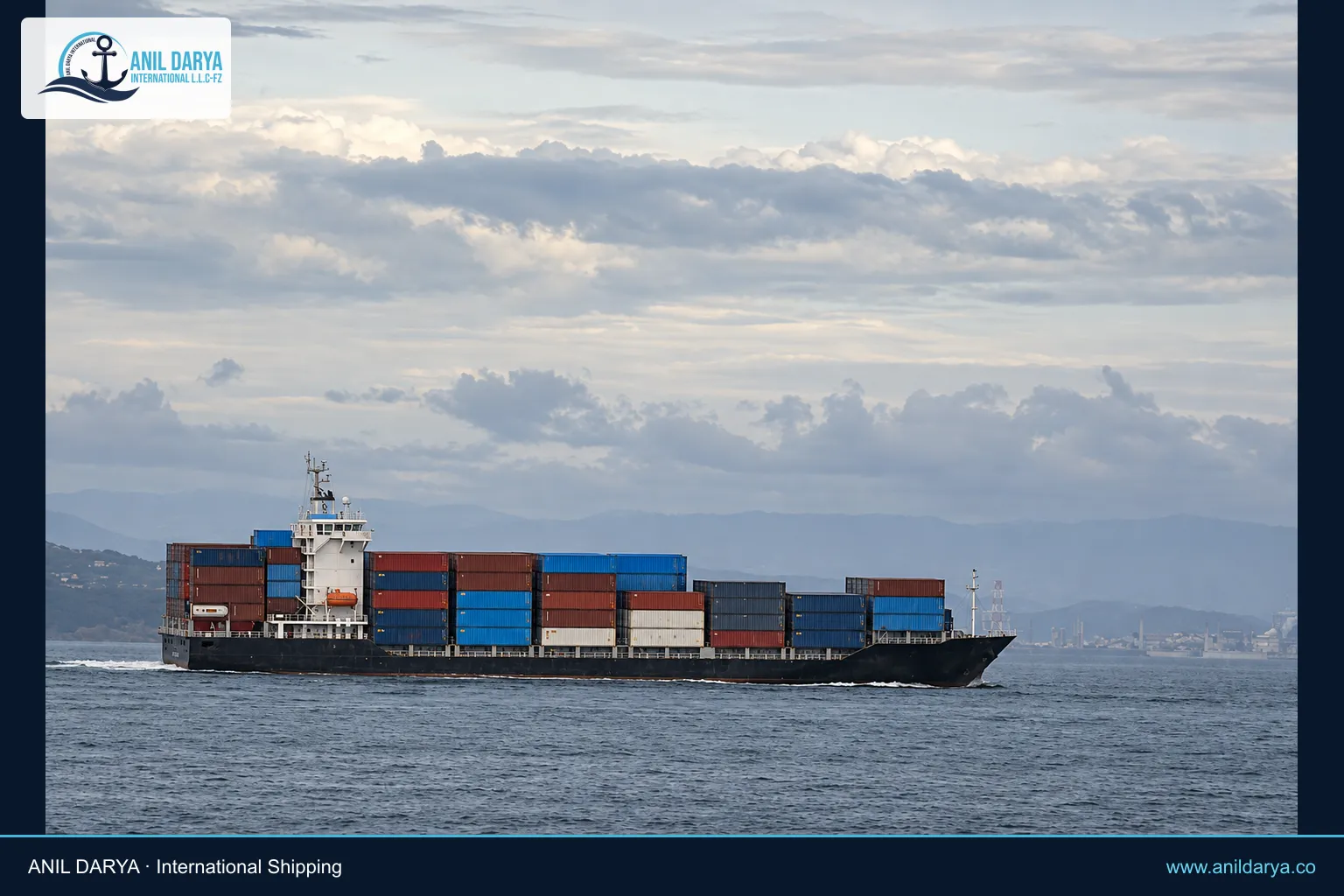
Typical cargo on this lane and the papers each needs
| Cargo | Usual equipment | Extra points for Algeria |
|---|---|---|
| Machinery and production lines | FCL, flat rack or breakbulk | New equipment only unless the broker confirms an exception; technical sheets for the tariff code |
| Household appliances, air conditioners | 40ft high cube | Arabic labels; refrigerant gas checked against the ozone rule |
| Solar panels, inverters, batteries | 40ft high cube | Batteries as DG with SDS and Chinese packaging certificates |
| Textiles and fabrics | 40ft or LCL | Exact fibre description for the tariff line; no second-hand clothing |
| Food ingredients | Reefer or dry FCL | Sanitary inspection document in the customs file |
Step by step: shipping from China to Algeria with Anil Darya
- Send us the supplier's city, the goods, HS codes, weights, volumes, the ready date and the Algerian delivery city.
- The importer's commissionnaire confirms the tariff code, duty, any DAPS, VAT, inspections and whether the product is allowed. Destination clearance is arranged with the consignee's broker before the cargo ships, and we coordinate this before we confirm the booking.
- The importer checks its PPI covers the goods and domiciles the import at its bank against the pro forma.
- We quote the load port, carrier, routing and Algerian discharge port, and book the space once you accept and the domiciliation date is known.
- The supplier applies Arabic labels, stuffs the container, issues the final invoice and packing list, and files the Chinese export declaration.
- The ship sails. We send you the B/L draft, check that its on-board date falls after the domiciliation date, and release the carrier's B/L through us.
- The ship unloads in Algeria. The broker files the detailed declaration well inside 21 days, with every document attached.
- Customs routes the file to the green, orange or red channel; the consignee or its broker pays duty and VAT.
- The box is released and trucked to the consignee, and the empty is returned to the line.
[AMIR-FACT: one real China to Algeria cross-trade shipment we handled (cargo, Chinese load port, Algerian discharge port, carrier, how the domiciliation date and B/L date were coordinated with the importer and its broker, and the outcome), cleared for publication]
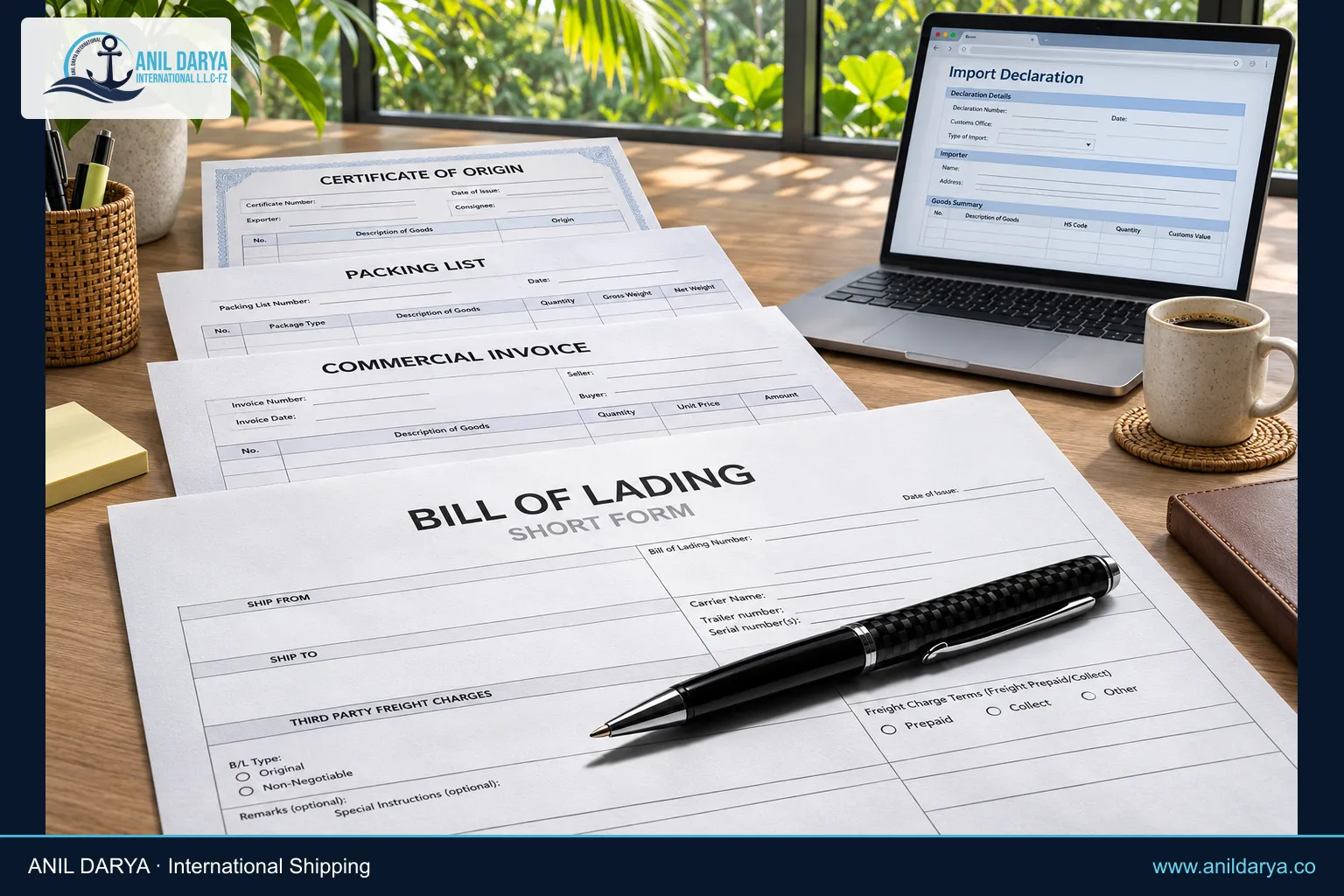
What drives the cost of container shipping from China to Algeria?
We do not publish rates, because they move with every sailing. These are the parts of your landed cost and who usually pays them.
| Cost part | What moves it | Usually paid by |
|---|---|---|
| Origin charges in China | Trucking, export filing, terminal handling, LCL loading | Supplier under FOB |
| Ocean freight and feeder | Box type, season, carrier, hub and discharge port | Buyer under FOB |
| Algerian port and line charges | Terminal handling, delivery order, container deposit | Consignee |
| Duty, DAPS and VAT | Tariff code, customs value, safeguard list | Consignee or its broker |
| Inspections | Red channel examination, conformity or sanitary checks | Consignee |
| Storage, demurrage and detention | Late declaration, missing documents, slow release | Whoever caused the delay, under your contract |
Our article on demurrage and detention explains how port waiting charges build up.
Checklist before the cargo leaves China
- Algerian importer with a commercial register entry matching the product and a tax number.
- PPI filed and covering the goods, or the broker's confirmation of the route that applies.
- Import domiciled at the bank, with the domiciliation date sent to us before loading.
- Tariff code, duty, DAPS and VAT checked with the commissionnaire.
- Product checked against the banned list, especially used goods and refrigerant gases.
- Arabic labels applied at the factory for consumer goods.
- Final invoice with all required details, packing list and certificate of origin.
- Broker named and clearance plan agreed before the booking is confirmed.
Mistakes that hold cargo in Algerian ports
- Shipping before destination clearance is agreed. With no commissionnaire ready, the 21-day clock runs out and the goods go into the deposit regime.
- Letting the supplier load before the bank domiciliation. A B/L dated earlier than the domiciliation can stop the bank from accepting the file.
- Changing quantities or prices after domiciliation, so the final invoice no longer matches the bank file.
- Buying used machinery or refurbished parts without checking the ban on used goods.
- Booking to Algiers when the consignee is in the east or west and another port would cut the truck leg.
- Expecting a duty preference because the goods were stored or consolidated in Dubai.
Frequently asked questions
Which Algerian port should my container from China go to?
Pick the port nearest the consignee that your carrier serves: Algiers for the centre, Oran for the west, Bejaia for Kabylie, and Djen Djen for the east and the oil and gas region. Djen Djen has the deepest container quay at 17 m, while Algiers has berths up to 11 m.
Does the bank domiciliation have to be done before loading?
Yes. Under Bank of Algeria note 01/DGC/2026 of 14 May 2026, an import of goods must be domiciled before the supplier ships, and the bank checks that the transport document is dated after the domiciliation. Send us the domiciliation date before the booking is confirmed.
What is the PPI?
It is the forecast import programme an importer files on the platform of the Ministry of Foreign Trade and Export Promotion for each half-year. The ministry treats it as a necessary step in requesting import authorisation, so your buyer should confirm the goods are covered before ordering.
What duty and VAT apply to goods from China?
Duty is set by the 10-digit tariff code, and some codes also carry the DAPS safeguard duty. VAT is then charged on the customs value plus duty; the customs example uses the 19% rate. China goods get no preference, so the general rate applies.
How long does the importer have to declare the goods?
Twenty-one clear days from unloading. After that, customs places the goods in the deposit regime for two months with late penalties, and unclaimed goods then pass to the treasury.
Does Anil Darya clear customs in Algeria?
No. The importer or its commissionnaire en douane files the declaration and clears the goods, and duty and taxes at destination are paid by the consignee or its broker. We agree the plan with that broker before we confirm the booking.
Can China cargo for Algeria go through Dubai?
Yes, to combine it with goods bought in the Gulf, to hold stock in Jafza, or to connect at Jebel Ali. The goods stay Chinese-origin, so no Arab free trade preference applies, and we handle UAE customs clearance for a fee whenever the cargo is landed in Dubai.
Get a quote for sea freight from China to Algeria
Tell us the supplier's city, the goods, the ready date, the Algerian city, your broker's name and the domiciliation status, and we will come back with a routing, a carrier and a price. Use our freight rate inquiry form, or contact our team to plan dangerous goods or project cargo first. You can also learn more about our Dubai freight forwarding team.
Sources
- Bank of Algeria: Note 01/DGC/2026
- Algerian Customs: Detailed declaration and documents
- Algerian Customs: Control channels
- Algerian Customs: Payment of duties
- Algerian Customs: Estimating duties and taxes
- Algerian Customs: Banned goods
- Algerian Customs: Preferential agreements
- Algerian Customs: GZALE rules
- Algerian Customs: Tariff database
- trade.gov: Algeria customs regulations
- trade.gov: Algeria import documents
- trade.gov: Algeria standards
- APS: PPI platform
- Algerie Eco: PPI window, second half 2026
- DP World Djazair: Algiers terminal
- DP World Djen Djen: Terminal data
- DP World Djen Djen: Our port
- Djen Djen Port: The port
- Bejaia Mediterranean Terminal: Partnership
- Valenciaport: Partners by TEU, H1 2025
- Shanghai Government: Export declaration
- CIRS: China DG packaging inspection
- Dubai Customs: Declaration regimes
- Dubai Chambers: Certificates of origin
- Jafza: About
Reviewed: 11 November 2026