
Shipping from Germany to Saudi Arabia is mostly a sea freight job: a container or a Ro-Ro or breakbulk unit loads at Hamburg, Bremerhaven or Wilhelmshaven and discharges at Jeddah or King Abdullah Port on the Red Sea coast, or at Dammam or Jubail on the Gulf coast. The German shipper files the export declaration in ATLAS, and the Saudi consignee's broker clears the goods through Fasah with a SABER shipment certificate, paying duty under the Saudi tariff and 15% VAT. Anil Darya books this lane from Dubai as a cross-trade: we book the ocean freight with the shipping line and coordinate the shipper in Germany and the broker in Saudi Arabia from start to finish.
Germany to Saudi Arabia shipping at a glance
| Item | Detail |
|---|---|
| Main mode | Sea freight: FCL, LCL, Ro-Ro for vehicles, flat rack and breakbulk for machinery |
| German load ports | Hamburg, Bremerhaven, Wilhelmshaven (JadeWeserPort) |
| Saudi discharge ports | West: Jeddah Islamic Port, King Abdullah Port. East: King Abdulaziz Port Dammam, Jubail |
| Routing | Direct call or transhipment, depending on the carrier and the month; confirmed on each booking |
| German export filing | Electronic export declaration in ATLAS-Ausfuhr, filed by the exporter or its agent; EORI number needed |
| Saudi import filing | Customs declaration on Fasah, at least 48 hours before the vessel arrives |
| Product conformity | SABER: product certificate (PCoC) for regulated products and a shipment certificate (SCoC) before the customs declaration |
| Customs duty | Ad valorem on the CIF value; GCC common external tariff of at least 5% on most goods, and a new Saudi tariff in force since 27 November 2025 with higher rates on some machinery, chemicals and steel |
| Import VAT | 15% on customs value plus duty and other charges |
| Tariff codes | 12-digit Saudi codes; the first six digits match the HS code used in Germany |
| Trade agreement | No EU-GCC free trade agreement in force, so German origin gives no duty preference |
| Who clears in Saudi Arabia | The consignee or its licensed Saudi customs broker, agreed before the cargo sails |
How a cross-trade booking on this lane works
On this lane the cargo never has to touch the UAE. It moves from a German quay to a Saudi quay, and we arrange the booking, carrier documents and coordination from our office in Dubai.
| Task | Who does it |
|---|---|
| Ocean freight booking, space, equipment, sailing choice | Anil Darya, with the shipping line |
| Pickup in Germany, container stuffing, export declaration in ATLAS | The German shipper or its origin agent; we agree times and cut-offs with them |
| Bill of lading | The shipping line's own B/L, issued and released to you through us as the carrier's agent |
| Saudi customs clearance, duty and VAT | The consignee or its Saudi customs broker |
| SABER certificates | Requested by the Saudi importer in SABER, with product data from the German manufacturer |
| Coordination from booking to delivery order | Anil Darya, between shipper, carrier and broker |
Anil Darya acts as agent for many shipping lines. On a cross-trade, the B/L you receive is the carrier's own document, and we handle its issue and release for you.
The Incoterm decides who pays which leg. Under FOB Hamburg, the German seller clears export and loads the box, and the Saudi buyer pays freight. Under CFR or CIF Jeddah, the seller pays freight to the Saudi port, but duty, VAT and Saudi port charges stay with the buyer. Under DAP or DDP, read the contract twice: a German seller cannot normally act as importer in Saudi Arabia without a local broker and importer of record. Our guide to Incoterms 2020 for sea freight sets out where risk passes in each case.
Which German port should you load at?
Pick the port with the best sailing to your Saudi port, not only the one nearest the factory. A box trucked or railed from Bavaria to Hamburg can still beat a closer port if Hamburg has the better service that week.
| Port | Key facts | Good for |
|---|---|---|
| Hamburg | Germany's largest seaport: 114.6 million tonnes and 8.3 million TEU in 2025, container volume up 7.3% | Most containerised cargo, project units through its multipurpose terminals, rail-fed boxes from south and east Germany |
| Bremerhaven | Container terminal with 14 berths for large ships, a 4,930 m quay, 14 to 16.5 m water depth and 5.21 million TEU in 2025 | Containers from north and west Germany, vehicles through its car terminal |
| Wilhelmshaven (JadeWeserPort) | Germany's deep-water container port on the Jade | Containers when the carrier's North Europe loop calls there instead of Hamburg |
Carrier rotations change during the year, so each quote names the load port, the vessel and whether it calls the Saudi port directly.
Which Saudi port is right for cargo from Germany?
Saudi Arabia has ports on two coasts, and choosing the wrong one adds a long truck haul across the country. The rule is simple: discharge at the port closest to where the goods are used.
| Saudi port | Coast | Key facts | Best for consignees in |
|---|---|---|---|
| Jeddah Islamic Port | Red Sea | RSGT runs a container terminal with 6.2 million TEU capacity on a 3,300 m quay and a multipurpose terminal with 12 berths for containers, bulk and breakbulk | Jeddah, Makkah, Madinah and the western region |
| King Abdullah Port | Red Sea | Privately owned port in King Abdullah Economic City; 5.5 million TEU current container capacity, a Ro-Ro terminal with 200,000 CEU current capacity and a bonded re-export zone | Vehicles, Rabigh and KAEC, the western region |
| King Abdulaziz Port, Dammam | Gulf | 43 berths, a container terminal plus two general cargo terminals, 105 million tonnes capacity and a railway to the dry port in Riyadh | Dammam, Khobar, Riyadh by rail or road, the Eastern Province |
| Jubail | Gulf | Commercial and industrial ports beside Jubail Industrial City | Petrochemical and industrial projects in Jubail |
Riyadh has no seaport. Cargo for Riyadh usually lands at Dammam and moves on by rail or truck. Fix the delivery city before booking, because changing the discharge port after loading is costly.
Direct sailings or transhipment?
From North Europe, Jeddah and King Abdullah Port sit on the main east-west container routes, so they are often called directly or through one Mediterranean hub. Dammam and Jubail are further away, and boxes for the Gulf coast are more often transhipped at a hub port and carried on a second vessel.
A direct call means one vessel and a steadier arrival date. Transhipment widens the choice of sailings but adds a connection. Either way the B/L runs from the German port to the Saudi port.
We do not publish a transit figure here. Each quote gives the carrier's current schedule for the sailing we offer.
[AMIR-FACT: the carriers we actually book from Hamburg, Bremerhaven or Wilhelmshaven to Jeddah, King Abdullah Port and Dammam in 2026, direct or via which hub, and our real port-to-port days for FCL and LCL]
Sea freight from Germany to Saudi Arabia: which equipment?
German shipments to the Kingdom are heavy on machinery, vehicles and medicines, so this lane uses more flat racks, Ro-Ro and reefers than most.
FCL and LCL
A full container suits factory loads, spare parts stock and heavy items such as pumps, valves and tooling. LCL suits small orders and first shipments, but each LCL lot must be cleared in Saudi Arabia on its own papers, so the SABER and invoice work is the same as for a full box. If you buy from several German suppliers, consolidating them into one FCL at a German warehouse often costs less than several LCL lots. Our article on FCL vs LCL shows where that break-even usually falls, and our sea freight service covers container types.
Vehicles and rolling equipment
New cars, trucks, buses and wheeled or tracked machines can move Ro-Ro. King Abdullah Port's Ro-Ro terminal handles import, export and re-export of cars. Vehicles are regulated products in Saudi Arabia, so conformity and registration rules apply before customs will release them. Check them with the Saudi broker before the vessel is booked.
Machinery, breakbulk and project cargo
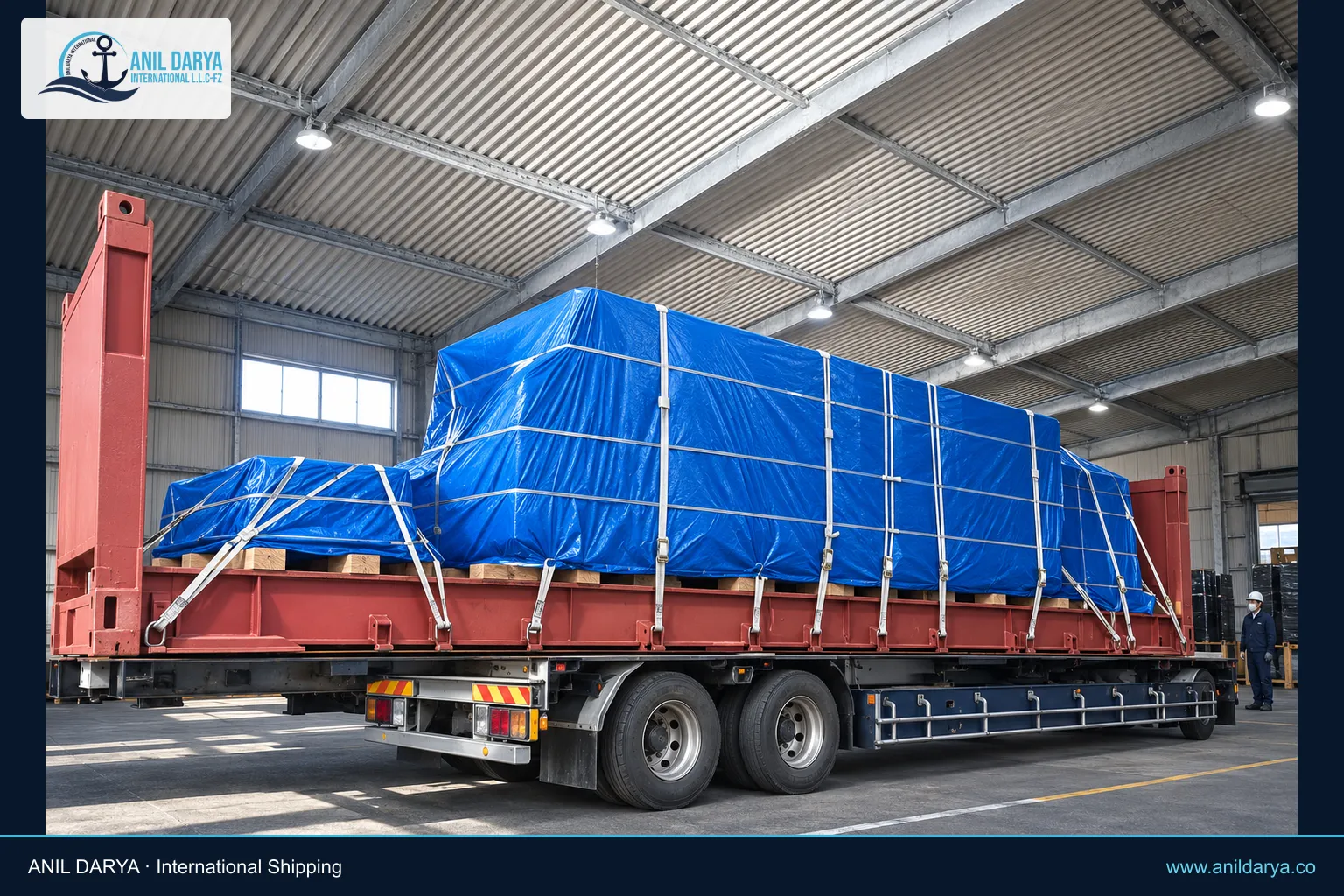
Presses, turbines, transformers and plant modules often exceed container size. Pieces that fit a 40ft flat rack or open top can travel on container ships, which gives more sailings. Larger units need breakbulk or heavy-lift tonnage, and the vessel date then drives the whole plan. Hamburg handles unit loads of just over 400 tonnes through its multipurpose terminals, and the Jeddah multipurpose terminal handles breakbulk.
- Get drawings, weights, centre of gravity and lifting points for every piece.
- Choose flat rack, open top or breakbulk, and get carrier acceptance in writing.
- Agree lashing and securing with the carrier and the German terminal.
- Prepare one master packing list that matches the invoice, the B/L and the SABER data.
- Agree discharge, port storage and the road permit for the Saudi leg with the consignee's broker and haulier.
Our break bulk and project cargo team plans the carrier side of these moves.
Reefer cargo
Many German medicines need a set temperature. Put it in the booking, and make sure the Saudi importer holds the product approval before loading, or the reefer waits at the port on power and storage charges.
Dangerous goods
Industrial chemicals, coatings, adhesives, lithium batteries in equipment and some spare parts move as dangerous goods under the IMDG Code, whose 2024 edition (Amendment 42-24) has been mandatory since 1 January 2026. The German shipper supplies the UN number, class, packing group, Safety Data Sheet and a signed DG declaration. On the Saudi side, chemicals need permits from the competent ministry. Our dangerous goods desk checks the papers and gets carrier approval before we confirm a DG booking.
Export from Germany: what the shipper must file
The export side is the German shipper's job, or its origin agent's. We coordinate with them but do not file in Germany.
- EORI number. Anyone who exports goods from the EU needs one, issued by the national customs authority.
- Export declaration. In Germany it is filed electronically in ATLAS-Ausfuhr, through certified software or the customs internet portal. It is lodged at the export customs office (Ausfuhrzollstelle), where the goods are packed or loaded.
- Exit. The customs office of exit, normally at the seaport, supervises departure. Once it confirms exit, the export office issues the exit notice (Ausgangsvermerk), which the exporter keeps as proof of export.
- Controls. Dual-use goods need an authorisation from BAFA, Germany's export control office. Many machine tools, sensors, chemicals and electronics fall under the dual-use list, so check before you sell.
Keep the value and description in the German export declaration identical to the invoice the Saudi broker files.
Certificate of origin and legalisation
Saudi buyers normally ask for a certificate of origin, issued by the German Chamber of Industry and Commerce (IHK). IHK Cologne advises that the certificate and the commercial invoice usually need consular legalisation by the Saudi embassy, and that the invoice should state the origin as "Federal Republic of Germany" and show freight and insurance separately on CIF sales. An electronic certificate of origin is possible, but the Saudi buyer must first request it through the Saudi foreign ministry portal.
Saudi customs for goods shipped from Germany
The Zakat, Tax and Customs Authority (ZATCA) runs Saudi customs. Clearance is done on the Fasah platform, by the importer directly or through a customs broker.
Fasah declaration and documents
| Document | Prepared by | What to check |
|---|---|---|
| Commercial invoice | German seller | Detailed description, HS code, brand, serial numbers, weights, origin, Incoterm; legalised if the buyer requires it |
| Bill of lading | Shipping line, released through us | Consignee and notify party match the Saudi importer; weights and pieces match the packing list |
| Certificate of origin | IHK in Germany | Needed unless origin is otherwise clearly established; legalised where required |
| Packing list | German seller | Piece by piece for machinery; marks match the cases |
| SABER shipment certificate | Saudi importer, through SABER | Issued before the customs declaration |
| IECEE certificate, product registration or permits | Manufacturer and Saudi importer | Only for goods that need them; check the tariff line |
ZATCA requires the documents and the declaration on Fasah at least 48 hours before the shipment arrives at the port of entry. In practice that means the broker needs final papers while the vessel is still at sea.
SABER conformity certificates
SABER is the online conformity platform of the Saudi Standards, Metrology and Quality Organization (SASO). For a regulated product, the importer registers a Product Certificate of Conformity (PCoC). For each shipment, it then gets a Shipment Certificate of Conformity (SCoC). SABER lists the fees as SAR 500 to register a product certificate and SAR 350 to issue a shipment certificate, both before VAT. IHK Cologne notes that since 1 October 2025 importers must apply for the shipment certificate in SABER before the customs declaration, otherwise the goods cannot be imported. A CE mark on German equipment helps with test reports, but it is not a SABER certificate.
Customs duty under the Saudi tariff
Saudi Arabia applies the GCC common external tariff of at least 5% on most goods from outside the GCC, charged ad valorem on the CIF value. Some goods are duty free, such as rice, bulk animal feed, livestock, fresh red meat, coffee and tea. Some processed foods carry higher rates of up to 40% where local production is high. A new Saudi tariff took effect on 27 November 2025, and IHK Cologne warns that rates on some machinery, chemicals and steel products now go well above 5%. Since January 2025 the tariff uses 12-digit codes, and incomplete codes delay clearance.
There is no EU-GCC free trade agreement. The European Commission says regional negotiations were suspended in 2008, so an EUR.1 or EU origin statement does not reduce Saudi duty. Confirm the 12-digit line and rate with the Saudi broker before pricing.
Import VAT of 15%
ZATCA charges 15% VAT on imports. The base is the customs value plus excise, customs duty and other charges, excluding VAT itself, so freight from Germany and the duty both raise the VAT due. A VAT-registered importer can apply to pay import VAT through its VAT return instead of at clearance. The conditions include a monthly tax period with imports at least once a month and 12 months of on-time returns and payments.

Agree Saudi clearance before your cargo leaves Germany
Destination customs clearance is not a service we sell in Saudi Arabia. It is done by the consignee or its own licensed Saudi customs broker. That is why we confirm the clearance arrangement before we confirm the booking.
- We ask for the consignee's legal name, its importer details and the name of its Saudi broker.
- The broker confirms it will handle the shipment and which documents and certificates it needs.
- The importer confirms the SABER status of every regulated item and any permits.
- Only then do we release the booking and send cut-off dates to the German shipper.
A box that lands with no broker or no SCoC runs up storage, demurrage and detention once free time ends. See our article on demurrage and detention.
Restricted and prohibited goods in Saudi Arabia
ZATCA requires permits from the competent authorities for restricted goods and refuses goods that are prohibited internationally or locally, as well as counterfeit or adulterated goods. For German shippers, the groups that most often need extra approval are:
- Pharmaceuticals, medical devices and cosmetics.
- Chemicals, including many industrial and cleaning products.
- Telecom and IT equipment, printers and toners.
- Vehicles and spare parts covered by technical regulations.
Pork products, alcohol and foods that contain alcohol, ozone-depleting substances, non-biodegradable plastic bags and used household appliances for resale are on the banned list that IHK Cologne publishes for Saudi Arabia.
Where Dubai can help when shipping from Germany to Saudi Arabia
Most cargo should go direct. Routing through Dubai makes sense in three cases.
| Option | How it works | When it helps |
|---|---|---|
| Transhipment at Jebel Ali | The carrier discharges the box at Jebel Ali and loads it on a feeder to Dammam or Jubail; the B/L still reads German port to Saudi port | When the best Gulf-coast sailing from Germany connects through Jebel Ali |
| Consolidation in Dubai | Cargo from Germany and other origins is received in Dubai and reloaded as one shipment for Saudi Arabia | Buyers who combine European and Asian suppliers into one Saudi delivery |
| Stock in a Dubai free zone, then re-export | Goods are held in JAFZA and shipped to Saudi Arabia in smaller lots as orders come in | Distributors who sell across the GCC and need stock close to Saudi customers |
Our Jebel Ali port guide covers the port, and our article on JAFZA re-export explains the free zone route. Where cargo enters or leaves the UAE, Dubai customs clearance is a service we provide for a fee.
The duty works differently on each route. Under the GCC customs union, duty is collected at the first point of entry, and goods that move on to another member state are not reassessed for duty if payment at the first point of entry is proven. If payment is not proven, duty is levied at the entry point of the final destination country. Goods held in a free zone and re-exported have not paid UAE duty, so Saudi duty is due on arrival. Saudi import VAT applies either way, because ZATCA treats goods received from another GCC state as imports. Confirm the treatment with your Saudi broker before choosing a Dubai route.
[AMIR-FACT: whether we currently route any Germany to Saudi Arabia cargo via Jebel Ali (transhipment or Dubai consolidation), and which feeder or carrier we use to Dammam or Jubail]
What cargo moves on this lane?
Saudi government trade data shows imports from Germany of SAR 42.0 billion in 2025. The largest groups were boilers, machinery and mechanical goods (SAR 11.2 billion), vehicles (SAR 6.9 billion) and pharmaceutical products (SAR 5.2 billion). That mix shapes how the lane is shipped.
| Cargo group | Usual shipping method | Main Saudi requirement to check |
|---|---|---|
| Industrial machinery and spare parts | FCL, flat rack, breakbulk | SABER certificates, 12-digit tariff line and rate |
| Cars, trucks, buses | Ro-Ro, sometimes containers | Vehicle conformity and registration rules |
| Medicines and medical devices | Reefer or dry FCL, LCL for small lots | Product approval and registration |
| Chemicals and coatings | FCL, often as dangerous goods | Chemical permit, SDS, IMDG declaration |
| Electrical and telecom equipment | FCL or LCL | SABER and any telecom approval |
What affects the cost of sea freight from Germany to Saudi Arabia?
We do not publish rates, because they change with each sailing. These are the parts of the landed cost.
| Cost part | Who usually pays | What moves it |
|---|---|---|
| Pickup, stuffing, German terminal handling, export filing | Seller under FOB, buyer under EXW | Factory distance from the port, truck or rail, export declaration fee |
| Ocean freight and surcharges | Depends on Incoterm | Container size, equipment type, season, carrier, direct or transhipped, fuel adjustment |
| Special equipment | As above | Flat rack or open top premiums, lashing, breakbulk rates, DG and reefer surcharges |
| Documents | Seller, often recharged | IHK certificate of origin, consular legalisation, courier of originals |
| Conformity | Saudi importer | SABER fees and any testing or certification body charges |
| Saudi port and broker | Buyer | Terminal handling, delivery order, broker fee, inspection |
| Duty and VAT | Consignee or its broker | Tariff line, CIF value, 15% VAT on the duty-inclusive value |
| Delays | Whoever caused them | Demurrage and detention when papers or SABER are late |
Duty and taxes at destination are paid by the consignee or its broker. Compare quotes on the same Incoterm, ports and scope.
How to ship from Germany to Saudi Arabia: step by step
- Agree the Incoterm, the port of discharge and the delivery city with your buyer or seller.
- Send us the cargo details: commodity, HS code, weights, dimensions, German pickup address, ready date, and whether anything is DG, reefer or oversized.
- Get our routing and quote: load port, carrier, direct or transhipment, and any Dubai option that fits.
- Confirm Saudi clearance: the consignee names its broker, and the broker confirms documents, SABER and permits.
- Book the space. For DG, reefer, Ro-Ro or out-of-gauge cargo we get carrier acceptance first.
- The German shipper or its origin agent arranges pickup, stuffing and the ATLAS export declaration before the cut-off.
- The seller gets the IHK certificate of origin and any legalisation; the importer gets the SABER shipment certificate.
- We check the draft B/L against the invoice and packing list, then the carrier's B/L is issued and released through us.
- The Saudi broker files on Fasah at least 48 hours before arrival and arranges payment of duty and VAT by the consignee.
- The broker collects the delivery order, the cargo is released and delivered, and the empty is returned within free time.
[AMIR-FACT: one real Germany to Saudi Arabia cross-trade shipment we booked (cargo, German load port, Saudi port, equipment, days door to door, and what we solved), cleared for publication]
Our Dubai freight forwarding team runs these steps.
Checklist before the cargo sails from Germany
- Incoterm, port of discharge and delivery city written in the contract.
- Saudi consignee and its broker confirmed, with their document list.
- 12-digit Saudi tariff line and duty rate confirmed for each item.
- SABER product certificates in place and the shipment certificate requested.
- Permits obtained for medicines, chemicals, telecom items or vehicles.
- Exporter has an EORI number and files ATLAS before the cut-off.
- Dual-use status checked, with BAFA authorisation if needed.
- IHK certificate of origin and any legalisation of invoice and certificate arranged.
- For DG: SDS, IMDG declaration and carrier approval. For oversized cargo: drawings, weights and lifting points.
Common mistakes on the German-Saudi lane
- Shipping before destination clearance is agreed. With no broker or importer ready, the cargo sits at the Saudi port and charges build daily.
- Assuming the CE mark is enough. SABER needs its own product and shipment certificates.
- Using an old duty rate. The tariff changed on 27 November 2025, and some machinery and chemical lines rose well above 5%.
- Expecting an EU origin discount. No EU-GCC trade agreement is in force.
- Picking the wrong coast. Cargo for Riyadh or the Eastern Province discharged at Jeddah faces a long truck haul.
- Skipping the dual-use check. A BAFA licence issue stops the export in Germany.
- Late legalisation. Consular stamps take time, and the broker needs the papers before the 48-hour Fasah deadline.
Frequently asked questions
Which ports are used when shipping from Germany to Saudi Arabia?
Most cargo loads at Hamburg, Bremerhaven or Wilhelmshaven. It discharges at Jeddah or King Abdullah Port on the Red Sea coast for the west, or at Dammam or Jubail on the Gulf coast for the east and for Riyadh by rail or road.
How long does sea freight from Germany to Saudi Arabia take?
It depends on the carrier, the port pair and whether the box is transhipped. Western ports are usually reached faster than Gulf-coast ports. We give the carrier's current schedule for the exact sailing on every quote rather than a general figure.
What is the customs duty on German goods in Saudi Arabia?
Most goods pay at least 5% on the CIF value under the GCC common external tariff, but the Saudi tariff that took effect on 27 November 2025 has higher rates on some machinery, chemicals and steel. Check the 12-digit tariff line with a Saudi broker before you price the order.
Is there VAT on imports from Germany into Saudi Arabia?
Yes. Saudi Arabia charges 15% VAT on the customs value plus duty and other charges. Approved VAT-registered importers can pay it through their VAT return instead of at clearance.
Do German products need SABER certificates?
Regulated products need a Product Certificate of Conformity registered in SABER, and every shipment needs a Shipment Certificate of Conformity before the customs declaration. SABER lists fees of SAR 500 for a product certificate and SAR 350 for a shipment certificate, before VAT.
Who issues the bill of lading on a cross-trade booked through Anil Darya?
The carrier does. You get the shipping line's own B/L for the German port to Saudi port leg, and because we act as agent for many lines, its issue and release run through our Dubai office.
Does Anil Darya clear customs in Saudi Arabia?
No. Saudi clearance is done by the consignee or its own Saudi customs broker. We confirm that arrangement with them before we confirm the booking, and we coordinate the documents through to the delivery order.
Can I route German cargo for Saudi Arabia through Dubai?
Yes, when it helps: transhipment at Jebel Ali for Gulf-coast ports, consolidation with other suppliers in Dubai, or stock held in JAFZA and re-exported in lots. Saudi duty and VAT rules differ by route, so confirm them with your broker first.
Get a quote for shipping from Germany to Saudi Arabia
Send us the German pickup point, the Saudi delivery city, cargo details and ready date, plus your broker's name if you have one. Use our freight rate inquiry form, or contact our team to plan a project, DG or Ro-Ro shipment first.
Sources
- ZATCA: Import instructions
- ZATCA: Importation rules
- ZATCA: Guideline on imports and exports under VAT provisions
- SABER platform (SASO): certificate fees
- US International Trade Administration: Saudi Arabia import tariffs
- IHK Koeln: Import requirements in Saudi Arabia
- European Commission: EU trade relations with the Gulf region
- UAE Federal Authority for Identity, Citizenship, Customs and Port Security: Customs union for GCC states
- German customs (Zoll): IT procedure ATLAS-Ausfuhr
- German customs (Zoll): Dual-use items
- Your Europe: Customs procedures on exports
- Port of Hamburg: Throughput figures for 2025
- Port of Hamburg: Terminals
- bremenports: Bremerhaven containers
- Red Sea Gateway Terminal: Terminal and services, Jeddah Islamic Port
- King Abdullah Port: owner, capacity, terminals and logistics zones
- Saudipedia: King Abdulaziz Port in Dammam
- DataSaudi: Saudi imports from Germany 2025
- IMO: IMDG Code 2024 edition
Reviewed: 11 November 2026