
Shipping from India to Bangladesh by sea usually means a container loaded at Kolkata, Haldia, Visakhapatnam, Chennai or Krishnapatnam and discharged at Chattogram (Chittagong), or a box from Nhava Sheva or Mundra that changes ship at Colombo first. The Indian seller files the shipping bill on ICEGATE, the Bangladeshi buyer's C&F agent clears the goods in ASYCUDA World, and a SAFTA or APTA certificate of origin can cut the customs duty. We book the ocean freight from Dubai, release the carrier's bill of lading and keep seller, buyer and agent on one timetable.
Shipping from India to Bangladesh at a glance
| Item | Detail |
|---|---|
| Scope of this guide | Sea freight only: FCL, LCL, flat rack, breakbulk and dangerous goods |
| East coast load ports | Kolkata and Haldia, Visakhapatnam, Paradip, Krishnapatnam, Chennai, Kattupalli |
| West and south load ports | Nhava Sheva, Mundra, Cochin, Tuticorin, mostly via a transhipment hub |
| Main discharge port | Chattogram: 3,531,118 TEU in fiscal year 2025-26 (Chittagong Port Authority) |
| Ship limits at Chattogram | Jetty berths take ships up to 10.0 m draught and 200 m length |
| Bilateral sea framework | India-Bangladesh Agreement on Coastal Shipping, signed 6 June 2015 |
| Indian export filing | Shipping bill on ICEGATE by the exporter or its customs broker |
| Bangladesh import filing | Bill of entry in ASYCUDA World by the importer's licensed C&F agent |
| Trade preference | SAFTA (customs duty 0%, 3% or 5% on listed HS codes) or APTA margins of preference |
| Standard VAT at import | 15%, plus other duties and advance taxes set by HS code |
How a cross-trade booking from India to Chattogram works
On a normal booking the box goes from an Indian port to Bangladesh without touching the UAE, while we run the ocean leg from Dubai.
| Party | What it does |
|---|---|
| Indian seller or its customs broker | Stuffs the box, files the shipping bill, gets the SAFTA or APTA certificate if the buyer claims it, gates in before cut-off |
| Anil Darya, Dubai | Compares sailings, books the space, checks the draft B/L against Bangladesh rules, tracks the box, releases the carrier's B/L |
| Shipping line | Carries the container, files the import manifest in Bangladesh, issues its own B/L |
| Bangladeshi buyer and its C&F agent | Holds the IRC and BIN, files the bill of entry, pays duty and VAT through the bank, takes delivery |
You get the shipping line's own bill of lading. We act as agent for many lines, so the carrier issues its B/L and we hand it over once freight is paid. Bangladeshi banks finance many cotton and yarn orders under letters of credit, and they want the line's original with the consignee and BIN exactly as the credit states. If an LC is open, it also fixes the load port, the latest shipment date and the Incoterm, usually FOB or CFR, so read it before we ask for space. Our guide to Incoterms 2020 for sea freight shows where risk moves.
Which Indian port to load at for Bangladesh
Pick the port near the factory that has a Chattogram connection. West coast cargo nearly always meets a feeder.
| Supplier region | Usual port | What to know for Bangladesh |
|---|---|---|
| West Bengal, Bihar, Jharkhand, Northeast | Kolkata Dock System, Haldia Dock Complex | River ports on the Hooghly run by Syama Prasad Mookerjee Port; draught changes with the tide and season, so check the port's published draft forecast |
| Odisha, Andhra Pradesh, Telangana | Paradip, Visakhapatnam, Krishnapatnam | All three are ports of call under the coastal shipping agreement; Visakhapatnam's container berth takes 16.0 m draught at plus 1.0 m tide |
| Tamil Nadu, Karnataka | Chennai, Kattupalli, Tuticorin | Chennai is on the agreement's routes; Tuticorin cargo usually feeds via Colombo |
| Gujarat, Maharashtra, Punjab, NCR | Nhava Sheva, Mundra | Big mainline ports; Bangladesh cargo usually goes via Colombo or Singapore |
For yarn spun in Punjab or Gujarat, ask for two quotes: rail to an east coast port plus a short crossing, and Mundra plus a hub. The cheaper ocean rate is not always the cheaper total.
Chattogram, Mongla and delivery to Dhaka
Chattogram takes almost all of Bangladesh's containers: 3,531,118 TEU and 4,336 ship calls in fiscal year 2025-26, per the Chittagong Port Authority. On the Karnaphuli River, its jetty berths take ships up to 10.0 m draught and 200 m length, so feeders on this lane are small.
| Delivery point | When it fits Indian cargo | FY 2025-26 figure |
|---|---|---|
| Chattogram Port | Default for containers, breakbulk and bagged cargo | 3,531,118 TEU |
| Kamalapur ICD, Dhaka | Box railed on from Chattogram for a Dhaka buyer | 29,670 TEU import |
| Pangaon terminal | Box sent up river from Chattogram | 4,741 TEU import |
| Mongla Port | Buyers in Khulna and the southwest, when a carrier calls | 29,714 TEU |
Not every box can go inland: Maersk, for example, delivers to Dhaka on CY terms only and refuses reefer, out-of-gauge and 45ft boxes there. Mongla and Pangaon are ports of call under the coastal shipping agreement, but confirm a real sailing first.
Sea freight from India to Bangladesh: coastal sailings or a hub?
The first is a short sea sailing across the Bay of Bengal. India and Bangladesh signed an Agreement on Coastal Shipping on 6 June 2015 and its operating procedure on 15 November 2015, according to a working note by the CUTS research centre. Its routes run from Chennai through Krishnapatnam, Kakinada, Visakhapatnam, Paradip, Haldia and Kolkata to Mongla, Payra, Chittagong and the Dhaka river ports, and ships under it pay port charges as coastal vessels. The first sailing, in March 2016, linked Chittagong and Krishnapatnam for cotton. The Financial Express reported in July 2020 that Kolkata and Chattogram are about 200 nautical miles apart, nearly two days' sailing.
The second is transhipment at Colombo or Singapore. ONE's 2025 India service guide shows the pattern: feeders link Calcutta with Colombo, a coastal loop calls at Mundra, Pipavav, Mangalore, Cochin, Colombo, Kattupalli and Visakhapatnam, and a dedicated Bangladesh feeder (BA2) shuttles between Chittagong and Colombo.
| Routing | How the box moves | Best for |
|---|---|---|
| Short sea from the east coast | Kolkata, Haldia, Visakhapatnam or Krishnapatnam straight to Chattogram or Mongla | Yarn, chemicals, steel and raw cotton from eastern and southern India |
| Feeder via Colombo | West or south coast port to Colombo, feeder to Chattogram | Factories near Mundra, Nhava Sheva, Cochin or Tuticorin |
| Feeder via Singapore | Mainline to Singapore, feeder to Chattogram | When the Colombo connection is full or slower for that week |
| Via Jebel Ali | Separate bookings India to Dubai and Dubai to Chattogram | Only when Indian goods join stock or cargo already in Dubai |
Carriers add and drop Chattogram calls often, so we confirm the vessel and hub for your actual sailing.
[AMIR-FACT: the carriers and services we actually book from India to Chattogram (east coast short sea vs Colombo or Singapore feeder), and our real port-to-port transit days from Kolkata/Haldia, Chennai and Nhava Sheva/Mundra]
FCL, LCL and special equipment
| Option | Typical India to Bangladesh cargo | Watch point |
|---|---|---|
| 20ft dry | Steel billets and sections, cement inputs, bagged chemicals, rice and pulses | Maersk's limit for a 20ft is 24,000 kg gross (cargo plus tare) |
| 40ft dry or high cube | Cotton yarn, raw cotton bales, fabric, vehicle parts, machinery | 30,400 kg gross for 40ft and 45ft under Maersk's rules |
| LCL | Spares, samples, small chemical lots | Unpacked at a freight station; the slowest consignee holds the rest |
| Flat rack or open top | Spinning machines, transformers, pump sets | No out-of-gauge delivery to Dhaka on some lines |
| Reefer | Fresh produce, some food ingredients | Maersk delivers reefers at Chattogram CY only |
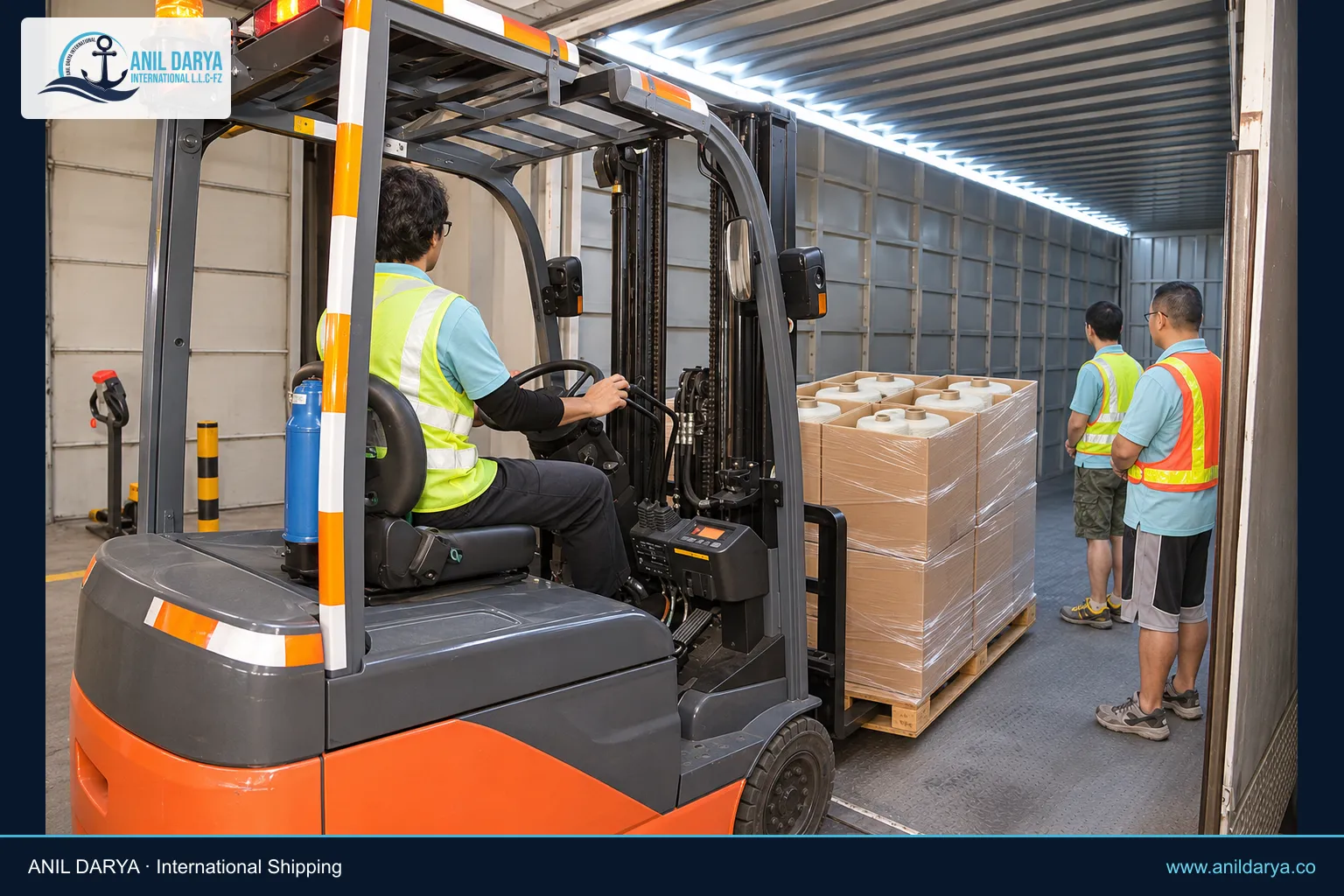
Declared weights must be real. Maersk states that the gross weight and volume on the B/L must agree with the packing list and the actual stuffing; a mismatch is treated as a breach of customs licensing rules. Our FCL vs LCL guide helps you pick, and our sea freight service books the equipment.
Dangerous goods and project cargo to Chattogram
Bangladesh's textile mills buy dyes, caustic soda, hydrogen peroxide and other process chemicals from India, and several of those are dangerous goods. They move under the IMDG Code, 2024 edition (Amendment 42-24), mandatory since 1 January 2026, with a safety data sheet, DG declaration and UN-approved packaging.
Bangladesh Customs lists a DG certificate among its import documents, and Maersk's Bangladesh page shows typical carrier limits:
- no IMO Class 1 or Class 7 cargo for import as a general policy;
- DG only in 20ft, 40ft and 40ft high cube dry boxes, never in reefers;
- the IMO class, UN number and technical name printed on the B/L;
- the consignee's DG documents at the line's Chittagong office 72 hours before the feeder arrives.
We get the carrier's acceptance for the UN number before packing. Our dangerous goods team checks class limits for each line.
Indian transformers, boilers and steel structures that outgrow a flat rack need a breakbulk ship. At Chattogram the CPA lists six general cargo berths and mobile cranes up to 100 tonnes, and its general cargo jetties 2 to 8 take ships drawing no more than 8.55 m. Send drawings, weights and lifting points early to our break bulk and project cargo team.
The Indian export side: IEC, shipping bill and ICEGATE
On FOB and CFR terms the seller, or its customs broker, handles export. We coordinate dates and papers with them.
- Importer Exporter Code. The DGFT issues it online. It is a 10-character code equal to the firm's PAN, and exporting needs one unless the firm is exempt.
- Export policy check. The DGFT's ITC(HS) export schedule marks some goods as restricted or needing an authorisation. The seller confirms its HS code is free to export before it books.
- Shipping bill. It is filed electronically on ICEGATE with a registered ICEGATE ID and a Class 3 digital signature certificate. Customs then lets the goods be loaded.
- Export general manifest. The line files it after sailing. ICEGATE notes that if an IGST refund stalls because the EGM is missing, the exporter must ask the line to file it.
The HS code, value and quantity on the shipping bill, invoice and certificate of origin must match, because the buyer's bank and Bangladesh Customs compare them.
SAFTA and APTA: cutting the duty on Indian goods
Indian cargo can enter Bangladesh at a preferential rate, and many sellers forget to claim it. The Bangladesh Customs Import Export Hub lists two agreements that cover India:
| Agreement | What Bangladesh gives Indian goods | Legal basis |
|---|---|---|
| SAFTA (South Asian Free Trade Area) | Customs duty of 0%, 3% or 5% on HS codes in the SRO table | SRO 78 of 2015, SRO 181 of 2020, SRO 188 of 2022 |
| APTA (Asia-Pacific Trade Agreement) | Margin of preference of 10% to 70% off customs duty on listed HS codes | SRO 267 of 10 September 2018 |
Codes left out of the SRO tables pay the normal rate, and the preference reduces customs duty only, not VAT or the other taxes. Your C&F agent checks which agreement, if either, gives the better result for each HS code.
The proof is a certificate of origin, and SAFTA's own procedures, printed in SRO 78 of 2015, are strict:
- It is issued by the authority India designates, at the time of export or within 3 working days of shipment. A late certificate is possible up to 45 days after shipment, marked "ISSUED RETROSPECTIVELY".
- It is in English, with a light orange original that the importer hands to Customs, and is valid for 12 months.
- No erasures are allowed, and the HS code, FOB value, weights and marks must match the shipment.
The goods must also qualify. Under SAFTA Rule 8, a product that is not wholly Indian qualifies if it changes tariff heading at the four-digit level in India and non-originating materials stay at or below 60% of the FOB value; some products follow specific rules in Annex-A, such as a change of subheading plus 30% domestic value added for transformers. Rule 12 then asks for direct consignment, covered in the Dubai section below.
[AMIR-FACT: whether our Bangladeshi consignees usually claim SAFTA or APTA on Indian cargo, which Indian office issued the certificates, and any claim that was refused at Chattogram and why]
Bangladesh importer setup: IRC, BIN and the payment route
The Import Registration Certificate comes from the Chief Controller of Imports and Exports (CCI&E) under the Ministry of Commerce. Commercial importers and private industrial users apply, and it is generally issued within three working days; firms inside Export Processing Zones register with BEPZA instead. The BIN is the buyer's VAT registration number. Lines print it on the B/L, and Maersk rejects any BIN that is not 11 digits or that begins with a zero.
Then the payment route. On 13 September 2026 Bangladesh Bank told banks that, under the Import Policy Order 2026-2029, industrial and commercial importers may import allowable goods on sales contracts without an LC, and it introduced open account payment. The order runs to 31 December 2029. Many Indian cotton and machinery sales still use LCs, and then the bank is the consignee on the B/L.
Bill of lading rules for Chattogram
An Indian seller used to Gulf or European buyers can easily send a B/L that Bangladesh will not accept. We check every draft against the rules Maersk publishes for Bangladesh imports, whichever line carries the box:
- Consignee: a Bangladeshi bank, a Bangladeshi importer with an 11-digit BIN, or a government-approved freight forwarder with a 9-digit AIN.
- No foreign consignee, and no "To order" or "To the order of shipper".
- Notify party in Bangladesh, not a bank as first notify, and never "same as consignee".
- HS code and an exact description, with technical names for chemicals and raw materials.
- The actual seal number on the B/L, and freight prepaid, since freight collect is not accepted for Bangladesh imports.
So on FOB India, the buyer pays the freight before sailing.
Customs clearance in ASYCUDA World
Bangladesh Customs, part of the National Board of Revenue, clears imports in ASYCUDA World. The system is linked to banks for duty payment and LCs, and to the port's container terminal system for release. UNCTAD reports that 82% of declarations were assessed within three days in 2021.
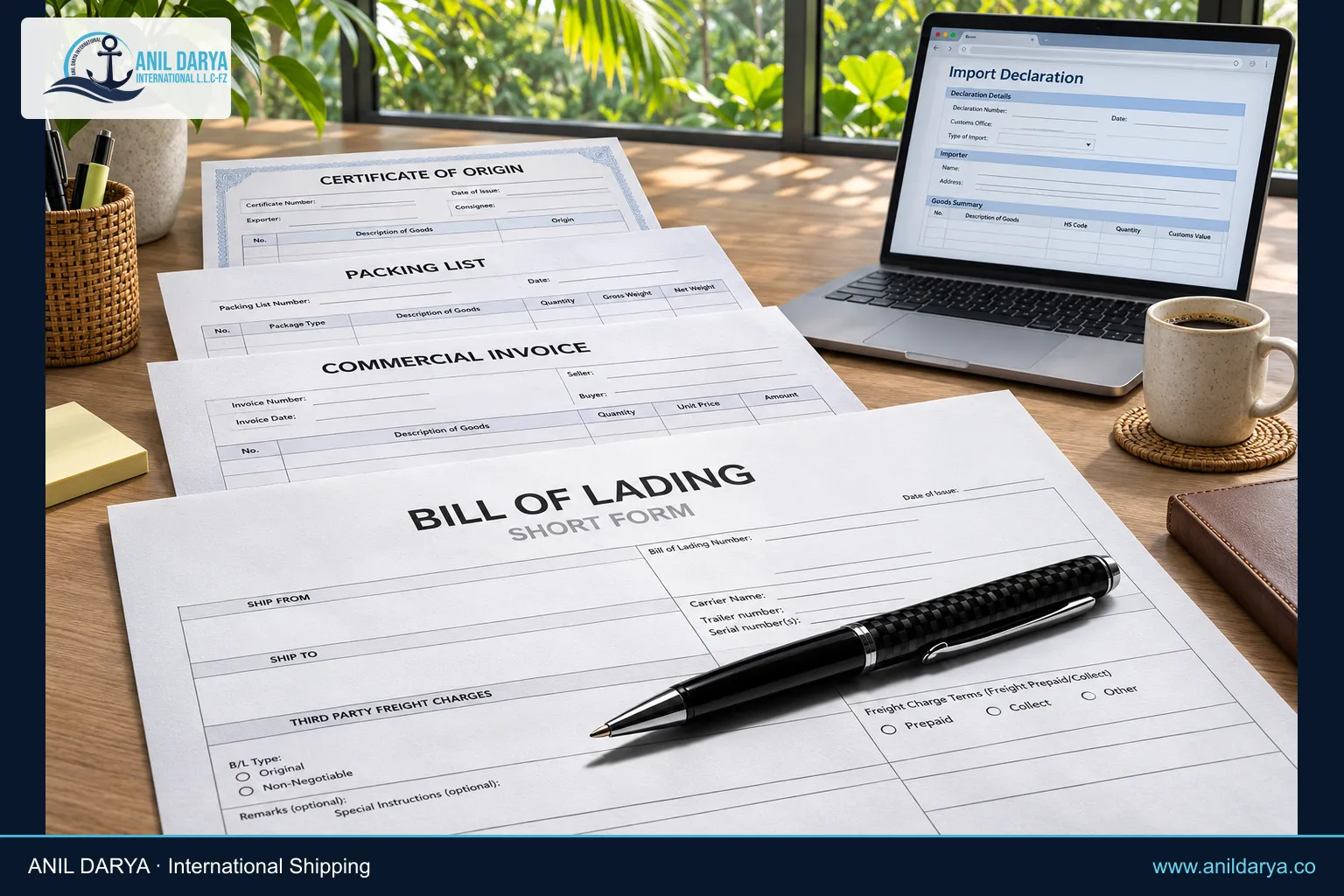
The Bangladesh Customs Hub publishes the general document list. On an Indian order, this is who usually provides what:
| Document | From | Check |
|---|---|---|
| IRC and BIN | Bangladeshi importer | Valid before arrival |
| LC, or sales contract and payment papers | Importer and its bank | Same route as the IPO allows |
| Commercial invoice, packing list, detailed packing list | Indian seller | Matches the shipping bill |
| Bill of lading | Shipping line, released through us | Consignee and BIN rules above |
| Certificate of origin | Indian seller | SAFTA or APTA form if a preference is claimed |
| Value declaration form and insurance cover note | Importer | Supports the customs value |
The line files the manifest, the C&F agent lodges the bill of entry, Customs may examine the box, the importer pays through a linked bank and the port releases it. Some bulk-type goods shipped in containers must be delivered through private off-dock depots. Maersk's list of 29 includes raw cotton, wheat, lentils, waste paper and soda ash, all of which can come from India.
We do not clear customs in Bangladesh. Before we confirm a booking, we agree with the buyer's C&F agent which papers it needs and by when. Duty and taxes at destination are paid by the consignee or its broker.
| Tax | Rate |
|---|---|
| Customs duty | By HS code, or the SAFTA or APTA rate with a valid certificate |
| Regulatory duty | By HS code, under the Customs Act, 2023 |
| Supplementary duty | 10% to 67% on goods in the VAT Act's Third Schedule, 500% in certain cases |
| VAT | 15% standard, some reduced rates |
| Advance income tax and advance tax | Collected at import, set by rule |
BSTI, food papers and prohibited goods
Some goods need a BSTI certificate before release. The Business Standard reported a BSTI release in January 2025: 79 products under Appendix-4 of the Import Policy Order 2021-24 needed certificates after testing, with conditional certificates for industrial raw materials kept in a named warehouse. The 2026-2029 order may have changed the list.
For some food cargo Maersk asks for analysis, radiation, veterinary and fumigation certificates 72 hours before arrival. The US government's Bangladesh guide adds that origin must be marked on goods or packaging, with exceptions such as industrial raw materials.
The Customs Hub publishes the import prohibited list from the 2021-24 order. Items that matter for Indian sellers include old, used, reconditioned, factory-rejected and stock-lot goods; reconditioned office equipment and old electronics; polypropylene and polyethylene bags under HS 39.23 and 63.05; and old or used motorcycles. Ask the C&F agent to confirm against the 2026-2029 order.
Typical cargo from India and the papers it needs
| Cargo | Usual equipment | Papers to plan |
|---|---|---|
| Raw cotton bales | 40ft dry | Off-dock delivery at Chattogram, fumigation if asked, SAFTA check |
| Cotton yarn and fabric | 40ft high cube | LC terms, fibre content on the invoice, bonded warehouse rules if the mill uses them |
| Dyes and textile chemicals | DG-approved dry box | SDS, DG declaration, technical name on the B/L |
| Steel billets, sections and coils | 20ft or breakbulk | Weights per piece, HS code, BSTI list check |
| Rice, onions, pulses | 20ft dry or reefer | Food certificates, off-dock list for pulses, regulator permit if required |
| Machinery and vehicle parts | 40ft or flat rack | ISPM-15 for crates, new goods only, origin marking |
The Financial Express reported in 2020 that boxes from Kolkata carried chemicals, billets and yarn, and came back mostly with garments or empty, which is why freight here includes empty repositioning.
Routing via Dubai: when it helps and when it costs the preference
A direct or Colombo routing suits most Indian cargo. Dubai helps when a trader holds Indian stock in Jafza and ships part loads to Chattogram, or when Indian goods join Gulf cargo for one Bangladeshi buyer. In August 2024 Syama Prasad Mookerjee Port announced a Haldia, Chittagong, Jebel Ali loop; we have not confirmed it still sails.
Watch the trade preference. SAFTA Rule 12 treats goods as directly consigned through a non-member country, and the UAE is one, only if the stop is for transport reasons, the goods do not enter trade or consumption there, nothing is done to them beyond unloading, reloading or keeping them in good condition, and they stay under customs control. Article 18 then asks for a through B/L issued in India. A box sold, split or relabelled in Dubai will probably lose the SAFTA rate, so confirm with the Bangladeshi broker first. Colombo is different, because Sri Lanka is itself a SAFTA member.
If Indian goods do stop in Dubai, we clear them through UAE customs for a fee. Read our Jebel Ali port guide and the article on Jafza re-exports.
[AMIR-FACT: whether we have routed India to Bangladesh cargo through Dubai (Jafza stock or consolidation with Gulf cargo), the carrier from Jebel Ali to Chattogram, and the real extra days against a direct Indian sailing]
Step by step: shipping from India to Bangladesh with Anil Darya
- Send us the goods, HS code, weight, volume, factory city, ready date and delivery point.
- Name the buyer's C&F agent. We agree with it, before we confirm the booking, which documents it needs and who pays the Chattogram charges.
- Check the buyer's IRC, 11-digit BIN and payment route, and send us the LC terms if there is one.
- Check the HS code against the SAFTA and APTA tables, the BSTI list and the prohibited list.
- We compare an east coast short sea sailing with a Colombo or Singapore feeder and book the space.
- The seller stuffs and weighs the box, files the shipping bill on ICEGATE and applies for the certificate of origin.
- We check consignee, notify party, BIN, HS code, weights and seal on the draft B/L against the invoice, the LC and the certificate.
- The line issues its B/L after loading, and we release it to you or the bank once freight is paid.
- The C&F agent files in ASYCUDA World with the original certificate, the importer pays duty and VAT, and we follow the box until release.
[AMIR-FACT: one real India to Bangladesh cross-trade shipment we handled (cargo, Indian load port, carrier, direct or via Colombo, what we coordinated and the outcome), cleared for publication]
What drives the cost of shipping from India to Bangladesh?
We do not publish prices; rates change with each sailing. These parts make up the total.
| Cost part | What moves it | Usually paid by |
|---|---|---|
| Inland haulage in India | Distance from mill to port, rail or truck | Seller under FOB |
| Indian port and export charges | Terminal handling, shipping bill, certificate of origin | Seller under FOB |
| Ocean freight | Short sea or hub routing, box type, season, empty repositioning | Buyer under FOB, always prepaid |
| Chattogram charges | Port and terminal charges, off-dock depot fees, storage | Consignee |
| Duty and taxes | HS code, customs value, SAFTA or APTA certificate | Consignee or its broker |
| Detention and demurrage | Late papers, BSTI tests, examinations | Whoever caused the delay, by contract |
Free time is short: Maersk's Bangladesh tariff from 6 April 2026 gives 4 days of import detention for dry and flat rack boxes and 2 for reefer and DG, and the consignee pays port storage. Our article on demurrage and detention shows how fast those charges add up.
Checklist before the box leaves India
- C&F agent appointed and the clearance plan agreed before booking.
- Buyer's IRC valid and the 11-digit BIN on the draft B/L.
- Payment route fixed; LC dates and load port match the booking.
- HS code agreed and checked against SAFTA, APTA, BSTI and the prohibited list.
- IEC active, export policy checked and the shipping bill filed on ICEGATE.
- Certificate of origin applied for at export, not weeks later.
- Freight prepaid, real gross weights, ISPM-15 on wood, DG acceptance if needed.
Mistakes that hold Indian cargo in Bangladesh
- Shipping before destination clearance is agreed. With no C&F agent ready, the 4 free days go fast.
- A B/L "To order" or with the Indian seller's bank as consignee. Bangladesh needs a local consignee with a BIN, or a local bank.
- Freight collect on an FOB sale. The line will not accept it for Bangladesh.
- No SAFTA or APTA certificate, or one whose HS code or weight differs from the invoice, so the buyer pays full duty.
- Selling or splitting the cargo in a third country and still claiming SAFTA.
Frequently asked questions
Which Bangladesh port receives sea cargo from India?
Chattogram, which handled 3,531,118 TEU in fiscal year 2025-26. Mongla (29,714 TEU) suits buyers in the southwest when a carrier calls, and Dhaka buyers can take delivery at Kamalapur ICD or Pangaon if the line offers it.
Is there a direct sea route from India to Bangladesh?
Yes. The 2015 India-Bangladesh Agreement on Coastal Shipping allows direct sailings from east coast ports such as Kolkata, Haldia, Visakhapatnam, Krishnapatnam and Chennai to Chattogram, Mongla and other Bangladesh ports. Cargo from the west coast usually changes ship at Colombo or Singapore.
How long does sea freight from India to Bangladesh take?
It depends on the routing. Kolkata and Chattogram are about 200 nautical miles apart, close to two days at sea; a west coast box waiting for a Colombo feeder takes much longer. Ask for the carrier's schedule for your sailing.
Do Indian goods pay lower duty in Bangladesh?
Often, if the paperwork is right. Under SAFTA, Bangladesh charges 0%, 3% or 5% customs duty on HS codes in its SRO table, and APTA gives margins of 10% to 70% on other listed lines. You need a valid certificate of origin, and VAT still applies at 15%.
Who issues the SAFTA certificate of origin and when?
The authority India designates issues it, at export or within 3 working days of shipment. It is valid for 12 months, and a late certificate is possible up to 45 days after shipment if it is marked as issued retrospectively.
Does Anil Darya clear customs in Bangladesh?
No. The importer's licensed C&F agent files the bill of entry, and duty and taxes at destination are paid by the consignee or its broker. We agree the plan with that agent before we confirm the booking and send the documents on time.
Get a quote for shipping from India to Bangladesh
Send us the factory city, the goods and HS codes, the ready date, the payment route and your C&F agent in Bangladesh, and we will propose a routing, a carrier and a price. Use our freight rate inquiry form, or contact us to plan DG or project cargo first. You can also read more about our Dubai freight forwarding team.
Sources
- CUTS International: Working note on the India-Bangladesh Coastal Shipping Agreement
- The Financial Express: Container line between Chattogram and Kolkata, July 2020
- ONE: 2025 India service guide (Calcutta, India Coastal Express and Bangladesh feeders)
- Indian Infrastructure: Bengal Middle East Express announced, August 2024
- Syama Prasad Mookerjee Port, Kolkata: Draft forecasts for Kolkata and Haldia
- Visakhapatnam Port Authority: Allowable drafts
- Chittagong Port Authority: Container and vessel statistics to 2025-26
- Chittagong Port Authority: Maximum draught and length, January to June 2026
- Chittagong Port Authority: Jetties and moorings
- Chittagong Port Authority: Cargo handling equipment
- Maritime Gateway: Mongla Port results for fiscal year 2025-26
- Bangladesh Customs Import Export Hub: Preferential agreements and SROs (SAFTA, APTA)
- Bangladesh Customs: SRO 78 of 2015 with SAFTA Rules of Origin and certification procedures
- Bangladesh Customs Import Export Hub: General import documents
- Bangladesh Customs Import Export Hub: Import prohibited goods list
- UNCTAD ASYCUDA: Bangladesh country profile
- US International Trade Administration: Bangladesh import requirements
- US International Trade Administration: Bangladesh prohibited and restricted imports
- UNB: Bangladesh Bank guidelines for the Import Policy Order 2026-29
- PwC Worldwide Tax Summaries: Bangladesh other taxes
- The Business Standard: BSTI certificates for 79 import products, January 2025
- Maersk: Bangladesh import information
- ICEGATE (CBIC): FAQ on shipping bills, digital signatures and EGM
- DGFT: Foreign Trade Policy 2023, Chapter 2 (IEC and export policy)
- IMO: IMDG Code 2024 edition (Amendment 42-24)
Reviewed: 11 November 2026