
Shipping from India to Saudi Arabia is mostly a container trade: rice, meat, textiles, machinery, steel and medicines loaded at Nhava Sheva or Mundra and discharged at Dammam on the Gulf coast or Jeddah and King Abdullah Port on the Red Sea. Your Indian exporter files the shipping bill on ICEGATE, and the Saudi importer or its customs broker files the import declaration on Fasah and pays duty and 15% VAT. We book the ocean freight from Dubai and coordinate both ends, so this guide explains how the lane works and what each party must have ready.
India to Saudi Arabia shipping at a glance
| Item | Detail |
|---|---|
| Type of lane | Cross-trade: cargo moves India to Saudi Arabia, booked and coordinated by Anil Darya from Dubai |
| Main Indian load ports | Nhava Sheva (JNPA, Navi Mumbai), Mundra; also Chennai, Cochin, Kandla, Visakhapatnam and others for regional cargo |
| Main Saudi discharge ports | Dammam (King Abdulaziz Port) for the Eastern Province and Riyadh; Jeddah and King Abdullah Port for the west; Jubail for industrial cargo |
| Service types | Direct calls from India's west coast, or transhipment through a Gulf hub, depending on the service |
| Indian export filing | Shipping bill filed electronically through ICEGATE by the exporter or its customs broker |
| Saudi import filing | Customs declaration on Fasah, at least 48 hours before arrival, by the importer or a customs broker |
| Saudi customs duty | GCC common external tariff, at least 5% on most goods, charged on the CIF value; rice, tea and coffee enter duty-free |
| Saudi import VAT | 15% on all imported goods, including goods exempt from duty |
| Product conformity | SABER certificates for regulated products; SFDA rules for food, with registration on the Ghad platform |
| Bill of lading | The shipping line's own B/L, issued and released to you through us as the carrier's agent |
How a cross-trade shipment from India to Saudi Arabia works
The container loads in India, sails to a Saudi port and clears there; it is never imported into the UAE. We book the space from Dubai and keep shipper, carrier and the consignee's broker on one plan.
| Stage | Who does it | What we do |
|---|---|---|
| Pickup, stuffing and Indian export declaration | The Indian shipper or its origin agent | Share the booking, cut-off and documents list, and follow up on readiness |
| Ocean freight | The shipping line | Book the space, confirm the routing and release the carrier's B/L to you |
| Saudi import clearance, duty and VAT | The consignee or its Saudi customs broker | Confirm with the broker before we confirm the booking, and send pre-arrival documents |
| Delivery inside Saudi Arabia | The consignee or its broker and trucker | Share arrival notices and free-time dates |
On an India to Saudi booking you receive the carrier's own bill of lading. Because Anil Darya is agent for many shipping lines, that B/L is issued and handed over to you through our Dubai desk, and it names the Saudi consignee exactly as its broker needs it.
Customs clearance in Saudi Arabia is not a service we sell there. Duty and taxes at destination are paid by the consignee or its broker. That is why we ask who the Saudi broker is before a booking is confirmed, not after the vessel sails.
The Incoterm decides who pays each leg. On FOB the Indian seller clears export and the Saudi buyer pays the sea freight; on CFR or CIF the seller books freight and the buyer still pays Saudi charges, duty and VAT. Our Incoterms 2020 guide for sea freight shows where cost and risk pass in each case.
Which Indian ports to ship from
Most Saudi-bound containers start on India's west coast, where the direct Gulf and Red Sea services call. East and south coast cargo usually connects to one of them.
| Indian port | Region it serves | Why shippers use it for Saudi cargo |
|---|---|---|
| Nhava Sheva (JNPA) | Maharashtra, central India, Mumbai area | Five container terminals and about half of the containerised volume of India's major ports, so most Saudi services call here |
| Mundra | Gujarat, Rajasthan, north India by rail | Four container terminals with 7.5 million TEU capacity, plus bulk, breakbulk and oversized project cargo |
| Kandla | Gujarat, north-west India | Bulk and general cargo; containers usually connect to a west coast service |
| Chennai, Cochin, Tuticorin | Tamil Nadu, Kerala, south India | Textiles, spices, tea and engineering goods from the south |
| Visakhapatnam, Kolkata | East India | Steel, minerals and eastern cargo; longer routings to the Gulf |
Mundra is linked to India's national rail network, so a factory in Punjab, Haryana or Rajasthan can rail its boxes there. A supplier near Pune or Mumbai will normally use Nhava Sheva.
Which Saudi port should your cargo arrive at?
Saudi Arabia has two coasts, and the right port depends on where the consignee is. Choosing the wrong coast can add a long truck journey across the country.
| Saudi port | Coast | Best for consignees in |
|---|---|---|
| Dammam (King Abdulaziz Port) | Gulf | Dammam, Khobar, the Eastern Province and Riyadh |
| Jubail | Gulf | The Jubail industrial area and petrochemical projects |
| Jeddah Islamic Port | Red Sea | Jeddah, Makkah, Madinah and the western region |
| King Abdullah Port | Red Sea | King Abdullah Economic City, Rabigh and the western region |
| Yanbu, Jizan | Red Sea | Local industry and the south-west |
Dammam has 43 berths, a container terminal and two general cargo terminals, and a railway to the dry port in Riyadh. For a Riyadh buyer, Dammam plus rail or truck is usually the shorter path than Jeddah. For a buyer in Jeddah or Makkah, discharge on the Red Sea side.
Direct sailings or transhipment: how the services run
Container shipping from India to Saudi Arabia runs on two kinds of service. A direct service calls an Indian port and then a Saudi port on the same vessel. A transhipment service drops the box at a hub port, where it moves to a second vessel for the last leg.
Carrier schedules show both on this lane. Some examples from carrier and port pages we opened:
- Milaha's MGX 2 service (schedule released February 2026) lists direct calls from Nhava Sheva and Mundra to Dammam. It runs fortnightly, with plans to go weekly later.
- Milaha's MIX service (also released February 2026) runs weekly between Mundra, Nhava Sheva, Sohar, Jebel Ali and Hamad. It serves Dammam by transhipment at Hamad.
- Global Feeder Shipping's JJS service, announced by JNPA in March 2026, runs Mundra, Nhava Sheva, Jeddah and King Abdullah Port on its loop.
- Emirates Shipping Line's IRC service, as published in March 2024, ran Mundra, Nhava Sheva, Jebel Ali and Jeddah on one loop.
Services change often, so treat these as examples, not a current timetable. Before each booking we check the routing the carrier actually offers that week and tell you whether it is direct or transhipped, and where.
A direct call is usually faster with fewer handling points. Transhipment wins when it sails sooner, has space, or reaches a Saudi port the direct loop skips.
[AMIR-FACT: the carriers we actually book from Nhava Sheva and Mundra to Dammam and Jeddah, whether each is direct or transhipped, and the real port-to-port transit days we see]
Sea freight from India to Saudi Arabia: FCL, LCL and special cargo
Almost all of this trade moves by sea. The first decision is the type of equipment.
| Option | Typical India to Saudi cargo | Decision rule |
|---|---|---|
| FCL 20ft | Rice, sugar, ceramic tiles, steel parts, granite | Heavy cargo that fills the weight limit before the space |
| FCL 40ft / high cube | Textiles, garments, furniture, auto parts, packaged food | Light or bulky cargo from one supplier |
| LCL | Samples, first orders, small lots of spices or garments | Volumes too small for a whole box; more handling and a longer release |
| Reefer | Frozen meat, fruit, vegetables, some pharmaceuticals | Set point agreed in writing; SFDA health certificate ready |
| Flat rack / open top | Machinery and steel structures slightly out of gauge | Fits the rack by size and weight, so container services can carry it |
| Breakbulk / project | Transformers, plant equipment, large fabrications | Too big for a flat rack; the vessel date drives the plan |
If you are comparing a few LCL lots with one full box, our article on FCL vs LCL costs explains where the break-even usually falls. For container types and booking, see our sea freight service.
Breakbulk and project cargo
Mundra handles bulk, break bulk and oversized project cargo, and Dammam has two general cargo terminals. For pieces that do not fit a container, we need drawings, weights and lifting points before we approach carriers. Our break bulk and project cargo team makes sure every piece on the packing list matches the B/L.
Dangerous goods and chemicals
Indian paints, resins, solvents and agrochemicals are often dangerous goods at sea, moving under the IMDG Code 2024 edition (Amendment 42-24), mandatory since 1 January 2026. The shipper gives the UN number, class, packing group, a current SDS and a signed DG declaration, and the carrier must accept the booking before stuffing. Our dangerous goods team checks these papers against the carrier's rules before we confirm space.
How long does shipping from India to Saudi Arabia take?
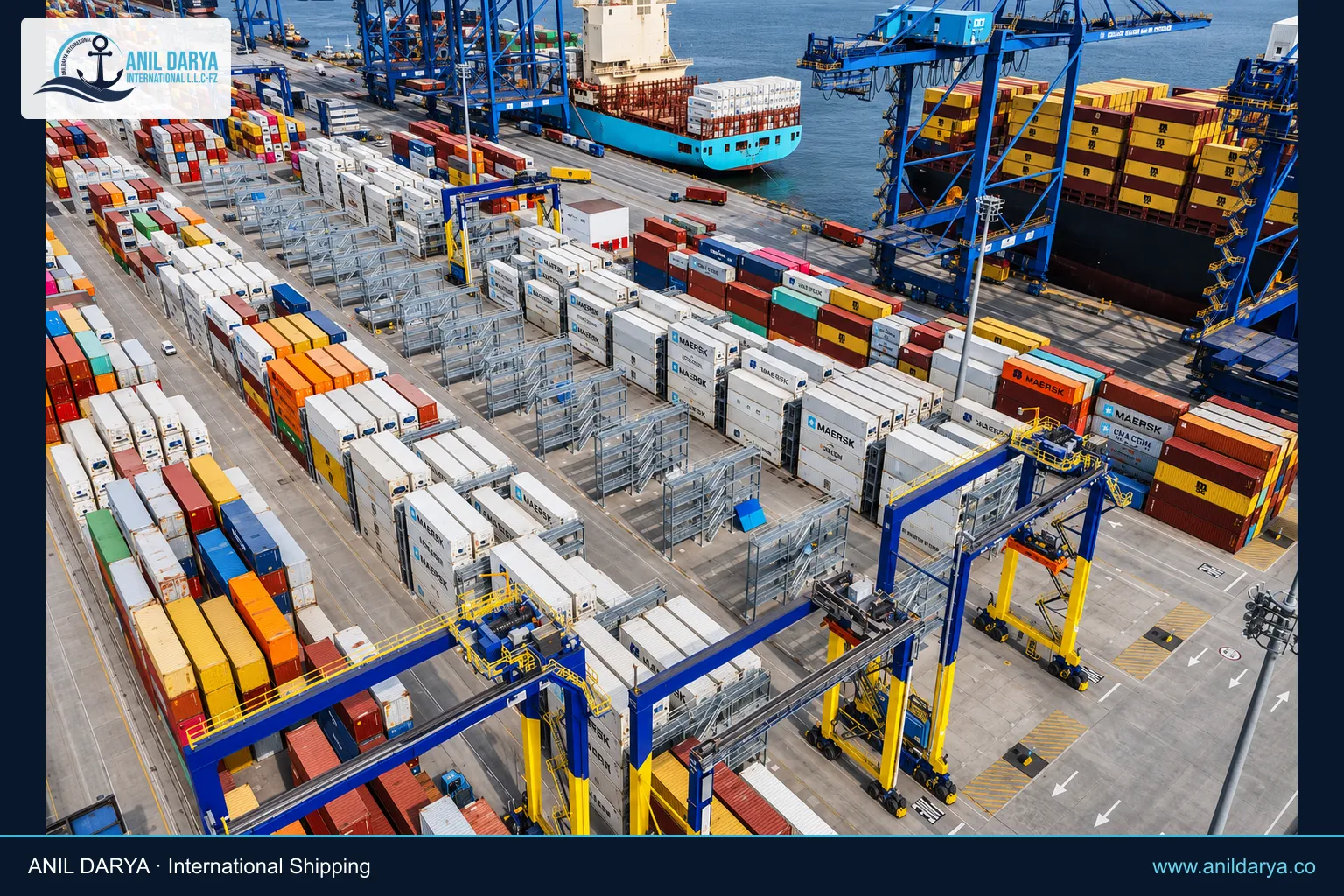
Carriers publish their own port-to-port transit days. Two schedules we opened, both released in February 2026:
| Service | From | To | Published transit | Type |
|---|---|---|---|---|
| Milaha MGX 2 | Nhava Sheva | Dammam | 7 days | Direct call |
| Milaha MGX 2 | Mundra | Dammam | 5 days | Direct call |
| Milaha MIX | Nhava Sheva | Dammam | 8 days | Transhipment at Hamad |
| Milaha MIX | Mundra | Dammam | 11 days | Transhipment at Hamad |
These are planned schedules, not promises. Congestion and missed connections add days, and door-to-door time is longer than port to port.
| What adds days | How to reduce it |
|---|---|
| Cargo not ready at the cut-off | Book against a real ready date, not the order date |
| Shipping bill errors or export inspection | Match HS code, value and weights across invoice and shipping bill |
| Transhipment wait at the hub | Ask for the connecting vessel when you book |
| Missing SABER or SFDA papers | Have the certificates issued before the box sails |
| Late Fasah declaration | Send documents to the Saudi broker as soon as the B/L is drafted |
Export from India: shipping bill, IEC and certificate of origin
The Indian side of the lane is handled by the shipper or its origin agent. We coordinate with them, but we do not file the Indian export declaration.
- Importer-Exporter Code (IEC). No goods may be exported from India without an IEC unless specifically exempted. It is a 10-character code, the same as the firm's PAN, issued by DGFT online and updated every year.
- Shipping bill. Under section 50 of the Customs Act, 1962, the exporter files the shipping bill electronically. Filing runs through ICEGATE, and the filer needs a registered ICEGATE ID and a digital signature. Most exporters use a licensed customs broker.
- Let export order. Customs permits clearance and loading under section 51 once the goods are assessed and examined if selected.
- Export General Manifest. The shipping line files the EGM after sailing. If it is missing, ICEGATE tells the exporter to ask the carrier to file it, because the IGST refund scroll for exports depends on it.
Saudi customs asks for a certificate of origin unless the origin is clearly established. In India, non-preferential certificates of origin are filed electronically on the DGFT eCoO 2.0 platform at trade.gov.in, which has been mandatory since 1 January 2025. About 125 issuing agencies, most of them chambers of commerce, issue them through the platform.
Food shipments also need Indian health, phytosanitary or halal slaughter certificates for the Saudi side, so plan them with the shipper before stuffing.
Saudi import customs: Fasah, documents and the broker
The Zakat, Tax and Customs Authority (ZATCA) runs Saudi customs. Clearance is done on the Fasah platform, either by the importer directly or with a customs broker. ZATCA says the declaration and clearing procedures should be done at least 48 hours before the shipment arrives at the port of entry.
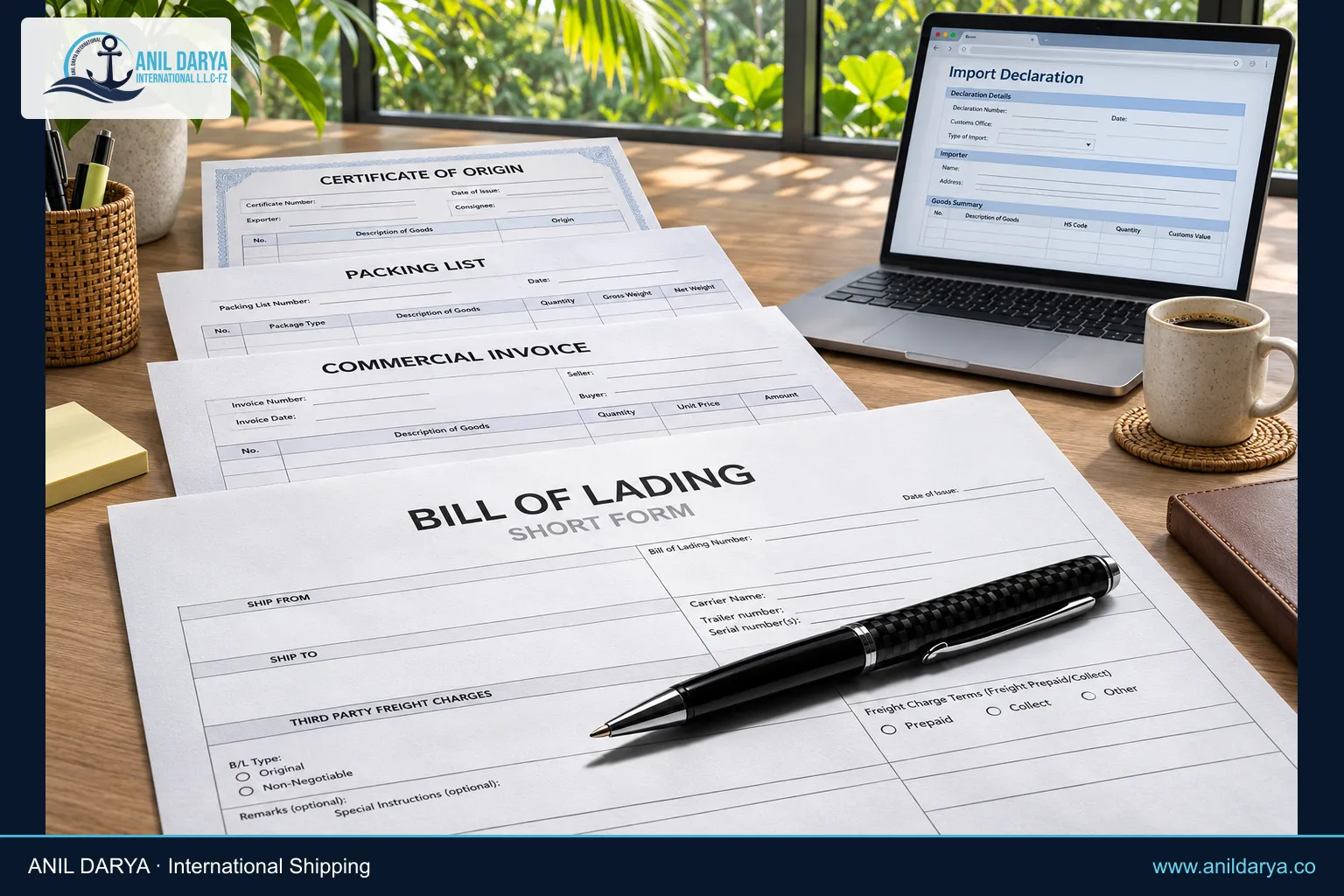
| Document | Issued by | Notes for Indian cargo |
|---|---|---|
| Commercial invoice | Indian exporter | Full description, HS code, unit price, value, currency, Incoterm; for food, quantities, expiry dates and batch numbers |
| Bill of lading | Shipping line, released through us | Consignee and notify party exactly as the Saudi importer is registered |
| Certificate of origin | Indian issuing agency via eCoO 2.0 | Required unless origin is clearly established |
| Packing list | Indian exporter | Weights and piece count matching the invoice and B/L |
| SABER shipment certificate | Certification body, via SABER | For regulated products |
| SFDA documents | Indian authorities and the importer | Health, phytosanitary and halal certificates where the product needs them |
| Permits for restricted goods | Competent Saudi authority | Obtained by the importer before arrival |
The importer must be licensed to import, and its tax number goes on the declaration, linked through a commercial registration number, a 700 code, a Saudi ID or a GCC ID. A first-time buyer should sort this out before the box sails.
Agree the Saudi broker before the cargo ships
We do not clear goods in Saudi Arabia. Before we confirm your booking, we ask the consignee to name its customs broker, and we check that the broker has the documents list and the expected arrival date. This one step prevents most of the costly delays on this lane.
SABER and SFDA: conformity before the cargo sails
SABER for regulated products
SABER is the online platform of the Saudi Standards, Metrology and Quality Organization (SASO). Products covered by a SASO technical regulation are "regulated products". Each needs a product certificate of conformity (PCoC) issued in SABER after a certification body checks it. Each shipment then needs a shipment certificate of conformity (SCoC), valid for that shipment only, and the certification body issues it only if every regulated product in the box has a valid PCoC. For Indian electrical goods, auto parts, building products, toys and machinery, ask the importer to start SABER as soon as the order is placed.
SFDA rules for rice, spices, meat and other food
Food is a large part of what India sends to Saudi Arabia, so Saudi Food and Drug Authority (SFDA) rules matter on this lane. Before importing food, the importer must register its establishment and each food product on SFDA's Ghad platform, and submit clearance requests through Fasah. SFDA lists these documents for food clearance:
- Certificate of origin, commercial invoice and bill of lading.
- Health certificate from the competent authority in the exporting country.
- Phytosanitary certificate for grains, crops, fresh fruit and vegetables.
- Halal certificate where the product requires one, and a halal slaughter certificate for meat and poultry from a centre accredited by the Saudi Halal Center.
- An import permit for poultry, fish and table eggs and their products.
The importer also needs a licensed warehouse, with an exemption for small importers of no more than 5 shipments and 2,000 kg a year. SFDA may draw samples for testing, and the importer pays for the analysis. Build that time into your plan for frozen meat and packaged food.
Customs duty and 15% VAT in Saudi Arabia
Saudi Arabia applies the GCC common external tariff. Most goods from outside the GCC pay at least 5%, charged ad valorem on the CIF value. Some processed foods pay more, up to 40% where local production is protected. Rice, tea, coffee, bulk animal feed, livestock and fresh red meat enter duty-free, which covers several of India's main exports to the Kingdom.
VAT is a separate charge. ZATCA applies 15% VAT to all imported goods, whatever their tariff rate and even when they are exempt from duty. The VAT base is the customs value plus duty, excise and other charges. A shipment of Indian basmati rice pays no duty, but it still pays 15% VAT.
| Indian product | Duty position | VAT |
|---|---|---|
| Rice, tea, coffee | Duty-free under the tariff | 15% |
| Fresh red meat | Duty-free under the tariff | 15% |
| Most manufactured goods (textiles, machinery, auto parts) | At least 5% of CIF; check the HS code | 15% on customs value plus duty |
| Selected processed foods | Higher rates, up to 40% | 15% |
| Cigarettes, carbonated drinks | Duty plus excise (100% and 50%) | 15% |
VAT is normally paid with the duty on the customs declaration. A VAT-registered importer can apply to ZATCA to pay import VAT through its VAT return instead, if it files monthly, imports at least once a month, has 12 months of on-time filing and can show financial stability. Confirm your exact rate by HS code with the Saudi broker before you price the goods.
Restricted and prohibited goods in Saudi Arabia
ZATCA requires permits from the competent authorities for restricted goods, and it refuses goods prohibited internationally or locally, and counterfeit or adulterated goods. On this lane the groups that most often need approval are food and feed, medicines and cosmetics (SFDA), regulated manufactured goods (SABER), agrochemicals, and meat and poultry. If you are unsure, ask the Saudi broker before booking, because a permit chased after arrival costs port storage.
Where Dubai fits on this lane
Most India to Saudi Arabia shipping runs direct and never needs Dubai. Routing through Dubai helps in three cases.
- Transhipment. Some India-Gulf loops call Jebel Ali, and Emirates Shipping Line's IRC loop ran Indian ports, Jebel Ali and Jeddah together. When a carrier offers a Jebel Ali connection, we tell you before booking. Our Jebel Ali port guide explains the port.
- Consolidation. A buyer with small lots from several suppliers can gather them in Dubai and send one container on.
- Free zone stock. A trader can hold Indian goods in a Dubai free zone such as Jafza and re-export to Saudi Arabia in smaller calls. Our article on re-exporting from Jafza covers how that works.
For consolidation or re-export, we handle the Dubai Customs declarations for a fee. Free zone goods are unlikely to count as GCC origin, so Indian goods stay Indian for Saudi duty and VAT. Confirm this with the Saudi broker first.
[AMIR-FACT: whether we route India to Saudi Arabia cargo through Jebel Ali (transhipment, consolidation or Jafza re-export), on which carriers, and how often]
What drives the cost of shipping from India to Saudi Arabia?
We do not publish prices; each quote depends on the week, carrier and cargo. These are the parts of the total.
| Cost part | Who usually pays (FOB) | What moves it |
|---|---|---|
| Inland haulage in India | Seller | Distance to the port, truck or rail, factory stuffing |
| Indian export clearance and port charges | Seller | Broker fees, terminal handling, inspection |
| Ocean freight | Buyer | Container type, season, direct or transhipment, surcharges |
| DG, reefer, out-of-gauge premiums | Buyer | Cargo class, temperature, dimensions and lashing |
| Saudi port and delivery order charges | Buyer | Terminal, carrier tariff, LCL unpacking |
| Saudi duty, VAT and broker fees | Buyer | HS code, CIF value, SABER and SFDA costs, testing |
| Inland delivery in Saudi Arabia | Buyer | Distance from the port, for example Dammam to Riyadh |
| Demurrage and detention | Whoever causes the delay | Late documents, late permits, slow empty return |
Demurrage is the charge that grows fastest when papers are late. Our article on demurrage and detention explains how free time works.
Step by step: shipping from India to Saudi Arabia
- Agree the Incoterm and who pays freight, Saudi charges, duty and VAT.
- Send us the cargo details: product, HS code, weight, volume, Indian supplier location, ready date, Saudi consignee and city, and whether anything is DG, reefer or out of gauge.
- We check carrier options from the nearest Indian port to the right Saudi port, and tell you if each is direct or transhipped.
- The consignee names its Saudi customs broker. We confirm with the broker that it can clear the cargo and has the documents list.
- The importer starts SABER or SFDA steps and any permits, so the certificates are ready before sailing.
- We confirm the booking with the carrier. For DG, reefer and breakbulk, we get carrier acceptance first.
- The Indian shipper or its origin agent picks up, stuffs the container and files the shipping bill on ICEGATE.
- We check the draft B/L against the invoice, packing list and certificate of origin, then the carrier issues the B/L and we release it to you.
- The Saudi broker files the Fasah declaration at least 48 hours before arrival and arranges payment of duty and VAT with the consignee.
- The consignee or its broker collects the delivery order, takes delivery and returns the empty within free time.
[AMIR-FACT: one real India to Saudi Arabia cross-trade shipment we handled (cargo, Indian load port, Saudi port, carrier, transit and how the destination clearance went), cleared for publication]
Checklist before the cargo leaves India
- Incoterm written in the contract.
- Saudi customs broker named and briefed, before the booking is confirmed.
- Importer licensed to import, with its tax number linked in ZATCA.
- HS code agreed by seller and buyer, and the Saudi duty rate checked.
- SABER PCoC and SCoC issued for regulated products.
- For food: Ghad registration, health certificate, phytosanitary or halal certificates as needed.
- Certificate of origin applied for on eCoO 2.0.
- Invoice, packing list, shipping bill and B/L showing the same weights, pieces and values.
- For DG: SDS, UN number, DG declaration and carrier acceptance.
- Delivery plan and free time agreed for the Saudi port.
Mistakes that hold Saudi-bound cargo at the port
- Shipping before destination clearance is agreed. If no Saudi broker has accepted the job, the container sits at the port while charges grow.
- Assuming duty-free means tax-free. Rice and meat pay no duty, but 15% VAT still applies.
- Late SABER certificates. A regulated product without a valid SCoC cannot clear.
- Wrong coast. Shipping to Jeddah for a Riyadh buyer, or to Dammam for a Jeddah buyer, adds a long inland haul.
- Food invoices without batch numbers and expiry dates. SFDA asks for them on the invoice.
- Undeclared DG. Paints, resins and chemicals booked as general cargo can be rejected or fined.
- Consignee details that do not match the Saudi importer's registration. Fix them on the draft B/L, not after arrival.
Frequently asked questions
How long does sea freight from India to Saudi Arabia take?
Published carrier schedules released in February 2026 show 5 days from Mundra and 7 days from Nhava Sheva to Dammam on a direct call, and 8 to 11 days with transhipment. Door to door takes longer once pickup, export clearance and Saudi clearance are added.
Which Saudi port should I ship to from India?
Use Dammam for the Eastern Province and Riyadh, because Dammam has a railway to the Riyadh dry port. Use Jeddah or King Abdullah Port for Jeddah, Makkah, Madinah and the western region.
What is the import duty on goods from India to Saudi Arabia?
Most goods pay the GCC common external tariff of at least 5% on the CIF value. Rice, tea, coffee and fresh red meat enter duty-free. All imports also pay 15% VAT.
Who clears the cargo in Saudi Arabia?
The consignee or its Saudi customs broker files the declaration on Fasah and pays duty and VAT. Anil Darya does not clear goods in Saudi Arabia, so we confirm the broker before we confirm the booking.
Do I need SABER for goods from India?
You need SABER certificates if your product is covered by a SASO technical regulation. Each product needs a PCoC and each shipment needs an SCoC issued in SABER before clearance.
What does SFDA need for Indian rice or spices?
The importer registers its establishment and each product on the Ghad platform. The shipment needs a certificate of origin, invoice with batch and expiry details, bill of lading, health certificate and, for grains, a phytosanitary certificate.
Whose bill of lading do I get for India to Saudi cargo?
You get the shipping line's own B/L for the Indian load port to the Saudi discharge port. As agent for many lines, we receive it from the carrier and release it to you.
Can I route India to Saudi Arabia cargo through Dubai?
Yes, when it helps. You can tranship at Jebel Ali if the carrier offers it, consolidate several suppliers in Dubai, or hold stock in Jafza and re-export. We handle Dubai Customs for these moves, and Saudi duty and VAT still apply on arrival.
Get a quote for shipping from India to Saudi Arabia
Send us the Indian supplier location, Saudi delivery city, cargo details and ready date for carrier options and a price. Use our freight rate inquiry form, or contact our team to talk through a DG, reefer or project shipment first. Our Dubai freight forwarding team coordinates the shipper, the carrier and the Saudi broker from one desk.
Sources
- ZATCA: Import instructions (documents, Fasah, 48 hours before arrival, broker)
- ZATCA: Import of goods (restricted and prohibited goods)
- ZATCA: Guideline on imports and exports under VAT (15% on imports, VAT base, VAT return option, importer ID)
- SFDA: Conditions and requirements for food clearance (Ghad, Fasah, documents, halal, warehouse, sampling)
- US International Trade Administration: Saudi Arabia import tariffs (GCC tariff, duty-free goods, excise)
- Intertek: SASO SALEEM and SABER (PCoC, SCoC, regulated products)
- Saudipedia: King Abdulaziz Port in Dammam (berths, terminals, rail to Riyadh)
- JNPA: Port overview (five container terminals, share of major-port container volume)
- Adani Ports: Mundra port (terminals, capacity, project cargo, rail)
- Milaha: MGX 2 service schedule, February 2026 (Nhava Sheva and Mundra to Dammam)
- Milaha: MIX service schedule, February 2026 (transhipment via Hamad)
- Emirates Shipping Line: IRC service advisory, March 2024
- India Shipping News: JNPA welcomes Global Feeder Shipping's JJS service (March 2026)
- CBIC: Customs Act, 1962 (sections 50 and 51)
- ICEGATE: FAQ (shipping bill filing, EGM, IGST refund scroll)
- DGFT: Foreign Trade Policy 2023, chapter 2 (IEC)
- India Briefing: DGFT eCoO 2.0 for non-preferential certificates of origin
- IMO: IMDG Code 2024 edition (Amendment 42-24)
- EY: Saudi Arabia clarifies GCC origin of goods (free zone goods)
- Dubai Customs: Customs declaration types (import, export, transit, transfer)
Reviewed: 11 November 2026