
Shipping from Turkey to Oman is a container trade with one awkward fact: the port lists we checked show no ship that sails straight from a Turkish quay to an Omani one. Boxes from Iskenderun, Mersin, the Istanbul terminals or Aliaga usually reach Jebel Ali or another hub first, then finish on a feeder to Sohar, Salalah or Duqm, or by truck from Dubai. There is no Türkiye-Oman trade agreement in force, so most Turkish goods pay Oman's 5% customs duty plus 5% VAT. We book the ocean freight from Dubai and coordinate both ends.
Turkey to Oman shipping at a glance
| Item | Detail |
|---|---|
| Mode covered here | Sea freight: FCL, LCL, reefer, flat rack, breakbulk and project cargo, dangerous goods |
| Turkish load ports | Iskenderun (LimakPort), Mersin, Ambarli and the other Istanbul terminals, Izmit Bay, Aliaga (Izmir), Gemlik |
| Omani discharge ports | Sohar (north), Salalah (south), Duqm (central coast); Muscat's Port Sultan Qaboos no longer takes cargo ships |
| Usual routing | Mainline from Turkey to a hub such as Jebel Ali, then a feeder to Oman; or Jebel Ali plus a truck to Oman |
| Port-published sea days | LimakPort list of 7 October 2025: Iskenderun to Jebel Ali 18 days (KAWA) or 22 days (Messina); nothing published to an Omani port |
| Turkish export filing | Customs declaration in BILGE, by the seller or its Turkish customs broker |
| Proof of origin | Non-preferential certificate of origin, issued electronically in Turkey through MEDOS |
| Trade agreement | None in force between Türkiye and Oman, so no EUR.1 duty relief |
| Oman import filing | Bayan declaration, 12-digit GCC tariff code, OMR 15 fee for companies |
| Duty and VAT in Oman | 5% GCC common tariff on most goods; 5% VAT on imports |
| Bill of lading | The shipping line's own B/L, issued and released to you through us as the line's agent |
Who does what on a cross-trade booking
The cargo never has to be imported into the UAE, but the booking and follow-up run from our Dubai desk.
| Task | Who | What it covers |
|---|---|---|
| Ocean booking and routing | Anil Darya, from Dubai | Space on the Turkish mainline, the onward feeder or truck to Oman, DG and out-of-gauge acceptance |
| Pickup, stuffing, export declaration | Turkish seller or its origin agent | Truck to the terminal, VGM, seal, BILGE filing, certificate of origin |
| Bill of lading | The shipping line | Its own B/L; we act as agent for many lines, so it is issued and released to you through us |
| Customs work in Dubai, if the cargo stops there | Anil Darya, for a fee | Transit, re-export or import declarations with Dubai Customs |
| Oman clearance, duty and VAT | The consignee or its Omani customs broker | Bayan declaration, permits, payment, delivery |
We do not sell customs clearance in Oman, and we have no office or agent in Turkey or Oman. What we do is hold the booking until the Omani side is ready: the broker is named, it has seen the draft invoice and HS codes, and any permit the goods need is applied for. Only then do we confirm the space with the line.
The Incoterm decides who pays each leg. On FOB Mersin, the seller clears export and loads the box, and the Omani buyer pays the freight we book. On CFR Sohar, the seller buys the freight but the buyer still pays Omani port charges, duty and VAT. EXW is the weak choice here: a buyer in Muscat cannot file a Turkish export declaration, so someone in Turkey must still act as exporter. Our Incoterms 2020 guide for sea freight shows where cost and risk pass under each term.
Turkish load ports for Omani cargo
Choose the terminal nearest the factory that has a Gulf connection that month.
| Port area | Typical supplier base | Point for Oman cargo |
|---|---|---|
| Iskenderun (LimakPort) | Hatay, Gaziantep, Kahramanmaras, steel mills around the gulf | 1,000,000 TEU a year, 920 m container berth, 15.5 m depth, 600 reefer plugs; publishes its Gulf services with export days |
| Mersin | Adana, Mersin, Konya, Kayseri | Large east Mediterranean gateway; ask whether the Gulf mainline calls here or relays elsewhere |
| Ambarli and other Istanbul terminals | Istanbul, Thrace, Marmara industry | Most Gulf boxes from here sail on longer loops; book early for project cargo |
| Izmit Bay (Kocaeli) | Gebze, Kocaeli, Sakarya, automotive and machinery plants | Check whether a feeder links to the Gulf mainline |
| Aliaga (Izmir) | Izmir, Manisa, Denizli: food, marble, textiles | Aegean exports; reefer and marble often load here |
Which Omani port: Sohar, Salalah or Duqm?
Oman's three container ports are far apart. Pick the one closest to where the goods are used.
| Port | Facts from the operator | Best for Turkish cargo going to |
|---|---|---|
| Sohar | Hutchison Ports Sohar: 2 million TEU a year, 18 m draft, 13 cranes; Muscat, Dubai and Abu Dhabi within about four hours by road | Muscat, Al Batinah, the north, and buyers who may also serve the UAE |
| Salalah | Container terminal with 6 berths, 2,197 m quay, up to 18 m draft, 6 million TEU, more than 1,500 reefer plugs; a primary hub in the Gemini network | Dhofar and the south; reefer food |
| Duqm | Port of the Duqm Special Economic Zone with container, multipurpose and dry bulk terminals | Steel, line pipe and project cargo for central Oman |
Turkish quotes still say "Muscat" by sea. Port Sultan Qaboos in Muttrah stopped receiving container ships, cargo vessels and car carriers from 31 August 2014, and commercial traffic moved to Sohar. If an offer names Muscat, ask which port the box will really discharge at.
Salalah has a season to plan around. The port reports waves of up to 4.0 m during the June to August monsoon and runs monsoon controls then, so leave slack in summer arrival dates.
Routing for shipping from Turkey to Oman
This is where the lane differs from Turkey to Saudi Arabia or Qatar. LimakPort Iskenderun publishes every container service that calls the terminal, and its list updated on 7 October 2025 shows Gulf calls only at Jebel Ali:
| Service (operator) | Rotation after Iskenderun | Published export days from Iskenderun |
|---|---|---|
| East Mediterranean Sea Express (KAWA) | Sokhna, Jeddah, Jebel Ali | Sokhna 4, Jeddah 8, Jebel Ali 18 |
| Red Sea Gulf Ipak (Messina) | Port Said, Aqaba, Jeddah, Djibouti, Mundra, Jebel Ali | Port Said 2, Aqaba 4, Jeddah 6, Djibouti 9, Mundra 17, Jebel Ali 22 |
We checked the days against the order of calls on each loop, and they rise in step. No Omani port appears anywhere in that list. The 2023 edition of the same list showed a weekly Gulf loop to Jebel Ali, Hamad, Dammam and Jubail, again without Oman. LimakPort itself tells readers to check the carriers' own notices for current rotations, so treat both lists as dated snapshots.
For the last leg, Asyad Line's published services FEX and IEX both call Jebel Ali and then Sohar, and Milaha's Upper Gulf Express links Sohar with Jebel Ali, Hamad and Kuwait each week. None of these pages gives a Jebel Ali to Sohar day count we can print.
[AMIR-FACT: the carriers and services we actually book from Iskenderun, Mersin and the Istanbul terminals to Sohar and Salalah today, the hub where the box changes ship (Jebel Ali, Salalah or another), and the real door-to-port days we see]
The practical routings, then:
| Routing | How it works | When it fits |
|---|---|---|
| Through B/L with a relay | The line carries the box from Turkey to its hub and on to Sohar, Salalah or Duqm on one bill of lading | Most FCL; one contract and one B/L to the Omani port |
| Jebel Ali, then truck | The box lands at Jebel Ali and goes by road to Oman under a transit declaration | Cargo for Sohar, Muscat or Buraimi when feeder space is tight |
| Dubai consolidation or stock | Turkish goods are held or grouped in a Dubai free zone and sent to Oman as orders come | Distributors who serve Oman and other GCC buyers from one stock |
[AMIR-FACT: whether we move Turkish cargo for Oman through Jebel Ali in practice (feeder or truck via Hatta), which onward carrier or trucking we use, and how many days the Dubai leg adds]
Container shipping from Turkey to Oman: FCL, LCL and reefer
Let the cargo's density pick the box.
| Option | Typical Turkish cargo | Decision rule |
|---|---|---|
| 20ft dry | Rebar, steel sections, marble, ceramic tiles | Heavy goods that hit the weight limit before the box is full |
| 40ft or 40ft high cube | Furniture, carpets, kitchen units, textiles | Light, bulky goods; carpets and sofas want the extra height |
| LCL | Samples, spare parts, a trial order | Ask where the consolidated box is opened; a split at the hub adds handling and a wait for the next feeder |
| Reefer | Confectionery, dairy, chilled food | Book plugs on the mainline and the feeder; Salalah's terminal has more than 1,500 plugs |
| Flat rack or open top | Generators, steel frames, machinery over height | Every relay is two more lifts; get lashing and lifting plans before booking |
A relay matters more for LCL than for FCL. Your cartons can wait at the hub for the box to fill or for the next feeder, so a small FCL is often quicker once you pass about half a box. Our article on FCL vs LCL walks through the break-even, and our sea freight service lists the equipment we book.
Breakbulk and project cargo
Turkish contractors and manufacturers supply steel structures, tanks, switchgear and plant to Omani projects. If a piece is too wide or too heavy for a flat rack, it needs breakbulk or heavy-lift tonnage straight to the Omani port. Duqm's multipurpose terminal handles steel plates, line pipe and out-of-gauge cargo, and Sohar has a general cargo terminal run by C. Steinweg for steel and project cargo. Moving a heavy piece inland needs a permit for an exceptional load from Oman's Ministry of Transport, which the consignee's side requests. See our break bulk and project cargo service.
Dangerous goods from Turkey
Paints, resins, adhesives, aerosols, lithium batteries and many cleaning chemicals are dangerous goods at sea. The IMDG Code 2024 edition, Amendment 42-24, has been mandatory since 1 January 2026, so the Turkish shipper's DG declaration and Safety Data Sheet must follow it. A relay means two carriers' DG desks must accept the box, the mainline and the feeder. In Oman, Duqm's port rules ask for notice at least 24 hours before DG is handled and 72 hours plus a licence for Class 1 and Class 7. Chemicals also need clearance from Oman's Environment Authority, and explosives need a Royal Oman Police permit. Our dangerous goods team checks the papers against both carriers' rules before we ask for space.
How long does shipping from Turkey to Oman take?
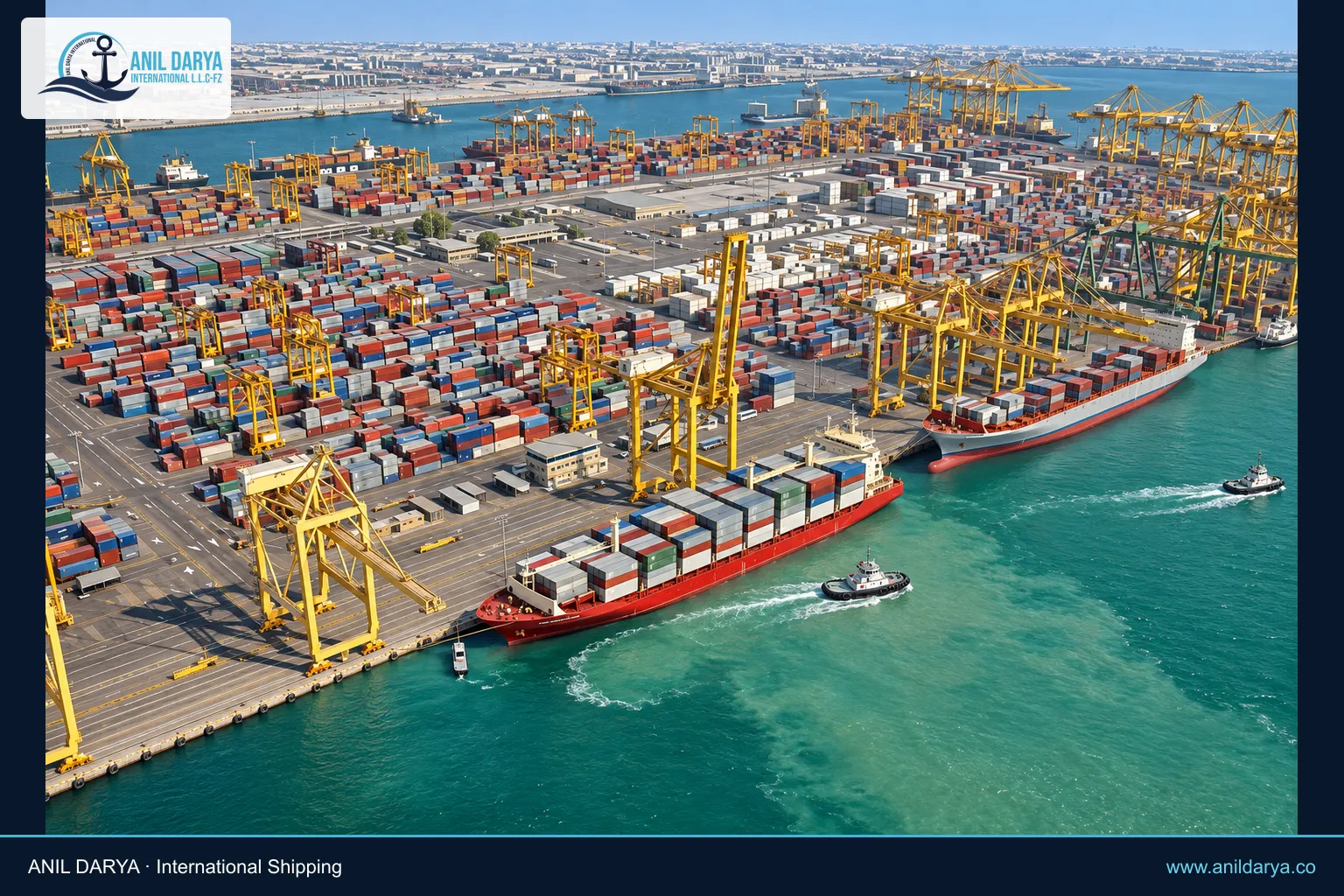
The only figures published by a port or carrier that we found end at Jebel Ali: 18 or 22 days from Iskenderun in LimakPort's October 2025 list. The wait at the hub and the feeder or truck to Oman come on top, and they vary with the connection.
| Stage | What sets the time |
|---|---|
| Pickup and stuffing in Turkey | Production date, truck booking, VGM, seal |
| Turkish export clearance | BILGE declaration accepted, certificate of origin issued in MEDOS, any inspection |
| Mainline sea leg | Rotation and number of calls before the hub |
| Relay at the hub | Connection to the next feeder or truck; LCL may wait longer |
| Feeder or road to Oman | Feeder frequency to Sohar, Salalah or Duqm; Hatta border time for trucks |
| Oman clearance and delivery | Bayan declaration, permits, inspection, distance from the port |
Export clearance in Turkey
The seller or its origin agent handles the Turkish side; we agree the cut-off and papers with them. The Ministry of Trade's export regime FAQ (dated 20 August 2019) sets out the basics:
- An exporter needs a Turkish tax ID number and membership of the relevant exporters' association.
- Goods are declared to the authorised customs office, normally by a customs declaration in BILGE, the ministry's customs system.
- Military items, dual-use goods and nuclear items need permission from the competent body, and customs can ask for one on unlisted goods if the end use is unclear.
- Under Anti-Smuggling Law No. 5607, false statements on the type, quantity or value of exports to obtain support count as smuggling.
For Oman, the seller also needs a certificate of origin. Turkey's Ministry of Trade explains in its 2019 origin brochure that goods in non-preferential trade prove origin with a certificate of origin, and that certificates of origin are now issued, approved and endorsed electronically through the MEDOS system run with the chambers. Ask the seller to send it with the invoice, plus a copy of the export declaration, because Oman Customs lists a declaration from the exporting country among its documents.
Is there a trade agreement on this lane?
No. Türkiye's Ministry of Trade lists its free trade agreements in force, and Oman is not on that list. The Gulf Cooperation Council appears only under negotiations. So Turkish goods enter Oman as ordinary non-GCC goods, and an EUR.1 does not lower the duty.
The Dubai route has a trap here. Türkiye has an agreement in force with the UAE, and Abu Dhabi Customs explains that its preference applies to goods imported directly from Türkiye into the UAE and claimed at import. That benefit stays in the UAE. The UAE's guide to the GCC customs union says goods exempted under free trade agreements are subject to duty when they cross the next border. If Turkish goods enter Dubai duty-free under that agreement and then go by truck to Oman, expect Oman to charge its 5%.
The opposite case works in your favour. Under the GCC customs union, duty is collected at the first point of entry. If the goods paid the 5% GCC duty when cleared in Dubai, the Omani broker can show the UAE import declaration so the duty is not charged twice. Agree with both brokers which country collects it before you choose the route.
Oman import customs for Turkish goods
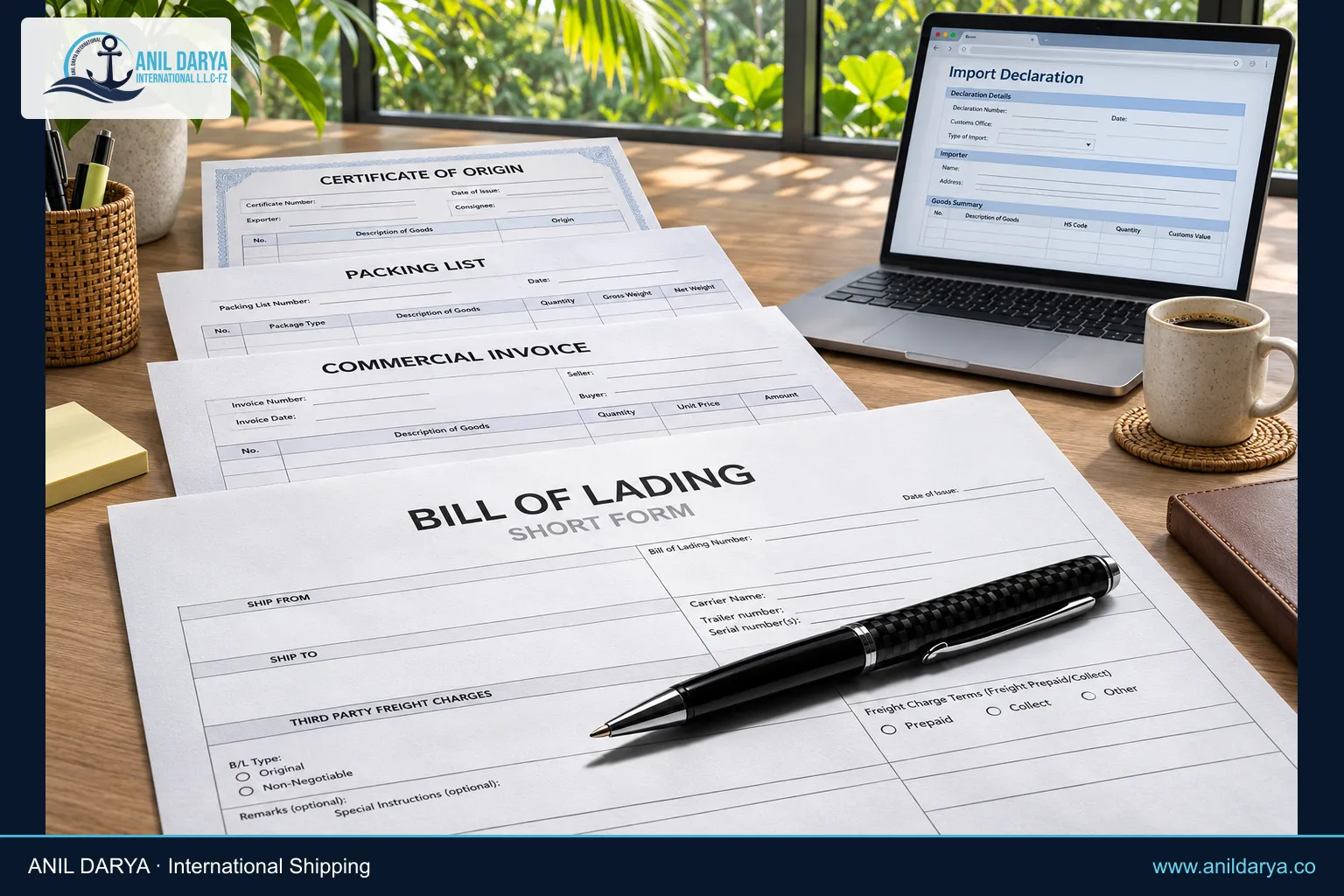
Customs in Oman is part of the Royal Oman Police, and every import is declared in Bayan, the electronic customs system. A registered Bayan user files, usually the consignee's broker. Oman Customs' service page (checked 11 November 2026, no version date shown) sets the fee at OMR 15 for companies and OMR 5 for individuals. Since 1 January 2025, Oman classifies goods under the 12-digit GCC integrated tariff, so the Turkish GTIP code on the invoice must be mapped to the Omani 12-digit line.
| Document | From | What the Omani broker checks |
|---|---|---|
| Commercial invoice | Turkish seller | Full description, price, currency, Incoterm, consignee as on the B/L; Arabic translation if customs asks |
| Certificate of origin | Issued in Turkey through MEDOS | Shows Turkey as the country of manufacture; goods match the invoice |
| Exporting-country declaration | Seller, from its BILGE filing | Same goods and values as the invoice |
| Packing list | Turkish seller | Pieces, marks, net and gross weights |
| Bill of lading | Shipping line, released through us | Load port in Turkey, discharge port in Oman, consignee and notify party |
| Permits and conformity papers | Consignee, often with the seller's help | In hand before the box sails |
Oman runs the process without paper. Salalah port linked its terminal system to Bayan from 27 May 2024 (customer advisory 04/24): inspection requests and release messages pass electronically, and the port asks that B/L details are right from origin, because errors there hold up the Bayan process. That is why we compare the draft B/L with the invoice and packing list before the mainline sails. If the broker is unsure about value or classification, the consignee can use Oman Customs' pre-advance value disclosure in Bayan before the goods arrive.
Duty and VAT on Turkish goods in Oman
Oman applies the GCC common external tariff, which the UAE's ICP describes as 5% on foreign goods imported from outside the union since 1 January 2003, with 417 goods exempt under the approved schedule and 100% on tobacco. Oman's Tax Authority VAT FAQ (last updated 11 November 2026) sets VAT at 5% on most goods and says it applies to imported goods.
| Charge | Rule for Turkish goods | Who pays |
|---|---|---|
| Customs duty | 5% for most goods; some exempt; tobacco 100% | Consignee or its broker |
| VAT | 5% on imports | Consignee or its broker |
| Bayan fee | OMR 15 for companies | Consignee or its broker |
| Permits and certificates | Set by each authority | Consignee |
Duty and taxes at destination are paid by the consignee or its broker. We do not pay Omani duty or VAT.
Permits, standards and restricted goods in Oman
Oman Customs publishes the permits each authority issues. Several touch the goods Turkey sells most:
| Turkish cargo | Omani rule | Authority |
|---|---|---|
| Household appliances, lighting, cables | Low voltage electrical equipment permit | Ministry of Commerce, Industry and Investment Promotion (standards) |
| Paints, cosmetics, detergents | Chemical, cosmetic and paint permits; cosmetics under GSO 1943 with a third-party conformity certificate | Ministry of Commerce; Environment Authority for chemicals |
| Building products, steel, LPG cylinders | Construction products and LPG cylinder permits | Ministry of Commerce |
| Tyres, cars, lubricating oils | Standards permits; second-hand vehicles need a separate permit | Ministry of Commerce |
| Toys and safety shoes | Standards permits | Ministry of Commerce |
| Phones and radio devices | Release of controlled telecom goods | Telecommunications Regulatory Authority |
| Meat, dairy, plants and seeds | Health or phytosanitary certificate and import permit; halal certificate for meat | Ministry of Agriculture, Fisheries and Water Resources |
Oman Customs refuses counterfeit goods, goods that infringe intellectual property, goods prohibited locally or internationally, and goods that fail the approved specifications. Pork products and alcohol are restricted, according to the US government's Oman guide published 18 December 2025. A product that fails the Omani or GCC standard can be held even with complete paperwork.
What cargo moves on this lane?
Türkiye's Ministry of Foreign Affairs names iron and steel, furniture, woven carpets, motor vehicles, machinery and food items as its main exports to Oman.
| Cargo | Usual equipment | Oman-side point |
|---|---|---|
| Iron and steel | 20ft, flat rack, breakbulk | Construction products permit; weights for road delivery |
| Furniture and carpets | 40ft high cube | Volume, packing, delivery access |
| Motor vehicles and parts | Containers or car carriers via a hub | Standards permit; separate permit for used vehicles |
| Machinery | FCL, flat rack | Out-of-gauge acceptance on both legs; 12-digit code per item |
| Food items | Dry FCL or reefer | Health certificates, halal where needed, plug on the feeder |
How to ship from Turkey to Oman, step by step
- Send us the details: product, HS code, weight, volume or dimensions, Turkish pickup city, Omani delivery point, Incoterm, ready date. Flag DG, reefer and oversized pieces.
- Pick the Omani port by where the cargo is going: Sohar for the north, Salalah for Dhofar, Duqm for the central coast.
- Agree destination clearance. The consignee names its Omani broker, who checks the 12-digit code and any permit. We do not confirm the booking until this is in place.
- We quote the routing: the mainline, the hub, the feeder or truck, and the cut-off. For DG and out-of-gauge cargo we get acceptance from each carrier first.
- Origin work. The seller or its origin agent trucks the cargo, stuffs the box, files in BILGE and gets the certificate of origin in MEDOS.
- Draft check. We match the draft B/L to the invoice and packing list and send copies to the Omani broker.
- Sailing and relay. The line issues its B/L, released to you through us, and we follow the box through the hub to Oman.
- Clearance and delivery. The broker files in Bayan, the consignee pays duty and VAT, and the empty box goes back within free time.
[AMIR-FACT: one real cross-trade shipment we handled from Turkey to Oman (cargo, Turkish load port, hub, Omani port, total days, how the broker cleared it), cleared for publication]
What drives the cost of this lane
We do not publish rates because they change with every sailing. These are the parts of the total and what moves each one:
| Cost part | What moves it |
|---|---|
| Origin charges in Turkey | Truck distance, terminal handling, BILGE filing, certificate of origin |
| Mainline freight | Port pair, box type, season, surcharges |
| Relay and last leg | Transhipment at the hub, feeder rate, or trucking from Dubai with border costs |
| Special cargo | DG fees on two carriers, reefer, flat rack lashing, breakbulk premiums |
| Dubai customs work, if used | Transit or re-export declarations, storage in a free zone |
| Omani port and delivery | Terminal handling, delivery order, LCL unpacking, distance from the port |
| Duty, VAT and permits | CIF value, tariff line, conformity certificates |
Our guide to demurrage and detention shows how waiting days become charges.
Checklist before the box leaves Turkey
- Incoterm and load port written into the contract.
- Omani broker named and the draft documents shared.
- 12-digit Omani tariff line agreed and the 5% checked.
- Permits or conformity certificates in hand for electrical goods, chemicals, cosmetics, tyres, toys and food.
- Certificate of origin from MEDOS and a copy of the export declaration.
- Invoice, packing list and B/L with the same pieces, weights and consignee.
- Hub and onward leg named on the quote, with the Omani discharge port.
- For DG: SDS, DG declaration, acceptance from both carriers, port notice in Oman.
- Free time at the Omani port agreed and cargo insurance arranged.
Mistakes to avoid on this lane
- Shipping before destination clearance is agreed. A box with no Omani broker or permit sits at Sohar or Salalah and runs up charges.
- Expecting a direct ship. Plan for a relay and ask where it happens.
- Booking to "Muscat port". Container traffic moved to Sohar in 2014.
- Claiming UAE agreement benefits for Oman. Duty-free entry into Dubai under the UAE-Türkiye agreement does not carry into Oman.
- Sending an EUR.1 and expecting zero duty. Oman has no agreement in force with Türkiye.
- Booking DG with one carrier only. The feeder line must accept it too.
- Mismatched values between the Turkish export declaration and the invoice used in Bayan.
Frequently asked questions
Is there a direct ship from Turkey to Oman?
We found none in the port lists we checked. LimakPort's October 2025 list shows Gulf calls only at Jebel Ali, so most boxes relay at a hub and finish on a feeder to an Omani port or by truck from Dubai.
How long does sea freight from Turkey to Oman take?
LimakPort publishes 18 or 22 days from Iskenderun to Jebel Ali. The relay and the onward feeder or truck to Oman come on top. We quote days for your port pair from the live schedule.
Which Omani port should Turkish cargo go to?
Sohar for Muscat and the north, Salalah for Dhofar and the south, and Duqm for the central coast and its economic zone. Port Sultan Qaboos in Muscat no longer takes cargo ships.
Do Turkish goods pay customs duty in Oman?
Yes. There is no Türkiye-Oman trade agreement in force, so most goods pay the GCC common tariff of 5%, plus 5% VAT. Some goods are exempt and tobacco pays 100%. The consignee or its broker pays.
What documents does Oman Customs need for goods from Turkey?
For a Bayan declaration: commercial invoice, certificate of origin, and a declaration from the exporting country. You also need the packing list, the B/L and any permit the goods require.
Who clears the cargo in Oman?
The consignee or its customs broker files in Bayan and pays duty and VAT. We do not sell clearance in Oman, but we agree the broker before we confirm the booking.
Can Turkish goods reach Oman through Dubai?
Yes, as a relay at Jebel Ali, by truck from Dubai, or from stock in a Dubai free zone. We handle the Dubai customs work for a fee. Agree with both brokers where the 5% GCC duty is collected.
Can Anil Darya issue the bill of lading?
The B/L is the shipping line's own bill of lading. We act as agent for many lines, so it is issued and released to you through us.
Get a quote for shipping from Turkey to Oman
Tell us the Turkish pickup city, the cargo, the ready date, the Omani delivery point and your broker in Oman. We will come back with the carrier, the hub, the onward leg and a price. Use our freight rate inquiry form, or contact our team to talk through DG, reefer or project cargo first. You can also read about our Dubai freight forwarding team.
Sources
- Republic of Türkiye Ministry of Trade: Free trade agreements (in force and under negotiation)
- Republic of Türkiye Ministry of Trade: Export regime FAQ (20 August 2019)
- Republic of Türkiye Ministry of Trade: Digital customs FAQ (BILGE)
- Republic of Türkiye Ministry of Trade: Origin information sheet, MEDOS (February 2019)
- Republic of Türkiye Ministry of Foreign Affairs: Commercial and economic relations with Oman
- LimakPort Iskenderun: Container carriers and services (updated 7 October 2025)
- LimakPort Iskenderun: Container carriers and services (updated 15 November 2023)
- LimakPort Iskenderun: Port technical features
- Asyad: Asyad Line direct services (FEX, IEX, REX)
- Milaha: Upper Gulf Express (UGX) service profile, February 2023
- Asyad: Hutchison Ports Sohar container terminal
- Port of Salalah: Container terminal
- Port of Salalah: Marine services (monsoon)
- Port of Salalah: Customer advisory 04/24 on Bayan integration
- Port of Duqm: Terminals
- Port of Duqm: Dangerous goods port rules
- C. Steinweg Oman: Sohar general cargo terminal
- MarineLink: Port Sultan Qaboos cargo moves to Sohar
- Oman Customs: Request a customs declaration in Bayan (documents and fees)
- Oman Customs: Pre-advance value disclosure
- Oman Customs: Permits by authority
- Oman Customs: Import of goods (prohibited goods)
- Oman Customs: Customs duty calculator
- Times of Oman: Oman adopts the 12-digit GCC unified tariff from January 2025
- Oman Tax Authority: VAT FAQs (last updated 11 November 2026)
- US International Trade Administration: Oman import requirements (18 December 2025)
- UAE ICP: Customs union for GCC states
- Abu Dhabi Customs: UAE-Türkiye CEPA conditions
- Dubai Customs: Customs declaration types including transit
- Dubai Media Office: Hatta Customs Center
- IMO: IMDG Code 2024 edition (Amendment 42-24)
Reviewed: 11 November 2026