
Shipping from USA to Kuwait means a long ocean leg from an East Coast, Gulf Coast or West Coast port to Shuwaikh or Shuaiba, almost always with a change of ship at a Gulf hub such as Jebel Ali. The American exporter files Electronic Export Information in AES and gets the invoice and certificate of origin certified, then a licensed Kuwaiti broker clears the goods and the importer pays 5% duty on the CIF value of most items. Anil Darya books this lane from Dubai as a cross-trade and keeps the shipping line, the US shipper and the Kuwaiti broker on one timetable.
USA to Kuwait shipping at a glance
| Question | Short answer |
|---|---|
| US load ports | Baltimore, Jacksonville, Newark, Norfolk, Charleston, Savannah, Houston, Freeport; Los Angeles, Long Beach and Seattle for western cargo |
| Kuwait ports | Shuwaikh (commercial, vehicles, consumer goods) and Shuaiba (industrial, heavy and chemical cargo), both run by Kuwait Ports Authority |
| Routing | Mainline ship to a Gulf hub, then a feeder; NYK RoRo's 2026 sheets mark Kuwait as transhipment via Jebel Ali |
| US export filing | EEI in AES, ITN to the carrier at least 24 hours before loading; used vehicles also need CBP title checks 72 hours ahead |
| Kuwait clearance | General Administration of Customs, declarations filed only by licensed brokers |
| Duty | 5% of CIF for most goods, 100% on tobacco, exceptions for basic food and medical items |
| VAT and excise | Neither in force (PwC, reviewed July 2026) |
| Trade agreement | No US-Kuwait free trade agreement, so US origin pays the normal GCC rate |
How a USA to Kuwait cross-trade runs from our Dubai desk
The cargo moves from America to Kuwait; the booking, the paper checks and the follow-up sit with us in Dubai.
| Job | Done by |
|---|---|
| Picking the line, the routing and the equipment; booking space | Anil Darya, with the shipping line |
| Collecting the goods, trucking or rail to the US port, loading the box or delivering the vehicle | The US shipper or its American forwarder, working to the cut-offs we send |
| AES filing, export licences, vehicle titles, chamber certification | The US exporter (the USPPI) or its agent |
| Bill of lading | Issued by the shipping line itself and released to you through us |
| Kuwaiti declaration, KUCAS and other approvals, duty, delivery order, trucking | The Kuwaiti importer and its licensed broker |
Anil Darya acts as agent for many shipping lines. On this lane that means the carrier's own B/L, written from the American load port through the Gulf relay to Shuwaikh or Shuaiba, is checked against your invoice and released to you by our Dubai team once the freight terms are met. We have no office or agent in the US or in Kuwait.
Settle the Incoterm first. A Kuwaiti dealer that wants to control the line and free time buys FOB Baltimore or FOB Houston, and we book the sea leg for the buyer. On CFR Shuwaikh the seller pays the freight but the Kuwait port costs and duty stay with the buyer. See our guide to Incoterms 2020 for sea freight.
Choosing the US port for Kuwait cargo
Start with where the goods are. Inland trucking or rail inside the US can cost more than you expect, so the right port is usually the one nearest the factory or the auction yard that has a Middle East service.
| US port | Fact we checked | Kuwait cargo it suits |
|---|---|---|
| Baltimore | The Maryland Port Administration calls it the number one US port for roll-on/roll-off cargo; NYK RoRo loads at its Dundalk and Fairfield terminals | Cars, SUVs, trucks, construction machinery |
| Jacksonville (Blount Island) | Listed as a load port on NYK RoRo's US to Middle East sheets | Vehicles and rolling equipment from the Southeast |
| Houston and Freeport | Port Houston ranks first in the US for foreign waterborne tonnage, 220.1 million short tons in 2024, and handles 75% of US Gulf Coast container traffic; Freeport appears on NYK's sheets | Oilfield tools, valves, pipe, drilling spares, resins |
| Newark, Norfolk, Charleston, Savannah | Main Atlantic container gateways | FCL and LCL from the Northeast and the Carolinas |
| Los Angeles, Long Beach, Seattle | West Coast gateways | Goods made or stocked in the western states |
Shuwaikh or Shuaiba: where US cargo lands in Kuwait
Kuwait Ports Authority 2024 figures show two very different ports:
| 2024 figure | Shuwaikh | Shuaiba |
|---|---|---|
| Location and role | Shuwaikh industrial area next to Kuwait City; main commercial port | Ahmadi Governorate in the south; main industrial port |
| Berths | 21 | 20 |
| Containers | 613,093 TEU | 282,870 TEU |
| General cargo | 3,230,749 tonnes | 23,688,110 tonnes |
| Vehicles | 177,394 | 2,972 |
The vehicle numbers settle one question for American car exporters: Shuwaikh is where Kuwait's imported cars come in. Shuaiba is the natural port for drilling equipment, steel, chemicals and anything bound for the refineries and plants in the south.
Sea freight from USA to Kuwait: relays and published schedules
We found no carrier schedule from a US port straight into Kuwait. Carriers publish a relay: a long voyage to a Gulf hub, then a smaller ship.
| Carrier source we opened | US ports | What it shows for Kuwait |
|---|---|---|
| NYK RoRo USEME sheet, week 8, 20 February 2026 | Jacksonville (Blount Island), Baltimore (Dundalk and Fairfield), Freeport, Newark | Ships call Jebel Ali, Khalifa, Dammam and Sohar; Kuwait, Bahrain and Hamad are marked "T/S via JEA" |
| NYK RoRo USEME sheet, week 15, 7 April 2026 | Same port list | Service shown as suspended until further notice, with Kuwait still in the discharge list |
| Bahri multipurpose liner (carrier page) | US East Coast and Gulf Coast ports, plus Canada | Direct to Jeddah, Dubai, Dammam and Mumbai every 18 days; Kuwait is not named, so it needs an onward leg |
| Emirates Shipping Line Gulf loop advisory | None (feeder) | A loop that links Jebel Ali with Shuwaikh and continues to Dammam |
On the February NYK sheet, Selene Leader was listed at Baltimore's Fairfield terminal on 19 March 2026 and due at Jebel Ali on 9 May, with Kuwait cargo relayed from there. Dates are estimates, and the April sheet shows the service suspended, so ask for the current sheet.
For containers the sources point the same way: Bahri's liner stops at Dubai and Dammam, and Gulf feeders link Jebel Ali with Shuwaikh. The hub changes the total days more than the ocean leg does, so every quote should name it.
[AMIR-FACT: the carriers and services we actually book from US East Coast, Gulf Coast and West Coast ports to Shuwaikh and Shuaiba in 2026 (container and Ro-Ro), which hub each one relays at, and our real port-to-port days]
Vehicles, containers and project cargo
Cars, SUVs and machinery on wheels
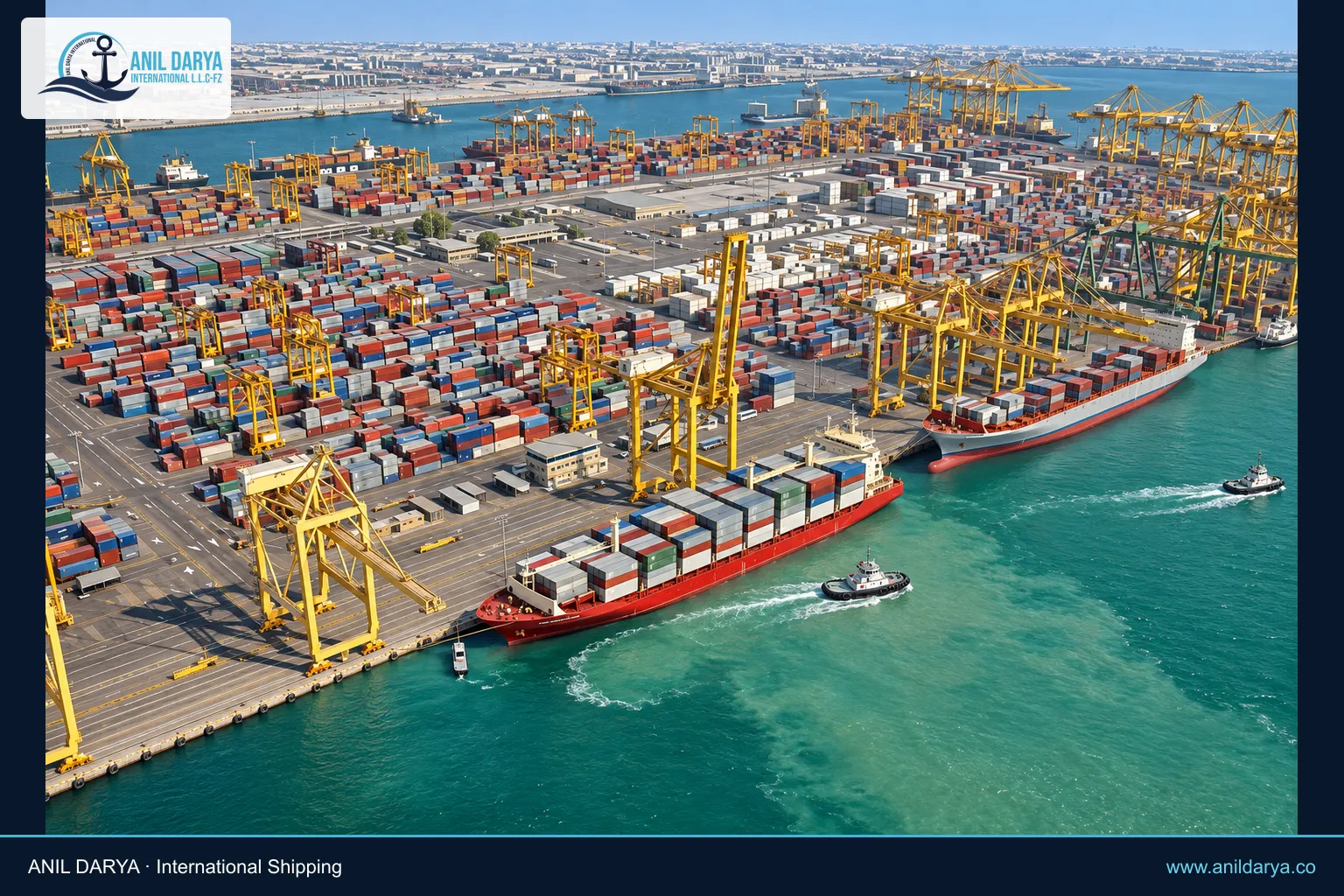
Units drive onto a Ro-Ro ship in Baltimore, Jacksonville or Freeport and drive off at the hub before the onward leg to Shuwaikh. Three rules decide whether a vehicle should be booked at all:
- Kuwait prohibits the import of cars more than ten years old, according to the US International Trade Administration. Check the model year before you buy at a US auction.
- For a used vehicle, US Customs and Border Protection needs the original title or a certified copy, plus two copies, with the VIN, and the documents and the vehicle must be presented at least 72 hours before export by sea. A lien or lease needs written release.
- Vehicles are a KUCAS product group, so the importer confirms the reports first.
FCL and LCL
A 20ft box fits heavy oilfield spares and valves; a 40ft high cube fits medical equipment, IT hardware and store stock. LCL works for first orders, but every lot still needs its own certified papers and a full Kuwaiti declaration, and the box is released only when every consignee's paper is clear. Our FCL vs LCL guide helps you find the break-even, and our sea freight service lists the equipment we book.
Breakbulk and project pieces
Wellheads, compressors, transformers and refinery modules often exceed a container. Flat racks and open tops on a container line take the moderate pieces; larger ones need Ro-Ro or multipurpose tonnage, with discharge at Shuaiba close to the industrial users. Get the carrier's written acceptance for the relay port as well as the load port. Our note on flat rack, open top and out-of-gauge cargo shows the size limits.
Dangerous goods
Drilling chemicals, paints, lithium batteries and lab reagents sail under the IMDG Code. Kuwait adds its own conditions, which Emirates Shipping Line publishes for cargo it carries there:
- Classes 1, 2, 6 and 7 need approval from the Kuwaiti authorities before the box loads at origin.
- IMDG containers are discharged only on direct delivery at Shuaiba in every season, and Shuwaikh has a summer restriction.
- The carrier's Kuwait agent needs an advance DG manifest with UN number, class, technical name, flash point, packages and weights.
On a transhipped lane the relay hub and the feeder must also accept the class. Our dangerous goods desk checks the SDS and declaration against each line's rules before we ask for space.
The US export side: EEI, export controls and certified papers
US export formalities belong to the exporter or its American forwarder; we send dates and drafts but file nothing with US agencies.
- EEI is required when any Schedule B line in the shipment is worth more than $2,500, or when the goods need an export licence at any value. It is filed in AES, the export module of ACE, and ACE AESDirect is free to use.
- The ITN or exemption legend must reach the ocean carrier at least 24 hours before the cargo loads.
- Check each item against the Commerce Control List. Items not listed are EAR99. A listed item needs a licence for Kuwait only if the Country Chart shows an "X" for its reason for control and no licence exception applies.
Certification and legalisation for Kuwait
The US International Trade Administration says the commercial invoice and the certificate of origin for Kuwait should be legalised by a local chamber of commerce or the National U.S.-Arab Chamber of Commerce (NUSACC). A Kuwait tariff summary adds that shipping papers are certified by the Kuwaiti embassy as well, and that the Kuwaiti foreign ministry checks them on arrival. NUSACC charges $85 per document on paper or $60 through its digital service, wants each document signed and notarised, and forwards papers to an embassy only with a cheque for that embassy's fee. Ask the Kuwaiti broker which stamps it needs, then book the chamber step before the goods are packed.
The invoice must state that the goods are of US origin and made in the United States, and name any foreign content with its share of the value.
Kuwait customs: brokers, licences and documents
Kuwait's General Administration of Customs clears the cargo. All import declarations go through brokers the administration licenses, and trade.gov notes that only local agents can clear goods, with an official letter of representation and a letter from the end user. Importers of licensed products must be Kuwaiti citizens or Kuwait-based firms registered with the Ministry of Commerce and Industry, and their licence lasts a year. The licence holder's name must appear on the bill of lading, so the consignee field on the draft B/L is one of the first things we check.
Documents the Kuwaiti broker will ask for
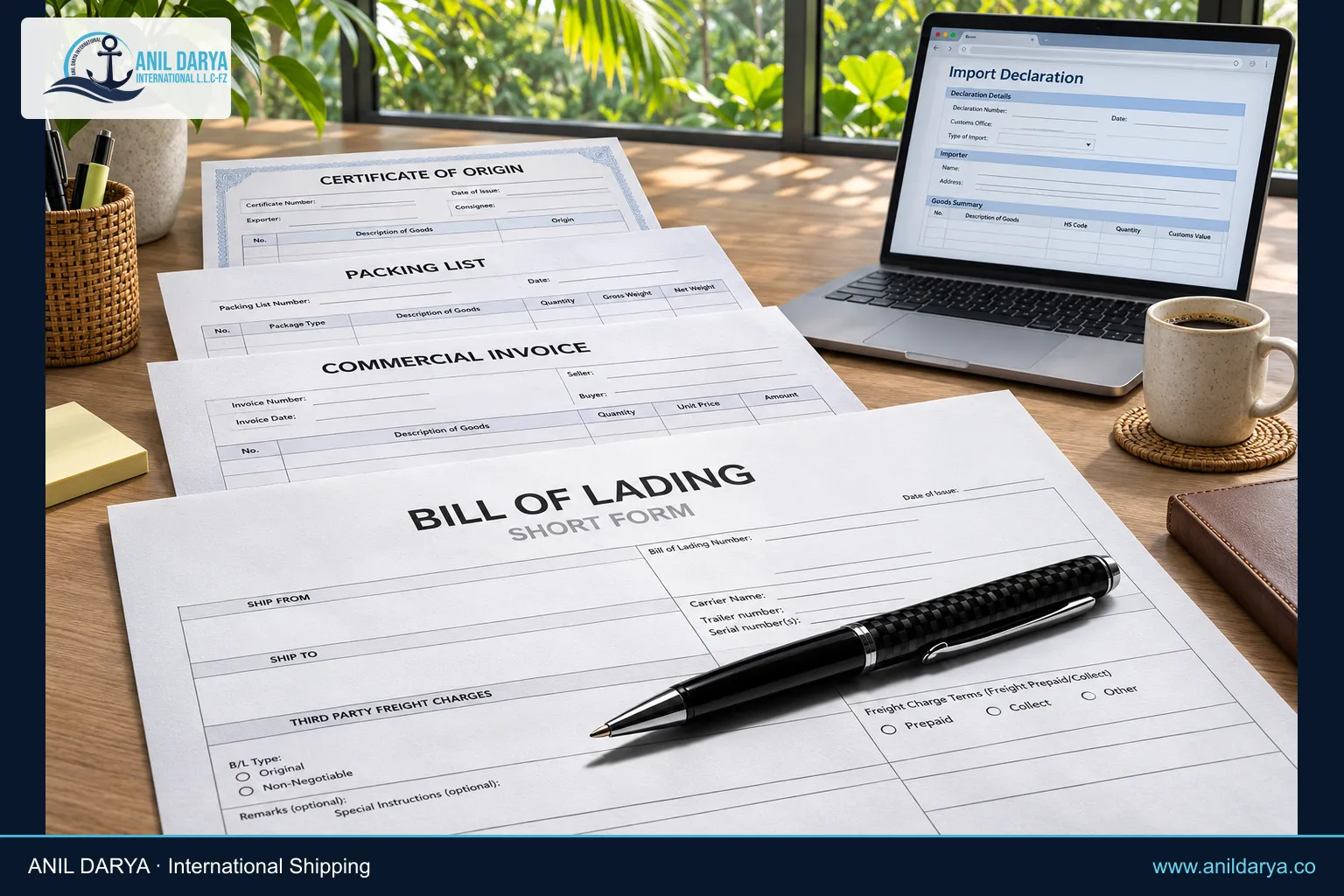
| Document | Copies | Points for a US exporter |
|---|---|---|
| Commercial invoice | Original and two copies | Metric net and gross weights, marks and numbers, US origin statement, chamber stamp |
| Certificate of origin | Original and two copies | Legalised like the invoice; foreign content and its percentage stated |
| Packing list | As requested | Item detail for every package, stamped with the exporter's or forwarder's seal |
| Bill of lading | Three copies plus the full set | Kuwaiti licence holder as consignee, Shuwaikh or Shuaiba as final port |
| KUCAS TER and TIR | Per product, per shipment | Issued before shipment for regulated goods |
| Permits and certificates | As issued | Food, meat, medicines, cosmetics, machinery licences from the Public Authority for Industry |
For sea cargo, the papers should reach Kuwaiti customs at least five days before the vessel arrives. Send scans to the broker as soon as the B/L is drafted.
Kuwait has used the GCC integrated tariff with 12-digit codes since 1 January 2025, which took it from about 7,800 tariff lines to more than 13,400. A 10-digit Schedule B number from the US export system is not enough on the Kuwaiti invoice. Get the full code from the broker and print both.
Marking is checked too. Every imported item needs a country of origin label that cannot be removed, matching the shipping papers, and outer packages should show the shipper, the consignee, the weight and "Made in the U.S.A."
Is there a trade agreement between the USA and Kuwait?
Not one that cuts duty. Trade.gov lists a Trade and Investment Framework Agreement signed with Kuwait in 2004 and a later US-GCC framework, but no bilateral free trade agreement. Kuwait's own preference agreements run through the GCC, which has free trade agreements with Singapore and with the EFTA states. American goods therefore pay the full GCC external tariff in Kuwait.
That has a practical side. The US certificate of origin for Kuwait is a non-preferential document: it proves where the goods were made and supports the declaration, but it does not claim a lower rate. Kuwait's GCC duty-free treatment needs 40% or more of the value added in a GCC state and a producer at least 51% owned by GCC citizens, so repacking or labelling US goods in Dubai does not turn them into GCC goods. If you store or split cargo in Dubai, there is no preference to lose, but keep the original US origin papers with every lot so the Kuwaiti broker can still declare the right origin.
Duty and tax on American goods in Kuwait
Kuwait charges the GCC common external tariff: 5% of the CIF value for most goods. Long-haul freight is in that base. Tobacco products pay 100%. Kuwait keeps exceptions for 417 basic foodstuffs and for some agricultural, medical and pharmaceutical items, and a Kuwait tariff summary lists 0% for basic food, medicines, fresh plants and animals, gold and printing materials.
Kuwait signed the GCC VAT framework in 2017, but its parliament has not passed it, and there is no excise tax, according to PwC's summary reviewed on 22 July 2026. Duty and taxes at destination are paid by the consignee or its broker.
| Route the US goods take | Where the duty falls |
|---|---|
| Through B/L from the US port to Shuwaikh or Shuaiba, relay at a hub | 5% of CIF in Kuwait |
| Stored in a UAE free zone such as JAFZA, then sent on | Free zone goods sit outside GCC customs territory, so Kuwait collects its duty |
| Cleared and duty paid into mainland UAE first | GCC duty is collected at the first point of entry; the Kuwaiti broker must accept the UAE proof of payment |
KUCAS and other product rules for US goods
The Kuwait Conformity Assurance Scheme belongs to the Public Authority for Industry. For each consignment of a regulated product, a PAI-approved certification and inspection body issues two reports before shipment: a Technical Evaluation Report on the product and a Technical Inspection Report on the shipment. PAI issues a clearance certificate based on the TIR, can allow temporary release against an undertaking, and Kuwait may take random samples. The regulated list has six groups: electrical toys, electric and gas appliances, vehicles, chemicals, building materials and others.
| US product | Rule | Who acts |
|---|---|---|
| Household appliances | Must run on 240V/50Hz without a transformer; Arabic manuals; KUCAS reports | US maker and Kuwaiti importer |
| Reinforcing steel and cement | Kuwait Quality Mark from 22 December 2025 | Supplier and importer |
| Detergents and household cleaners | KWS GSO 151:2023 and KWS GSO 2555:2022 | Supplier and importer |
| Food | Clearance request on the Public Authority for Food and Nutrition's Raqeb portal; Arabic labels; production and expiry dates; certificate of no cyclamates | US exporter and importer |
| Meat and poultry | Health and wholesomeness certificates; halal slaughter statement certified by an Arab chamber and legalised by a Kuwaiti embassy or consulate | US exporter |
Restricted and prohibited goods in Kuwait
Trade.gov lists pork, alcoholic drinks, gambling machines, pornography, narcotics, used medical equipment and cars over ten years old as prohibited. Firearms and explosives need special procedures, and medicines and precious metals or stones need permits. The used medical equipment and old car bans catch many US exporters.
Agree the Kuwaiti broker before the cargo leaves the US
We do not sell customs clearance in Kuwait. The importer clears through its own licensed broker, and we confirm the booking only after that broker has agreed to take the job. On a voyage of many weeks with a relay, finding out at Shuwaikh that nobody can file is the most expensive mistake on this lane.
In practice we take the importer's licence details and broker contact, the broker confirms the codes, papers and stamps it needs, approvals start on both sides, and only then do we confirm space and send the US shipper its cut-offs.
A container or vehicle that lands without a ready broker sits in the terminal while storage and line charges grow. Our guide to demurrage and detention explains how those charges start.
Where Dubai fits on the US to Kuwait lane
Jebel Ali is often the hub on this lane already. You can also use Dubai on purpose.
| Option | How it works | Who it suits |
|---|---|---|
| Relay at Jebel Ali on a through B/L | The vehicle or box changes ship at Jebel Ali and continues on the line's own bill of lading | Most Ro-Ro and many container shipments |
| Consolidation in Dubai | US cargo joins goods from Europe or Asia and leaves for Kuwait as one load | Kuwaiti buyers with suppliers in several countries |
| Stock in JAFZA, released in smaller lots | US goods wait in the free zone and move to Kuwait as orders come in | Distributors covering several Gulf markets |
Jebel Ali has over 80 weekly services to more than 150 ports and handles Ro-Ro, breakbulk, reefer and IMDG cargo, as our Jebel Ali port guide explains. For the free zone route, read our note on re-exporting through JAFZA. When goods are cleared into or re-exported from the UAE, customs clearance in Dubai is a service we provide for a fee.
[AMIR-FACT: whether we route USA to Kuwait cargo through Jebel Ali in practice (relay, Dubai consolidation or JAFZA stock), which feeder we use from Jebel Ali to Shuwaikh or Shuaiba, how many days the relay adds, and whether relayed cargo needs any UAE customs step]
What US cargo goes to Kuwait?
USTR puts US goods exports to Kuwait at $2.5 billion in 2025, up 2.4% on 2024. Trade.gov reports that transportation equipment, cars and parts included, was the largest group in 2024 at $679 million, about 28% of the total, followed by oil and gas field equipment, telecom and IT equipment, medical equipment and electronics. Most of it moves as Ro-Ro into Shuwaikh, breakbulk into Shuaiba, or FCL.
What decides the cost of shipping from USA to Kuwait?
Ocean rates change with every sailing, so we do not publish them. The landed cost is built from these parts.
| Cost part | Usually paid by | What moves it |
|---|---|---|
| Inland trucking or rail, US terminal charges, AES filing, CBP vehicle checks | Seller on FOB, buyer on EXW | Distance to the port, rail ramp, terminal and filer fees |
| Ocean freight and the relay to Kuwait | Set by the Incoterm | Coast, hub, Ro-Ro or container, DG or reefer, season |
| Certification and legalisation | Seller, often recharged | Number of documents, chamber and embassy fees, KUCAS inspection |
| Kuwait port charges, broker fee and duty | Buyer or its broker | Terminal handling, inspection, trucking, CIF value and tariff line |
Check that each quote includes the feeder leg into Kuwait, not just the voyage to the hub.
Shipping from USA to Kuwait step by step
- Agree the Incoterm, the Kuwait port and the delivery site with the buyer.
- Send us the commodity, 12-digit Kuwaiti code, weights and sizes, US pickup city, ready date, and any vehicle, DG, reefer or oversized detail.
- We propose the load port, carrier, relay hub and any Dubai option.
- The Kuwaiti importer names its broker, and we agree the clearance plan with that broker before the booking is confirmed.
- Approvals start (KUCAS, Raqeb, DG, ministry licences) and we book the space.
- The US shipper moves the goods to the port, presents any used vehicle to CBP 72 hours ahead, and files EEI so the ITN reaches the carrier 24 hours before loading.
- The exporter has the invoice and certificate of origin certified and legalised, with 12-digit codes and origin marks that match.
- We check the draft B/L against the invoice and packing list, and the line's B/L is issued and released to you through us.
- Papers reach the broker at least five days before the feeder arrives; the broker clears, the consignee pays duty, and the cargo is delivered.
[AMIR-FACT: one real USA to Kuwait cross-trade shipment we booked (cargo, US load port, carrier, relay port, Kuwait port, total days and one problem we solved), cleared for publication]
Our Dubai freight forwarding team runs these steps with the US shipper and the Kuwaiti broker.
Checklist before the cargo sails from the US
- Incoterm, Kuwait port and delivery site written into the sales contract.
- Kuwaiti broker confirmed and the licence holder shown as consignee on the B/L.
- 12-digit Kuwaiti code on every invoice line.
- Invoice and certificate of origin certified and legalised to the broker's level.
- Origin label on every item and "Made in the U.S.A." on outer packages.
- KUCAS reports, Raqeb clearance, halal or health certificates where needed.
- Vehicles: model year inside the ten-year limit, title with CBP 72 hours before export.
- ECCN or EAR99 checked, EEI filed and the ITN with the carrier.
- DG: Kuwaiti approval, SDS, IMDG declaration, acceptance by the relay hub and feeder.
Mistakes that cost money on this lane
- Shipping before destination clearance is agreed. With no broker in place, the goods wait at Shuwaikh or Shuaiba and charges build daily.
- Buying a car at a US auction that is over ten years old. Kuwait will not let it in.
- Sending refurbished medical equipment. Used medical equipment is on Kuwait's prohibited list.
- Printing only the 10-digit Schedule B number on the Kuwaiti invoice.
- Treating a quote to Jebel Ali as a quote to Kuwait. Ask for the feeder leg in writing.
Frequently asked questions
How long does shipping from the USA to Kuwait take by sea?
It depends on the coast, the carrier and the relay. On NYK RoRo's February 2026 sheet, one ship was listed at Baltimore on 19 March and due at Jebel Ali on 9 May, with Kuwait cargo relayed from there. Each quote from us carries the carrier's own dates.
Is there a direct ship from the US to Kuwait?
We found no direct service in the carrier schedules we opened. US cargo usually changes ship at a Gulf hub such as Jebel Ali and reaches Shuwaikh or Shuaiba on a feeder.
Which Kuwait port should US cargo go to?
Shuwaikh, beside Kuwait City, takes most vehicles and consumer goods; it handled 177,394 vehicles in 2024. Shuaiba, in Ahmadi Governorate, is the industrial port for heavy equipment, steel and chemicals.
What import duty does Kuwait charge on American goods?
Most goods pay 5% of CIF value and tobacco pays 100%, while some basic foods and medical items are exempt. There is no US-Kuwait free trade agreement, no VAT and no excise. The consignee or its broker pays.
Can I ship a used car from the USA to Kuwait?
Yes, if it is not more than ten years old. CBP must see the title and the vehicle at least 72 hours before it sails, and the Kuwaiti importer should confirm the KUCAS requirements for vehicles.
Do US export documents need legalisation for Kuwait?
Yes. The invoice and certificate of origin are certified by a US chamber or NUSACC, and Kuwaiti practice adds embassy certification. Ask the broker for the exact level before printing.
Does Anil Darya clear customs in Kuwait?
No. A licensed Kuwaiti broker clears the goods for the importer. We agree that arrangement before we confirm the booking.
Get a quote for shipping from the USA to Kuwait
Send us the US pickup city, the Kuwait delivery site, the cargo, the ready date and your broker's name if you have one. Use our freight rate inquiry form, or contact our team to talk through a vehicle, project or DG move first.
Sources
- US International Trade Administration: Kuwait import requirements and documentation
- US International Trade Administration: Kuwait import tariffs
- US International Trade Administration: Kuwait trade agreements
- US International Trade Administration: Kuwait customs regulations
- US International Trade Administration: Kuwait labeling and marking requirements
- US International Trade Administration: Kuwait prohibited and restricted imports
- US International Trade Administration: Kuwait standards for trade
- US International Trade Administration: Kuwait market overview
- Office of the US Trade Representative: Kuwait
- Middle East Briefing: Kuwait customs tariffs, taxes and exemptions
- PwC Worldwide Tax Summaries: Kuwait other taxes (reviewed 22 July 2026)
- Public Authority for Industry: Conformity of imported products
- Intertek: Kuwait Conformity Assurance Scheme (KUCAS)
- Public Authority for Food and Nutrition: Raqeb clearance request guide
- Kuwait Ports Authority: Shuwaikh Port (2024 statistics)
- Kuwait Ports Authority: Shuaiba Port (2024 statistics)
- Emirates Shipping Line: Restricted cargo, Kuwait DG rules
- Emirates Shipping Line: GPS service advisory (Jebel Ali to Shuwaikh)
- NYK RoRo: USEME trade schedule, week 8, 20 February 2026
- NYK RoRo: USEME trade schedule, week 15, 7 April 2026
- Bahri: Integrated logistics, multipurpose liner service
- Maryland Port Administration: Port of Baltimore
- Port Houston: Statistics
- US Census Bureau: Automated Export System
- 15 CFR 30.4: EEI filing time limits
- 15 CFR 30.37: EEI exemptions
- 15 CFR 732.3: EAR99 and the Commerce Country Chart
- 19 CFR 192.2: Export of used self-propelled vehicles
- National U.S.-Arab Chamber of Commerce: Commercial document certification
- Goods Across Borders: GCC customs union explainer
- DP World: Jebel Ali Port
Reviewed: 11 November 2026