
Shipping from Vietnam to Saudi Arabia is mostly a container trade: boxes load at Cai Mep, Cat Lai or Hai Phong and discharge at Dammam on the Gulf coast or Jeddah on the Red Sea coast. The Vietnamese exporter files the export declaration on VNACCS, and the Saudi consignee or its customs broker clears the cargo on Fasah, with SABER certificates for regulated products, customs duty and 15% VAT. Anil Darya books the ocean freight from Dubai and coordinates both ends; this guide shows how the lane works and what to settle before the box leaves Vietnam.
Vietnam to Saudi Arabia shipping at a glance
| Item | Detail |
|---|---|
| Type of trade | Cross-trade: cargo moves between two non-UAE countries, booked and coordinated by Anil Darya from Dubai |
| Main Vietnamese load ports | Cai Mep cluster, Ho Chi Minh City (Cat Lai), Hai Phong; Da Nang for central Vietnam |
| Main Saudi discharge ports | King Abdulaziz Port, Dammam (SADMM) for the east and Riyadh; Jeddah Islamic Port for the west; King Abdullah Port and Jubail on some services |
| Usual modes | FCL 20ft and 40ft, LCL, reefer, flat rack and breakbulk, dangerous goods with carrier approval |
| Vietnam export filing | VNACCS electronic declaration (EDA, EDB, EDC), filed by the exporter |
| Saudi import filing | Fasah, at least 48 hours before the cargo reaches the port of entry, by the importer or a customs broker |
| Saudi duty | GCC common external tariff, at least 5% for most goods, ad valorem on CIF value |
| Saudi VAT | 15% on imports |
| Product conformity | SABER: product certificate (PCoC) plus a shipment certificate (SCoC) for regulated goods |
| Bill of lading | The shipping line's own B/L, issued and released to you through Anil Darya as the carrier's agent |
| Destination clearance | Arranged by the consignee's customs broker in Saudi Arabia, agreed before we confirm the booking |
How shipping from Vietnam to Saudi Arabia works as a cross-trade
On this lane the goods never enter the UAE as an import. They sail from a Vietnamese terminal to a Saudi terminal, and we arrange the sea leg from Dubai. Agree the split of jobs in writing before anyone books.
| Task | Who does it |
|---|---|
| Pickup from the factory and container stuffing in Vietnam | The shipper or its origin agent |
| Vietnamese export declaration on VNACCS | The exporter, directly or through its own broker |
| Ocean freight booking, space and equipment | Anil Darya, with the shipping line, from Dubai |
| Bill of lading | The shipping line issues its own B/L; we handle its issue and release as the carrier's agent |
| Coordination of cut-offs, documents and arrival notice | Anil Darya, with the shipper and the consignee's broker |
| Saudi customs declaration on Fasah, SABER, permits | The consignee or its licensed customs broker in Saudi Arabia |
| Duty and VAT | Paid by the consignee or its broker at destination |
We do not have an office, yard or agent in Vietnam or in Saudi Arabia. What we bring is the booking power with the carriers, one point of contact for the whole move, and a check that every party is ready before the container is gated in. Anil Darya acts as agent for many shipping lines, so the B/L you receive is the carrier's document, not a house bill.
The Incoterm decides who pays what. If a Saudi buyer buys FOB Cai Mep, the buyer controls the freight and can ask us to book it. If a Vietnamese seller sells CFR Dammam, the seller books the freight, and we can work for the seller instead. Our guide to Incoterms 2020 for sea freight shows where cost and risk pass in each case.
Which Vietnamese ports to ship from
Pick the port nearest the factory with good service to your Saudi port. Vietnam has three very large container gateways.
| Port | Region and hinterland | 2025 volume and rank | Notes for Saudi cargo |
|---|---|---|---|
| Ho Chi Minh City (Cat Lai and city terminals) | South: Binh Duong, Dong Nai, Long An | Over 8.9 million TEU, 22nd in the world | Cat Lai is a river terminal with 12.5 m draft at berth and ships up to 45,000 DWT, so Gulf cargo often joins a larger vessel elsewhere |
| Cai Mep cluster | South, deep-water estuary south-east of the city | Over 7.6 million TEU, 31st | Takes large mainline ships; the place to look for direct Gulf calls |
| Hai Phong | North: Hanoi, Bac Ninh, Bac Giang, Hai Duong | Over 8.2 million TEU, 26th | Electronics and phone factories in the north usually load here |
| Da Nang | Central Vietnam | Smaller volumes | Fewer long-haul options; check the routing on every quote |
A rule we use: a factory in the south ships from Cai Mep or Cat Lai, and a factory in the north ships from Hai Phong. Trucking a box the length of Vietnam to chase a slightly cheaper rate rarely pays once you add the road cost and the extra days.
Which Saudi port should your cargo arrive at?
Saudi Arabia has two coasts, and the right port depends on where the consignee is.
| Saudi port | Best for | Useful facts |
|---|---|---|
| King Abdulaziz Port, Dammam (SADMM) | Eastern Province and Riyadh | Rail line of about 556 km to the Riyadh dry port; main imports are food, construction materials and consumer goods |
| Jeddah Islamic Port | Jeddah, Makkah, Madinah and the west | Red Sea Gateway Terminal there handled about 39% of Saudi container throughput in 2024 |
| King Abdullah Port | West coast, north of Jeddah | Privately owned port; called by some mainline services |
| Jubail | Jubail industrial area, Eastern Province | Industrial cargo and containers for the petrochemical cluster |
For a buyer in Riyadh, Dammam is usually the natural choice because of the rail and road links to the capital. For a buyer in Jeddah or the holy cities, discharge at Jeddah and keep the truck leg short. If your buyer has sites on both coasts, split the order by port at the time of booking, not after arrival.
Direct services, transhipment and the Jebel Ali option
Containers from Vietnam to Saudi Arabia move in one of three ways. Which one you get depends on the carrier, the load port and the Saudi port.
- Direct loop. One vessel loads in Vietnam and calls the Saudi port on the same rotation, often with other calls on the way.
- Transhipment. The box loads on one ship, is discharged at a hub and reloaded onto another vessel for the Saudi port.
- Via Dubai by choice. The cargo is shipped to Jebel Ali on purpose, then re-exported to Saudi Arabia later, for example after consolidation or storage.
An example from a carrier's own announcement: in August 2023, RCL published the rotation of its RGA service as Cai Mep, Laem Chabang, Port Klang, Nhava Sheva, Jebel Ali, Dammam, Sohar, then back east. On a loop like that, a box loaded at Cai Mep stays on the same ship and calls Jebel Ali before Dammam. Rotations change, so we check the current schedule on each booking and tell you whether a quote is direct or transhipped, and where.
[AMIR-FACT: the carriers and services we actually book from Cai Mep, Cat Lai and Hai Phong to Dammam and Jeddah, whether each is direct or transhipped (and at which hub), and the real port-to-port days we see]
Jebel Ali becomes useful on this lane in two cases. The first is when your Vietnamese cargo is going to more than one Gulf buyer: ship to Jebel Ali, then send the Saudi share on with the rest. The second is when a Saudi buyer wants to hold stock close to the market and call it forward in smaller lots. Read our Jebel Ali port guide for terminals and port rules.
FCL, LCL and special cargo from Vietnam to Saudi Arabia
Most cargo on this lane moves in full containers.
| Option | Typical Vietnam to Saudi cargo | Decision rule |
|---|---|---|
| FCL 20ft | Ceramic tiles, stone, steel products, rice, cashews in bags | Use when the cargo is heavy and dense; check road weight limits at the Saudi end |
| FCL 40ft or 40ft high cube | Furniture, garments, footwear, electronics, household goods | Use when the cargo is light and bulky; one supplier, one consignee |
| LCL | Samples, first orders, spare parts, mixed small lots | Use below roughly a third of a container; expect more handling and a later release |
| Reefer | Frozen seafood, fruit, some processed foods | Use when temperature matters; SFDA rules apply at destination |
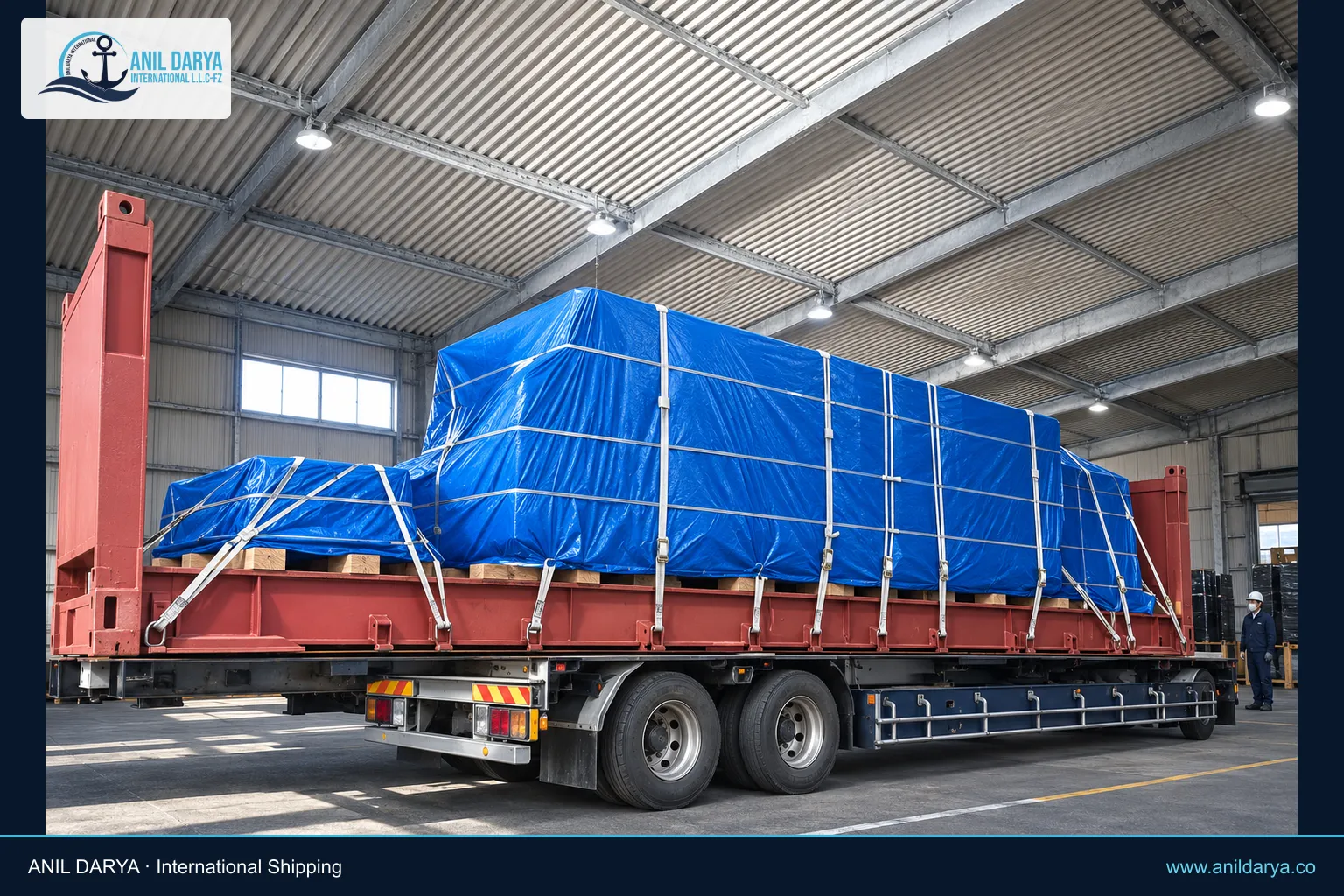
| Flat rack or open top | Machinery, transformers, steel structures slightly out of gauge | Use when the piece fits the frame by size and weight; carrier approval needed |
| Breakbulk | Very large or very heavy single pieces | Use when a flat rack is not enough; the vessel date then drives the plan |
If you buy from two or three Vietnamese suppliers in the same region, it is often cheaper to stuff one container than to ship several LCL lots. Our article on when FCL beats LCL explains the break-even, and our sea freight service page covers equipment and booking.
Dangerous goods
Paints, adhesives, aerosols, cleaning chemicals and lithium batteries inside electronics are dangerous goods at sea. The carrier will only accept them with the UN number, class, packing group, a current Safety Data Sheet and a signed DG declaration from the shipper. Some products also need a permit in Saudi Arabia before they can be cleared. Our dangerous goods desk checks the papers and gets the line's approval before you commit to a sailing.
Breakbulk and project cargo
For plant equipment, steel structures or oversized machinery, we start from drawings, weights and lifting points for every piece, then pick flat racks or breakbulk space. The Saudi broker needs a packing list that matches each piece on the B/L, so build it before loading. See our break bulk and project cargo service for how we plan these moves.
How long does shipping from Vietnam to Saudi Arabia take?
Door to door, the sailing is only one part of the time.
| Stage | What decides the time |
|---|---|
| Cargo ready, pickup and stuffing | Factory schedule, truck booking, empty container release |
| Vietnamese export clearance | VNACCS channel result: green clears fast, yellow needs documents, red needs a physical check |
| Port cut-off and sailing | Weekly sailing day, direct loop or transhipment, number of calls on the way |
| Saudi clearance | Fasah declaration filed at least 48 hours before arrival, SABER certificates ready, permits in hand |
| Delivery in Saudi Arabia | Truck or rail to the consignee, unloading, empty return |
Ask for the routing with every quote. A Cai Mep sailing with a direct Dammam call and a Hai Phong sailing that tranships twice can differ by more than a week, even with the same carrier. Jeddah and Dammam are also on different coasts, so the days to each are never the same.
Vietnam export side: VNACCS and the exporter's job
Export customs in Vietnam is run by the General Department of Vietnam Customs. The exporter files the declaration electronically on the VNACCS system in three steps.
- EDA, registration of the declaration. The registered details can be changed for up to 7 days.
- EDB, used to amend the registered details if needed.
- EDC, the final declaration. VNACCS then gives a channel result.
On a green channel the declaration clears without document checks. Yellow means customs wants to see the documents. Red means customs wants the documents and a physical check of the cargo. The documents the exporter may need include the declaration form, the commercial invoice, any export licence, inspection certificates for goods under inspection, and a raw timber statement for wood products.
The rules sit in Decree 206/2025/ND-CP and Circulars 38/2015/TT-BTC and 39/2018/TT-BTC. If you buy EXW, you still need a Vietnamese party to act as exporter, because a Saudi buyer cannot file on VNACCS. That is why FOB is the cleaner term for most Saudi buyers.
Ask the supplier for a certificate of origin issued in Vietnam. Saudi customs may waive it when origin is clearly shown, but it is simpler to have it than to argue about it at the port.
Saudi import customs for goods from Vietnam
Saudi customs is run by the Zakat, Tax and Customs Authority (ZATCA). Clearance is done on Fasah, ZATCA's electronic platform, either by the importer directly or through a customs broker. The documents and the declaration must be in at least 48 hours before the cargo reaches the port of entry.
| Document | Prepared by | What to check for a Vietnamese shipment |
|---|---|---|
| Commercial invoice | Vietnamese seller | Full English description, HS code, unit price, currency, Incoterm, Saudi consignee |
| Bill of lading | Shipping line (issued through us) | Consignee and notify party match the Saudi importer; weights and pieces match the invoice |
| Certificate of origin | Issued in Vietnam | Goods and consignee match the invoice; may be waived if origin is clear |
| Packing list | Vietnamese seller | Cartons, gross and net weight, marks; the broker needs it for the declaration |
| SABER certificates | Saudi importer, through SABER | PCoC for each regulated product and an SCoC for this shipment |
| IECEE certificate | Manufacturer | Needed for goods that require it, usually electrical products |
| Product registration or permit | Saudi importer | For example SFDA registration for food, cosmetics or medical devices |
Anil Darya does not sell customs clearance in Saudi Arabia. The consignee appoints its own licensed broker, and we coordinate with that broker before we confirm the booking: who files on Fasah, whether SABER certificates are ready, and which permits apply. If nobody on the Saudi side has agreed to clear the cargo, we do not load it.
SABER for Vietnamese products
SABER is the Saudi online conformity platform supervised by the Saudi Standards, Metrology and Quality Organization (SASO). For a regulated product, the importer registers a Product Certificate of Conformity (PCoC) and then requests a Shipment Certificate of Conformity (SCoC) for each consignment. SABER lists its fees as SAR 500 to register a PCoC and SAR 350 to issue a shipment certificate, both before VAT. The shipment certificate is now valid for 90 days instead of 60.
This matters a lot for typical Vietnamese exports. SABER announced that the unified charging port rule applies from 1 May 2026 to products such as digital cameras, e-readers, headphones, keyboards, computer mice, portable speakers and wireless routers, which must meet SASO IEC 62680-1-2:2023 and 62680-1-3:2023. If your factory in Hai Phong or Binh Duong makes any of these, check the charging port before production, not at the Saudi quay.
Duty and VAT on goods shipped from Vietnam to Saudi Arabia
Saudi Arabia applies the GCC common external tariff to goods from outside the GCC. For most products the duty is at least 5%, charged on the CIF value. Some staples, including rice, coffee, tea, bulk animal feed, livestock and fresh red meat, enter duty-free. Some processed foods carry higher rates of up to 40% where local production is high.
Import VAT is 15%. ZATCA calculates it on the customs value plus customs duty and other fees, and it applies even when the duty itself is zero. Excise tax is separate: 100% on cigarettes, tobacco and energy drinks, and 50% on carbonated soft drinks.
| Vietnamese product | Duty position to check | VAT |
|---|---|---|
| Rice | Listed among duty-free staples | 15% |
| Coffee and tea | Listed among duty-free staples | 15% |
| Cashews, pepper, processed foods | Check the HS code; most foods 5%, some processed foods higher | 15% |
| Phones, computers, electronics | Check the HS code; SABER usually applies | 15% |
| Garments, footwear, furniture | Check the HS code; usually the general CET rate | 15% |
Duty and taxes at destination are paid by the consignee or its broker. Because the duty base is CIF, the freight and insurance we book are part of it, so the invoice and freight figures given to the broker must agree.
Typical cargo on this lane
Vietnamese trade data reported by a Hanoi forwarder, citing Vietnam Customs statistics, put mobile phones and parts, computers and electronics, and cashew nuts among the leading exports to Saudi Arabia in 2024 and 2025. Seafood, rice, pepper, coffee, textiles, footwear and wood furniture also move on this lane. Each group has its own trap.
- Phones, electronics and accessories: SABER certificates, the charging port rule, lithium battery DG rules at sea.
- Cashews, pepper, coffee and rice: SFDA food rules, labels, and moisture control in the container.
- Frozen seafood: reefer set point, health certificate, SFDA requirements for the product.
- Garments and footwear: correct HS codes by fibre and material; mixed cartons slow clearance.
- Wood furniture: the raw timber statement on the Vietnamese export side, fumigation if the buyer asks for it.
Restricted and prohibited goods in Saudi Arabia
ZATCA says goods that are prohibited internationally or locally may not be imported, along with counterfeit or adulterated goods and goods that break approved specifications or intellectual property rules. Restricted goods need permits from the competent authority before clearance. For food, drugs, medical devices, cosmetics, pesticides and animal feed, that authority is the Saudi Food and Drug Authority (SFDA).
Before your supplier ships, ask the Saudi broker three things: is this HS code restricted, which permit is needed, and is it already issued. A permit requested after the container lands means storage and container charges every day it waits.
Using Dubai on the Vietnam to Saudi lane
A direct sailing is usually best for a single full container. Dubai earns its place when the order is split, small or not yet sold.
| Situation | How Dubai helps | What it involves |
|---|---|---|
| Several Vietnamese suppliers, small lots for Saudi and other Gulf buyers | Bring the lots to Jebel Ali and consolidate them in Dubai | UAE customs steps in Dubai, which we handle for a fee |
| Saudi buyer wants stock close by, called forward in small lots | Hold the goods in a free zone such as Jafza and re-export | Free zone storage, then a re-export to Saudi Arabia by sea or road |
| One full container, one Saudi consignee | Usually no gain | Book direct from Vietnam to the Saudi port |
Jafza describes itself as the largest customs bonded zone in the Middle East, next to Jebel Ali Port. Our article on re-exporting through Jafza explains how goods move in and out of the zone.
[AMIR-FACT: whether we consolidate Vietnamese LCL in Dubai for Saudi buyers today, how often, and the extra days it usually adds compared with a direct sailing]
What affects the cost of sea freight from Vietnam to Saudi Arabia?
We do not publish rates, because they change with each sailing. These are the parts of the bill and what moves each one.
| Cost part | What moves it |
|---|---|
| Origin charges in Vietnam | Trucking distance to Cai Mep, Cat Lai or Hai Phong, terminal handling, export filing by the shipper's broker |
| Ocean freight | Container type, season, carrier, direct or transhipped, surcharges |
| Special cargo | DG surcharges, reefer plugs, flat rack or breakbulk premiums |
| Destination charges in Saudi Arabia | Terminal handling, delivery order, broker fees, inspection |
| Conformity and permits | SABER fees, SFDA registration, testing |
| Duty and VAT | HS code and CIF value |
| Delays | Demurrage and detention when free time runs out |
A missing SABER certificate can keep a box at Dammam for days; our guide to demurrage and detention explains how those charges build up.
How to ship from Vietnam to Saudi Arabia: step by step
- Agree the Incoterm. FOB Cai Mep, Cat Lai or Hai Phong is the cleanest for most Saudi buyers.
- Send us the cargo details: product, HS code, weight, volume, supplier address, ready date, Saudi delivery city and any DG.
- Confirm the Saudi customs broker. The consignee names its broker, and we agree with them who files on Fasah and what permits are needed.
- Check SABER and permits. The importer registers the PCoC and requests the SCoC; SFDA or other permits are applied for now.
- Choose port and routing. We compare direct and transhipped options to Dammam or Jeddah and send you the routing with the quote.
- Book the space. We book with the shipping line from Dubai and get approval for DG, reefer or out-of-gauge cargo.
- Pickup and export filing. The shipper or its origin agent stuffs the container and files the VNACCS declaration before the cut-off.
- Check the draft B/L against the invoice and packing list, then the carrier issues its B/L and we release it.
- Pre-arrival filing. The Saudi broker files on Fasah at least 48 hours before arrival.
- Clearance and delivery. The consignee or its broker pays duty and VAT, collects the cargo and returns the empty within free time.
[AMIR-FACT: one real Vietnam to Saudi Arabia cross-trade shipment we handled (cargo, load port, Saudi port, carrier, days taken and any issue solved), cleared for publication]
Checklist before the container leaves Vietnam
- Incoterm agreed and written into the sales contract.
- Saudi customs broker named and confirmed in writing.
- HS code checked for every line, with the Saudi duty rate.
- SABER PCoC registered and SCoC requested for regulated products.
- Charging port compliance checked for small electronics.
- SFDA or other permits issued where the goods need them.
- Invoice, packing list and draft B/L show the same weights, pieces and consignee.
- Certificate of origin requested from the Vietnamese side.
- For DG: UN number, SDS, DG declaration and carrier approval.
- For reefer: set temperature on the booking and health certificate ready.
- Free time at the Saudi port known and the delivery truck planned.
Common mistakes on this lane
- Shipping before destination clearance is agreed. A box that arrives with no broker and no SABER certificate sits at the port and builds charges.
- Wrong coast. Discharging at Jeddah for a Riyadh buyer, or at Dammam for a Jeddah buyer, adds a long truck trip.
- Ignoring SABER until the end. Certificates take time; request them while the goods are in production.
- Electronics that miss the charging port rule. The goods can be refused at clearance.
- Undeclared lithium batteries or chemicals. The carrier can reject or fine the booking.
- Late Fasah filing. The 48-hour rule is there for a reason; miss it and the release waits.
- Values that do not match. The VNACCS export value, the invoice and the Fasah declaration should agree.
Frequently asked questions
Which ports are used for shipping from Vietnam to Saudi Arabia?
Cargo usually loads at Cai Mep, Cat Lai (Ho Chi Minh City) or Hai Phong. It discharges at King Abdulaziz Port in Dammam for the east and Riyadh, or at Jeddah Islamic Port for the west. King Abdullah Port and Jubail are called by some services.
Is there a direct sailing from Vietnam to Dammam?
Some loops call both. RCL, for example, published a rotation in 2023 with Cai Mep and Dammam on the same service, calling Jebel Ali on the way. Rotations change, so check the current routing with each quote.
Who clears the goods in Saudi Arabia?
The consignee or its licensed customs broker files the declaration on Fasah, at least 48 hours before the ship arrives. Anil Darya coordinates with that broker before booking but does not sell clearance in Saudi Arabia.
What is the import duty on Vietnamese goods in Saudi Arabia?
Most goods pay the GCC common external tariff of at least 5% on the CIF value. Rice, coffee and tea are among the duty-free staples, and some processed foods pay more. Import VAT is 15%.
Do Vietnamese electronics need SABER certificates?
Most regulated electrical products do. The importer registers a Product Certificate of Conformity and requests a Shipment Certificate of Conformity for each consignment. Some small devices must also meet the unified charging port rule from 1 May 2026.
Who files the export declaration in Vietnam?
The exporter files it on VNACCS, directly or through its own customs broker. The declaration is registered (EDA), changed if needed (EDB) and then finalised (EDC) before the cargo loads.
What bill of lading do I get on a cross-trade shipment?
You get the shipping line's own bill of lading. Anil Darya acts as agent for many shipping lines, so the carrier's B/L is issued and released to you through us. We do not issue a house B/L on this lane.
Can my Vietnamese cargo go through Dubai first?
Yes, if it helps. Small lots from several suppliers can be consolidated in Dubai, or stock can be held in a free zone such as Jafza and re-exported to Saudi Arabia. UAE customs in Dubai is a service we handle for a fee.
Get a quote for this lane
Tell us the factory location, the cargo, the ready date and the Saudi delivery city, and name the consignee's customs broker if you have one. We will come back with the load port, the Saudi port, the routing and a price. Use our freight rate inquiry form or contact our team to plan a DG, reefer or project shipment first. You can also read more about our Dubai freight forwarding team.
Sources
- Viet Nam Trade Portal (MOIT): export customs procedure on VNACCS (EDA, EDB, EDC, channels, documents)
- Saigon Newport: Vietnamese ports in Lloyd's List 2026 Top 100 (2025 volumes)
- Saigon Newport: Tan Cang Cat Lai terminal (draft and vessel size)
- RCL: RGA service rotation from 5 September 2023 (Cai Mep to Jebel Ali and Dammam)
- ZATCA: Import instructions (documents, Fasah, 48 hours)
- ZATCA: Import of goods (prohibited and restricted goods)
- ZATCA: Guideline on imports and exports under VAT
- U.S. International Trade Administration: Saudi Arabia import tariffs (CET, duty-free items, excise, VAT)
- SABER (SASO): fees, shipment certificate validity, charging port notice
- Saudi Food and Drug Authority: remit
- King Abdul Aziz Port, Dammam (UN/LOCODE, rail to Riyadh, main imports)
- Red Sea Gateway Terminal: about (share of Saudi container throughput 2024)
- Jafza: about the free zone
- HP Global: Vietnam to Saudi Arabia trade by commodity (citing Vietnam Customs)
Reviewed: 11 November 2026