
Buying a used refinery for sale abroad: logistics checks before you sign
Logistics due diligence for buyers of second-hand refineries and process plants: what to check on weights, ports, dismantling scope, documents and import rules before signing.
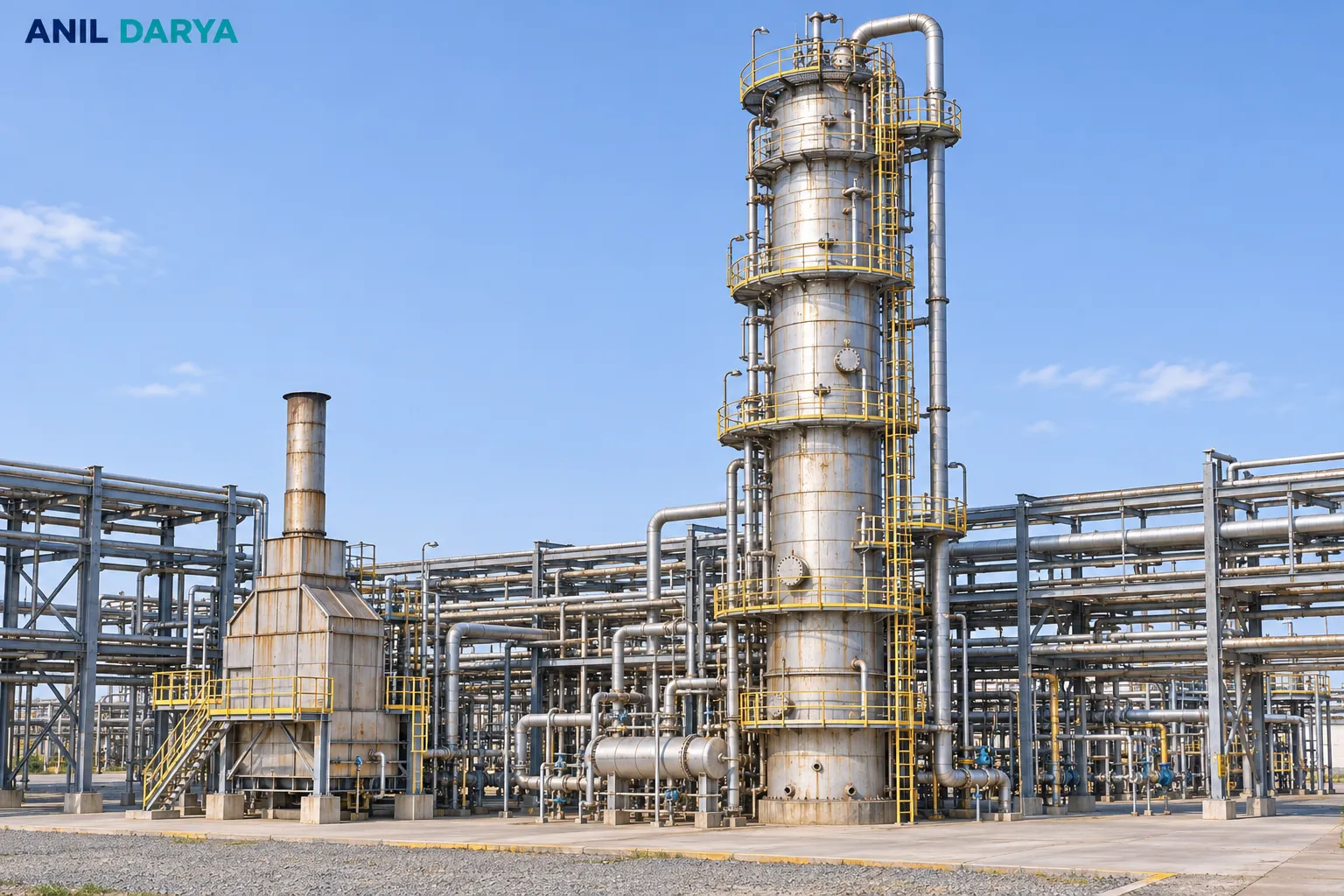
A used refinery for sale can look like a bargain on the listing page. The listing gives a capacity, a list of units and a year of construction. It rarely says what the plant weighs, where the nearest heavy lift port is, who will take it apart, or how the buyer's customs will value it. Those gaps decide whether the plant can be moved on time and within budget. This guide sets out the logistics checks a buyer should run before signing a purchase agreement for a second-hand refinery or process plant.
We look at it from the shipping side. Price, process design and crude suitability are for your engineers and advisers. Our concern is whether the plant can physically get from where it stands to where you want it.
What a used refinery for sale listing tells you
Listings from plant dealers follow a pattern. Phoenix Equipment's refinery page shows capacity, year built, the main process units and a sold or available status. Location is often missing. Documentation is not mentioned. A surplus listing for a 15,500 BPD refinery we opened gave a title, two build years and almost nothing else.
Some listings do carry shipping clues. One Phoenix listing for a 56,000 BPD refinery says the plant has been dismantled and the equipment is stored close to a major seaport. That changes the job. There is no dismantling risk left, but you inherit whatever tagging and packing the previous owner did.
So treat the listing as a starting point. The facts that drive logistics have to come from the seller in writing.
| What the listing usually gives | What you need for shipping |
|---|---|
| Capacity in barrels per day | Equipment list with tag, weight and dimensions for every item |
| Main process units | Which units are complete, which are partial, which were never installed |
| Year built | Drawings, data books and inspection records |
| Status (operating, idle, mothballed, dismantled) | Make-safe status, residual hydrocarbons, who dismantles and by when |
| Sometimes a region | Exact site, distance to port, road limits, nearest heavy lift berth |
Check 1: the equipment list and the documents behind it
Ask for the full equipment list before anything else. Each line should have a tag number, description, length, width, height and empty weight. Without it, nobody can say how many containers, break bulk pieces or heavy lifts the move needs.
Then ask what drawings exist. Phoenix's Vicksburg case shows why. The 14,000 BPD crude unit had passed through several owners, and limited technical documentation was left for a relocation. Phoenix used match-marking and laser scanning, with an engineering consultant, to record the plant before it came apart. If your plant has the same gap, budget for that survey work.
Watch for equipment that was never installed. On Phoenix's Florida to Indonesia job, some refinery assets, including large ASME vessels, were stored separately because they had never been put in place. Stored items need their own inspection, their own packing and their own place in the shipping plan.
Check 2: the heaviest piece and the route out
Find the heaviest and the largest item. Usually it is a column, a reactor or a heat exchanger bundle. That one piece decides whether you need a heavy lift ship, which ports can take it, and whether the road from the plant to the quay can carry it.
Ask four questions about it:
- Can it be shipped whole, or will it be cut into sections and welded again at the new site?
- Which port near the plant has the quay strength and crane capacity to load it, or space for a ship's own cranes to do it?
- Can the road from the plant reach that port without bridges, power lines or bends stopping it?
- Can the port and road at your end receive it?
Cutting is sometimes the right answer, but it moves work from the shipping budget to the erection budget. Welds on pressure parts need procedures and inspection at the new site.
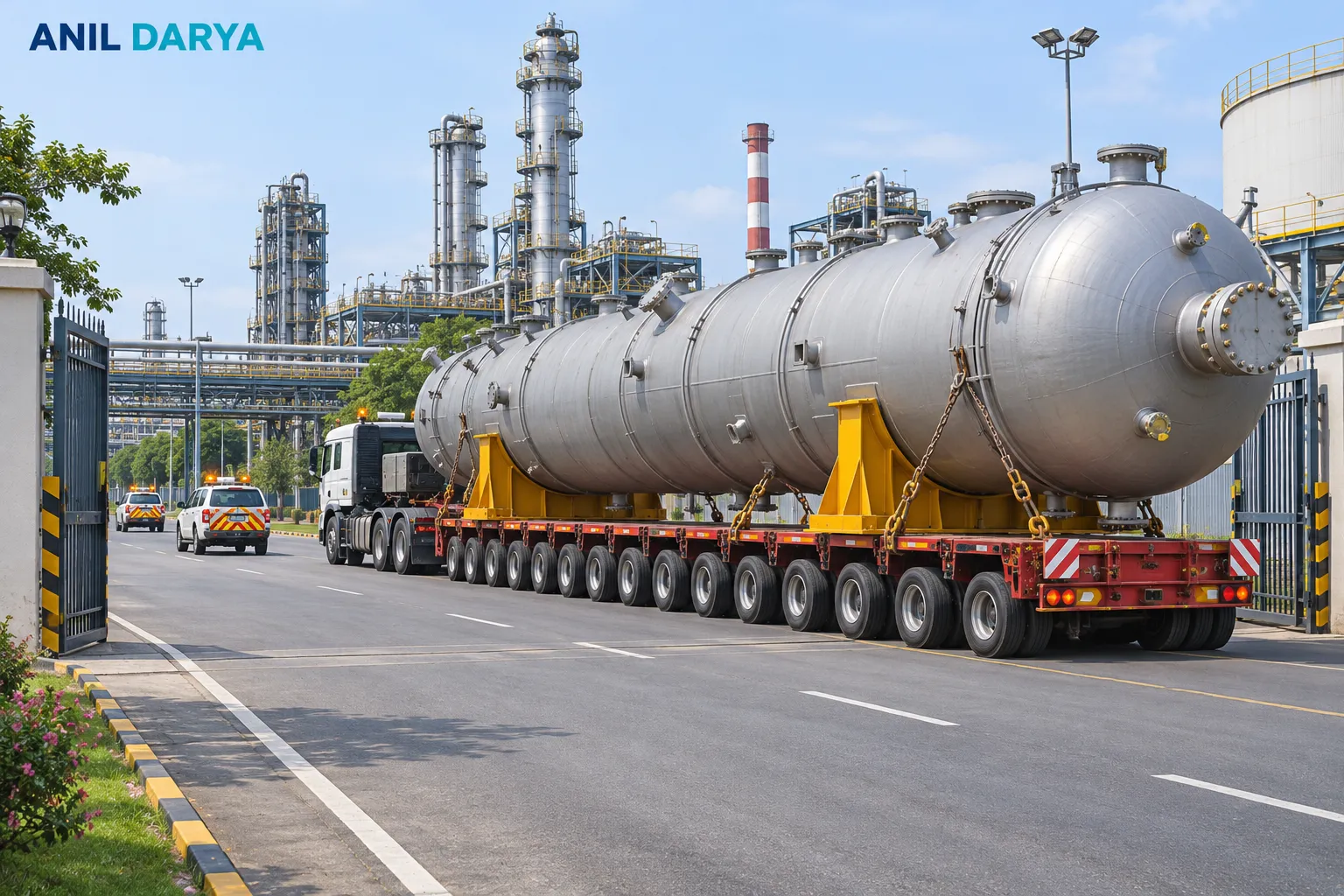
Check 3: condition of the pressure equipment
A refinery is mostly pressure equipment. Its condition decides whether moving it is worth it at all. API 510 is the American Petroleum Institute's code for the maintenance, inspection, repair and alteration of pressure vessels, and API runs an inspector certification for it. Ask the seller for the inspection history and get your own qualified inspector to review it. We do not inspect equipment. We do need the result, because a vessel that will be scrapped should not be booked on a ship.
Corroded or thin-walled items also change how they are lifted and seafastened. Weak lifting lugs or saddles may need replacing before export.
Check 4: who dismantles, who makes it safe, and by when
The purchase agreement should name who dismantles the plant and who removes residual hydrocarbons first. On the Vicksburg unit, the residual hydrocarbons were removed and the equipment made safe before dismantling. Phoenix also helped the buyer find a dismantling contractor that fitted the buyer's budget.
Also check the removal deadline. Phoenix committed to removing the Vicksburg plant within 12 months of purchase, and the physical dismantling took under four months. Larger plants take much longer: PRIOS reports about 20 months of dismantling for a European refinery it sold overseas.
Finally, check where the seller's scope ends. At Vicksburg, Phoenix covered packing and loading, and the buyer took responsibility for the shipment itself. That split is common. If the contract is silent, you may find the plant packed on a quay with nobody booked to move it.
| Item to settle in the contract | Why it matters for logistics |
|---|---|
| Make-safe and cleaning responsibility | Cargo with hydrocarbon residue can be refused or need dangerous goods handling |
| Dismantling contractor and method | Decides piece sizes and the release order to the port |
| Match-marking and tagging standard | Pieces without matching tags get lost between site, ship and new site |
| Packing and preservation standard | Poor packing means repacking at the port or damage at sea |
| Delivery point (site, port, on board) | Sets where your shipping scope starts |
| Removal deadline | Drives vessel bookings and storage at the load port |
Residues matter for shipping. Where they cannot be fully removed, see dangerous goods shipping for how such cargo is declared.
Check 5: import rules at the new site
Rules for importing used plant differ from country to country, including how it is valued for duty. Settle them before you sign, not when the first vessel arrives.
For the UAE, Dubai Customs charges duty at 5% of the CIF value. For used machinery, its guidance says the transaction value can be used, but because the machinery has been used, value is usually set by depreciation from the price of new machinery for the period of use. Have that valuation basis agreed with your broker early. We arrange payment of the duty and VAT as part of clearance for cargo into the UAE.
For other countries, destination clearance is agreed with the consignee's broker before shipping. If the plant goes cross-trade from one country to another without touching the UAE, the shipping line's B/L is released through us as agent for the line, and that broker handles the import.
[AMIR-FACT: site visit policy for buyers of used plants: whether our specialists inspect the plant site, access road and load port before the purchase is signed, and in which countries]
Check 6: a realistic timeline for a used refinery for sale
Buyers often underestimate how long the move takes. The published cases give a range:
- A 2,300 BPD recycled oil refinery went from Florida to Indonesia in under nine months, due diligence to delivery, according to Phoenix.
- The Vicksburg crude unit was dismantled in under four months, with the buyer then arranging shipment.
- PRIOS reports about two years of market development and negotiation before its European refinery was sold, then about 20 months of dismantling. The move needed around 1,200 containers and approximately 800 over-dimensional loads.
Shipping itself is rarely the longest phase. Dismantling, packing and approvals are. But shipping is where a bad plan becomes visible, as cargo piles up at the port or a heavy piece has no ship.
Modular plants are easier to move
If you have a choice, a plant built from skids or modules is usually simpler to relocate. PRIOS notes that plants can be relocated if they were designed with transportable modules and demountable interfaces, and that converting a conventional design later usually adds cost. Our explainer covers the concept, and covers shipping the modules.
How we fit in when you buy a used refinery for sale abroad
We are a Dubai freight forwarder. We do not sell plants and we do not dismantle them. Once you have a plant in view, we plan and book the shipping with heavy lift and multipurpose lines, surveyors and local contractors. Our specialists prepare and issue the lift plan, lashing and stowage calculations. Where an insurer or charterer requires it, an independent marine warranty surveyor still approves them. Our refinery work includes a refinery project in Iraq and the shipment of parts for a refinery project in Saudi Arabia.
The full move, phase by phase, is on our page. For the general flow of a project shipment, read the project cargo logistics process. For what a shipping line needs on day one, see the break bulk quote checklist. Insurance for a move like this is covered in break bulk and project cargo insurance.
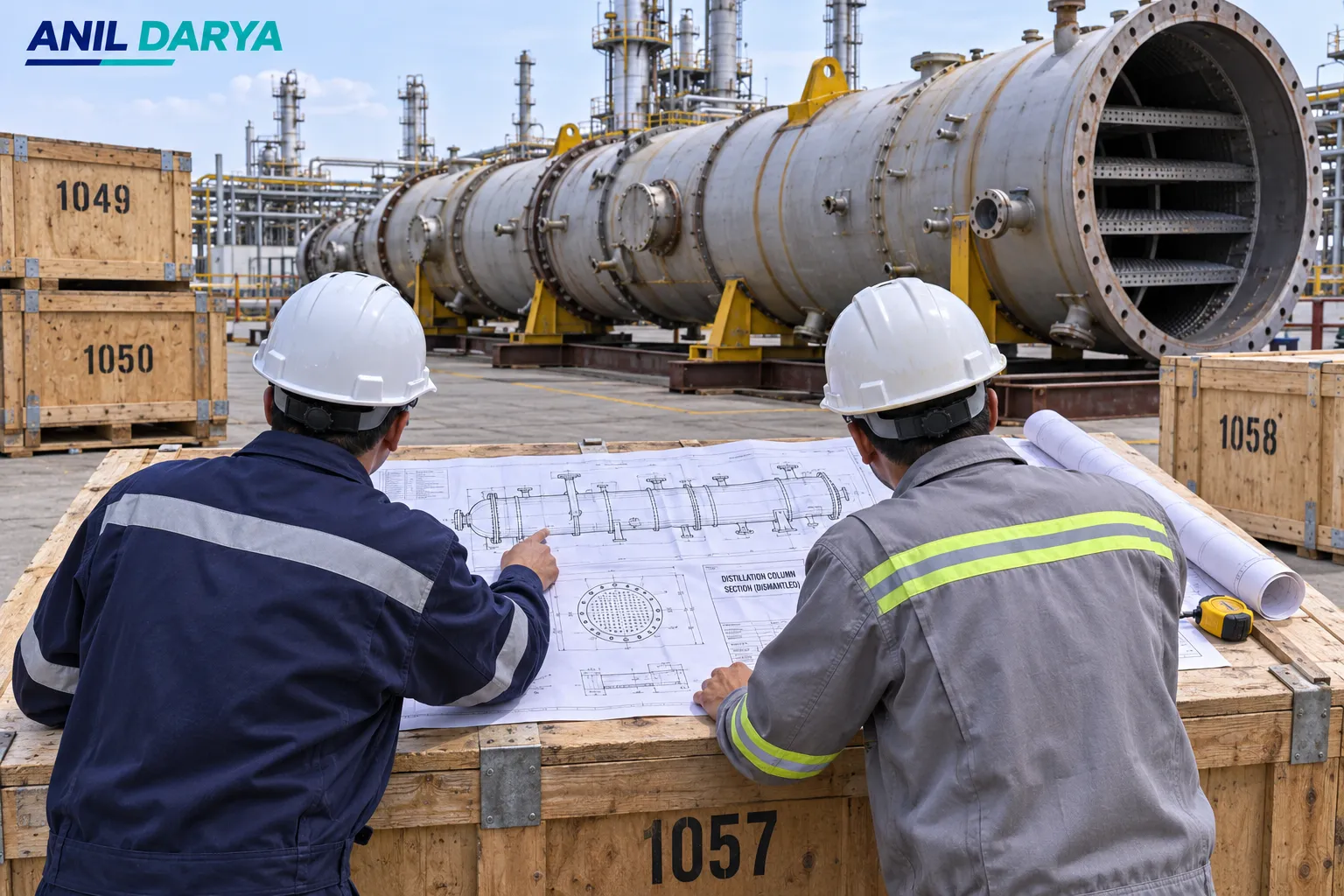
Free shipping consultation before you sign for a used plant
Send us what the seller has given you, even if it is incomplete: the listing, the equipment list, any drawings and weights, photos of the largest items, the plant location, your intended site and your target start-up date.
Our specialists answer by email straight away, and we arrange a meeting in person when the deal needs one. We tell you what the shipping job looks like before you commit. That covers how much of the plant could go in containers or as break bulk, which pieces would need a heavy lift ship, the surveys and lift planning those pieces would need, the documents to ask the seller for, the questions to raise about the load and discharge ports, and a suggested route, into the UAE, out of Dubai or cross-trade straight to your country. There is no charge for this review.
You can also reach us through the freight inquiry form or the contact page.
Frequently asked questions
Where can I find a used refinery for sale?
Specialist plant dealers and surplus brokers list complete refineries and individual units. Many listings are already sold or lack location and documents, so confirm availability and ask for the equipment list early.
What drives the cost of moving a used refinery?
We do not publish figures. The main drivers are the number of pieces, the heaviest and largest items, how much is cut, packing quality, the distance from the plant to a suitable port, and the import rules at your end.
How long does it take to relocate a used refinery?
Published cases range from under nine months for a 2,300 BPD unit to about 20 months of dismantling alone for a large European refinery. Shipping is usually shorter than dismantling and packing.
Is a modular refinery for sale easier to relocate?
Usually yes, if it was designed with transportable modules and demountable interfaces. The skids or modules can often be shipped whole.
Who is responsible for shipping a used plant after purchase?
Whatever the contract says. In the Vicksburg case, the seller packed and loaded and the buyer arranged the shipment. Agree the delivery point before signing.
What documents should I ask the seller for?
An equipment list with weights and dimensions, drawings, inspection records for pressure equipment, a make-safe certificate or statement, and details of any tagging or match-marking already done.
How is a used refinery valued for customs in Dubai?
Dubai Customs charges 5% of the CIF value. For used machinery, value is usually set by depreciation from the price of new machinery for the period of use.
Sources
- Phoenix Equipment: refineries for sale
- Phoenix Equipment: Vicksburg Petroleum 14,000 BPD crude unit sold to Africa
- Phoenix Equipment: 2,300 BPD recycled oil refinery from Florida to Indonesia
- Surplus Record: oil refinery, 15,500 BPD listing
- PRIOS: a successful oil refinery relocation
- PRIOS: the advantages of modular process plants
- API: API 510 pressure vessel inspector certification
- Dubai Customs: FAQ (duty and valuation of used machinery)
- UAE Government portal: clearing the customs and paying customs duty
- DNV: DNV-ST-N001 Marine operations and marine warranty
Reviewed: 16 November 2026