
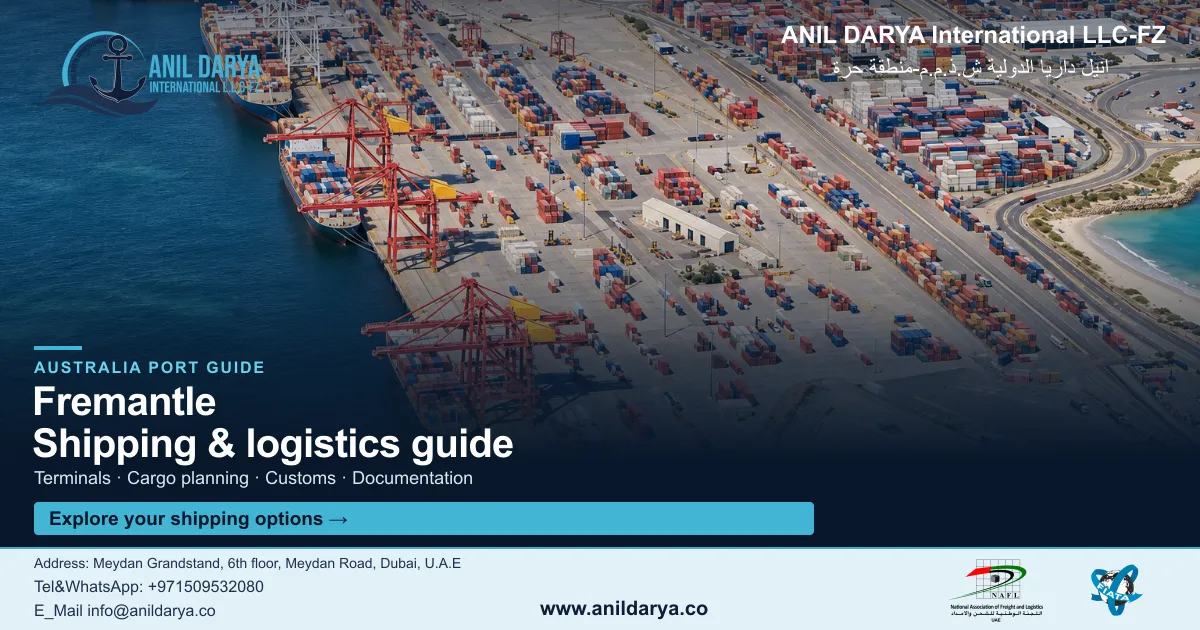
Port of Fremantle shipping is how almost every container reaches Western Australia: the port handles over 99% of the state's container trade. Containers, vehicles and general cargo use the Inner Harbour at the mouth of the Swan River, while bulk cargo uses the Outer Harbour at Kwinana, about 20 km south. This guide covers the terminals, the rail link to Perth, dangerous goods notice rules, customs and biosecurity at Fremantle, and how to ship there from Dubai step by step. We ship both from Dubai to Fremantle and from Fremantle to Dubai.
Port of Fremantle at a glance
| Item | Detail |
|---|---|
| Port authority | Fremantle Ports, a Government of Western Australia trading enterprise |
| UN/LOCODE | AUFRE |
| Location | Mouth of the Swan River, Fremantle, in the Perth metropolitan area |
| Two harbours | Inner Harbour (containers, general cargo, vehicles, livestock, cruise) and Outer Harbour at Kwinana, about 20 km south (dry and liquid bulk) |
| Container terminals | DP World Fremantle and Patrick Terminals, both at North Quay |
| Containers handled, 2025-26 | 920,521 TEU, up 3.7% on the previous year |
| Previous record | 887,514 TEU |
| Share of WA container trade | Over 99% |
| Container trade capacity | Peaks at around 1.4 million TEU a year |
| Largest container ship accepted | Up to 12,000 TEU |
| Inner Harbour depth (draft) | 14.5 m, with a minimum under keel clearance of 1.0 m |
| Containers moved by rail, 2025-26 | 26.4%, more than 240,000 TEU |
| Anchorage | Gage Roads, between Rottnest Island and the mainland |
| Customs and biosecurity | Australian Border Force (ABF) and the Department of Agriculture, Fisheries and Forestry (DAFF) |
| GST on imports | 10% of the value of the taxable importation |
| Shipping to Dubai | We also ship from Fremantle to Jebel Ali, Khalifa Port or Sharjah. Dubai duty is 5% of CIF for most goods, plus 5% import VAT |
What is the Port of Fremantle and where is it?
Fremantle is the main general cargo port of Western Australia. It sits at the mouth of the Swan River in the Perth metropolitan area, and the Inner Harbour opened in 1897. The port authority, Fremantle Ports, owns the land and channels. Private stevedores run the container terminals.
The port has two separate harbours, and the one on your booking matters:
- Inner Harbour. Inside the river mouth. Containers, vehicles, breakbulk, livestock and cruise ships. If you ship a container from Dubai, it lands here.
- Outer Harbour. In Cockburn Sound at Kwinana, about 20 km south. Grain, petroleum products, alumina, fertilisers, cement clinker, sulphur and other bulk. Fremantle Ports runs the Kwinana Bulk Terminal and Kwinana Bulk Jetty. Other jetties there are private.
Ships waiting for a berth anchor at Gage Roads, the stretch of water between Rottnest Island and the coast. If your vessel shows as "arrived" but not berthed, it is usually waiting there.
Ship size limits at Fremantle
The Inner Harbour has a maximum draft of 14.5 m, and vessels need at least 1.0 m under keel clearance. The WA Government's Westport program says Fremantle can only take container ships up to 12,000 TEU. Westport expects routes from 2030 to use ships of 14,000 TEU and more. For you, the limit mostly shows up as transshipment: the published Gulf services to Fremantle change ships at least once.
Which container terminals are at the Port of Fremantle?
Both container terminals sit on North Quay, on the north side of the Inner Harbour. Your carrier's service decides which one your box uses, so check the arrival notice before you book a truck.
| Terminal | Operator figures | Notes |
|---|---|---|
| DP World Fremantle | 3 berths, 929 m quay, 37.5 ha terminal area, post-Panamax cranes, straddle carriers, on-dock rail tracks | An AU$18 million rail interchange will connect it directly to the North Quay Rail Terminal |
| Patrick Terminals Fremantle | 646 m quay line, 4 quay cranes, 700,000 TEU capacity | Redeveloped from 2015 to raise capacity and efficiency |
DP World says its rail interchange will cut more than 20,000 truck movements a year on internal port roads. If your consignee uses rail, ask which terminal the train serves.
Other Inner Harbour berths
Outside the two container terminals, the Inner Harbour also handles breakbulk, livestock and cruise ships. Port data lists no shore cranes for this cargo: stevedores hire cranes from outside providers, with capacities from 55 t to 500 t SWL. For a heavy piece, that means the crane is booked for your vessel call, not waiting on the quay.
What cargo can you ship through the Port of Fremantle?
| Cargo | Where it is handled | What to plan from Dubai |
|---|---|---|
| General goods in containers (FCL, LCL) | North Quay terminals, Inner Harbour | Terminal on the booking, clean container, packing declaration |
| Reefer cargo | North Quay terminals | Set temperature, food import conditions in BICON |
| Vehicles and machinery | Inner Harbour | Import approval for road vehicles, cleaning to biosecurity standard |
| Steel, project and breakbulk cargo | Inner Harbour general cargo berths | Mobile crane booking, lifting plan, road permits |
| Chemicals and other dangerous goods | Container terminals or bulk berths | Notice to the harbour master under AS 3846 |
| Dry and liquid bulk | Outer Harbour, Kwinana | Discharge berth, receiving facility, surveys |
Port data lists the main imports as petroleum products, steel, fertilisers, chemicals, timber, containers, motor vehicles and general cargo. In the 2017-18 financial year the top containerised imports were metal manufactures, furniture and chemicals. Exports lean on grain, hay and stock feed, wool, meat, minerals and livestock, which is why empty containers often leave Fremantle full of farm goods.
Port of Fremantle shipping for containers: FCL and LCL
Most cargo from the UAE to Western Australia moves in containers. You have two options:
- FCL (full container load). You book a whole 20ft or 40ft box. It suits larger shipments and goods that should not be handled with other cargo.
- LCL (less than container load). Your cargo shares a box and is unpacked at a container freight station in Perth. It suits small volumes, but the release depends on the whole container clearing biosecurity first.
A practical rule for Fremantle: if your goods are urgent or include timber packaging, FCL is often the safer choice, because one problem consignment in a shared box can hold every LCL shipment in it. Our guide to FCL vs LCL costs shows where the break-even usually falls.
How containers leave the port: road and rail
The WA Government called the 2025-26 rail figures a national record for container freight on rail. In that year 26.4% of the port's containers moved by rail, more than 240,000 TEU. Trains run from the North Quay Rail Terminal to intermodal terminals at Forrestfield, Kwinana, Rockingham and Kenwick. The state pays a Fremantle Container Rail Subsidy of $50 per TEU, which the rail terminal operator passes on to customers.
| Final delivery address | Usual way out of the port |
|---|---|
| Fremantle, Cockburn, Perth inner suburbs | Truck direct from the terminal |
| Eastern industrial areas near Kewdale, Forrestfield, Kenwick | Rail to an intermodal terminal, then a short truck leg |
| Kwinana and Rockingham industrial areas | Rail to Kwinana or Rockingham, or truck |
| Regional WA and mine sites | Unpack in Perth, then road transport or a container on a regional truck |
Ask the consignee's transport company which route they use before you agree delivery terms. The rail option needs the container booked onto a train, and that changes the collection timing.
Breakbulk and project cargo at Fremantle
Western Australia's mining and energy projects bring a steady flow of machinery, steel and modules through Fremantle. Two things make project cargo here different from a Gulf port:
- No shore cranes listed for general cargo. You use the ship's own gear or a hired mobile crane, so the lift plan must name the crane early.
- Biosecurity on the cargo itself. Machinery and vehicles must arrive clean of soil, seeds and plant material. Used equipment is the most common cause of inspection and cleaning orders.
If a piece fits a 40ft flat rack, a container service via a transshipment hub usually gives more sailings. If it does not, you need breakbulk or heavy-lift tonnage calling at Fremantle, and the sailing date drives everything. See our break bulk and project cargo service and our guide to flat racks, open tops and out-of-gauge cargo.
Dangerous goods at the Port of Fremantle
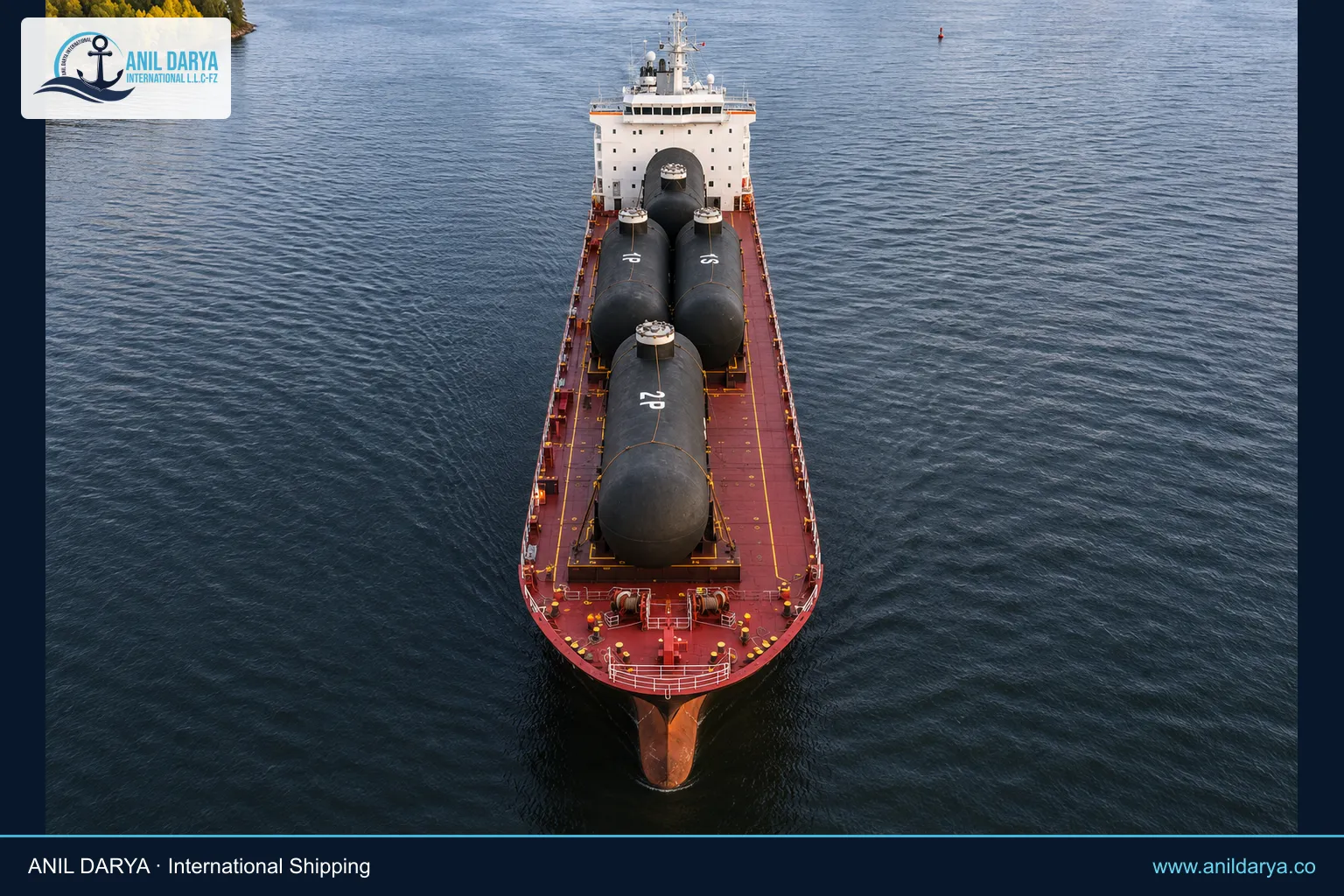
Dangerous goods in WA ports fall under the Dangerous Goods (Transport) (Dangerous Goods in Ports) Regulations 2001. The rules point to Australian Standard AS 3846 for how dangerous cargo is notified, classified and handled.
| Rule | What it means for your shipment |
|---|---|
| Regulation 16 | The consignor of dangerous cargo in a vessel must notify the harbour master under Section 3 of AS 3846 |
| Regulation 19 | The master and owner must also notify, and some cargo named by the harbour master needs written approval before the ship enters port |
| Regulation 17 | Explosives must be classified and segregated under AS 3846 |
| Regulation 18 | Containers with ammonium nitrate or calcium hypochlorite must meet the AS 3846 packing rules |
| Regulation 25 | Explosives above set quantities may only be handled at an approved berth, and handling stops during electrical storms |
| Regulation 26 | Berth operators may only keep listed packaged DG at a berth as AS 3846 allows |
In practice, the notice is lodged through the shipping line and its agent at Fremantle, using the data you give at booking. That is why a wrong UN number or missing safety data sheet can stop a DG box from being loaded in Jebel Ali at all.
What you need for any DG booking to Fremantle:
- UN number, proper shipping name, class and packing group for every product.
- A safety data sheet (SDS) for each product.
- A signed dangerous goods declaration and container packing certificate.
- UN-approved packaging, labels and placards.
- Carrier acceptance for the full route, including the transshipment port.
Our dangerous goods shipping team checks the documents and the acceptance on every leg before you commit to a sailing.
Customs and biosecurity at the Port of Fremantle
Customs rules at Fremantle are national. Our Melbourne guide covers them in more detail. Here is the short version, plus what differs in practice in Western Australia.
Who clears the cargo and what does it cost?
- The importer, or a licensed customs broker acting for them, lodges an import declaration (form B650, the N10) for sea cargo with the ABF.
- Most imported goods are liable for customs duty unless an exemption or concession applies. Check the rate for your tariff classification and origin.
- GST is 10% of the value of the taxable importation: customs value, plus any duty, plus the cost of transport and insurance to Australia.
- Some importers can defer GST to their next Business Activity Statement.
- Goods entered into a customs warehouse pay GST only when they leave it for home consumption.
Documents for a Fremantle import
| Document | Why it is needed |
|---|---|
| Commercial invoice | Customs value, description and tariff classification for the declaration |
| Packing list | Matches goods to packages for customs and biosecurity |
| Bill of lading | Release from the carrier at the terminal |
| Packing declaration | Tells DAFF what packaging is in the box and whether timber was treated |
| Timber treatment certificate | Only when timber pallets, crates or dunnage are used |
| Certificate of origin | Only if the importer claims a preferential duty rate |
| Import permit | Only where BICON or ABF rules require one (food, plant and animal products, some chemicals) |
| DG declaration and SDS | Only for dangerous goods |
Biosecurity checks that hit Fremantle cargo most
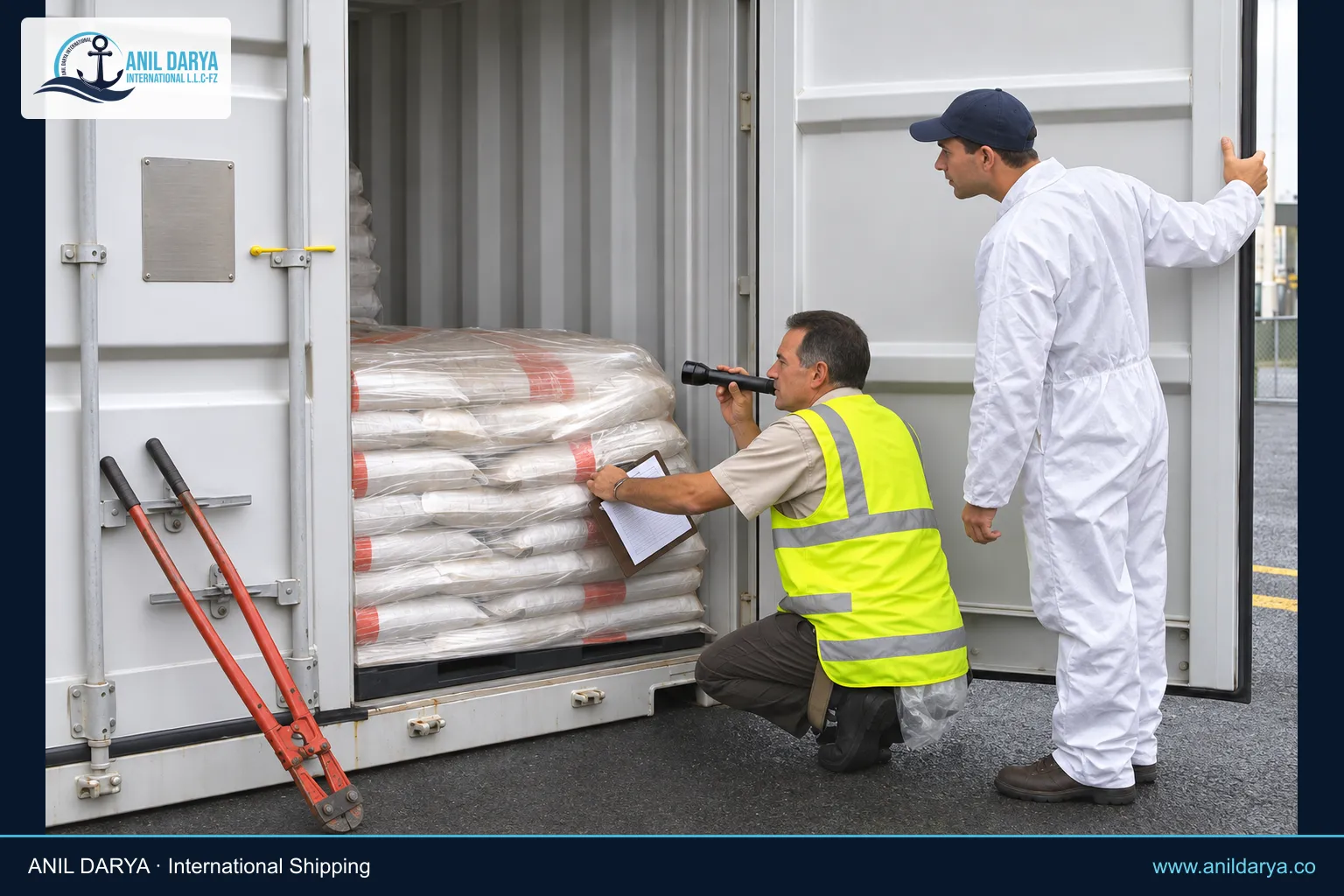
- Container cleanliness. Soil, seeds, plant material or insects inside or outside the box lead to treatment at the importer's cost.
- Timber packaging. Untreated or bark-covered pallets are a common cause of holds.
- Used machinery and vehicles. These must be cleaned before loading in the UAE. Cleaning in Perth costs more and takes longer.
- Seasonal measures. The brown marmorated stink bug (BMSB) season applies to goods made in target risk countries, even when they ship from Dubai. Check the current season and country list with DAFF before you ship machinery made in Europe or the US.
- BICON. The import conditions database lists permits and certificates for food, plant and animal products.
How long does shipping from Dubai to Fremantle take?
There is no single answer, because most services from the Gulf to Western Australia transship in Asia. Fluent Cargo's schedule data lists Jebel Ali to Fremantle at about 29 days 16 hours with one transfer, sailing every 2 to 4 weeks, and Fujairah to Fremantle at about 29 days 13 hours with one transfer. Carriers it names on the Fujairah services include COSCO, OOCL and CMA CGM. These are published indications, not a promise. Always check the arrival date on your booking.
[AMIR-FACT: the carriers or services we actually book from Jebel Ali to Fremantle, the transshipment hub they use, and our typical port-to-port days on this lane in 2026]
Air cargo is the fast option for urgent parts. Fluent Cargo lists direct flights from Dubai to Perth of about 10 hours 47 minutes. Our air cargo service covers DG by air as well.
How to ship from Dubai to the Port of Fremantle: step by step
Sea freight to Fremantle normally loads at Jebel Ali. Our Jebel Ali port shipping guide covers the UAE export side.
- Send us the cargo details. Commodity, tariff code, weight, volume or dimensions, packaging type, origin and the Incoterm agreed with the buyer.
- Check the Australian side first. The consignee or their broker checks BICON, any permit and the duty rate.
- Check BMSB status if the goods are machinery or were made in a target risk country.
- We compare carrier services into Fremantle, including the transshipment hub and which North Quay terminal each one uses.
- Book space. For DG, reefer or out-of-gauge cargo we get carrier acceptance first.
- Pack in a clean container with compliant packaging and prepare the packing declaration.
- We arrange UAE trucking, export clearance and gate-in at Jebel Ali before the cut-off.
- After sailing, we send the bill of lading, invoice, packing list, packing declaration and any certificates to the consignee's broker.
- The broker lodges the import declaration and answers any biosecurity questions before arrival.
- Once released, the consignee's transport company collects by truck or books the box onto the rail shuttle, then returns the empty on time.
How to ship from the Port of Fremantle to Dubai
We also handle the other direction: shipping from Fremantle to Dubai, with arrival at Jebel Ali, Khalifa Port or Sharjah port. We book the space with the carrier and run the UAE side. The Australian export papers stay with the shipper or its Australian agent.
The Australian export side
- Export Declaration. Goods must be reported to the Australian Border Force on an Export Declaration if they are worth more than AUD 2,000, need an export permit (whatever their value), carry a duty drawback claim, or have unpaid duty or excise.
- Who lodges. The exporter or its agent lodges it in the Integrated Cargo System, up to 6 months before export. The system returns an Export Declaration Number (EDN) and a status that shows whether the goods may be exported.
- Permits. Goods that need an export permit must have it whatever their value, so the shipper's agent checks this before booking.
The UAE import side
On arrival, the import declaration goes to Dubai Customs with the commercial invoice, packing list and certificate of origin, plus a permit from the relevant authority for restricted goods. The carrier releases the delivery order against the bill of lading. Customs duty in Dubai is 5% of the CIF value for most goods, with 50% on alcohol and 100% on cigarettes. Import VAT is 5% on top.
- Send us the shipper's details in Western Australia, the cargo, the HS code and the UAE delivery address.
- We book space to Jebel Ali, Khalifa Port or Sharjah and send the booking and cut-offs to the shipper.
- The shipper or its trucker delivers the cargo to the North Quay terminal the carrier names before the cut-off.
- The shipper or its Australian agent lodges the Export Declaration and gets the EDN.
- We check the draft bill of lading against the invoice and packing list before it is issued.
- We file the UAE declaration with Dubai Customs before the ship arrives.
- We arrange payment of the duty and VAT and collect the delivery order from the carrier.
- We truck the cargo to your site in the UAE and return the empty container within free time.
[AMIR-FACT: the carriers we actually use from Fremantle to Jebel Ali/Khalifa/Sharjah and our real transit days in this direction]
Checklist before you ship to Fremantle
- Tariff code and origin of the goods confirmed.
- BICON checked and any import permit in hand.
- BMSB status checked for machinery and goods made outside the UAE.
- Container swept and inspected before loading.
- Timber packaging treated and marked, or no timber used.
- Packing declaration signed.
- Licensed customs broker in Australia named and briefed.
- North Quay terminal confirmed with the carrier.
- Road or rail delivery agreed with the consignee's transport company.
- For DG: SDS, DG declaration and acceptance on every leg.
- For heavy pieces: mobile crane and lifting plan confirmed for the vessel call.
Common mistakes at the Port of Fremantle
- Assuming the vessel is direct. Most Gulf cargo transships, and the hub decides your real arrival date.
- Shipping used machinery with soil on it. Cleaning in Perth is slower and more expensive than cleaning in Dubai.
- Using untreated timber pallets.
- Choosing LCL for urgent goods, then waiting for the whole box to clear biosecurity.
- Missing DG data at booking, so the box is not loaded at Jebel Ali.
- Booking a truck to the wrong North Quay terminal.
- Planning a heavy lift without booking a mobile crane.
- Confusing the Inner Harbour with Kwinana. Containers land at the Inner Harbour; Kwinana is for bulk.
The future: will container trade move from Fremantle to Kwinana?
The WA Government's Westport program plans to move container trade from Fremantle to a new port at Kwinana. Its own reasons: Fremantle's capacity peaks at around 1.4 million TEU a year, it has a single freight rail line that cannot be expanded, and it only takes ships up to 12,000 TEU. Westport says Fremantle could reach capacity in the late 2030s and points to a possible move in the late 2030s. No final investment decision has been made. For shipments today, nothing changes: containers still land at North Quay.
Fremantle or another Australian port?
| If your consignee is in | Usually ship to |
|---|---|
| Perth and the rest of Western Australia | Fremantle |
| Victoria, Tasmania or southern New South Wales | Melbourne |
| Sydney and most of New South Wales | Sydney (Port Botany) |
| South-east Queensland | Brisbane |
Perth is far from the east coast ports, so the inland leg from Sydney or Melbourne is long. For WA consignees, land the cargo at Fremantle.
Frequently asked questions
What is the port code for Fremantle?
The UN/LOCODE for the Port of Fremantle is AUFRE. It appears on bookings, bills of lading and tracking systems.
Who operates the container terminals at Fremantle?
Two private stevedores run the container terminals at North Quay: DP World Fremantle and Patrick Terminals. Fremantle Ports, a WA Government trading enterprise, is the port authority.
How many containers does the Port of Fremantle handle?
Fremantle handled 920,521 TEU in the 2025-26 financial year, a record and 3.7% more than the year before. Its container trade capacity peaks at around 1.4 million TEU a year.
What is the difference between the Inner Harbour and Kwinana?
The Inner Harbour at the Swan River mouth handles containers, vehicles, general cargo and livestock. The Outer Harbour at Kwinana, about 20 km south, handles dry and liquid bulk such as grain, petroleum and alumina.
How long does shipping from Dubai to Fremantle take?
Fluent Cargo's schedule data shows about 29 to 30 days from Jebel Ali or Fujairah to Fremantle with one transfer. Your carrier, the transshipment hub and the sailing date decide the real time, so check the booking.
Do I need to notify the port about dangerous goods?
Yes. Under WA regulations the consignor of dangerous cargo must notify the harbour master in line with AS 3846, and the ship's master and owner must notify too. The shipping line and its agent lodge the notice using your booking data.
What GST do I pay on goods imported through Fremantle?
GST is 10% of the value of the taxable importation, which is the customs value plus duty plus transport and insurance to Australia. Some importers can defer it to their Business Activity Statement.
Can containers go from Fremantle to Perth by rail?
Yes. In 2025-26, 26.4% of Fremantle's containers moved by rail from the North Quay Rail Terminal to intermodal terminals at Forrestfield, Kwinana, Rockingham and Kenwick, with a state subsidy of $50 per TEU.
Is the Port of Fremantle moving to Kwinana?
The WA Government's Westport program plans to move container trade to Kwinana, with a possible move in the late 2030s. No final investment decision has been made, and containers still use Fremantle's Inner Harbour today.
Can you handle shipping from Fremantle to Dubai?
Yes. We book the space from Fremantle to Jebel Ali, Khalifa Port or Sharjah, file the Dubai Customs declaration and arrange payment of the 5% duty on the CIF value and the 5% import VAT. The shipper or its Australian agent handles the Export Declaration and EDN at origin.
Get a quote for Port of Fremantle shipping
Send us the cargo details and the delivery address in Western Australia, and we will come back with a routing and a price into Fremantle. Use our freight rate inquiry form, or contact our team to talk through a DG, project or machinery shipment first. You can also read more about our Dubai freight forwarding team.
Sources
- WA Government: Western Australia sets national record for container freight on rail (9 August 2026)
- Westport: Why Westport (capacity, ship size, timing)
- Westport program home page
- DP World: DP World Fremantle terminal facts
- DP World: Fremantle Rail Interchange (December 2025)
- Patrick Terminals: Fremantle
- Hatch: Fremantle Container Terminal redevelopment
- Wikipedia: Fremantle Harbour (LOCODE, harbours, depth, Kwinana operators)
- ShipNext: Fremantle port data (under keel clearance, cranes, cargo mix)
- iContainers: Port of Fremantle (port areas, cargo types)
- FreightWaves: Growth in box volumes at Freo (2017-18 trade mix)
- WA legislation: Dangerous Goods (Transport) (Dangerous Goods in Ports) Regulations 2001
- Australian Border Force: How to import (import declaration N10, form B650)
- Australian Border Force: Cost of importing goods
- Australian Border Force: GST and other taxes when importing
- Australian Border Force: Types of imports (motor vehicle import approval)
- Fluent Cargo: Dubai to Perth sea and air schedule data
- Australian Border Force: Export requirements (Export Declaration over AUD 2,000 or with a permit)
- Australian Border Force: ICS export overview (exporter or agent lodges, EDN, up to 6 months before export)
- Dubai Customs: Submit customs declaration (invoice, packing list, certificate of origin, permits for restricted goods)
- Dubai Customs: FAQ (duty 5% of CIF value, 50% alcohol, 100% cigarettes)
- UAE Government portal: Clearing the customs and paying customs duty (5% of CIF)
- UAE Federal Tax Authority: VAT (5% rate)
Reviewed: 10 November 2026