
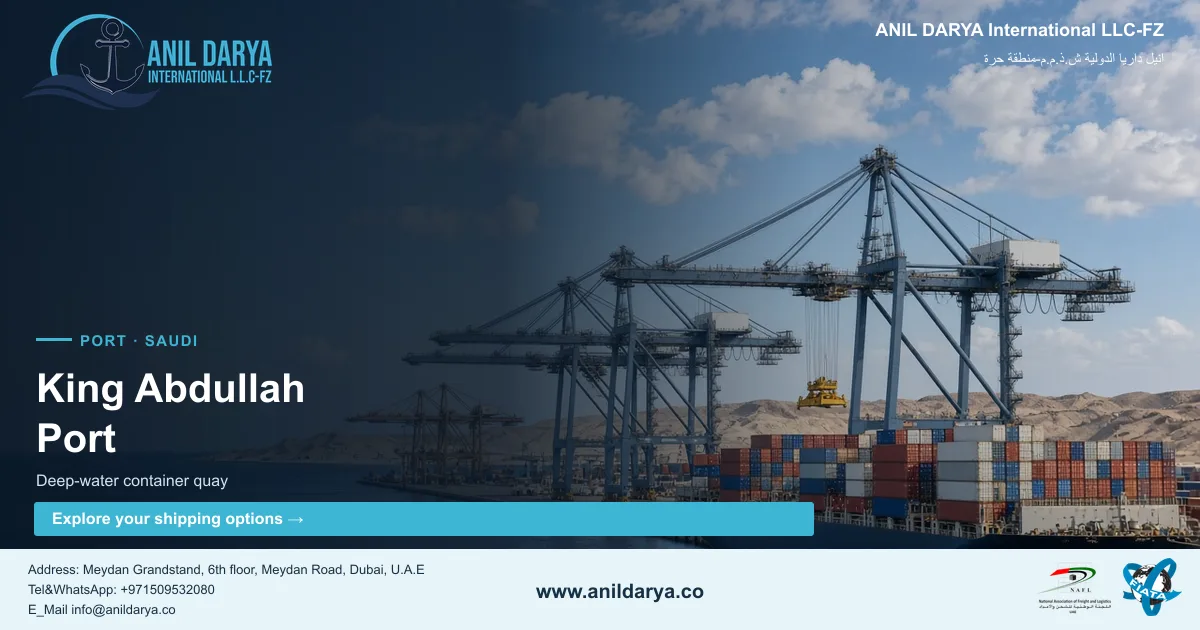
King Abdullah Port shipping means moving cargo through the privately owned port at King Abdullah Economic City (KAEC), about 90 km north of Jeddah on Saudi Arabia's west coast. It is one of the Kingdom's largest container ports, with an 18 m deep container terminal, a Ro-Ro terminal, a bulk and general cargo terminal and a bonded re-export zone behind the quay. This guide covers what is specific to this port, a short summary of Saudi customs, and how we ship your cargo there from Dubai. We ship both from Dubai to King Abdullah Port and from King Abdullah Port to Dubai.
King Abdullah Port shipping: key facts at a glance
| Item | Detail |
|---|---|
| Official name | King Abdullah Port (KAP) |
| Owner and developer | Ports Development Company (PDC), the first privately owned and funded port in Saudi Arabia |
| Container terminal operator | National Container Terminals (NCT) |
| UN/LOCODE | SAKAC |
| Location | King Abdullah Economic City, Rabigh, Makkah Province, about 90 km north of Jeddah |
| Port area | About 17.4 km² |
| Container operations since | September 2013 (officially inaugurated 11 February 2019) |
| Depth at the container terminal | 18 m alongside |
| Largest ships | Designed for container ships over 23,500 TEU |
| Current container capacity (port figure) | 5.5 million TEU a year |
| Containers handled in 2023 | 2,929,807 TEU |
| Ro-Ro terminal | 1,420 m berth, 14 m depth, 200,000 CEU current capacity |
| Bulk, agri bulk and general cargo terminal | 1,420 m berth, 14 m depth |
| Bonded and re-export zone | About 1,000,000 m² next to the terminals |
| Nearest major airport | King Abdulaziz International Airport, Jeddah, about 95 km |
| Customs | ZATCA, declaration on Fasah at least 48 hours before arrival |
| Import duty and VAT | Mostly 5% duty on CIF value, plus 15% import VAT |
| King Abdullah Port to Dubai | Shipper or its Saudi broker files the export declaration; GCC-origin goods with an authenticated certificate of origin enter the UAE duty-free, 5% VAT applies |
Where is King Abdullah Port and why ship through it?
King Abdullah Port sits inside King Abdullah Economic City in Rabigh governorate, Makkah Province. Saudipedia puts it about 90 km north of Jeddah. Fluent Cargo lists King Abdulaziz International Airport at about 95 km, and Jeddah Islamic Port at about 117 km by road.
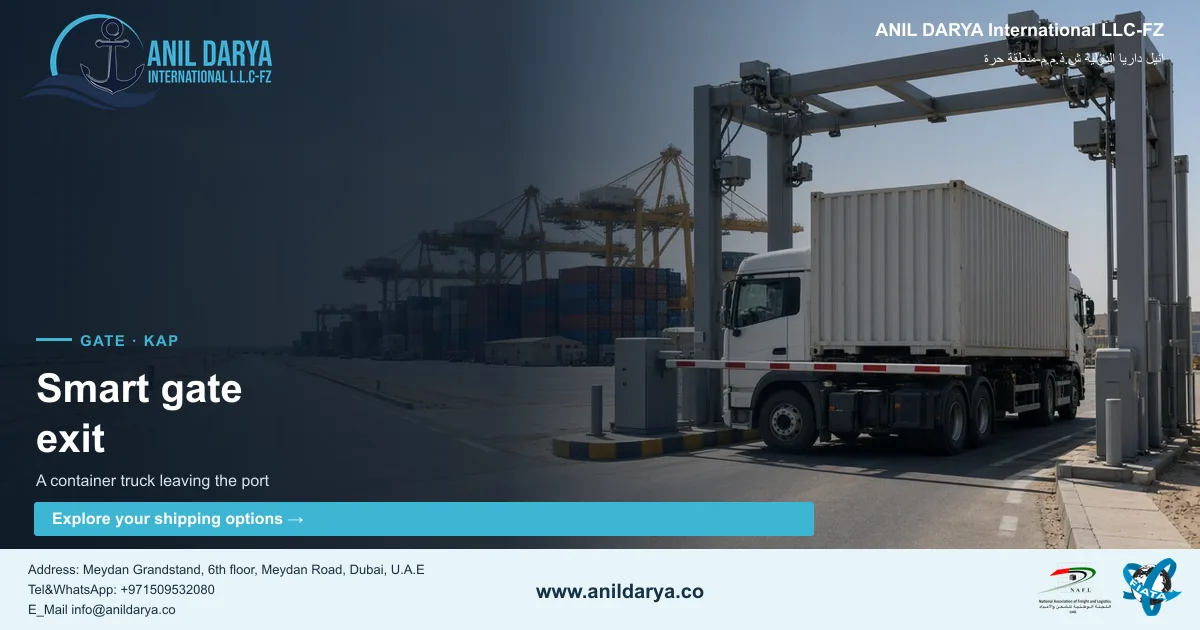
The port started container operations in September 2013 and was officially inaugurated in February 2019. It is owned and developed by Ports Development Company, which the port describes as the first privately owned and funded port facility in Saudi Arabia and the wider region. That matters in practice: the port runs its own port community system and smart gate, and its terminal partners (NCT for containers, plus AMSTEEL and Almarai) work inside one privately planned site.
Shippers use King Abdullah Port for four main reasons:
- The consignee is in KAEC, its Industrial Valley, Rabigh or north Jeddah, so the truck leg is short.
- The cargo comes on a large deep-sea service that calls KAP rather than Jeddah.
- The cargo is vehicles or wheeled equipment for the Ro-Ro terminal.
- The goods need bonded storage or re-export handling in the zone behind the port.
A simple rule: if your consignee is in Jeddah city, Makkah or Taif, compare KAP with Jeddah Islamic Port before you book. If the consignee is in Riyadh or the Eastern Province, neither west coast port is usually the right choice.
Which terminals does King Abdullah Port have?
KAP has three terminal types: containers, Ro-Ro, and bulk with agri bulk and general cargo. The port publishes both current capacity and the capacity it plans to reach when the master plan is complete, so read the numbers with that in mind.
Container terminal run by National Container Terminals
NCT operates the container handling facility. It handles import, export and transshipment boxes, reefers and some break bulk.
| Item | NCT container terminal |
|---|---|
| Berths | 6 |
| Quay length | About 2,200 m |
| Depth alongside | 18 m |
| Terminal area | About 1.2 million m² |
| Reefer capacity | Over 2,500 containers |
| Ship-to-shore gantry cranes | 20 |
| Rubber-tyred gantry cranes | 60 |
| Terminal tractors | 135 |
The port says its quay cranes span 25 containers across and lift 65 tonnes, and that the terminal is built for ships over 23,500 TEU. For you, this means very large Asia and Europe services can call directly. It does not mean every service from the Gulf does, so we check each sailing.
Ro-Ro terminal for vehicles and wheeled equipment
The Ro-Ro terminal has a 1,420 m berth with 14 m depth. The port lists current capacity at 200,000 CEU, against 1.5 million CEU when fully built. Services include discharge, short-term quayside storage, transfer to longer-term storage inside the port, inventory control and land for a pre-delivery inspection (PDI) facility. The terminal also handles tractors, trucks and heavy wheeled equipment for large projects, and has its own gates complex with direct highway access.
Bulk, agri bulk and general cargo terminal
This terminal also has a 1,420 m berth with 14 m depth. It takes dry bulk, agricultural bulk and general cargo such as steel and project pieces. Almarai and AMSTEEL are listed among the port's terminal partners.
| Cargo stream | Current capacity a year | Planned capacity a year |
|---|---|---|
| Containers | 5.5 million TEU | 25 million TEU |
| Ro-Ro | 200,000 CEU | 1.5 million CEU |
| Dry bulk | 3 million tonnes | 10 million tonnes |
| Agri bulk | 4 million tonnes | 15 million tonnes |
| General cargo | 2 million tonnes | 5 million tonnes |
Source: King Abdullah Port's own published figures. Older port statements give lower full-build targets (20 million TEU), so treat the planned column as the port's ambition, not today's reality.
How much cargo does King Abdullah Port handle?
Saudipedia, citing Lloyd's List, reports 2,929,807 TEU handled in 2023, up 0.8% from 2,905,306 TEU in 2022. That puts KAP among the busiest container ports in the Kingdom. A large share of that volume is transshipment: the port says that within five years of opening it became the Kingdom's largest transshipment hub.
KAP also ranks well on productivity. Saudipedia lists first place in the World Bank Container Port Performance Index for 2021 and again for 2023. In 2022 the port worked 20,153 TEU on a single vessel call, the MSC Renee, in about 77 working hours.
Bulk and general cargo is smaller but growing. In 2019 the port reported 2.98 million tonnes of bulk and general cargo, up from 689,000 tonnes in 2018, and 203,670 TEU of import containers.
What this means for a shipper from the UAE: the port is quick at the quay, but a transshipment-heavy port depends on the connecting service. Ask which vessel brings your box in and where it is transshipped, not only the arrival port.
Logistics zones behind the quay
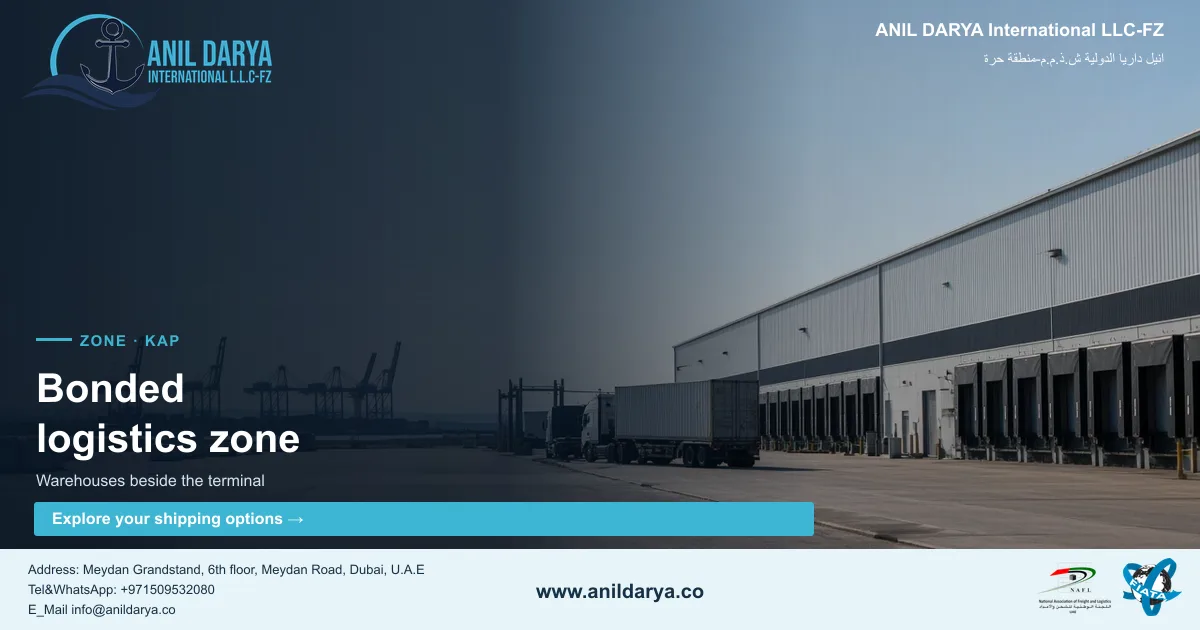
This is where KAP differs most from Jeddah. The port has planned land next to the terminals for storage, re-export and processing.
| Zone | Size | What it is used for |
|---|---|---|
| Bonded and re-export zone | About 1,000,000 m² | Warehousing, cross-docking, open-yard storage, LCL, bonded and non-bonded facilities |
| Petrochemical hub | About 1,000,000 m² | Palletised petrochemicals stored near the port and stuffed into containers when orders arrive |
| Processing and service zone | About 700,000 m² | Support for bulk and general cargo operations |
| Ro-Ro hub | About 120,000 m² | Vehicle storage within driving distance of the Ro-Ro terminal |
| Railway zone (planned) | About 1,000,000 m² | Planned multimodal rail terminal with 10 million TEU a year capacity |
The port says storage in the bonded zone has no fixed end date, renewed automatically every three years. It also pitches the zone as a way to avoid port storage charges once a box stays beyond the free period. If your consignee plans to hold stock near the port and release it in parts, ask them whether they already have a warehouse in this zone.
The planned railway zone is not a working rail service today. Plan inland moves by truck.
What cargo moves through King Abdullah Port?
| Cargo type | Where it is handled | What to plan |
|---|---|---|
| General goods in containers | NCT container terminal, FCL or LCL | Direct or transshipped service, free time, truck from KAEC |
| Chilled and frozen food | NCT reefer area (over 2,500 reefer positions) | Set temperature, food permits, quick clearance |
| Cars, trucks, wheeled machinery | Ro-Ro terminal | Ro-Ro sailing dates, vehicle import rules, PDI if needed |
| Steel and general cargo | Bulk and general cargo terminal | Piece list, discharge plan, inland trucks |
| Grain and feed | Agri bulk terminal | Receiver's silo or storage, phytosanitary papers |
| Petrochemicals for export | Petrochemical hub, then container terminal | Booking, stuffing and DG paperwork at origin |
| Project and out-of-gauge cargo | Flat racks at NCT, or breakbulk at the general cargo berth | Lifting plan, road permits to site |
FCL and LCL shipping to KAP: which one to book
With FCL you book a whole 20ft or 40ft container. It suits heavy cargo and larger volumes, and it releases as soon as your own declaration clears. With LCL your cargo shares a box with other shippers and is unpacked before release, so one late document in the consolidation can hold everyone. The bonded zone lists LCL among its services, but you still need to confirm with the carrier or co-loader where an LCL box for KAP is unpacked. Our guide to choosing between FCL and LCL shows where a full container starts to pay.
Breakbulk, project cargo and dangerous goods at King Abdullah Port
Breakbulk and project cargo
KAP takes general cargo at its 14 m bulk and general cargo berth, and NCT lists break bulk handling at the container terminal. The Ro-Ro terminal handles heavy wheeled equipment for large projects. For a project shipment to KAEC or the Rabigh area, we plan it in this order:
- Collect drawings, dimensions, weights and centre of gravity for each piece.
- Choose between a flat rack or open top on a container service, Ro-Ro for wheeled units, or conventional breakbulk.
- Agree lifting and lashing with the carrier and the terminal before the cargo leaves the UAE.
- Line up the Saudi broker and any permits so the cargo leaves the port quickly.
- Plan the road move from the quay to site with the consignee's transport company.
Read how we handle flat rack, open top and out-of-gauge cargo, or see our break bulk and project cargo service.
Dangerous goods
KAP sits next to a petrochemical hub, and petrochemical exports move through the container terminal. The port's public pages do not publish its DG class rules or storage limits, and we could not read its port information guide. So we confirm acceptance with the carrier and the terminal for every DG booking. You need to supply:
- UN number, proper shipping name, class and packing group.
- A Safety Data Sheet for each product.
- A dangerous goods declaration signed by a trained person.
- UN-approved packaging, labels and container placards.
- Any Saudi permit the product needs, approved before sailing.
Our dangerous goods shipping team checks carrier acceptance before you commit to a sailing.
Customs at King Abdullah Port: a short summary
KAP uses the same Saudi customs rules as every other Saudi port. Our Jeddah port guide covers them in full, so here is the short version:
- ZATCA clears the cargo. The importer or its customs broker files on the Fasah platform at least 48 hours before the ship arrives.
- Core documents are the commercial invoice, bill of lading and certificate of origin. Product documents come on top, such as an IECEE certificate or a product registration.
- Regulated products need SABER certificates. SABER lists SAR 500 for a product certificate and SAR 350 for each shipment certificate, before VAT, and shipment certificates are valid for 90 days.
- Most goods from outside the GCC pay at least 5% duty on CIF value under the GCC common external tariff. Import VAT is 15%.
Two points are specific to KAP. The port advertises cargo clearance within 24 hours on its terminal pages, which depends on your documents being complete. And goods can enter the bonded and re-export zone rather than clearing straight into Saudi Arabia, which helps if part of the cargo will leave again.
How to ship from Dubai to King Abdullah Port
From the UAE you have three practical routes. Most containers go by sea from Jebel Ali. Road is an option when the cargo must move door to door. Very large or wheeled units may suit Ro-Ro or breakbulk tonnage.
| Option | How it works | When it fits |
|---|---|---|
| Sea FCL, Jebel Ali to KAP | Container on a carrier service that calls KAP, direct or via a transshipment port | Regular volumes, heavy cargo, cargo that can wait for a sailing |
| Sea LCL to KAP | Cargo consolidated in Dubai, unpacked at the Saudi end | A few cubic metres, no deadline |
| Road, UAE to KAEC | Truck loaded at your site, cleared at the Ghuwaifat and Al Batha border, driven across Saudi Arabia | Door-to-door control, part loads, urgent cargo |
| Ro-Ro or breakbulk | Vehicles to the Ro-Ro terminal, oversized pieces to the general cargo berth | Machinery, vehicles, project pieces |
Fluent Cargo's tracker listed only two carriers with direct calls at KAP in late 2026, MSC and Global Feeder Shipping. Services change often, so we confirm the current sailing and any transshipment port for each booking.
[AMIR-FACT: the carriers or services we actually use from Jebel Ali to King Abdullah Port (direct or via which transshipment hub) and our typical port-to-port and door-to-door transit days]
This is how we handle a typical sea shipment from Dubai to KAP. We book the space, prepare the UAE side and work with your Saudi consignee or their clearing agent.
- Send the cargo details: commodity, HS code, weight, volume or dimensions, pickup point in the UAE and Incoterm.
- We check Saudi product rules: SABER, permits and product registration.
- We compare services from Jebel Ali port to KAP and confirm whether each is direct or transshipped. For DG, reefer or out-of-gauge cargo we get carrier acceptance first.
- We arrange the empty container, stuffing at your site or a UAE warehouse, and the seal.
- We file the UAE export or re-export declaration.
- The full container gates in at Jebel Ali before the carrier's cut-off.
- We send the bill of lading, invoice, packing list and certificate of origin so the consignee's broker can file on Fasah at least 48 hours before arrival.
- ZATCA assesses duty and VAT, inspects if selected and releases the cargo. The consignee's agent collects the delivery order and trucks the box out, or moves it into the bonded zone.
- The empty goes back to the depot the line names, within free time.
Our sea freight service from Dubai covers FCL and LCL to KAP. If your cargo starts in Abu Dhabi, we can also compare a sailing from Khalifa Port.
How to ship from King Abdullah Port to Dubai
We also handle the other direction: shipping from King Abdullah Port to Dubai, with arrival at Jebel Ali, Khalifa Port or Sharjah port. We book the space with the carrier and run the UAE side. The Saudi export filing stays with the shipper or its Saudi customs broker.
The Saudi export side
- Export declaration. ZATCA's export instructions ask for the bill of lading, the invoice and the manifest to complete the export declaration, and ZATCA recommends working with a customs broker. The shipper or its Saudi broker files it.
- Certificate of origin. For duty-free entry in the UAE, each item needs a certificate of origin authenticated by the competent Saudi government agency. Ask the shipper to apply for it before the vessel sails.
The UAE import side
On arrival, the declaration goes to Dubai Customs with the commercial invoice, the packing list, the certificate of origin and any permit from the authority that controls restricted goods. The carrier then releases the cargo against the bill of lading with a delivery order. Customs duty in Dubai is 5% of the CIF value for most goods, with 50% on alcohol and 100% on cigarettes. Import VAT is 5%, charged on the customs value including freight, insurance and customs fees. A VAT-registered importer that meets the Federal Tax Authority conditions accounts for it on its VAT return instead of paying at the border.
Goods of Saudi national origin can enter the UAE free of customs duty. Under the GCC Unified Economic Agreement, agricultural, animal, industrial and natural resource products of national origin are exempt from reciprocal customs charges between member states. For manufactured goods, the value added in the member states must be at least 40% of the final value, and GCC citizens must own at least 51% of the producing plant. Each exempt item must travel with a certificate of origin authenticated by the competent government agency. Import VAT of 5% still applies.
- Send us the shipper's details near King Abdullah Port, the cargo, the HS code and the UAE delivery address.
- We book space from King Abdullah Port to Jebel Ali, Khalifa Port or Sharjah and send the booking and cut-offs to the shipper.
- The shipper or its trucker delivers the container to the NCT container terminal at King Abdullah Port before the cut-off.
- The shipper or its Saudi agent files the export declaration with ZATCA before the cut-off.
- We check the draft bill of lading against the invoice and packing list before it is issued.
- We file the UAE declaration before the vessel arrives, so clearance can start when it berths.
- We arrange payment of the duty and VAT and collect the delivery order from the carrier.
- We truck the cargo to your site and return the empty container inside the free time.
[AMIR-FACT: the carriers we actually use from King Abdullah Port to Jebel Ali, Khalifa Port or Sharjah (direct or via which hub), and our real port-to-port transit days in this direction]
King Abdullah Port or Jeddah: which fits your cargo?
| Your situation | Usually better | Why |
|---|---|---|
| Consignee in KAEC, Industrial Valley or Rabigh | King Abdullah Port | Short truck leg inside the economic city |
| Consignee in central or south Jeddah | Jeddah Islamic Port | Port is in the city, more services call |
| Vehicles or wheeled equipment | Either, compare Ro-Ro sailings | Both ports have Ro-Ro handling |
| Goods to store under bond and re-export | King Abdullah Port | Large bonded and re-export zone next to the terminals |
| Riyadh or Eastern Province | Neither, look at Dammam or road | Shorter inland leg from the east coast |
Checklist before you ship to King Abdullah Port
- HS code confirmed for every item.
- SABER status checked, with certificates in place before sailing.
- Permits and product registrations approved.
- Invoice, packing list and bill of lading show the same weights, piece counts and consignee.
- Port of discharge on the booking is King Abdullah Port (SAKAC), not Jeddah.
- Direct or transshipped service confirmed, with the transshipment port named.
- Saudi broker ready to file on Fasah at least 48 hours before arrival.
- Decision made on clearing into Saudi Arabia or entering the bonded zone.
- For DG: SDS, DG declaration, packaging, labels and carrier acceptance.
- For project cargo: drawings, lifting points and a road plan from the quay.
Common mistakes when shipping to King Abdullah Port
- Booking "Jeddah" when the consignee expects KAP. The two ports are about 90 km apart and the truck leg changes the cost.
- Treating the planned capacity figures as current. Use the current numbers when you plan Ro-Ro or bulk volumes.
- Ignoring the transshipment leg. A fast port does not help if the box waits for a connection elsewhere.
- Waiting for arrival to start SABER. Shipment certificates must be ready before the declaration is filed.
- Planning cargo by rail. The rail terminal is still a plan; move inland by truck.
- Sending different consignee names on the bill of lading and invoice. The Saudi broker cannot file until they match.
Frequently asked questions
Where is King Abdullah Port located?
King Abdullah Port is in King Abdullah Economic City, Rabigh governorate, Makkah Province, on Saudi Arabia's west coast. It is about 90 km north of Jeddah and about 95 km from King Abdulaziz International Airport.
Who owns and operates King Abdullah Port?
The port is owned and developed by Ports Development Company, the first privately owned and funded port in Saudi Arabia. National Container Terminals (NCT) operates the container terminal.
What is the port code for King Abdullah Port?
The UN/LOCODE for King Abdullah Port is SAKAC. Use it on bookings and bills of lading so the cargo is not routed to Jeddah (SAJED) by mistake.
What is the water depth at King Abdullah Port?
The container terminal has 18 m depth alongside and is designed for ships over 23,500 TEU. The Ro-Ro and the bulk and general cargo terminals each have 14 m depth along a 1,420 m berth.
How many containers does King Abdullah Port handle?
King Abdullah Port handled 2,929,807 TEU in 2023, according to Lloyd's List figures cited by Saudipedia. The port states a current container capacity of 5.5 million TEU a year.
Can King Abdullah Port handle vehicles and project cargo?
Yes. The Ro-Ro terminal handles cars, trucks, tractors and heavy wheeled equipment, with storage and land for a pre-delivery inspection facility. Non-wheeled project pieces go on flat racks or as breakbulk at the general cargo berth.
Does King Abdullah Port have a free zone?
It has a bonded and re-export zone of about 1,000,000 m² next to the terminals, with warehousing, cross-docking and LCL services. Goods can be stored there under bond and re-exported without clearing into Saudi Arabia.
How do I ship from Dubai to King Abdullah Port?
Most containers go by sea from Jebel Ali, on a direct or transshipped service that calls KAP. Road via the Ghuwaifat and Al Batha border is the alternative for door-to-door moves. We book the space, prepare UAE documents and work with your consignee's Saudi broker.
How do I ship from King Abdullah Port to Dubai?
The shipper or its Saudi broker files the export declaration with ZATCA and delivers the box to the NCT terminal before the cut-off. We book the space, file the Dubai Customs declaration before arrival and arrange payment of the duty and 5% VAT. Saudi-origin goods with an authenticated GCC certificate of origin are exempt from UAE customs duty.
Get a quote for King Abdullah Port shipping
Send us your cargo details and we will come back with a routing and a price for shipping to King Abdullah Port. Use our freight rate inquiry form, or contact our team to talk through a Ro-Ro, project or DG shipment first. You can also read more about our Dubai freight forwarding team.
Sources
- King Abdullah Port: home page (owner, terminals, current and total capacity, logistics zones)
- King Abdullah Port: National Container Terminals (berths, quay, depth, equipment, start of operations)
- King Abdullah Port: Container terminal (depth, vessel size, cranes, 24-hour clearance)
- King Abdullah Port: Ro-Ro terminal (berth, depth, capacity, services)
- King Abdullah Port: Masterplan (terminal berths and depths, zones, planned rail terminal)
- King Abdullah Port: Bonded and re-export zone
- King Abdullah Port: Petrochemical hub
- King Abdullah Port: Terminals and terminal partners
- King Abdullah Port: 2019 bulk, general cargo and import container volumes
- Saudipedia: King Abdullah Port (location, area, inauguration, 2022 and 2023 TEU, rankings)
- Fluent Cargo: King Abdullah Port SAKAC (LOCODE, airport and road distances, carriers)
- ZATCA: Import instructions (documents, Fasah, 48-hour rule)
- SABER platform (SASO): certificate fees and validity
- US International Trade Administration: Saudi Arabia import tariffs (5% CET, CIF basis, 15% VAT)
- ZATCA: Export instructions (bill of lading, invoice, manifest, customs broker)
- GCC Secretariat General: Unified Economic Agreement (Articles 2 and 3, national products and certificate of origin)
- Dubai Customs: Submit customs declaration (invoice, packing list, certificate of origin, permits)
- Dubai Customs: FAQ (5% of CIF value, alcohol and cigarettes)
- UAE Government portal: Clearing customs and paying customs duty (5% of CIF in Dubai)
- Federal Tax Authority: VAT guide, section 3.5 on import VAT (5%, customs value, registered importers)
Reviewed: 10 November 2026