

|
Getting your Trinity Audio player ready...
|
China's Crude Oil Imports Fall Sharply in Q2 2026
China's crude oil imports declined significantly during the second quarter of 2026 as higher oil prices and supply disruptions linked to the Strait of Hormuz reduced purchasing activity.
The slowdown by the world's largest crude importer also eased global demand, helping moderate the upward pressure on oil prices created by disrupted Middle East supply.
Imports Drop to Their Lowest Level in Years
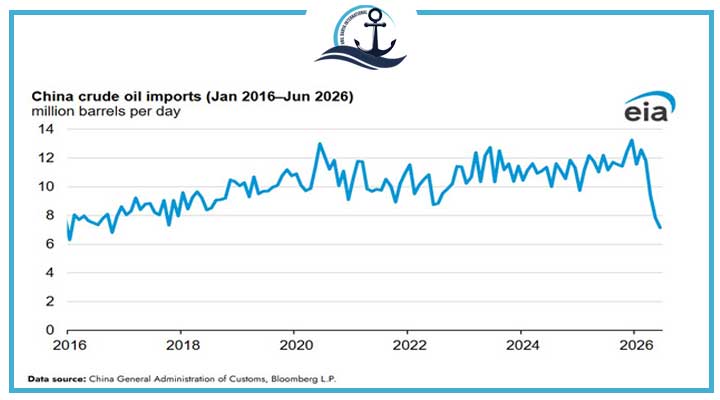
Data from China's General Administration of Customs show that crude oil imports averaged 8.1 million barrels per day (b/d) during the second quarter of 2026.
That represented a 32% decline compared with the previous quarter.
Imports fell below 8.0 million b/d in both May and June, marking the first time since 2016 that monthly volumes dropped beneath that level.
Higher Oil Prices Reversed Earlier Buying Trend
The latest decline contrasts sharply with China's purchasing strategy before tensions intensified around the Strait of Hormuz.
During 2025, China imported a record 11.6 million b/d of crude oil while taking advantage of the lowest oil prices since 2020 to expand its strategic reserves.
Imports averaged 12.0 million b/d during the second half of 2025 and remained at similar levels through February 2026 before market conditions changed.
Tanker Imports Recorded the Largest Decline
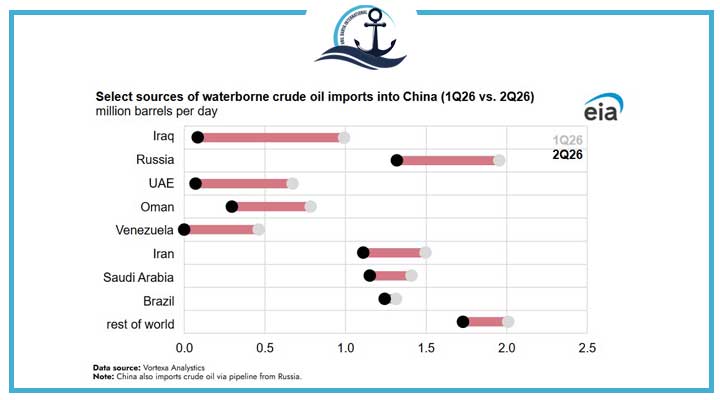
Most of China's crude oil arrives by sea, and tanker tracking data from Vortexa indicate that the reduction mainly affected seaborne shipments rather than pipeline supplies.
The largest decreases in waterborne imports between the first and second quarters came from:
- Iraq: down 910,000 b/d
- Russia: down 640,000 b/d
- United Arab Emirates: down 600,000 b/d
Pipeline imports are estimated to have remained broadly stable during the period.
Inventory Draws Supported Refinery Activity
China's refinery throughput declined during the quarter, but not as sharply as imports.
Refineries processed 2.2 million b/d less crude oil compared with the previous quarter, while imports fell by 3.9 million b/d.
The difference suggests China relied on crude oil inventories to help meet refinery demand rather than increasing imports.
Global Oil Market Feels the Impact
Analysts estimate that global crude inventories recorded draws of approximately 5.1 million b/d during the second quarter of 2026.
Lower Chinese demand helped offset some of the upward pressure on oil prices that resulted from supply disruptions around the Strait of Hormuz, highlighting the country's continued influence on global energy markets and tanker trade.