
Shipping from Pakistan to Dubai is one of the shortest container lanes into the UAE: most cargo loads at Karachi or Port Qasim and discharges at Jebel Ali. The sea leg is quick. What sets your delivery date is paperwork at both ends: the Pakistani exporter's declaration on the Pakistan Single Window, and your Dubai Customs declaration with 5% duty on the CIF value and 5% import VAT.
Pakistan to Dubai shipping at a glance
| Item | Detail |
|---|---|
| Main Pakistani load ports | Karachi Port (KICT, KGTL and SAPT terminals) and Port Qasim (QICT) |
| Main UAE discharge port | Jebel Ali (DP World), over 80 weekly services |
| Other UAE ports | Khalifa Port (Abu Dhabi) and Sharjah ports |
| Published carrier transit | 3 days Karachi to Jebel Ali on Emirates Shipping Line's Gulf Pakistan Shuttle table (advisory dated February 2024) |
| Modes | FCL, LCL, breakbulk and project cargo, dangerous goods, air cargo |
| Pakistani export filing | Goods declaration through PSW or WeBOC; PSW Single Declaration mandatory where a regulatory requirement applies |
| UAE customs authority (Dubai) | Dubai Customs |
| Importer ID in Dubai | Customs business code |
| Customs duty | 5% of CIF value for most goods; alcohol 50%, cigarettes 100% |
| Import VAT | 5%, deferred to the VAT return when the importer's customs number is registered with the FTA |
| Free zone next to the port | Jafza, over 11,000 companies |
How the Pakistan to Dubai sea freight route works
This is a short-sea lane. Emirates Shipping Line's February 2024 advisory for its Gulf Pakistan Shuttle shows a rotation of Jebel Ali, Karachi, Jebel Ali, Kuwait, Dammam and back to Jebel Ali, a 14-day round voyage, and 3 days from Karachi to Jebel Ali. That service is not listed on the line's current service network page, so treat the figure as a sign of how short the sea leg is, not as today's schedule. Ask for current sailings when you book.
The lane carries rice, textiles and garments, home textiles, leather goods, surgical and sports goods, salt, fruit and vegetables, minerals, cement and machinery spares. Some of it is sold in the UAE. A large share goes to Dubai traders who re-export it. Which of the two applies to your goods decides the customs route at the Dubai end, so settle it before you book.
What adds days to cargo from Pakistan to Dubai?
| Factor | Why it matters | What to do |
|---|---|---|
| Rotation | A ship that calls other Gulf ports before Jebel Ali reaches you later | Read the port rotation, not just the sailing day |
| Export declaration | A declaration held for a permit or a missing financial instrument keeps the box on the quay | Have the exporter file early on PSW |
| Cut-offs | A missed gate-in or documents cut-off rolls the box to the next sailing | Deliver the container well before the terminal deadline |
| Change of destination | Maersk notes that changing the destination country of a Pakistani export needs prior approval from Pakistan Customs, which takes time | Fix the destination before the export is declared |
| Dubai clearance | A late declaration or missing UAE permit keeps the box at Jebel Ali | File the Dubai declaration before the vessel berths |
[AMIR-FACT: our real port-to-port transit Karachi to Jebel Ali and Port Qasim to Jebel Ali in 2026, and the carriers we usually book on this lane]
Which Pakistani port should you ship from?
Pakistan's container trade runs through two ports, both in the Karachi area. The choice is usually about which terminal your carrier calls and where the factory is.
| Port | What the operator says | Good fit for |
|---|---|---|
| Karachi Port | Karachi Port Trust: three wharves with 34 berths, three container terminals (KICT, KGTL, SAPT), designed depth 13 to 16 m at container terminals, 2.28 million TEU in fiscal year 2023-24 | Most container services, breakbulk at the East Wharf general cargo berths |
| Port Qasim | Port Qasim Authority: 49 km channel open day and night for ships up to 13 m draught, 18 berths, about 51% of Pakistan's sea trade by PQA's figure | Containers through QICT, plus vehicles, machinery and project cargo at the Marginal Wharf |
| Inland dry ports (up-country) | Carriers accept boxes from inland points under their own rules | Factories in Punjab and the north that clear export inland |
For a factory in Lahore, Sialkot or Faisalabad, ask whether the carrier takes the container from an inland dry port on a through bill of lading. The trucking or rail leg to Karachi is then under the carrier's control. Dangerous goods are the exception: Maersk does not move DG cargo by rail or truck to inland locations in Pakistan, so DG boxes are delivered to the port.
Which UAE port should your cargo arrive at?
Most cargo from Pakistan discharges at Jebel Ali. DP World runs four container terminals there and handles breakbulk, project cargo, reefers and IMDG dangerous goods. Our Jebel Ali port guide covers the terminals and port rules.
- Consignee in Dubai or in Jafza: Jebel Ali.
- Warehouse or site in Abu Dhabi: compare Khalifa Port in Abu Dhabi to cut the truck leg.
- Consignee in Sharjah or the northern emirates: compare Sharjah port shipping.
The arrival port also sets which customs office clears the goods. Cargo discharged in Abu Dhabi or Sharjah clears with that emirate's customs, not Dubai Customs, so check that your agent can file there.
Sea freight from Pakistan to Dubai: FCL, LCL and special cargo
| Mode | Typical cargo from Pakistan | What to plan |
|---|---|---|
| FCL 20ft and 40ft | Rice, textiles, salt, cement, building materials | Payload within the container's CSC plate limit; Dubai declaration before arrival |
| LCL | Samples, garments, surgical and sports goods in cartons | Release only after the shared box is unpacked; the consolidator's papers and yours must match |
| Reefer | Mangoes, kinnow, vegetables, meat and fish | Food permit and health certificate before sailing; Maersk accepts reefers in Pakistan only at its Port Qasim yard |
| Flat rack, open top, breakbulk | Machinery, steel, project pieces | Carrier approval for out-of-gauge cargo, lifting plan and trailer in Dubai |
| Dangerous goods | Chemicals, paints, solvents | Carrier DG approval, delivery straight to the port, UAE port storage limits |
| Air cargo | Urgent spares, documents, perishables | Same Dubai Customs declaration, duty and VAT |
FCL or LCL from Pakistan?
FCL is sealed at origin and released in Dubai as one unit, which keeps handling low. LCL suits a few pallets, but your cargo waits until the consolidator's container is unpacked and every consignee in it is cleared. If you are close to half a 20ft container, ask for both prices. Our guide to FCL vs LCL costs shows where the break-even sits.
Machinery, steel and project cargo into Dubai
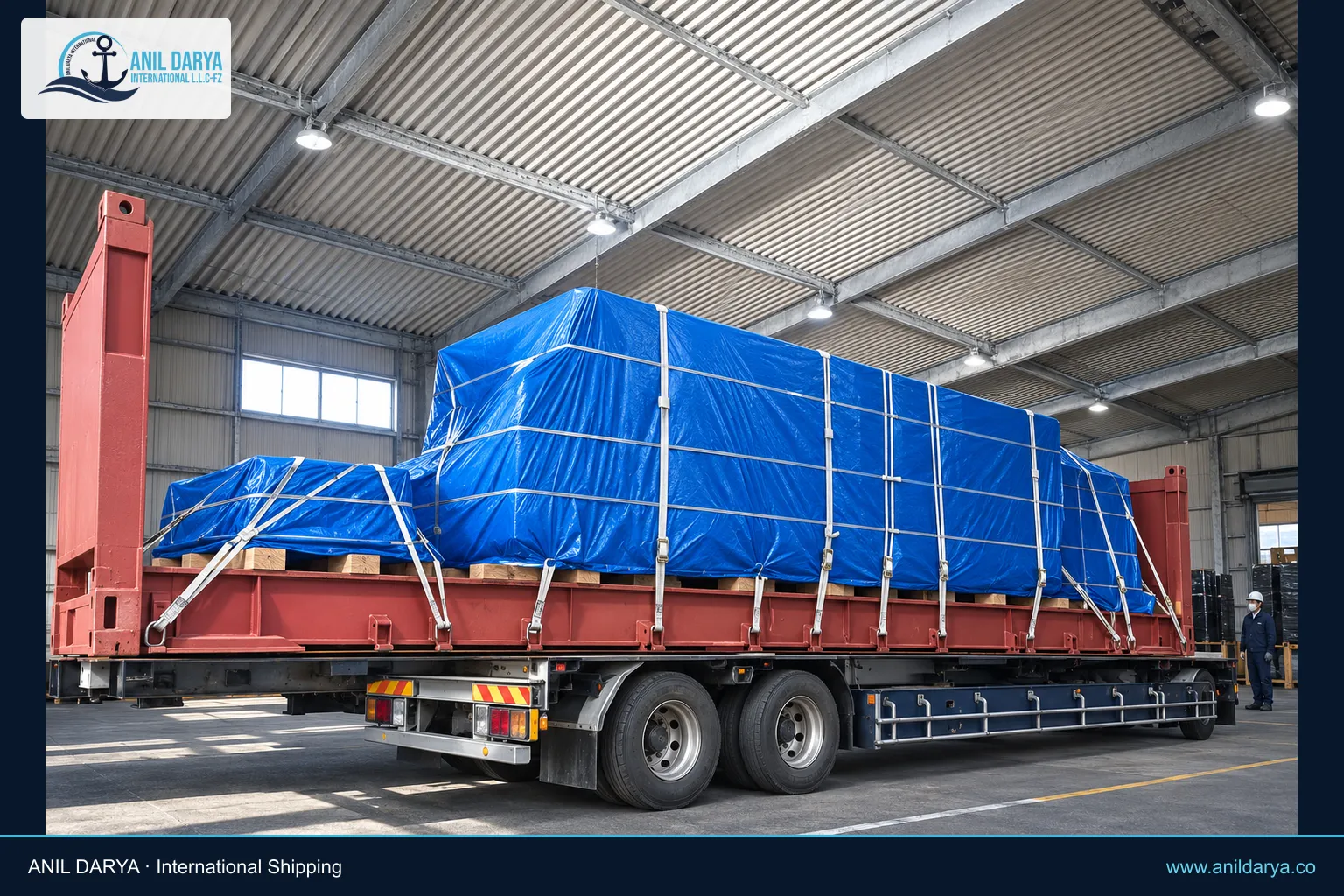
Maersk's Pakistan export notes say out-of-gauge and breakbulk cargo are accepted. Port Qasim's Marginal Wharf handles vehicles, machinery and project cargo. Pieces that fit a 40ft flat rack move on container services with more sailings. Larger units need breakbulk tonnage. At the Dubai end we plan the discharge, the trailer and any road permit before the ship arrives. See our break bulk and project cargo service.
Dangerous goods from Pakistan to Dubai
The exporter must supply a Safety Data Sheet, a dangerous goods declaration, UN-marked packaging and labels, and the carrier must approve the booking before the box is stuffed. In Pakistan the DG box moves straight to the port terminal. At Jebel Ali, port safety rules limit how long some classes may stay, so the Dubai declaration and the truck must be ready when the ship berths. Our guide to dangerous goods customs clearance in the UAE explains the Dubai side.
Air cargo from Pakistan to Dubai
Air suits spares, samples, garments for a launch date and perishables. Cargo flies from Karachi, Lahore and Islamabad into Dubai's airports. The export declaration in Pakistan and the import declaration in Dubai follow the same rules as sea cargo: a customs business code, 5% duty on the CIF value and import VAT. For small parcels, an express courier is usually simpler.
What the Pakistani exporter must do
The Pakistani side is your supplier's job. We book the space with the carrier; the shipper or its Pakistani agent arranges pickup and files the export. Delays here still land on your delivery date, so know what the steps are.
- Export goods declaration. The exporter or its customs agent files it with Pakistan Customs. PSW says traders can use PSW or WeBOC, but where a regulatory requirement applies, the PSW Single Declaration is mandatory.
- PSW registration and bank link. To file a Single Declaration for exports, the trader or customs agent must be registered with PSW, hold an active account with an authorised dealer bank and link that bank profile to its PSW business profile.
- Financial instrument. The export declaration is tied to a financial instrument for the payment mode. PSW says the bank settles it after the goods are cleared.
- Permits. Licences, permits and certificates from other agencies are applied for on PSW, which connects 29 banks and more than 22 government agencies.
- Product certificates for the UAE. Food needs an original health certificate from the exporting country's authority, and meat and poultry a halal slaughter certificate, according to the US trade guide on UAE import documents.
- Certificate of origin. Dubai Customs asks for one with every declaration. The US trade guide describes it as approved by the chamber of commerce in the country of origin.
Telex release and bills of lading from Pakistan
Plan how the bill of lading reaches you. Maersk's Pakistan export page says telex release is accepted only when the shipment moves on the carrier's master bill of lading and the shipper gives bank documents from an authorised bank. Where a forwarder's house bill is also issued, Maersk says State Bank of Pakistan rules stop it from offering telex release. If you need a quick release in Dubai, agree the bill type and the release method with your supplier before shipment.
UAE customs clearance when the ship arrives
Dubai Customs clears cargo at Jebel Ali and the other Dubai entry points. Each declaration is filed online under a regime: import, export, transit, transfer or temporary admission.
Who can clear your cargo in Dubai?
Dubai Customs says a licence holder first gets a customs business code, then files the declaration with it. Any company with a code can file. Clearing agents holding a Dubai Economic Department clearing and forwarding licence can also clear cargo for consignees, using their own code and the owner's authorisation. If you have no code yet, we arrange clearance through a licensed agent with your authorisation.
Which documents does Dubai Customs need?
| Document | Who provides it | Why Dubai needs it |
|---|---|---|
| Commercial invoice | Pakistani exporter | Customs value and HS code |
| Packing list | Pakistani exporter | Inspection and LCL release |
| Certificate of origin | Exporter, approved by the Pakistani chamber | Country of origin on the declaration |
| Bill of lading or air waybill | Carrier or forwarder | Title to the goods and release |
| Delivery order | Shipping line's agent in Dubai | Releasing the container |
| Import permit | Competent UAE authority | Restricted or duty-exempt goods |
| Health or halal certificate | Pakistani authority | Food, meat and poultry |
| SDS and DG declaration | Pakistani exporter | Dangerous goods only |
The US trade guide also points to the UAE Ministry of Foreign Affairs for attestation of commercial invoices and shipping documents. Ask your clearing agent whether your goods need it before the originals leave Pakistan.

Which declaration fits your goods?
| What happens to the goods | Declaration | Duty and VAT |
|---|---|---|
| Sold or used in the UAE mainland | Import for local use | Paid or accounted for at import |
| Stored in Jafza for resale | Transfer into the free zone | Due only if the goods later enter the mainland |
| Brought in for an exhibition or project, then sent back | Temporary admission | Deposit equal to the duty, refunded on re-export in time |
| Passing through to a third country | Transit | Not imported into the UAE |
Jafza sits next to Jebel Ali Port. It began with 19 companies in 1985 and now has over 11,000. Many Pakistani exporters sell to a Jafza trader who stocks the goods and re-exports them. Our guide to Jafza re-export explains how this works for bulk and breakbulk cargo.
Customs duty and VAT on cargo from Pakistan to Dubai
Dubai Customs charges 5% of the CIF value for most goods, 50% for alcohol and 100% for cigarettes. CIF covers the goods, freight and insurance, plus charges up to the place of import. Some tariff lines carry other rates or exemptions, so check your HS code before you price the deal. If the invoice is in Pakistani rupees or US dollars, Dubai Customs converts it at the exchange rate on the day the declaration is submitted.
Import VAT is 5%. The Federal Tax Authority's guide says it is charged on the customs value, including insurance, freight and any customs fees and excise tax paid on import. How you pay depends on your VAT status:
- VAT-registered importer whose customs registration number is registered with the FTA: no VAT is charged at the border. It appears on your next VAT return, where you can recover it as input tax if eligible.
- Importer not registered for VAT: VAT is paid through the FTA portal before customs releases the goods.
| Charge | Rate | Base |
|---|---|---|
| Customs duty, most goods | 5% | CIF value |
| Customs duty, alcohol | 50% | CIF value |
| Customs duty, cigarettes | 100% | CIF value |
| Import VAT | 5% | Customs value plus customs fees and excise tax |
What if Dubai Customs questions your invoice value?
Dubai Customs may ask for more evidence if it doubts the declared value, and may use another valuation method if the evidence is not there. Its FAQ also says an importer can ask for release before the value is finally settled. Keep the sales contract, payment proof and freight invoice ready, as a low invoice is the usual trigger.
Re-exporting Pakistani goods to third markets
Pakistani rice, textiles and other goods often move on from Dubai to Africa, the GCC and other markets. Plan three points before the cargo lands.
- Declaration. Deliver into Jafza under a free zone transfer, or declare transit if the goods only pass through. Duty then applies only if the goods enter the UAE mainland.
- Origin. The goods stay Pakistani in origin. The next country's customs will look at the original certificate of origin.
- New certificate if the buyer asks. Dubai Chambers issues certificates of origin for exported and re-exported goods, for AED 100 with a stated two-hour processing time, and asks for the Dubai Customs transit bill for transhipment goods.
Temporary imports and repairs
Machines sent to Dubai for an exhibition, a project or a repair and then returned to Pakistan can enter under temporary admission. Dubai Customs takes a deposit equal to the duty and refunds it when the goods leave within the allowed period. Put serial numbers on the packing list so the goods can be matched on the way out.
Restricted and prohibited goods in the UAE
Dubai Customs says some goods need approval from the competent authority before release, and goods that go against the values and morals of the country are banned. Groups that often need a UAE permit on this lane:
- Food, rice, fruit, vegetables, meat and fish: health certificate from Pakistan and UAE food approvals; halal slaughter certificate for meat and poultry.
- Medicines and medical products: Ministry of Health approval, per Dubai Customs.
- Books, printed matter and recorded media: released only after inspection by the information authority.
- Chemicals, pesticides and fertilisers: permits for many products and port approval for DG classes.
- Telecom and wireless equipment and cosmetics: product approval or registration.
Apply for the permit before the ship leaves Pakistan. A permit that arrives after the cargo means storage and container charges at Jebel Ali.
How to import from Pakistan to Dubai step by step
- Send us the cargo details. Commodity, HS code, weight, volume, the shipper's address in Pakistan and your delivery address in the UAE.
- Agree the Incoterm with the supplier. Under FOB we book the sea freight from Karachi or Port Qasim. Under CFR or CIF the supplier books it and we take over at the UAE port.
- Set up the Dubai side. Customs business code, VAT number linked to the code, and any UAE permit.
- Book space. We book with the carrier and send the booking and cut-offs to the shipper. DG, reefer and out-of-gauge cargo need carrier approval first.
- Pickup and export filing. The shipper or its trucker delivers the box to the terminal. The shipper or its Pakistani agent files the export declaration on PSW or WeBOC.
- Check the draft bill of lading against the invoice and packing list before the line issues it.
- File the Dubai declaration before the vessel berths.
- We arrange payment of the duty and VAT if due, and collect the delivery order.
- Deliver and return the empty. We book the truck, deliver to your site or Jafza warehouse and return the container within free time.
[AMIR-FACT: one real Pakistan to Dubai shipment we handled: cargo, Pakistani load port, mode, days from booking to delivery and how clearance went in the UAE, cleared for publication]
What affects the cost of shipping from Pakistan to Dubai?
We do not publish prices, because they change with every sailing. These are the parts of the bill and what moves them.
| Cost factor | What moves it |
|---|---|
| Ocean freight | Container type, season, space on the lane |
| Pakistani origin charges | Trucking or rail from up-country, terminal handling, export filing |
| Special equipment | Reefer, flat rack and open top cost more than dry boxes |
| UAE destination charges | Terminal handling, delivery order, clearance, trucking, CFS for LCL |
| Duty and VAT | 5% duty on CIF, 5% VAT unless deferred on the VAT return |
| Permits and certificates | Food, chemicals and regulated goods |
| Free time | Demurrage and detention once free days run out |
Who pays the Dubai duty: DAP or DDP?
Under DAP the Pakistani seller delivers to your door or the port, and you clear the goods and pay duty and VAT. Under DDP the seller pays them, but someone with a Dubai customs code still has to file as importer. A seller with no UAE company usually cannot do that alone, so write into the contract whose code is used and who recovers the VAT. Our demurrage and detention guide explains the cost of waiting at Jebel Ali while this is sorted out.
Checklist before cargo leaves Pakistan
- Customs business code active and VAT registration linked to it.
- HS code agreed with the supplier and checked for UAE duty and permits.
- UAE permits applied for, and health or halal certificates ordered for food.
- Supplier registered on PSW with its bank linked, and the financial instrument ready.
- Destination fixed before the export is declared.
- Bill type and release method agreed: original, telex or seaway bill.
- Invoice, packing list and bill of lading match on names, weights and HS codes.
- Declaration type chosen: local import, free zone, temporary admission or transit.
- DG: SDS, DG declaration and carrier approval in place.
- Delivery booked at the UAE end and cargo insurance arranged.
Common mistakes on the Karachi to Jebel Ali lane
- No customs code in Dubai. The cargo waits at the port until someone authorised files.
- VAT number not linked to the customs code, so VAT is paid at the border instead of deferred.
- Food sent without a health certificate or UAE approval. This is the most common hold for rice, fruit and meat.
- Asking for telex release on a house bill, then waiting for originals by courier.
- Changing the destination after export filing, which needs Pakistan Customs approval.
- Declaring goods for local use that are meant for re-export, and paying duty that was not due.
- An invoice value that does not match the payment, which invites a valuation query.
Frequently asked questions
How long does shipping from Pakistan to Dubai take by sea?
The sea leg is short. Emirates Shipping Line's February 2024 schedule showed 3 days from Karachi to Jebel Ali. Add time for export filing in Pakistan and clearance and delivery in the UAE, and check current sailings when you book.
Which Pakistani port is best for shipping to Dubai?
Karachi Port and Port Qasim both have container services to Jebel Ali. The right one is the port your chosen carrier calls. Port Qasim's Marginal Wharf also handles machinery and project cargo.
What is the customs duty on goods from Pakistan to Dubai?
Dubai Customs charges 5% of the CIF value for most goods, 50% for alcohol and 100% for cigarettes. Some tariff lines have other rates, so check the HS code.
Do I pay VAT on imports from Pakistan to Dubai?
Yes, 5%. A VAT-registered importer whose customs number is registered with the Federal Tax Authority accounts for it on the VAT return. Others pay it before release.
Who files the export declaration in Pakistan?
The exporter or its customs agent, through PSW or WeBOC. Where a regulatory requirement applies, the PSW Single Declaration is mandatory. We do not file in Pakistan.
Can I import from Pakistan to Dubai without a trade licence?
A business needs a customs business code to import into Dubai. A licensed clearing agent can file for you with your authorisation, but the goods still need an importer.
What documents does Dubai Customs need for cargo from Pakistan?
Commercial invoice, packing list, certificate of origin, bill of lading and delivery order, plus a permit for restricted goods. Food needs a health certificate, and DG cargo an SDS and DG declaration.
Can I ship cargo from Pakistan to a Dubai free zone without paying duty?
Yes. Goods transferred into Jafza pay duty only if they later enter the UAE mainland.
Get a quote for shipping from Pakistan to Dubai
Send us the cargo, the pickup point in Pakistan and the delivery address in the UAE. We will come back with a routing and price, including clearance at the UAE end. Use our freight rate inquiry form or contact our team, or read more about our Dubai freight forwarding team.
Sources
- Emirates Shipping Line: GPS and JBX service launches, customer advisory of 11 February 2024 (rotation, transit table, terminals)
- Emirates Shipping Line: current service network
- Ministry of Maritime Affairs: Karachi Port Trust Year Book 2023-24
- Port Qasim Authority: Introduction
- Port Qasim Authority: Port operational complex (Marginal Wharf, QICT)
- Pakistan Single Window: WeBOC and PSW
- Pakistan Single Window: Single Declaration for exports
- Maersk: Pakistan export information (restrictions, telex release, equipment)
- DP World: Jebel Ali Port
- Dubai Customs: Submit customs declaration
- Dubai Customs: FAQ (duty, business code, clearing agents, temporary admission, valuation, exchange rate)
- UAE Government portal: Customs duty and tariff
- Federal Tax Authority: VAT guide, section 3.5 (import VAT)
- US International Trade Administration: UAE import requirements and documentation
- Jafza: About Jebel Ali Free Zone
- Dubai Chambers: Issuing a certificate of origin
Reviewed: 10 November 2026