
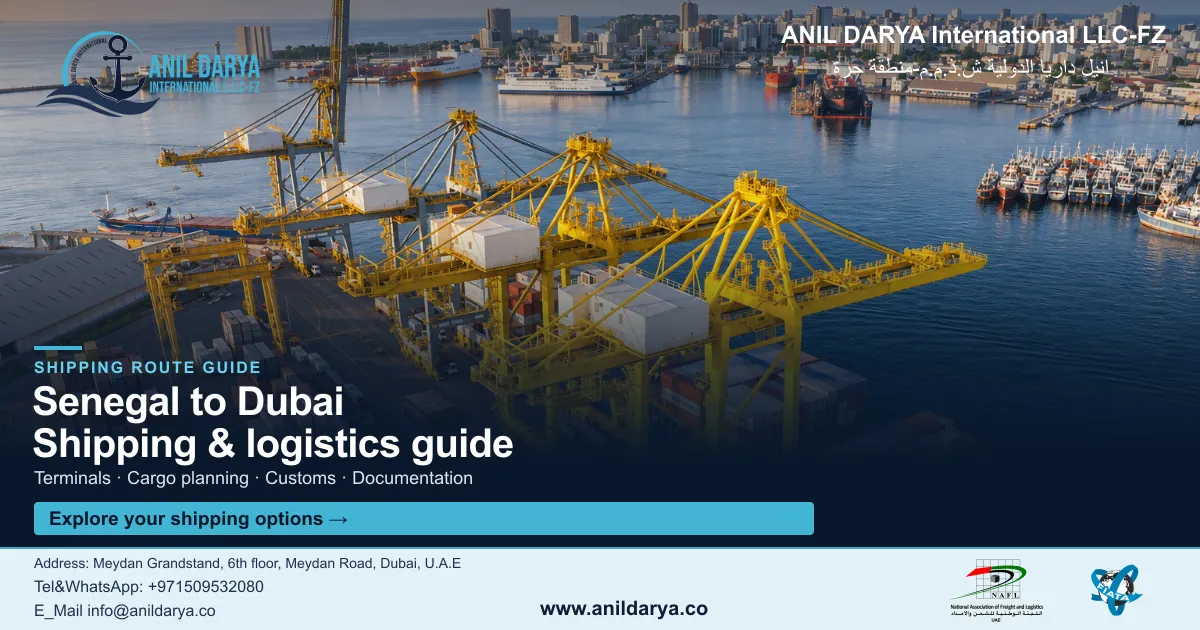
Shipping from Senegal to Dubai almost always starts at the DP World container terminal in Dakar and reaches the UAE after one or two transshipments. Before the box can sail, the Senegalese exporter needs an import-export card, an ORBUS pre-clearance number and an authorised declarant to lodge the export declaration, normally a licensed customs broker. In Dubai you clear the cargo under a customs business code and pay 5% duty on the CIF value for most goods plus 5% import VAT.
Senegal to Dubai shipping at a glance
| Item | Detail |
|---|---|
| Load port | Port of Dakar; DP World runs Senegal's only container terminal |
| Dakar container terminal | 900,000 TEU a year, 3 berths, published 13 m draft, 560 reefer plugs |
| Future port | Ndayane deep-water port, about 50 km south, phase 1 expected by 2028 |
| UAE arrival ports | Jebel Ali for Dubai; some services discharge at Khor Fakkan or Fujairah |
| Routing | One or two transshipments; no direct service in the schedule data |
| Air gateway | Blaise Diagne International (DSS) |
| Senegal export steps | Import-export card (CCIAD), CPPM code, ORBUS pre-clearance, licensed broker |
| Senegal customs | Douanes senegalaises, GAINDE electronic clearance |
| UAE customs (Dubai) | Dubai Customs, importer needs a customs business code |
| UAE duty | 5% of CIF for most goods; alcohol 50%, cigarettes 100% |
| UAE import VAT | 5%, deferred to the VAT return for registered importers linked with the FTA |
How the Senegal to Dubai sea freight route works
Dakar is on the Atlantic, at the western tip of Africa, and the UAE is on the Gulf. Fluent Cargo's schedule data for Dakar to the UAE lists no direct sailing. Services transship once or twice, and the two routes it shows end at Fujairah and Khor Fakkan on the UAE east coast. A box for a Dubai warehouse may therefore land outside Dubai and finish the trip by truck, or be relayed to Jebel Ali.
For perishable cargo such as mangoes and seafood, confirm reefer space, power arrangements at each transfer and the applicable UAE registration and release requirements before booking.
What stretches the Senegal to Dubai transit?
| Factor | Why it matters | What to do |
|---|---|---|
| Number of transshipments | Two vessel changes mean two chances to miss a connection | Ask for the hubs and the second-leg frequency |
| UAE discharge port | East coast ports add a truck leg or a relay to Dubai | Agree the final port with the carrier at booking |
| Reefer cargo | Fresh fruit and seafood lose value with every day of delay | Pick the service with fewest transfers, and have UAE approvals ready |
| Export formalities | Missing export documents can prevent loading | Get the card and CPPM code done before the first sale |
| Dubai clearance | Food without UAE approval waits at the terminal | Apply for UAE permits while the box is still in Dakar |
Request a dated carrier itinerary before booking, showing the UAE discharge port, any transshipment hubs, scheduled transit time and cut-offs. Confirm reefer power arrangements and acceptance on every leg where applicable.
Shipping from the Port of Dakar
Dakar is the only realistic container port for this lane. DP World signed a 25-year concession for the terminal in October 2007 and describes it as the only container terminal in Senegal. It handles IMDG dangerous goods and out-of-gauge cargo, and connects to the interior by road and rail.
| Facility | What DP World or the port says | Use it for |
|---|---|---|
| DP World Dakar container terminal | 15 ha, 900,000 TEU, 3 berths, 13 m draft, 6 quay cranes | Dry and reefer containers to the UAE |
| Reefer plugs | 560 at the terminal | Mangoes, frozen fish and seafood |
| Port Autonome de Dakar berths | Ro-ro, general cargo, dry bulk and tankers | Breakbulk and bulk cargo |
| Blaise Diagne International Airport | International air gateway; confirm the cargo itinerary to Dubai | Samples, fresh produce, urgent goods |
DP World also lists an average chart-datum depth of 12.5 m at Dakar alongside its published 13 m draft figure; obtain current vessel acceptance from the port rather than treating either as a guaranteed sailing limit. DP World is building a new deep-water port at Ndayane, about 50 km south of Dakar, with an 18 m draft in phase 1 and completion expected by 2028. Until it opens, plan every container from Senegal through Dakar.
Which UAE port should your cargo arrive at?
If your buyer is in Dubai or Jafza, ask for delivery at Jebel Ali. DP World operates the port and handles breakbulk, project cargo and IMDG dangerous goods. Our Jebel Ali port guide covers the terminals.
- Dubai or Jafza: Jebel Ali.
- Abu Dhabi: compare Khalifa Port in Abu Dhabi.
- Sharjah, the northern emirates or a Khor Fakkan service: read our Sharjah port shipping guide.
Sea freight from Senegal to Dubai: modes and cargo types
| Mode | Typical Senegalese cargo | What to plan |
|---|---|---|
| Reefer FCL | Mangoes, frozen fish, seafood | Health certificate, UAE food approval, temperature setting on the booking |
| Dry FCL | Processed food, cosmetics, textiles | Product registration where the UAE requires it, Dubai declaration before arrival |
| LCL | Handicrafts, samples, trade fair stock | The consolidator's papers and yours must match |
| Breakbulk and project | Equipment returning to the UAE after a project | Flat rack or breakbulk space, UAE berth and lifting plan |
| Dangerous goods | Chemicals, gas cylinders, batteries | SDS, DG declaration, carrier approval, UAE port storage limits |
| Air cargo | Fresh produce, samples | The same Dubai declaration, duty and VAT |
Reefer cargo: mangoes and seafood
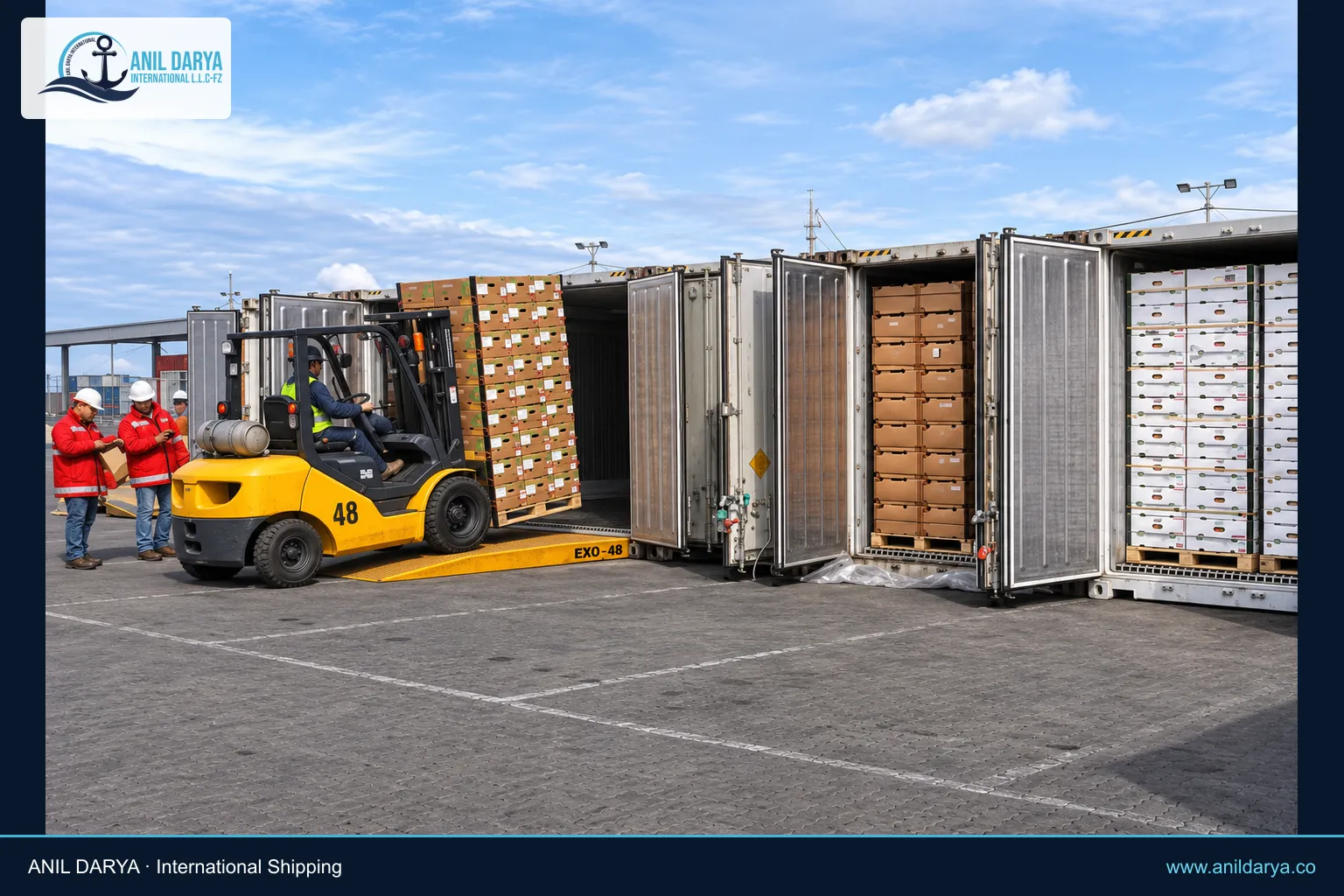
Dakar's 560 reefer plugs make it the gateway for Senegal's fresh and frozen exports. For a long, multi-leg trip to the Gulf, three things decide whether the cargo arrives in good shape: the number of transshipments, the time the box spends unplugged at each hub, and how fast the UAE end can release it. A food approval that is still pending when the ship berths costs plug-in fees at best and the cargo at worst. Our sea freight service covers reefer bookings into the UAE.
FCL or LCL from Senegal?
Small Senegalese exporters often start with a few pallets of cosmetics or handicrafts. Compare the available LCL departures with a 20ft FCL quotation, including origin and destination handling, consolidation time and delivery deadlines. Our guide to FCL vs LCL costs explains the break-even.
Dangerous goods and project cargo
DP World Dakar handles IMDG and out-of-gauge cargo. The Senegalese shipper provides the Safety Data Sheet, DG declaration, packaging, marks and labels that meet the applicable IMDG requirements, and gets carrier acceptance. At the UAE end, Jebel Ali limits port storage for some classes, so we line up the declaration and the truck before arrival. Our guide to dangerous goods customs clearance in the UAE explains the UAE rules. For heavy pieces, see our break bulk and project cargo service.
Air cargo from Dakar to Dubai
Fluent Cargo's schedule data shows direct passenger flights from Blaise Diagne International to Dubai International, and freighter connections into Al Maktoum International. Air is the quick option for samples and high-value fresh produce. The applicable Dubai tariff depends on the goods and customs regime, rather than whether they arrive by sea or air.
What the Senegalese exporter must do
Agree carrier booking, pickup and export-clearance responsibilities in the quotation. Unless origin services are expressly included, the shipper and its authorised Senegalese declarant arrange pickup and export formalities. The Senegal eRegulations portal sets out the export clearance in five steps.
Step 1: the import-export card
The exporter applies at the Dakar Chamber of Commerce, Industry and Agriculture (CCIAD) with its NINEA tax registration, its trade register extract for a company, an identity card and a receipt from COSEC, the Senegalese Shippers' Council. A second visit collects the card. The exporter also needs a CPPM code (Code Personne Physique et Morale).
Step 2: ORBUS pre-clearance
ORBUS is Senegal's single window for foreign trade, run by GAINDE 2000. The exporter files a pre-clearance request at the ORBUS facilitation centre in Dakar with the original invoice or pro forma, a copy of the NINEA notice and a copy of the CPPM code. The portal lists a fee of CFA 5,000 plus CFA 200 stamp duty and an ORBUS number as the result. Its 15–25-minute estimate covers this desk step, not complete export clearance; confirm current charges and processing arrangements. For a first request without the NINEA notice or CPPM code, it also lists an undertaking letter.
Step 3: the export declaration
The clearance request then goes to a licensed customs broker (commissionnaire agree en douane), who lodges it with Senegalese customs on GAINDE. Firms subscribed to the electronic clearance system can use their own transit staff instead of a broker.
| Senegal export item | Who handles it | Result |
|---|---|---|
| Import-export card | Exporter at CCIAD | Card needed for foreign trade |
| CPPM code | Exporter | Identification code for customs |
| ORBUS pre-clearance | Exporter at the ORBUS centre | ORBUS number |
| Export declaration | Licensed broker or the firm's own customs staff | Goods cleared for loading |
| Health or phytosanitary certificate | Competent Senegalese authority | Proof for UAE food and plant rules |
| Certificate of origin | Issuing body in Senegal | Proof of Senegalese origin for the UAE buyer |
Dubai customs clearance for cargo from Senegal
Once the ship reaches the UAE, the cargo goes through Dubai Customs if it lands at Jebel Ali or another Dubai entry point. The declaration is online, under one regime: local import, free zone transfer, transit or temporary admission.
Do you need a Dubai customs code?
Yes. Dubai Customs requires a customs business code from every business that uses its services, and you register for it online on Dubai Trade. A holder of a code can lodge the declaration. So can an agent with a Dubai Economic Department clearing and forwarding licence, with the cargo owner's authorisation. Without a code of your own, we clear through a licensed agent.
Papers to send ahead from Senegal
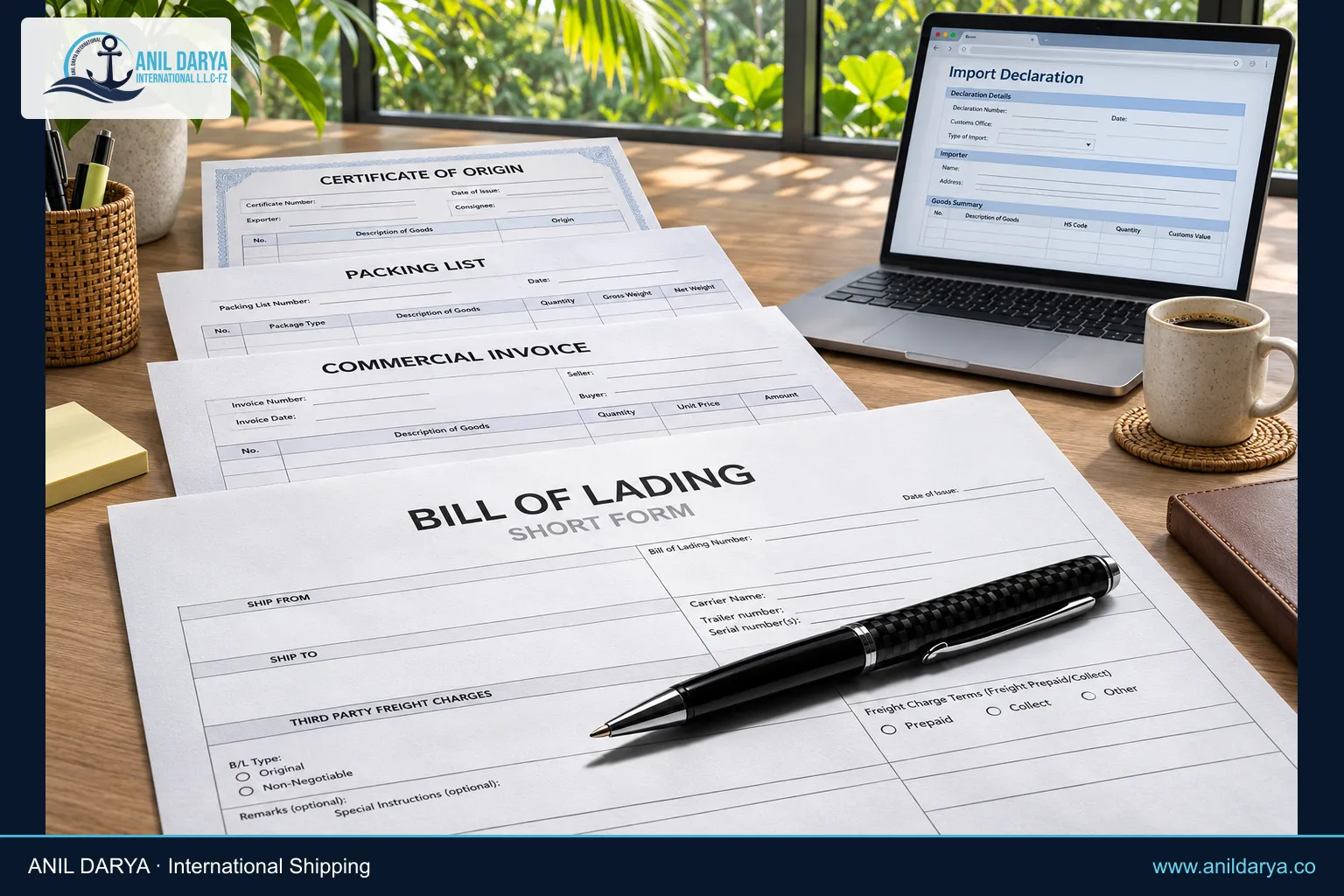
| Document | Source | Used in Dubai for |
|---|---|---|
| Commercial invoice | Senegalese exporter | Value and HS code |
| Packing list | Senegalese exporter | Inspection and LCL release |
| Certificate of origin | Exporter through the issuing body | Origin of the goods |
| Bill of lading or air waybill | Carrier | Transport details and cargo release; an air waybill is not a document of title |
| Delivery order | Carrier's agent in the UAE | Releasing the box |
| Health certificate | Senegalese authority | Fish, seafood and food |
| UAE permit | UAE authority for the product | Food, cosmetics and other restricted goods |
Choosing the right Dubai declaration
| Where the goods go next | Declaration | Duty and VAT |
|---|---|---|
| UAE shops, restaurants or factories | Import for local use | Customs duty on clearance; import VAT paid or accounted for through the applicable VAT procedure |
| A Jafza warehouse for resale abroad | Free zone transfer | Customs suspension subject to the free-zone procedure; VAT treatment depends on designated-zone rules, use and supporting evidence |
| A trade fair, then back to Senegal | Temporary admission | Duty-equivalent security, refundable on timely qualifying re-export; no customs deposit where an accepted ATA carnet covers the goods |
| Straight on to a third country | Transit | Not imported into the UAE |
Jafza, next to Jebel Ali Port, hosts over 11,000 businesses. A Senegalese brand selling cosmetics or food across the Gulf can hold stock there and pay UAE duty only on what enters the mainland. Our guide to Jafza re-export explains the free zone route.
Duty and VAT in Dubai on Senegalese goods
Most Senegalese goods pay 5% customs duty in Dubai, worked out on the CIF value: the goods plus the freight and insurance to the UAE. Two exceptions are fixed by Dubai Customs: 50% on alcohol and 100% on cigarettes. Some HS codes are exempt, so check yours before pricing.
On top of duty comes 5% import VAT, charged on the customs value, including freight and insurance, plus customs duty and any excise; do not add freight and insurance twice. A VAT-registered importer that has linked its customs number with the Federal Tax Authority reports it on the VAT return instead of paying at the border. An importer without VAT registration pays it before release.
| Charge | Rate | Calculated on |
|---|---|---|
| Customs duty, most goods | 5% | CIF value |
| Customs duty, alcohol | 50% | CIF value |
| Customs duty, cigarettes | 100% | CIF value |
| Import VAT | 5% | Customs value plus duty and excise |
Is there a UAE trade deal with Senegal?
Check the current UAE tariff for the exact HS code and origin before pricing. Apply the standard rate unless a valid exemption or preferential arrangement is confirmed and its evidence requirements are met; a certificate of origin alone does not establish a reduced rate.
Restricted goods for the UAE
For restricted goods, Dubai Customs needs the approval of the relevant UAE authority with the other documents. The groups that matter most for Senegal:
- Fish, seafood and frozen food: UAE food safety approval and a health certificate from Senegal.
- Fresh mangoes and other fruit: phytosanitary documentation and agricultural consignment release checks. Live plants and planting materials have additional permit requirements; confirm the exact commodity and origin conditions before loading.
- Cosmetics and personal care: product registration in the UAE.
- Herbal products and supplements: confirm product classification and the responsible authority before applying for registration or permits.
- Chemicals and dangerous goods: permits for some products and port approvals for some classes.
Arrange required registrations, pre-shipment permits and certificates while the cargo is still in Dakar. Consignment release may also require arrival inspection, document checks or sampling; pre-registration does not guarantee release.
How to ship from Senegal to Dubai, step by step
- Send us the cargo, HS code, weight, volume, temperature for reefer cargo, the pickup point in Senegal and your UAE delivery address.
- Agree the Incoterm with the seller. Under FOB we book from Dakar. Under CFR or CIF the seller books and we take over in the UAE.
- Prepare the UAE side: customs business code, VAT number linked to it, and UAE permits for food, cosmetics or other restricted goods.
- The seller confirms its import-export card and CPPM code, and gets the health or phytosanitary certificate.
- We book space with the carrier and confirm the hubs and the UAE discharge port. Reefer, DG and out-of-gauge cargo need carrier approval first.
- The seller or its trucker collects the empty, loads it and delivers it to the DP World terminal before the cut-off.
- The seller gets an ORBUS number and its broker lodges the export declaration.
- We check the draft bill of lading against the invoice and packing list.
- We file the Dubai Customs declaration before the vessel berths.
- We arrange payment of the duty and VAT, collect the delivery order, deliver to your site and return the empty inside free time.
What sets the price on this lane?
We price each booking, because rates on this lane follow transshipment space and reefer demand. What moves the price:
| Cost factor | Effect |
|---|---|
| Container type | Reefer costs more than dry, and needs power at every hub |
| Routing | Number of transshipments and whether the box ends at Jebel Ali or the east coast |
| Senegal origin charges | Trucking, terminal handling, ORBUS and broker fees, certificates |
| Incoterm | Who pays the sea freight and which local charges |
| UAE destination charges | Terminal handling, delivery order, clearance, trucking, CFS for LCL |
| Duty and VAT | 5% duty on CIF and 5% import VAT unless deferred |
| Free time | Demurrage, detention and plug-in fees after the free days |
For reefer cargo, every extra day at the UAE port also costs power. Our article on demurrage and detention explains how these charges are counted.
Checklist before cargo leaves Dakar
- UAE customs business code active and linked to your VAT registration.
- HS code agreed and checked for UAE duty and restrictions.
- Seller's import-export card and CPPM code in place.
- ORBUS pre-clearance done and an authorised declarant appointed.
- Health or phytosanitary certificate issued for food and plants.
- Required product registrations and pre-shipment permits completed; consignment release application and certificates prepared.
- Hubs and UAE discharge port confirmed, reefer setting on the booking.
- Invoice, packing list, certificate of origin and bill of lading match.
- Declaration type chosen: local import, free zone, temporary admission or transit.
- Cargo insurance arranged for the full multi-leg voyage.
Mistakes that slow Senegalese cargo
- A first-time exporter without an import-export card. Confirm the required registrations with the broker before the first shipment.
- Reefer cargo booked on the cheapest service with two transfers when a shorter routing was available.
- Seafood or mangoes dispatched before required registrations, permits and certificates are ready.
- Expecting Jebel Ali when the service discharges at Khor Fakkan or Fujairah.
- Cosmetics shipped without UAE product registration.
- Invoice, packing list and bill of lading that show different weights or descriptions.
Frequently asked questions
How do I ship goods from Senegal to Dubai?
Book a container from Dakar to Jebel Ali, have the Senegalese exporter complete ORBUS pre-clearance and the export declaration through a licensed broker, and clear the goods with Dubai Customs. Most goods pay 5% duty on CIF and 5% import VAT.
Is there a direct ship from Dakar to Dubai?
Not in the schedule data we checked. Services transship once or twice, and some end at Khor Fakkan or Fujairah instead of Jebel Ali, so confirm the routing when you book.
What does a Senegalese exporter need before shipping?
An import-export card from the Dakar Chamber of Commerce, a CPPM code, an ORBUS pre-clearance number and a licensed customs broker, plus health or phytosanitary certificates for food and plants.
What is ORBUS?
ORBUS is Senegal's single window for foreign trade, run by GAINDE 2000. Exporters file a pre-clearance request at an ORBUS centre and receive an ORBUS number before the export declaration is lodged.
How much duty do I pay in Dubai on goods from Senegal?
Dubai Customs charges 5% of the CIF value for most goods, 50% on alcohol and 100% on cigarettes. Import VAT of 5% applies on top, deferred for VAT-registered importers linked with the FTA.
Can I ship fresh mangoes or seafood from Senegal to Dubai?
Yes, in reefer containers or by air. Arrange the applicable health or phytosanitary certificate from Senegal, required product registration and any pre-shipment permits before dispatch. Final release remains subject to the competent UAE authority’s consignment checks.
Can Senegalese goods go into a Dubai free zone?
Yes. Goods transferred into Jafza pay UAE duty only if they later enter the mainland, which suits stock sold across the Gulf.
Does Anil Darya handle the export side in Senegal?
Confirm the service scope in the quotation. Unless origin services are expressly included, arrange pickup, ORBUS and the Senegalese export declaration with the shipper and its authorised local declarant.
Get a quote for shipping from Senegal to Dubai
Send us the cargo, the pickup point in Senegal and your UAE delivery address. We will reply with a routing, the UAE arrival port and a price that includes clearance in the UAE. Use our freight rate inquiry form or contact our team, and read about our Dubai freight forwarding team.
Sources
U.S. International Trade Administration: UAE import documents and food certificates; Dubai Municipality: food registration and consignment release services.
- Senegal eRegulations: Export customs clearance procedure
- Senegal eRegulations: ORBUS pre-clearance step (documents, fees, result)
- GAINDE 2000: ORBUS single window
- ASEPEX: Senegalese export promotion agency (priority sectors)
- DP World: Dakar Port
- DP World: Ports and terminals in Senegal (Ndayane)
- Fluent Cargo: Dakar (SNDKR) port profile
- Fluent Cargo: Dakar to Dubai sea and air schedules (routing)
- DP World: Jebel Ali Port
- Dubai Customs: FAQ (duty, business code, agents, deposits)
- Dubai Customs: Submit customs declaration
- UAE Government portal: Customs duty and tariff
- Federal Tax Authority: VAT guide (import VAT)
- Jafza: About Jebel Ali Free Zone
Reviewed: 16 November 2026