
Project cargo vs break bulk: what is the difference?
Break bulk describes how cargo is handled; project cargo describes how it is planned. The difference, with oil, gas and refinery examples.
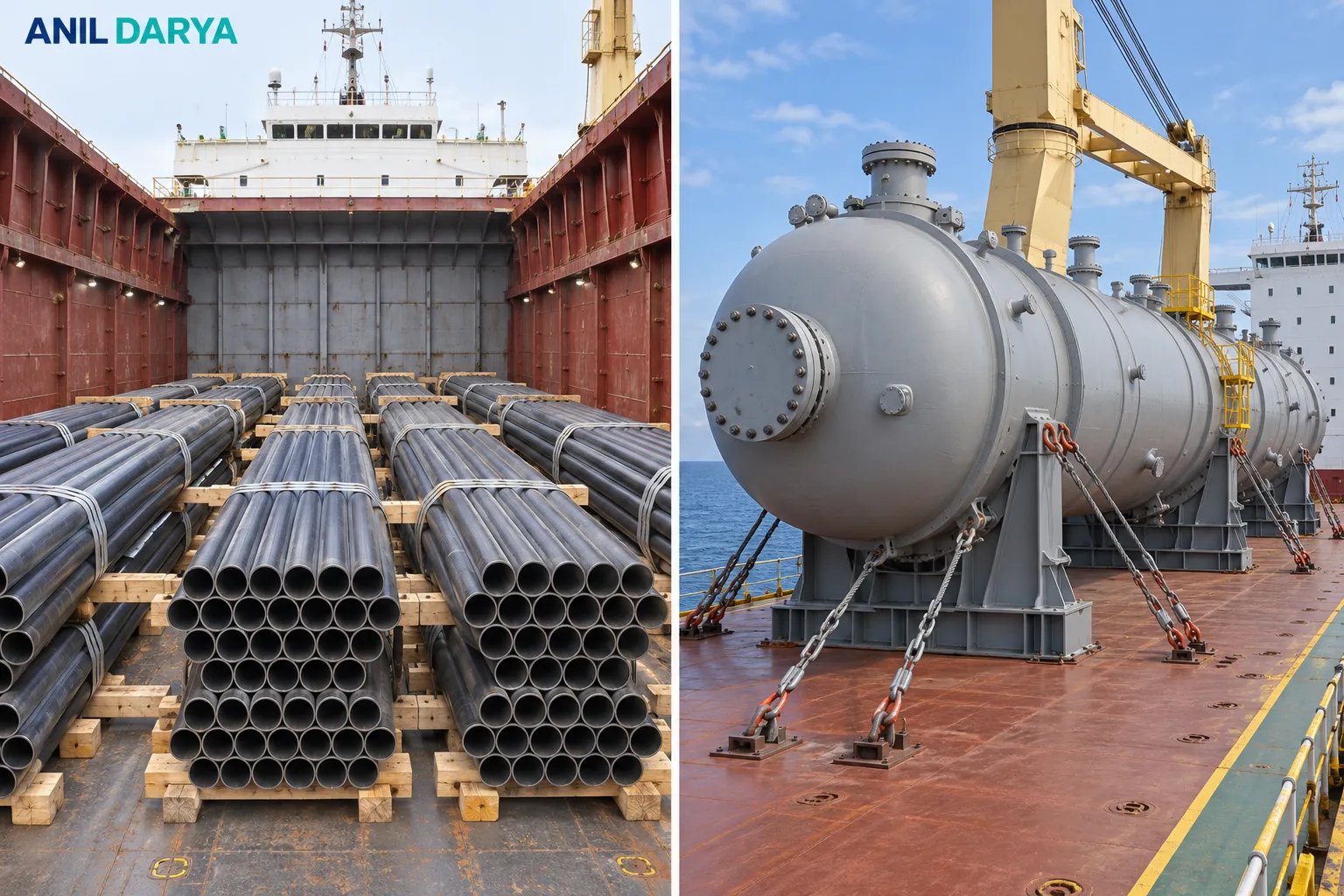
Project cargo vs break bulk is one of the most common points of confusion in heavy shipping, and the two terms are often used as if they mean the same thing. They overlap, but they describe different things. Break bulk describes how cargo is handled: piece by piece, outside a container. Project cargo describes how cargo is planned: as part of a specific project, with engineering, surveys and a fixed delivery window. This article explains each term, puts them side by side, and shows where oil, gas and refinery equipment fits.
Project cargo vs break bulk: the short answer
Almost all project cargo moves as break bulk, but most break bulk is not project cargo. A ship's hold full of steel coils is break bulk. A refinery reactor bound for a specific plant, with a lift plan and a marine warranty survey, is project cargo, and it is also break bulk because it is loaded as a single piece.
Magaya, a logistics software company, puts it this way: all project cargo could be considered breakbulk, but not all breakbulk is project cargo. What sets project cargo apart is the planning and coordination tied to one project.
What break bulk means
Break bulk, also called general cargo, is freight loaded onto a ship as individually counted units. The units can be bundled, palletised, crated, in bags, drums or barrels, or completely loose. The defining point is that each piece is lifted, stowed and secured on its own rather than inside a standard container.
Before containers spread in the late 1960s, break bulk was how most general cargo moved. Today it is used for goods that are too large, too heavy or too awkward for a box, and for commodities shipped in bags or bundles where a container adds no value.
Break bulk is usually shipped on multipurpose or general cargo ships with their own cranes. It is often booked on liner services that call at fixed ports on a schedule, and the cargo from several shippers shares the same ship. Our article on breakbulk liner vs charter explains when a scheduled sailing works and when a ship is chartered.
Typical break bulk cargo includes:
- Steel coils, plates, beams and pipe bundles
- Timber and plywood
- Bagged goods such as coffee, cocoa or cement
- Vehicles and construction machinery
- Machinery and equipment that does not fit a container
More examples, with an oil and gas focus, are in .
What project cargo means
Project cargo is the transport of large, heavy, high-value or critical equipment for a specific project, such as a power plant, a refinery, a gas processing plant or an offshore field. It is defined less by the shape of the cargo and more by the work around it.
Project cargo usually has some or all of these features:
- It goes to one site and must arrive in a set order, because construction depends on it.
- Some pieces are beyond normal ship cranes, or too wide or tall for standard handling.
- It needs a lift plan, centre of gravity data and lashing calculations.
- On larger moves, a marine warranty surveyor approves the operation. DNV names a certificate of approval as the main output.
- It often uses road, barge, ship and sometimes rail, with route surveys inland.
- The manufacturer, EPC contractor, shipping line, surveyors, lift contractors, port and customs all have a part.
The full sequence of a project cargo move, from first enquiry to delivery, is set out in our article on the project cargo logistics process.

Project cargo vs break bulk side by side
| Point | Break bulk | Project cargo |
|---|---|---|
| What the term describes | How the cargo is handled: piece by piece, outside a container | How the cargo is planned: as part of one project |
| Typical cargo | Steel, timber, bagged goods, vehicles, machinery | Reactors, turbines, transformers, modules, rigs, whole plants |
| Piece weight | From light bundles to heavy machinery | Often beyond normal ship crane capacity |
| Vessel | Multipurpose and general cargo ships, often on liner services | Heavy lift, multipurpose with tandem cranes, semi-submersible, sometimes chartered |
| Engineering | Standard stowage and lashing practice | Lift plans, lashing calculations, sometimes stability review |
| Third-party approval | Pre-loading condition survey is common | Marine warranty survey on larger moves |
| Delivery | To a port or warehouse | Often to a construction site, with route survey and permits |
| Timing | Follows the liner schedule | Follows the project schedule |
The table shows tendencies, not hard rules. A single used crane sold to a trader is break bulk with some project-style planning. A shipment of pipe for a new pipeline is break bulk cargo, but if it feeds a construction schedule it is handled as project cargo.
Where bulk cargo and containers fit
Two other terms often get mixed into the comparison.
Bulk cargo is unpackaged goods shipped in large volumes and loaded loose into the hold, measured by weight or volume. Dry bulk includes grain, coal, iron ore and fertiliser. Liquid bulk includes crude oil, petroleum products and chemicals. Bulk is not counted in pieces, which is the clearest difference from break bulk. If you ship commodities in this way, see our bulk cargo service.
Containerised cargo moves in standard boxes. An EY analysis of EPC logistics notes that containers suit small to medium-sized cargo, with standardised and largely automated handling, while heavy or oversized equipment such as turbines generally needs break bulk. The same analysis says break bulk often needs more documentation and inspections, which can extend lead times.
Between the two sit flat racks and open-top containers. They carry out-of-gauge pieces on container ships and are sometimes the cheapest way to move a wide but light item. The limits are explained in our guide to flat rack and open top OOG cargo.
Oil and gas examples: which is which
Oil, gas and refinery projects show the difference clearly, because one project often produces both kinds of cargo.
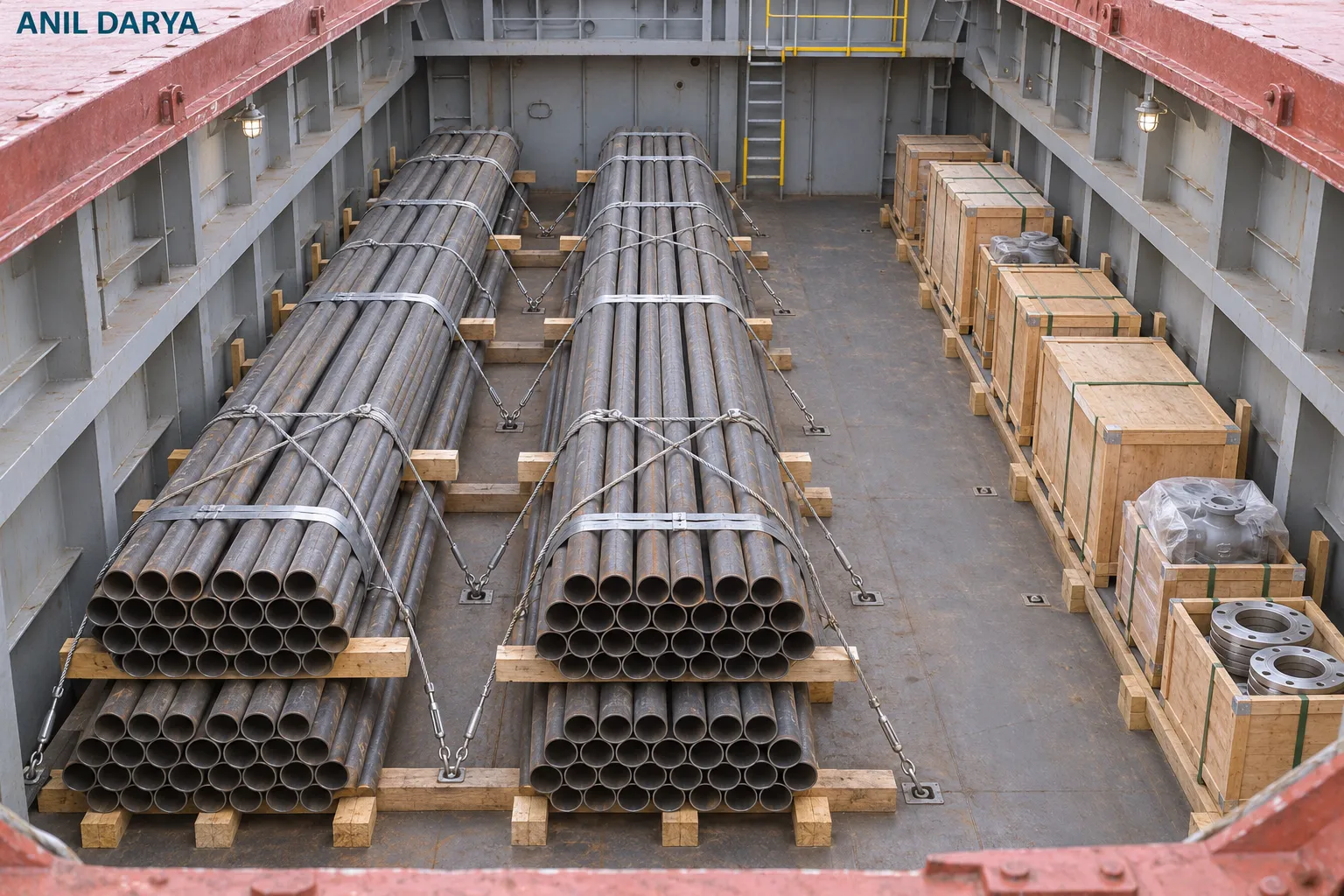
- Line pipe and OCTG: casing and tubing are covered by API Specification 5CT and line pipe by API Specification 5L. Bundles of pipe in the hold are classic break bulk. When they feed a pipeline construction programme, the shipment is run like project cargo. See .
- A reactor or column is a single piece with saddles, lifting lugs and a set destination. That is project cargo.
- Gas turbines and compressors ship as skid packages that need lift planning and preservation. Also project cargo.
- A land rig moves in many pieces. Most are break bulk, while the mast and heaviest skids need project-style planning.
- A jack-up rig moves whole on a semi-submersible heavy lift ship, which floods its ballast tanks to float the rig on. This is project cargo in its clearest form.
- Valves, spares and crated fittings usually go in containers, sometimes as break bulk with the main cargo.
Our overview of lists these cargo families with the shipping method that usually fits each.
Our own refinery work shows the mix. We have handled cargo for a refinery project in Iraq and parts for a refinery project in Saudi Arabia, where heavy items and ordinary break bulk travel under one plan.
[AMIR-FACT: how the Iraq or Saudi Arabia refinery cargo was split between containers, break bulk and heavy lift, and which vessel type was used]
Why the label matters when you book
Calling a shipment "break bulk" when it is in fact project cargo is a common cause of late surprises. A shipping line quoting standard break bulk will assume normal ship cranes, normal lashing and a port-to-port move. If the heaviest piece then turns out to need a tandem lift, a lift plan or a marine warranty surveyor, the vessel, schedule and price can all change.
UK HSE guidance on lifting operations says complex lifts, such as tandem lifts using several cranes, need a written plan from a person with significant and specific competence. That engineering takes time, and it has to be finished before the ship arrives. IMO's CSS Code sets the international reference for stowage and securing, and the people planning stowage are expected to know the ship's Cargo Securing Manual.
The practical advice is simple. Describe the cargo by its real dimensions, weights and destination, not by a label. Mark the heaviest and largest pieces clearly. Say whether delivery is to a port or to a site. With that, the forwarder can decide whether the move is break bulk, project cargo, or a mix. Our heavy lift shipping guide shows what changes once a piece crosses into heavy lift.
Into the UAE, out of Dubai and between other countries
The same distinction applies in every direction. For cargo arriving in the UAE, a project cargo move continues past the port to site, and we arrange customs clearance, arrange payment of the duty and VAT, and book the heavy haulage contractor. For cargo leaving Dubai, we check packing and marking and book the ship through our break bulk service or, for containerised parts, sea freight. For cross-trade, where cargo moves between two other countries and never touches the UAE, the shipping line's own bill of lading is issued and released through us as agent for the line, and destination clearance is agreed with the consignee's broker before sailing.
Free consultation: is your shipment project cargo or break bulk?
If you are not sure which category your equipment falls into, send us the piece list before you ask for prices. Include dimensions, weights, drawings with lift points, the centre of gravity for the heavy items, the packing list, origin, destination and dates.
We sort the pieces into container, standard break bulk and project cargo, and reply with the vessel types that fit, the surveys and lift planning required, the documents list, the checks to make at the destination port, and a suggested route into the UAE, out of Dubai or as cross-trade. It costs nothing and does not commit you to book. You can start with the freight rate inquiry form, or read how the process works on our page.
Frequently asked questions
Is project cargo the same as break bulk?
No. Break bulk describes cargo handled piece by piece outside containers. Project cargo describes cargo planned as part of a specific project. Most project cargo is shipped as break bulk, but most break bulk is not project cargo.
What is the difference between bulk and break bulk?
Bulk cargo is loose and unpackaged, such as grain, ore or crude oil, loaded directly into the hold and measured by weight or volume. Break bulk is counted in individual pieces, bundles or packages that are lifted and secured one by one.
What is considered project cargo?
Heavy, oversized, high-value or critical equipment moved for a specific project: reactors, turbines, transformers, process modules, rigs and the components of whole plants.
Is all project cargo break bulk?
Nearly all of it, because the main pieces are too big for containers. Small parts of a project, such as spares and fittings, may still travel in containers.
Can break bulk cargo go in containers?
Out-of-gauge pieces that are light enough can go on flat racks or in open-top containers on container ships. Once a piece is too heavy or too large for that, it goes on a multipurpose or heavy lift ship.
What is a break bulk vessel?
A general cargo or multipurpose ship designed to carry individually loaded pieces, usually with its own cranes. Heavier pieces go on dedicated heavy lift ships, compared in .
Is a gas turbine project cargo or break bulk?
Both. It is loaded as a single break bulk piece, but it needs lift planning, preservation and often a set delivery date at site, which makes it project cargo.
Sources
- What is project cargo (Magaya)
- Break bulk cargo (Wikipedia)
- Bulk cargo vs break bulk cargo (Ship4wd)
- Optimizing EPC logistics: containerized vs break-bulk cargo (EY)
- DNV-SE-0080 Noble Denton marine services: marine warranty survey (DNV)
- Code of Safe Practice for Cargo Stowage and Securing (IMO)
- Planning and organising lifting operations (UK HSE)
- API Specification 5CT, Casing and Tubing (API)
- API Specification 5L, Line Pipe (API)
- Heavy-lift ship (Wikipedia)
Reviewed: 16 November 2026