
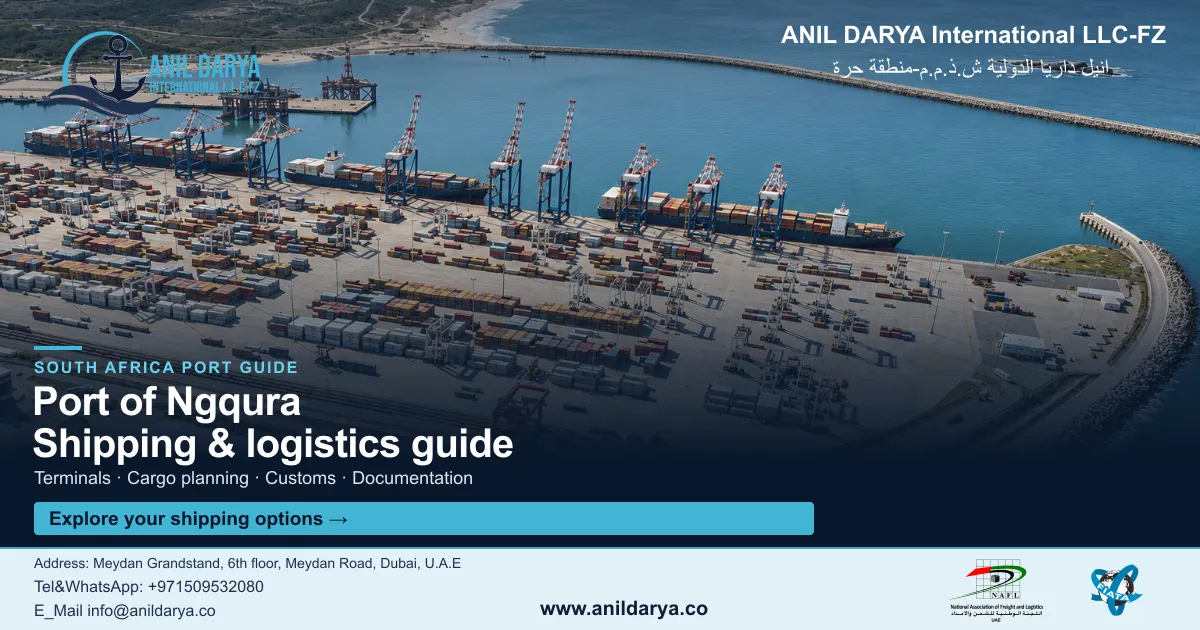
Port of Ngqura shipping means using South Africa's newest deepwater port, at Coega about 20 km north-east of Gqeberha (Port Elizabeth). It handled 747,847 TEU in 2025, about half of it transshipment, and it is the container gateway for consignees in the Eastern Cape. This guide covers the container terminal, how Ngqura differs from the older Port Elizabeth harbour next door, manganese and project cargo, SARS clearance at Ngqura, and how to ship there from Dubai. We ship both from Dubai to Ngqura and from Ngqura to Dubai.
Port of Ngqura at a glance
| Item | Detail |
|---|---|
| Other names | Coega port, Coega Harbour |
| Port authority | Transnet National Ports Authority (TNPA) |
| Container terminal operator | Transnet Port Terminals (TPT), Ngqura Container Terminal (NCT) |
| UN/LOCODE | ZANGQ |
| Location | Algoa Bay, at the mouth of the Coega River, 20 km north-east of Gqeberha, midway between Durban and Cape Town |
| Commercial operations since | October 2009 |
| Port land | 1,307.77 ha |
| Berths | 7: 4 container, 2 dry bulk, 1 liquid bulk |
| Depth | Port 18 m chart datum; container terminal 16 m |
| Entrance channel width | 300 m |
| Reefer points | 1,652 |
| Containers handled, 2025 | 747,847 TEU |
| Total cargo, 2025 (excluding containers counted in TEU) | 8,162,061 tonnes, mostly dry bulk exports |
| Ocean-going vessel arrivals, 2025 | 704, of which 395 container ships |
| Main commodities | Containers, manganese, abnormal cargo |
| Next to the port | Coega Special Economic Zone (SEZ) |
| Customs | South African Revenue Service (SARS) |
| Import VAT | 15% of the added tax value |
| Ngqura to Dubai | Also handled: SARS export by the shipper or its clearing agent, UAE clearance at Jebel Ali, Khalifa Port or Sharjah by us |
Where is the Port of Ngqura and why was it built?
Ngqura sits on Algoa Bay in the Nelson Mandela Bay metro, inside the Coega Special Economic Zone. TNPA describes it as a deepwater container transhipment hub and the newest port in the South African system. It was built from 2002, and the first commercial ship, MSC Catania, discharged 275 containers on 4 October 2009.
The port was designed for two jobs. The first is container transshipment: TNPA lists West and East African, European and Asian trade routes, and the container terminal serves traffic from the Far East, South America and African markets. The second is industrial bulk, starting with manganese ore railed from the Northern Cape. Two breakwaters protect the harbour: a 1.3 km western breakwater and a 2.7 km eastern breakwater, which is the longest in South Africa.
For a shipper in Dubai, the delivery address decides whether Ngqura is the right port. It suits consignees in Gqeberha, the Coega SEZ and the wider Eastern Cape. Cargo for Johannesburg and Gauteng usually goes through Durban, which we cover in our Durban port guide.
Ngqura or Port Elizabeth: two ports on one bay
Ngqura and Port Elizabeth (Gqeberha) are separate TNPA ports about 20 km apart on the same bay. They have different terminals, different depths and different cargo. Your bill of lading must name the right one, because carriers do switch calls between them.
| Item | Port of Ngqura | Port of Port Elizabeth |
|---|---|---|
| UN/LOCODE | ZANGQ | ZAPLZ |
| Opened | 2009 | 1825 |
| Berths | 7 | 15 (TNPA) |
| Container terminal | NCT, 4 berths, 16 m | PECT, 3 berths totalling 925 m |
| Entrance channel depth | 18 m chart datum | 14.5 m chart datum |
| Containers, 2025 | 747,847 TEU | 130,715 TEU |
| Total cargo, 2025 | 8,162,061 t | 12,042,025 t |
| Vehicles, 2025 | None reported | 153,637 units |
| Typical cargo | Large container ships, transshipment, manganese, abnormal cargo | Containers, vehicles, liquid bulk, dry bulk, breakbulk |
A simple rule: if your cargo is a container on a mainline service, expect Ngqura. If it is a vehicle shipment, conventional breakbulk or a smaller feeder call, Port Elizabeth may be the discharge port. Check the port of discharge on the booking confirmation, not just "Port Elizabeth" or "Gqeberha" in the quote, and tell your clearing agent which port it is.
The Ngqura Container Terminal: berths, cranes and reefers
NCT is one of the container terminals run by Transnet Port Terminals. TNPA lists a four-berth container terminal with 10 ship-to-shore cranes and a depth of 16 m. A 2025 government news report on the port counted eight ship-to-shore cranes in use, so equipment numbers move with maintenance and renewal.
| Terminal item | Figure | Source type |
|---|---|---|
| Container berths | 4 | TNPA |
| Container berth depth | 16 m | TNPA |
| Ship-to-shore cranes | 10 listed by TNPA; 8 cited in 2025 | TNPA, SAnews |
| Reefer points | 1,652 | SAnews (2025) |
| Transhipment capacity | 1.5 million TEU | SAnews (2025) |
| Design capacity of the port | 2.0 million TEU a year | Wikipedia |
| Largest container ships handled | MSC 12,500 TEU ships; MSC Nicola Mastro, one of the world's largest, berthed in 2025 with four tugs | Wikipedia, SAnews |
Ngqura's productivity has been weak in past years. The World Bank's Container Port Performance Index ranked it 404th of 405 ports in 2023 and 380th of 400 in 2025. A 2025 report put the full revamp, including equipment refurbishment, at about 15 years. For your planning, that means a delay on arrival or a rolled export box is still possible, so leave slack in any delivery promise.
What the transshipment role means for your box
TNPA's 2025 container figures show that 384,071 TEU of Ngqura's 747,847 TEU were transshipped, about 51%. Only 194,140 TEU were landed from deep-sea ships for the local market. In practice, many ships calling at Ngqura are swapping boxes between services, and your import box from the Gulf competes for crane time with transshipment moves. The upside is a wide choice of deep-sea services. The downside is that a vessel delay at Ngqura can hit the local box as well.
What cargo can you ship through the Port of Ngqura?
TNPA lists containers, manganese and abnormal cargo as Ngqura's commodities. The 2025 cargo figures show 8,040,620 tonnes of dry bulk, nearly all exports, against 64,284 tonnes of breakbulk and 57,156 tonnes of liquid bulk. For cargo coming from the UAE, it is mainly a container port.
| Cargo from the UAE | Where it goes | What to plan |
|---|---|---|
| General goods (FCL) | NCT | Port of discharge on the booking, road weight limit, SARS documents |
| Small shipments (LCL) | Unpacked at a depot after discharge | Release depends on the whole container clearing |
| Chilled and frozen food | NCT reefer points | Set temperature, health certificates, import permits |
| Machinery and project pieces | Flat rack via NCT, or general cargo berths | Lifting plan, laydown space, abnormal load permits |
| Vehicles | Usually Port Elizabeth, not Ngqura | Confirm the car terminal port before booking |
| Dangerous goods | NCT under carrier and TNPA rules | Carrier acceptance; Class 1 and 7 need prior approval with some lines |
| Dry bulk imports | Dry bulk berths | Receiving facility and discharge plan in place first |
FCL and LCL shipping to Ngqura
Most cargo from the UAE to the Eastern Cape moves in containers. You choose between a full box (FCL) and a shared box (LCL) as on any lane.
- FCL suits larger volumes and goods you do not want handled with other cargo. The box is collected from NCT once SARS releases it and the line issues the delivery order.
- LCL suits small volumes. The consolidator's box is unpacked at a depot, so your release also depends on the other shippers' paperwork.
Our guide to FCL vs LCL costs explains where a full container starts to pay off.
Road weight limits for delivery from Ngqura
South African road limits catch out many Gulf shippers. Maersk publishes these maximum gross weights for road haulage, including container tare and any reefer genset:
| Container | Maximum gross for road haulage |
|---|---|
| 20ft dry or reefer | 30 tonnes |
| 40ft dry | 31.5 tonnes |
| 40ft reefer | 31.5 tonnes |
| 45ft | Not accepted in South Africa |
A 20ft box of tiles, stone or steel loaded to its maximum at Jebel Ali can be over the road limit at Ngqura. Agree the payload with the consignee before you load.
Manganese, bulk and the Coega SEZ
Ngqura's bulk trade is driven by manganese. A rail corridor of 1,003 km links the port to the manganese mines around Hotazel in the Northern Cape. Moving the manganese terminal from Port Elizabeth to Ngqura is expected to raise capacity from 5.5 million to 16 million tonnes a year. In 2025 Port Elizabeth still shipped 10,663,893 tonnes of dry bulk against 7,452,830 tonnes at Ngqura, so the move is not complete.
The Coega SEZ wraps around the port. It covers about 90 km², is split into 14 zones, and targets automotive, agro-processing, chemicals, energy, general manufacturing and metals. It has customs-controlled areas for export-oriented manufacturers. If your consignee is inside the SEZ, ask them how their customs status affects the declaration before the cargo sails.
Two projects are worth knowing about. In May 2026 Transnet signed a 25-year terminal operator agreement with Ukwanda LNG for an onshore LNG regasification facility with its own berth at Ngqura, about ZAR 22 billion, with full operations expected by 2035. And TNPA's 30-year forecast puts the port at up to 110 million tonnes a year.
Project and abnormal cargo at Ngqura
TNPA lists abnormal cargo among Ngqura's commodities, and the deep water and long quay make it a practical landing point for heavy pieces bound for Eastern Cape sites. A 12 ha laydown area between the SEZ and the port, opened in April 2015, gives temporary storage for abnormal cargo after discharge.
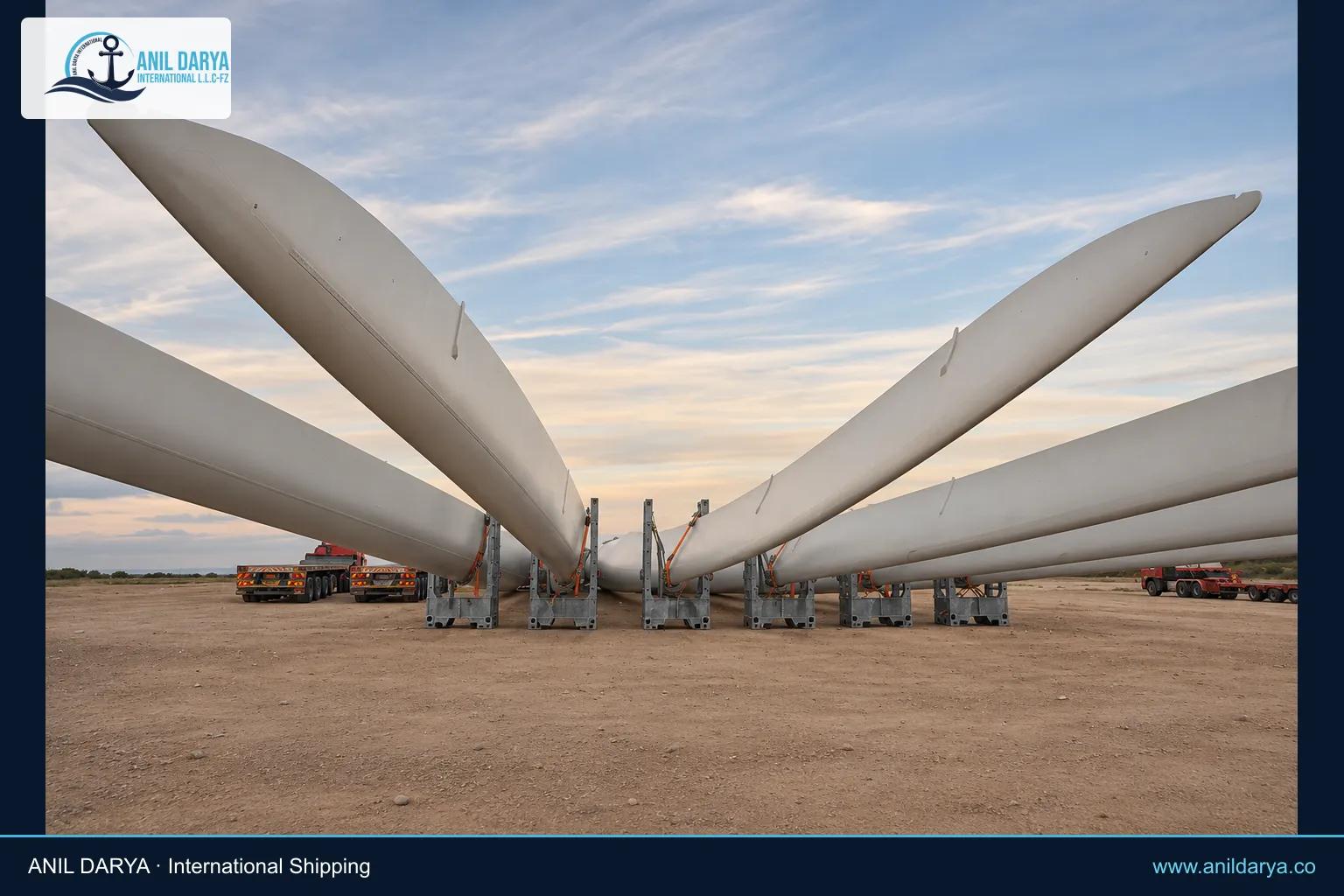
When we plan a project shipment from the UAE into Ngqura, we work in this order:
- Collect drawings, weights, dimensions and centre of gravity for every piece.
- Decide between flat racks on a container service and a breakbulk or heavy-lift vessel calling at the general cargo berths.
- Confirm the discharge port with the carrier: Ngqura or Port Elizabeth.
- Agree lifting gear and lashing: ship's cranes, or a hired mobile crane at the quay.
- Plan the road move with the consignee's haulier, including abnormal load permits and escorts.
- Line up the SARS declaration and any permits so the pieces leave the quay quickly.
See our break bulk and project cargo service and our guide to flat racks, open tops and out-of-gauge cargo.
Dangerous goods through the Port of Ngqura
DG cargo to Ngqura moves in IMDG containers on the container services. Carrier acceptance is the first gate. Maersk's South African cargo rules say hazardous Classes 1 and 7 need approval before acceptance, and DG charcoal is not accepted. Other lines have their own lists, and a transshipment hub on the way may have its own limits.
What you need for a DG booking to Ngqura:
- UN number, proper shipping name, class and packing group for each product.
- A safety data sheet (SDS) for each product.
- A signed dangerous goods declaration and container packing certificate.
- UN-approved packaging, labels and placards.
- Acceptance from the carrier on every leg, including the transshipment port.
Plan a fast release so the box does not sit in the terminal. Our dangerous goods shipping team checks the documents and acceptance before you commit to a sailing, and our article on IMDG segregation in containers covers what can share a box.
Customs clearance at the Port of Ngqura
SARS clears cargo at Ngqura under the same national rules as Durban and Cape Town. Here is the short version.
- The importer must be registered with SARS. The importer or its agent declares the goods.
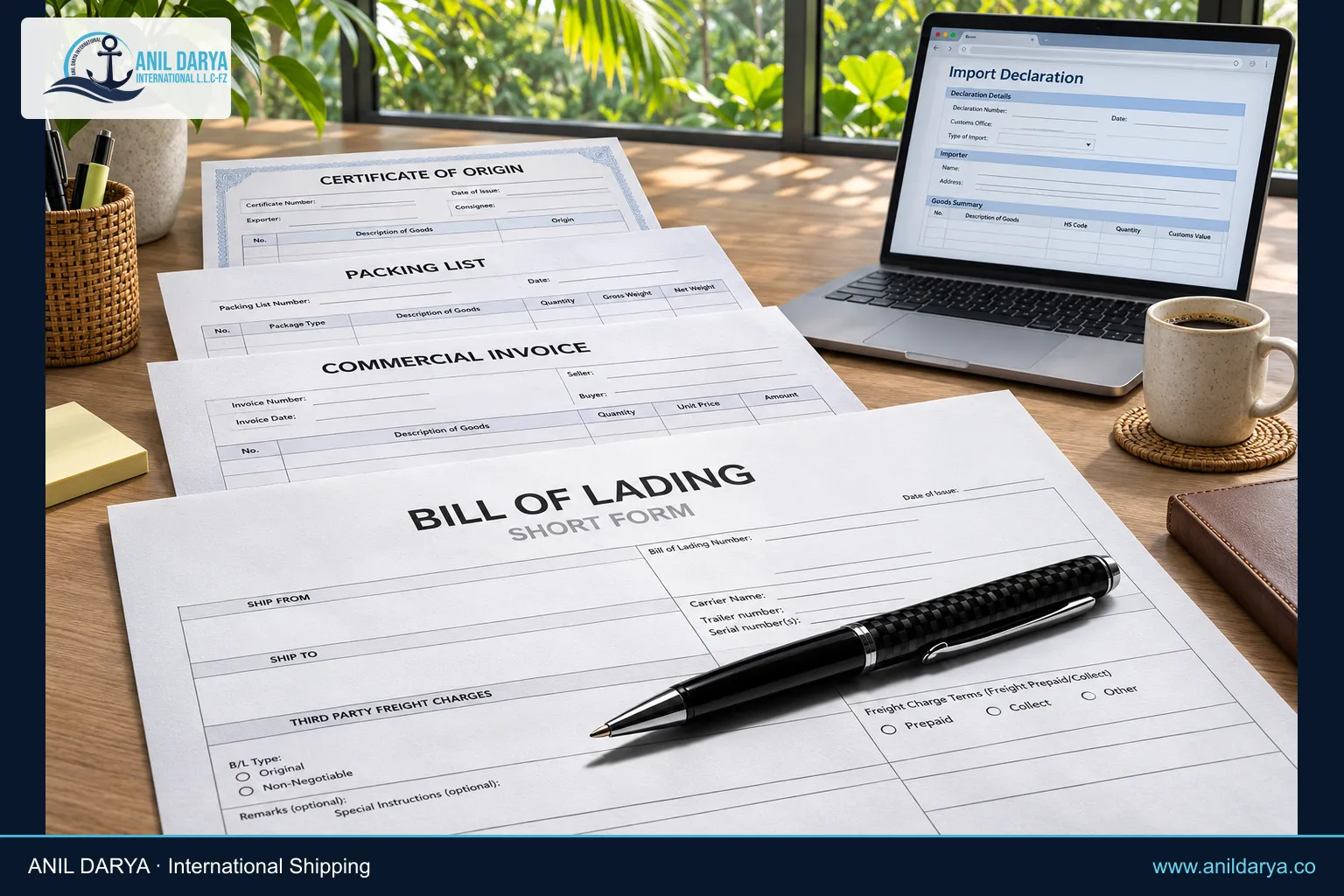
- SARS checks the declaration against the invoice, bill of lading, certificate of origin and any permits.
- Restricted goods need an import permit from the International Trade Administration Commission (ITAC), produced at clearance. Maersk names used tyres and textile waste or used clothing as cases that need one.
- SARS may examine the goods, ask for samples, or hold them for another government department.
| Cargo situation | Time to declare after landing |
|---|---|
| Most goods | 7 days |
| Loose or break bulk cargo by sea | 14 days |
| Goods in a container depot | 28 days |
Goods not declared in time can be moved to the State Warehouse. Import VAT is 15% of the added tax value, which is the customs value plus 10%, plus any non-rebated duty. Duty depends on the tariff heading.
Shipping from Dubai to Ngqura: services and transit
Containers from the UAE to Ngqura load at Jebel Ali. DP World lists Gqeberha (Ngqura) as a key container gateway for inbound cargo to South Africa, alongside Durban and Cape Town. Most Gulf cargo reaches Ngqura on a service that transships at a hub, and carriers can switch a call between Ngqura and Port Elizabeth Container Terminal at short notice, as Maersk did on one service in 2024.
[AMIR-FACT: the carriers or services we actually book from Jebel Ali to Ngqura, the hub they transship at, and our typical port-to-port days on this lane in 2026]
For urgent parts, air freight to South Africa goes mainly through Johannesburg. Our air cargo service can quote it, including DG by air.
How to ship from Dubai to the Port of Ngqura: step by step
Our Jebel Ali port shipping guide covers the UAE export side in detail.
- Send us the cargo details: commodity, tariff code, weight, volume or dimensions, and the Incoterm agreed with your buyer.
- Confirm the South African side. The consignee is registered with SARS, has a clearing agent for Ngqura, and has applied for any ITAC permit.
- Check the payload against the South African road weight limit for the container size.
- We compare services, confirm the port of discharge (Ngqura or Port Elizabeth) and the hub.
- Book space. For DG, reefer or out-of-gauge cargo we get carrier acceptance first.
- We arrange UAE trucking, export clearance and gate-in at Jebel Ali before the cut-off.
- After sailing, we send the bill of lading, invoice, packing list and certificate of origin to the consignee's clearing agent.
- The agent lodges the declaration within the SARS deadline and pays duty and VAT.
- Once SARS releases the box and the line issues the delivery order, the haulier collects it from NCT.
- The empty goes back to the depot the line names, within free time.
How to ship from the Port of Ngqura to Dubai
We also handle the other direction: shipping from Ngqura to Dubai, with arrival at Jebel Ali, Khalifa Port or Sharjah port. We book the space with the carrier and run the UAE side. The export papers at origin stay with the shipper or its South African clearing agent.
The South African export side
- Exporter registration. SARS says any person, local or foreign, who wants to export goods from South Africa must register as an exporter. A foreign exporter must also appoint a registered agent in South Africa.
- The export declaration. The shipper lodges it with SARS, or a licensed clearing agent lodges it for the shipper. A shipper that submits its own declarations must also register as an EDI user; one that uses a clearing agent does not.
- Permits. Goods that need an export permit must have it at clearance. Permits for restricted goods come from the International Trade Administration Commission (ITAC).
- Proof of export. SARS requires proof of export from the port of exit, so the shipper's agent keeps the loading record from Ngqura.
- Pickup. The shipper or its trucker delivers the box to the Ngqura Container Terminal inside the carrier's receiving window and cut-off, within the road weight limit.
The UAE import side
When the box from Ngqura reaches the UAE, the declaration goes to Dubai Customs with the Eastern Cape shipper's commercial invoice, packing list and certificate of origin, plus any permit the goods need if they are restricted. The line issues the delivery order only against the bill of lading. Most goods pay Dubai customs duty of 5% of the CIF value, while alcohol pays 50% and cigarettes 100%. Import VAT is 5% of the customs value, so the freight and insurance from Ngqura are part of the base. A VAT-registered importer whose customs number is linked with the Federal Tax Authority accounts for that VAT on its VAT return instead of paying it at release.
- Send us the shipper's details in the Eastern Cape, the cargo, the HS code and the UAE delivery address.
- We book space from Ngqura, confirm the hub and send the booking and cut-offs to the shipper.
- The shipper or its trucker packs the box and delivers it to NCT before the cut-off.
- The shipper or its clearing agent lodges the SARS export declaration with any ITAC permit.
- We check the draft bill of lading against the invoice and packing list before the carrier issues it.
- We file the Dubai Customs declaration before the ship arrives.
- We arrange payment of the duty and VAT, or the VAT deferral if you are VAT-registered, and collect the delivery order from the line.
- We truck the cargo to your site in the UAE and return the empty inside free time.
[AMIR-FACT: the carriers and hub we actually use from Ngqura to Jebel Ali, Khalifa Port or Sharjah, and our real port-to-port transit days in this direction]
Checklist before you ship to Ngqura
- Port of discharge confirmed as Ngqura (ZANGQ), not Port Elizabeth (ZAPLZ), on the booking.
- Consignee registered with SARS and a clearing agent named.
- Tariff code checked for duty and VAT.
- ITAC permit in hand for restricted goods.
- Gross weight within the road limit: 30 t for a 20ft, 31.5 t for a 40ft.
- Certificate of origin issued.
- For reefers: set temperature and any health certificates.
- For DG: SDS, DG declaration and acceptance on every leg.
- For project cargo: drawings, lifting points, laydown space and road permits.
- Free time agreed with a buffer for vessel delays.
Common mistakes when shipping to the Port of Ngqura
- Assuming "Port Elizabeth" and "Ngqura" are the same port. The clearing agent and haulier go to the wrong terminal.
- Booking Ngqura for a Johannesburg consignee. Durban is usually the shorter inland leg.
- Loading a 20ft box over 30 tonnes gross.
- Shipping used tyres or used clothing without an ITAC permit.
- Missing the 7-day declaration window.
- Promising a delivery date with no slack for terminal or transshipment delays.
- Assuming a DG class accepted on one lane is accepted on every leg to Ngqura.
Ngqura or another South African port?
TNPA's 2025 container figures show where Ngqura sits.
| Port | Containers, 2025 | When to choose it |
|---|---|---|
| Durban | 2,732,190 TEU | Gauteng and KwaZulu-Natal consignees |
| Cape Town | 843,599 TEU | Western Cape consignees and reefer cargo |
| Ngqura | 747,847 TEU | Eastern Cape consignees, Coega SEZ, large container ships |
| Port Elizabeth | 130,715 TEU | Vehicles, breakbulk and smaller container calls in the Eastern Cape |
For Western Cape deliveries, see our Cape Town port guide. For bulk cargo in northern KwaZulu-Natal, see our Richards Bay port guide. Price the inland leg from each port before you choose.
Frequently asked questions
Where is the Port of Ngqura located?
Ngqura is on Algoa Bay in the Eastern Cape, at the mouth of the Coega River, about 20 km north-east of Gqeberha (Port Elizabeth). It sits inside the Coega Special Economic Zone, midway between Durban and Cape Town.
Is Ngqura the same as Port Elizabeth?
No. They are two separate ports on the same bay. Ngqura (ZANGQ) is the deepwater container and manganese port opened in 2009; Port Elizabeth (ZAPLZ) is the older harbour that handles containers, vehicles and bulk.
What is the port code for Ngqura?
The UN/LOCODE for the Port of Ngqura is ZANGQ. You will see it on bookings, bills of lading and tracking systems.
How do I ship from Dubai to Ngqura?
Send us the cargo details and confirm the consignee is registered with SARS and has a clearing agent. We book from Jebel Ali, clear UAE export and send the documents to that agent, who lodges the SARS declaration and pays duty and VAT.
How many containers does Ngqura handle?
Ngqura handled 747,847 TEU in 2025, according to TNPA. About 51% of that was transshipment, which makes it South Africa's third-largest container port after Durban and Cape Town.
How deep is the water at the Port of Ngqura?
TNPA gives the port a depth of 18 m chart datum, with 16 m at the container terminal. That lets it take larger container ships than Port Elizabeth, whose entrance channel is kept at 14.5 m.
What documents do I need to clear cargo at Ngqura?
To clear a container landed at Ngqura, SARS checks the importer's declaration against the commercial invoice, the bill of lading, the certificate of origin and any permits. If the goods are restricted, for example used tyres or used clothing, an ITAC permit must also be produced at clearance.
How long can I leave uncleared cargo at Ngqura?
It depends on how the cargo landed at Ngqura. SARS allows 7 days after landing for most goods, 14 days for loose or break bulk cargo by sea and 28 days for goods held in a container depot. Cargo still undeclared after that can be moved to the State Warehouse, so line up the clearing agent before the vessel arrives.
Can you ship from Ngqura to Dubai?
Yes. The shipper or its South African clearing agent files the SARS export declaration. We book the space, clear the cargo with Dubai Customs and arrange payment of the duty, 5% of the CIF value for most goods, and the 5% import VAT.
Can I ship dangerous goods to Ngqura?
Yes, in IMDG containers with carrier acceptance. Some lines need prior approval for certain classes; Maersk, for example, requires it for Classes 1 and 7 in South Africa.
Get a quote for Port of Ngqura shipping
Send us the cargo details and the delivery address in the Eastern Cape, and we will come back with a routing and a price into Ngqura. Use our freight rate inquiry form, or contact our team to talk through a project, DG or reefer shipment first. You can also read more about our Dubai freight forwarding team.
Sources
- Transnet National Ports Authority: Our Ports (Port of Ngqura and Port of Port Elizabeth fast facts and commodities)
- Transnet National Ports Authority: Containers handled by port, 2025 calendar year (TEU, landed, shipped, transshipped)
- Transnet National Ports Authority: Summary of cargo handled at South African ports, 2025 (tonnes by cargo type)
- Transnet National Ports Authority: Vessel arrivals at South African ports, 2025
- Transnet Port Terminals: Container services (NCT and PECT)
- Wikipedia: Port of Ngqura (history, berths, design capacity, CPPI ranking, manganese rail corridor, LOCODE)
- SAnews: Port of Ngqura promises to be one of the best in Africa (September 2025)
- FreshPlaza: South Africa Port of Ngqura expands trade capacity (October 2025)
- Africa Ports: Port of Ngqura (Coega)
- TransMarine Shipping: Ngqura port info (location, operator)
- Africa Ports: Port Elizabeth (terminals, container berths, channel depth)
- Wikipedia: Port of Port Elizabeth (opening year, LOCODE)
- Wikipedia: Coega (SEZ size, zones, sectors, abnormal cargo laydown area)
- Baird Maritime: Transnet signs 25-year deal for Eastern Cape LNG terminal (May 2026)
- DP World: Shipping to South Africa (Gqeberha/Ngqura gateway)
- Maersk: Terminal change from NCT to PECT (May 2024)
- Maersk: South Africa imports (cargo restrictions, road weight limits)
- SARS: Imports (clearance, documents, declaration deadlines)
- SARS: Duties and taxes for importers (VAT and added tax value)
- SARS: Exports (export declaration, ITAC permits, proof of export)
- SARS: Exporters (registration, registered agent, EDI)
- SARS: Clearing agents
- Dubai Customs: Submit customs declaration (documents for import, export and re-export declarations)
- UAE Government portal: Customs duty (5% of CIF in Dubai, alcohol 50%, cigarettes 100%)
- Federal Tax Authority: VAT guide, section 3.5 (5% import VAT, customs value, deferral to the VAT return)
Reviewed: 10 November 2026