|
Getting your Trinity Audio player ready...
|
Turkey Restricts Black Sea-Bound Vessel Traffic
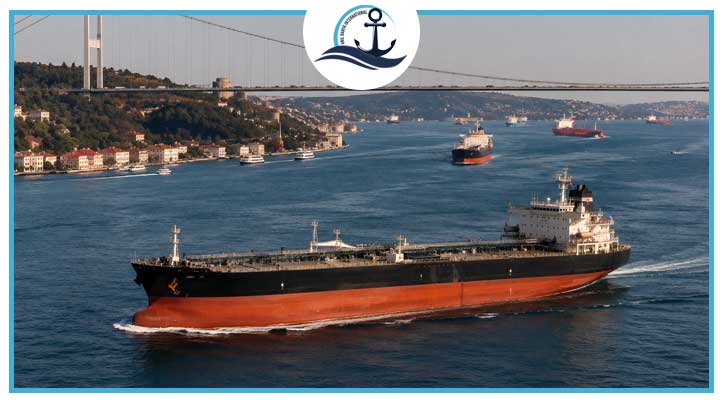
Turkey has reportedly restricted some vessels from passing through the Dardanelles towards the Black Sea, adding a new operational complication for commercial shipping as attacks on merchant vessels in the region intensify.
Authorities have not publicly explained the reason for the move, according to people familiar with the restrictions. The measure comes amid growing concern in Ankara over the safety of commercial vessels following a series of Russian and Ukrainian attacks in the Black Sea.
Restrictions Affect Some Black Sea-Bound Vessels
The reported measure effectively limits the movement of some ships entering the Black Sea through the Turkish Straits.
People familiar with the situation said some vessels had also been informed that the restriction applies to ships heading towards Ukraine. However, no official explanation for the measure had been provided.
Turkey's Directorate General of Coastal Safety referred questions on the restrictions to the Ministry of Transport and Infrastructure, which had not provided a response at the time of the original report.
The restrictions do not appear to represent a complete halt to northbound maritime traffic. Ship-tracking data cited in the report showed vessels destined for Bulgarian and Turkish ports continuing north through the Dardanelles as of 1 p.m. local time.
Attacks Raise Concerns Over Commercial Shipping
The development follows an escalation in attacks involving commercial vessels operating in and around the Black Sea.
Earlier in the week, Turkey's Foreign Ministry said crew members, including Turkish citizens, had been injured in drone attacks involving two Turkish-owned vessels.
Ankara subsequently called on the parties involved in the conflict to take concrete measures to protect navigational safety in the Black Sea.
Turkey also warned that further escalation could have wider consequences beyond maritime security, including risks to international food supplies.
The Black Sea remains an important maritime corridor for grain, energy and other commodities, making disruption to commercial navigation a concern for both shipowners and cargo interests.
Black Sea Grain Trade Faces Additional Pressure
The reported restrictions come as intensifying attacks by Russia and Ukraine have already increased uncertainty around Black Sea grain exports.
The region is a major source of agricultural commodities for international markets. Security concerns affecting vessels, terminals and export infrastructure can therefore influence both shipping operations and commodity flows.
Recent attacks have already contributed to concerns about grain availability. Wheat prices reached a two-year high in July as market participants assessed the potential impact of further disruption to Black Sea exports.
Any restrictions affecting access through the Turkish Straits add another operational consideration for vessels serving ports in the region.
Turkish Straits Become More Important for Voyage Planning
The Dardanelles and Bosphorus provide the maritime connection between the Mediterranean and Black Sea, making Turkey's management of vessel movements particularly important for regional Sea Freight and commodity trade.
For shipowners, operators and cargo interests, the immediate issue is whether the reported restrictions remain limited to certain destinations or vessel movements, or whether Turkish authorities issue broader navigation requirements.
The distinction is important because available information indicates that traffic has not stopped completely. Ships heading towards Turkish and Bulgarian ports were still moving north through the Dardanelles, while restrictions had reportedly affected other Black Sea-bound vessels.
Security Risks Add to Wider Trade Disruption
The Black Sea developments are occurring at a time when global maritime trade is already facing disruption elsewhere.
Oil and energy movements have been affected by reduced traffic through the Strait of Hormuz, while escalating attacks in the Black Sea have created additional uncertainty for grain and other commodity shipments.
For vessels operating in the region, navigational restrictions now add another factor alongside security assessments, voyage planning and the risk of attacks on commercial shipping.
Until Turkish authorities provide further clarification, the scope and duration of the reported restrictions remain uncertain. Shipping operators will therefore be watching official navigation notices and actual vessel movements through the Dardanelles closely.