
Anil Darya International L.L.C-FZ is a Dubai-based freight forwarder focused on ocean freight: FCL and LCL sea freight, dangerous goods by sea, bulk cargo and break bulk / project cargo. A member of FIATA and NAFL.
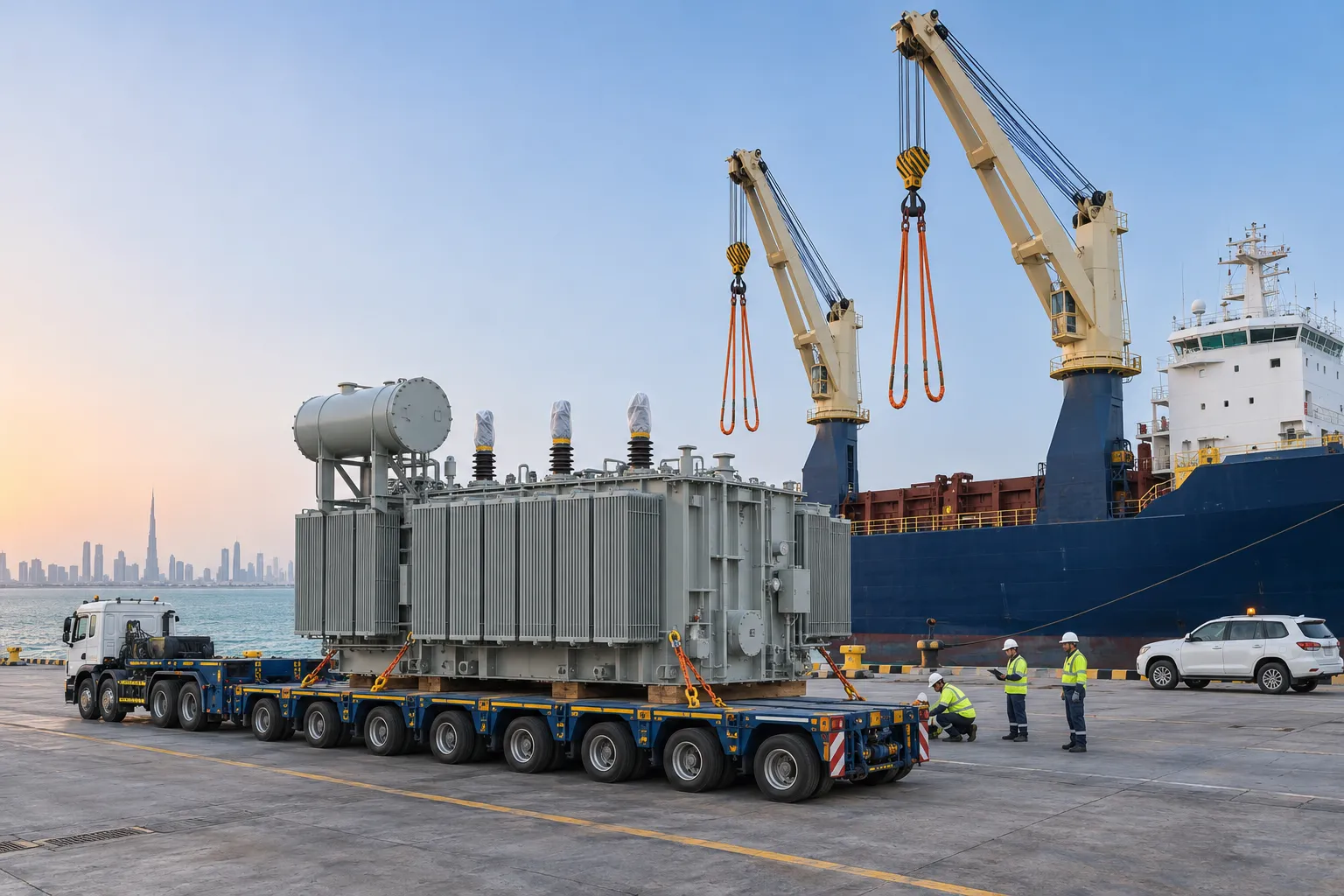
Project cargo logistics is the planning and transport of equipment that is too big, too heavy or too valuable to move as ordinary freight. Typical examples are a transformer, a reactor, a crane section, a set of process modules, or a whole plant shipped in hundreds of pieces. Anil Darya International L.L.C-FZ is a freight forwarder in Dubai. We plan these moves by sea, book the right vessel, and get the cargo onto that vessel. Our specialists calculate the lift and the lashing, and we arrange the road permits and the trucks at both ends.
In short: we handle project cargo coming into the UAE, leaving Dubai for a site abroad, and moving between two other countries. Send drawings or a packing list, and our specialists reply by email straight away. If the job needs a meeting, we set one up.
What counts as project cargo
A shipment becomes project cargo when standard freight handling stops working. Size alone is not the test. Three things usually decide it:
- Out of gauge. At least one piece is longer, wider or taller than the inside of a container, so it cannot travel in a closed box.
- Heavy lift. A single piece is heavier than the ship's normal cargo gear, the quay crane or a flat rack can safely take. Then the lift needs a plan, special gear, and sometimes two cranes working in tandem.
- Tied to a project schedule. The pieces belong to one build, so a late piece holds up a commissioning date, not just a delivery.
Many project shipments mix all three. A refinery package might hold a 60 m column, forty containers of piping and valves, and a few crates of instruments, all due on site in a fixed order.
Typical project cargo
| Industry | Typical pieces | Where to read more |
|---|---|---|
| Oil, gas and refining | Columns, reactors, heat exchangers, pressure vessels, process modules, line pipe | Oil and gas project cargo, refinery equipment shipping |
| Power | Transformers, gas and steam turbines, generators, switchgear skids | Gas turbine shipping |
| Drilling | Rig substructures, masts, draw works, mud pumps, camp units | Drilling rig transport by sea |
| Construction and infrastructure | Tunnel boring machine parts, bridge girders, crane sections, precast units | Break bulk shipping |
| Industrial plants | Kilns, crushers, presses, paper machine rolls, complete production lines | Module transport by sea |
| Pipelines and steel | Line pipe, steel structures, coils and plate | Steel pipe shipping |
Project cargo logistics in Dubai: what we do on each job
A project move is a chain. If one link is weak, the whole chain stops. On every job we take charge of these links:
- Feasibility. We check the piece list against vessel options, port limits and the road to site before anyone commits to a date.
- Engineering. Our specialists make the lift plans, the lashing and securing calculations and the stowage plans. Where an insurer or a charterer requires it, an independent marine warranty surveyor approves them.
- Vessel booking. We book space with multipurpose, heavy lift, ro-ro or container lines. We also check whether a part charter makes sense.
- Road moves and permits. We arrange the trailers, permits and escorts from the factory or yard to the port, and from the discharge port to site.
- Documents and customs. We prepare the bill of lading, packing lists with dimensions and weights, the customs entries and, if you want it, cargo insurance.
- Follow-up. We follow loading, discharge and the critical lifts with the surveyors and contractors, and report to you through one contact until the last piece is delivered.
We are the forwarder and coordinator. We do not own ships, cranes or trucks. Ships, cranes and trucks are hired from carriers and local contractors, and everyone works from one plan and one schedule. That keeps the responsibility for the plan in one place: with us.
Choosing the mode: container, flat rack, break bulk, ro-ro or heavy lift
The cheapest safe mode for each piece usually wins. Most projects use more than one. The small parts go in containers, the wide parts go on flat racks, and the biggest pieces go as break bulk or on a heavy lift vessel.
| Mode | Best for | Watch out for |
|---|---|---|
| Standard or high cube container | Spares, piping, valves, instruments, cable drums that fit inside | Door opening and floor load. Heavy items need proper lashing inside. |
| Open top container | Tall pieces loaded by crane from above | Height above the roof line counts as out of gauge and needs carrier approval. |
| Flat rack | Wide, tall or heavy machinery up to the rack's rated payload | Over-width and over-height lose slots on deck. Lines limit how many they take per sailing. |
| Break bulk on a multipurpose vessel | Pieces too big or heavy for a flat rack, and mixed project lots | Fewer sailings than container lines. Port handling and lashing need planning. |
| Heavy lift vessel | Very heavy single pieces lifted with the ship's own cranes in tandem | Limited fleet and longer booking lead time. The lift plan must be approved. |
| Ro-ro | Cargo on its own wheels or on rolling trailers (mafis), such as cranes, trucks and transformers on trailers | Deck height and ramp load limits. Not every port has a suitable ro-ro berth. |
| Part or full charter | A whole plant, or a schedule that no liner sailing can meet | You pay for the space whether it is full or not. It suits large volumes. |
Our guide project cargo vs break bulk explains the difference in more detail.
Container sizes that decide "fits or out of gauge"
The first check on any piece list is whether a piece fits a standard box. These are approximate inside dimensions and payloads from carrier specifications. Each line's figures differ a little.
| Equipment | Inside or floor size (approx.) | Max. payload (approx.) |
|---|---|---|
| 20ft standard | 5.90 × 2.35 × 2.39 m | about 28,300 kg |
| 40ft high cube | 12.03 × 2.35 × 2.69 m | about 28,800 kg |
| 20ft open top | 5.90 × 2.35 × 2.35 m, no fixed roof | about 28,200 kg |
| 40ft open top | 12.02 × 2.35 × 2.35 m, no fixed roof | about 26,600 kg |
| 20ft flat rack | 5.57 × 2.19 m floor, end walls only | about 35,000 kg |
| 40ft flat rack | 11.65 × 2.21 m floor, end walls only | about 38,800 kg |
A piece that is wider than about 2.35 m, or taller than the box, is out of gauge even if it is light. A piece heavier than the rack's payload goes break bulk or heavy lift, whatever its size. Rack payload also depends on how the weight spreads across the floor, so we check the load spread with the line before booking.
Project cargo logistics engineering: lift plans, lashing and stowage
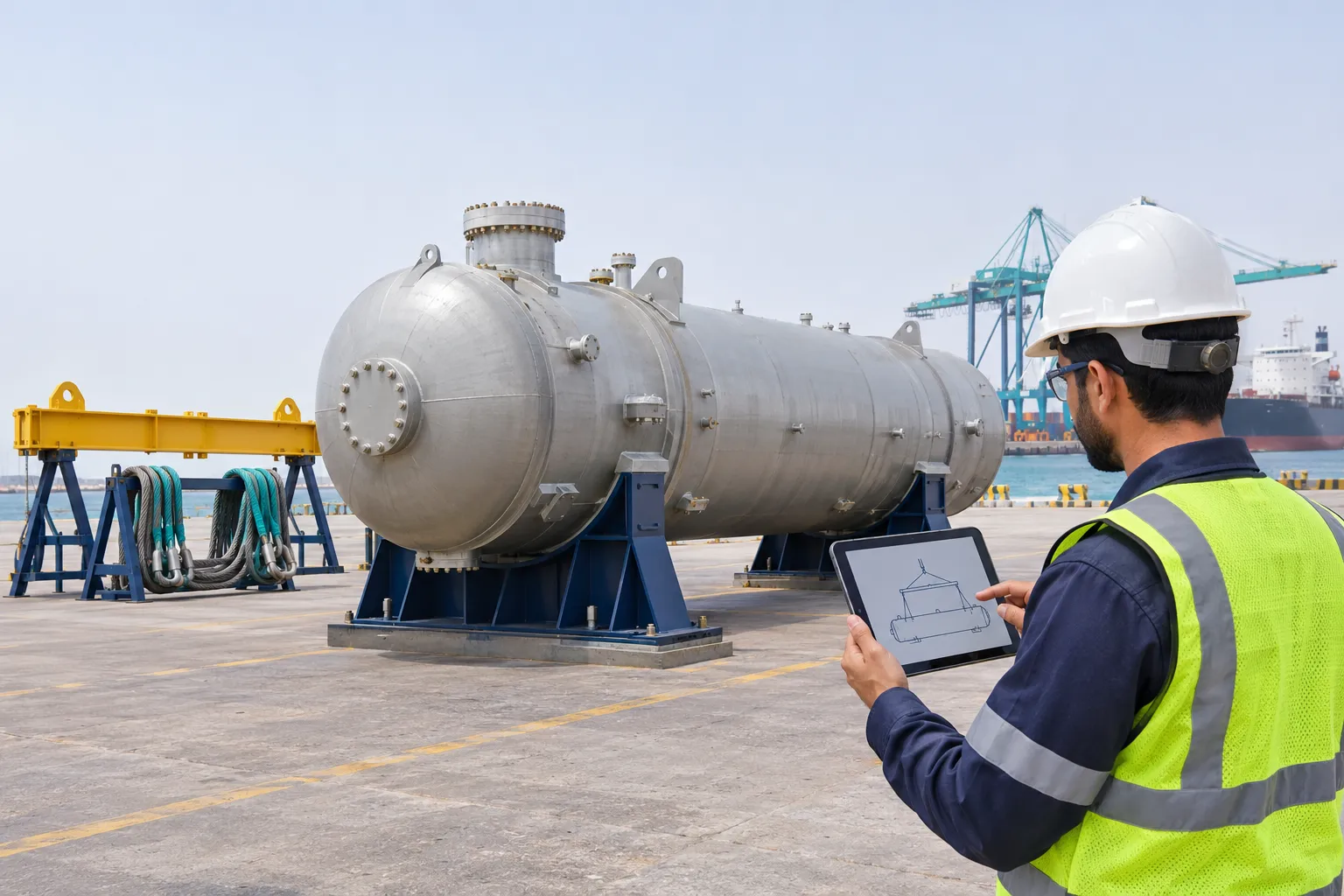
This is where project moves are won or lost. Many forwarders pass the engineering to whoever is loading the ship. We don't. Our specialists produce the calculations, and the surveyors and the vessel's officers check them against the same numbers.
- Lift plan. Crane or ship-gear selection, rigging, sling angles and the centre of gravity, plus a tandem lift where one crane is not enough.
- Lashing and securing. Forces at sea worked out for the vessel and the route, with lashing points, chains, wires and welding seafastening where needed. The method follows the IMO Code of Safe Practice for Cargo Stowage and Securing.
- Stowage. Position on deck or in the hold, deck strength and load spread with grillage or dunnage, plus clearance from other cargo.
- Marine warranty survey. Where an insurer or charterer requires it, an independent marine warranty surveyor reviews the plans and attends the operation. Our article on marine warranty surveys and seafastening covers what they look at.
The heavy lift shipping guide explains vessel gear and lift limits in more depth.
Route surveys and road permits in the UAE
Many project delays happen on the road, not at sea. Before a heavy or wide piece moves, we check the whole route from the factory gate to the quay, or from the quay to site:
- Bridge and overpass heights, overhead power and telecom lines, and street furniture that has to come down
- Turning radii at junctions and roundabouts, plus slopes and soft ground
- Road and bridge load capacity against the trailer's axle loads
- Site access and crane ground at the delivery point
Oversize and overweight loads need a permit from the roads authority of each emirate on the route. In Dubai that is the Roads and Transport Authority (RTA). Larger moves also need a police or approved escort and a fixed time window, which is often at night. A move that crosses from one emirate to another needs approval in each of them. We apply for these permits with the trailer contractor and book the escort before the vessel arrives, so the cargo does not sit on the quay.
Road equipment is chosen piece by piece. It can be a low-bed or extendable trailer, a multi-axle hydraulic modular trailer, or self-propelled modular transporters (SPMTs) for the heaviest short moves. How long a permit takes depends on the load and on the conditions at the time of the move, so we start the applications as soon as the dimensions and the route are known.
UAE ports for project cargo
The right port depends on the piece, the vessel and how far the site is from the quay.
| Port | Operator | Why it is used for project cargo |
|---|---|---|
| Jebel Ali | DP World | The main gateway for Dubai, with general cargo, ro-ro and break bulk handling next to the container terminals. Most sailing options are here. |
| Khalifa Port | AD Ports Group | General cargo and break bulk for Abu Dhabi sites, KEZAD and Mussafah. It has large open yards for laydown. |
| Sharjah Port and Hamriyah Port | Sharjah Ports | General cargo for sites in Sharjah and the northern emirates. Hamriyah serves the free zone industries next to it. |
| Fujairah Port | Port of Fujairah | The east coast, for sites on that side and oil terminal projects. |
For each job we confirm the quay crane capacity, berth draft and laydown area with the terminal before booking. Published capacity is not always what is available on the day.
Into the UAE, out of Dubai, and cross-trade
Imports into the UAE. The piece list goes to the line and the terminal before loading at origin. Customs entries are prepared ahead, so the cargo can leave the port soon after discharge. The trailer, permits and escort are ready on arrival. Where the project uses a free zone, we check before shipping whether the goods enter the free zone or the mainland, because the documents and duty treatment are different.
Exports from Dubai. Many plants and suppliers in the UAE ship equipment to projects across the Gulf, Africa and Asia. We collect from the factory or yard, handle the export customs, and plan the discharge and delivery with the receiving side.
Cross-trade. Some moves never touch the UAE, for example a package from China to a site in Africa. We plan and coordinate them from Dubai with the carrier and our partner agents at both ends. Customs clearance abroad is agreed before shipping.
Iraq and Saudi Arabia are where we work most. We handle sea freight for many steel plants and petrochemical plants in both countries, and recent project work includes cargo for a refinery project in Iraq and parts for a refinery project in Saudi Arabia.
Documents for a project shipment
- Packing list with dimensions and weights for every piece. Include the centre of gravity and lifting points for heavy pieces. This one document drives the whole plan.
- General arrangement drawings for the out-of-gauge and heavy pieces.
- Commercial invoice and, for UAE imports, the documents that customs asks for, such as a certificate of origin.
- Bill of lading. For break bulk and heavy lift this is usually a conventional bill of lading or a charter party bill.
- Lift plans, lashing calculations and the stowage plan, plus the surveyor's certificate where required.
- Road permits and escort approvals for each leg.
- A DG declaration if any piece carries fuel, batteries, gas or chemicals. Anil Darya holds a dangerous goods licence issued by NAFL. See dangerous goods shipping.
How long project cargo logistics planning takes
There is no single number. Lead time depends on the biggest piece and on how many parties must approve the plan. These are the stages we plan for:
| Stage | What drives the time |
|---|---|
| Feasibility and route check | Whether drawings and weights are final |
| Vessel booking | Liner break bulk sailings are booked weeks ahead. Heavy lift vessels and charters need longer. |
| Engineering and approvals | Lift and lashing calculations, plus the marine warranty surveyor's review where required |
| Road permits and escorts | Size of the load and how many emirates or countries the route crosses |
| Sea transit | Route, port calls and the vessel's rotation |
| Discharge and delivery to site | Port congestion, customs and site readiness |
The earlier we see the piece list, the more vessel options stay open. When dimensions are still estimates, send them anyway. A first check on estimates saves weeks later.
What drives the cost of project cargo shipping
We don't publish rates, because every project is priced on its own piece list. These are the things that move the price:
- Volume and weight of each piece. Break bulk is usually charged per revenue ton, the higher of weight or volume. See how break bulk freight is charged.
- Heavy lift surcharges above the line's weight thresholds, and any tandem lift.
- Out-of-gauge on flat racks, because lost slots on deck are charged.
- Road transport: trailer type, permits, escorts and night moves.
- Engineering and surveys: route survey, lift plans and the marine warranty survey.
- Port handling: storage, laydown time and waiting time.
- Insurance: cover for the sea leg and the lifts.
The biggest savings come from early planning. Splitting a piece list into the right modes and booking the right sailing usually saves more than any negotiation on the freight rate.
Incoterms and insurance for project cargo
For heavy pieces the riskiest moments are the lifts, not the voyage. That is why the Incoterm matters. It decides who carries the risk at the port of loading, during discharge and when the piece comes off the trailer at site.
- FOB and FCA: risk passes at loading, so the buyer carries the sea leg and the discharge.
- CIF and CFR: the seller books the vessel, but risk still passes on loading at origin.
- DAP and DPU: the seller carries the risk to the named place. With DPU that includes unloading at site, which matters for heavy pieces.
Project cargo is usually insured on an all-risks basis, and the policy should state that it covers the lifting operations. Check this before signing. We arrange cargo insurance when you ask for it. The cover and its cost are confirmed at the start, before booking.
Common mistakes on project shipments
- Estimated weights that turn out wrong. A heavier piece can need a different crane, vessel or trailer at the last minute.
- Booking the vessel before the road route is checked. The ship arrives, but the piece cannot leave the port.
- No lifting points or centre of gravity on the drawings. The lift cannot be planned safely.
- Splitting the job across several forwarders. Every hand-over is a point where data is lost.
- Forgetting hazardous content. Machinery with fuel or batteries can count as dangerous goods at sea.
What to send for a project cargo quote
The more of this you send, the faster and more exact our reply:
- Piece list: length, width, height and weight of each piece. Mark the out-of-gauge and heavy items.
- Drawings with the centre of gravity and lifting points for the heavy pieces
- Pickup address and delivery site, or the ports
- Ready date and the date the cargo is needed on site
- Incoterm, and who handles customs at each end
- Any dangerous goods content: fuel, batteries, gas, chemicals
Send it through our freight rate inquiry, by email to info@anildarya.co or on WhatsApp. If you want to talk a project through before you book, use our project cargo consultation. For the step-by-step view of a project from route survey to handover, read the project cargo logistics process and our guide to EPC project logistics.
Why project teams work with ANIL DARYA
- Steady work for steel and petrochemical plants in Iraq and Saudi Arabia, so we know the ports, documents and site deliveries on those routes.
- Our own specialists do the lift, lashing and stowage calculations, so the engineering does not depend on the loading contractor.
- We focus on ocean freight and know the Jebel Ali and Khalifa Port routines for general cargo and break bulk.
- Specialists reply by email straight away, with a meeting when the job needs one.
- One contact from the first drawing to the last delivery note.
- We are a member of FIATA and NAFL, and we hold a dangerous goods licence from NAFL. The certificates are on our About page.
FAQ
What is project cargo?
Equipment that cannot move as normal freight because it is out of gauge, very heavy, high value or tied to a project schedule. Examples are transformers, turbines, reactors, plant modules and rig parts. It is usually shipped as break bulk, on flat racks or on heavy lift vessels.
How is project cargo logistics different from normal freight forwarding?
Normal forwarding books space for standard units. Project cargo logistics also covers the engineering: lift plans, lashing, stowage, route surveys and permits. It also coordinates many pieces against one site schedule.
What weight makes a piece a heavy lift?
There is no single legal threshold. A piece becomes a heavy lift when it exceeds what the ship's normal gear, the quay crane or a flat rack can safely handle. In practice that is often a single piece of a few dozen tonnes, but it depends on the vessel and the port.
Can project cargo go in containers?
Partly. Smaller parts go in standard or high cube containers, and tall or wide pieces up to the rated payload go in open tops or on flat racks. Pieces larger or heavier than that go as break bulk or on a heavy lift vessel.
Do I need a permit to move an oversized load on UAE roads?
Yes. Oversize and overweight moves need a permit from the roads authority of each emirate on the route, such as the RTA in Dubai. Larger loads also need an escort and a fixed time window. We arrange these with the trailer contractor before the cargo arrives.
Which UAE port is best for project cargo?
Jebel Ali has the most sailings and handles general cargo, ro-ro and break bulk. Khalifa Port suits sites in Abu Dhabi. Sharjah, Hamriyah and Fujairah suit sites near them. We choose by the vessel, the crane capacity and the distance to site.
Who makes the lift and lashing calculations?
Our own specialists. Where an insurer or charterer requires it, an independent marine warranty surveyor reviews and approves them.
Can you ship project cargo from Dubai to other countries, or between two other countries?
Yes. We handle imports into the UAE, exports from Dubai to project sites abroad, and cross-trade moves that never touch the UAE, coordinated from Dubai. Customs clearance abroad is agreed before shipping.
Can project cargo include dangerous goods?
Yes. Machinery with fuel, batteries or gas, and chemicals inside modules, are common. They need classification and a DG declaration. Anil Darya holds a dangerous goods licence issued by NAFL.
Do you ship project cargo by air?
Our focus is ocean freight, which suits almost all project cargo. For urgent small parts, see our air cargo page.
How early should I contact you?
As soon as there is a piece list, even an estimated one. Heavy lift vessels and permits take time to arrange, and an early check keeps more options open.
Sources
- ONE: container specifications
- IMO: Code of Safe Practice for Cargo Stowage and Securing
- Dubai Roads and Transport Authority (RTA)
- DP World UAE: Jebel Ali
- AD Ports Group: ports (Khalifa Port)
- Port of Fujairah
- ICC: Incoterms rules
Reviewed: 23 November 2026 by Seyed Amir Ghazi Tabatabaei, FIATA Diploma (Geneva, August 2026), Anil Darya International L.L.C-FZ, Dubai.